Guotai Junan Securities 2026 US Stock Outlook: The Internal Melting Point and External Turning Point of the AI Bubble

Wallstreetcn
2025.12.11 03:10
portai
I'm PortAI, I can summarize articles.

Guotai Junan Securities looks ahead to the U.S. stock market in 2026, pointing out the internal melting point and external inflection point of the AI bubble. In 2025, the U.S. stock market demonstrated resilience amid tariff shocks and the AI boom, but the AI narrative faced skepticism by the end of the year. Tech giants intensified irrational market prosperity with increased capital expenditures for expansion, making the risk of the AI bubble a core issue in 2026. Although AI investments are considered a bubble, they have rationality for the U.S., while the systemic risk of tech giants is high. The vulnerabilities in the AI industry chain are becoming apparent, and the fragility of capital expenditures will intensify. High leverage and off-balance-sheet financing amplify risks, and the liquidity uncertainty surrounding the mid-term elections in 2026 is a key external risk

Summary

In 2025, the U.S. stock market demonstrated resilience amidst the intertwining impacts of tariff shocks and the AI boom. The OBBBA Act and the Federal Reserve's dovish shift boosted market sentiment, while collaborations between OpenAI and tech giants further elevated the AI hype. However, by the end of the year, the AI narrative faced skepticism, as tech giants consumed cash flow and ramped up financing to expand capital expenditures, creating a "chain of iron" investment pattern that exacerbated irrational market exuberance. The risk inflection point of the AI bubble in the U.S. stock market for 2026 became a core topic.

AI investments are indeed a bubble, but there is a rationale for them in the U.S. Unlike the tech bubble of 2000, the current scale and concentration of AI investments are higher, and the systemic risks posed by tech giants far exceed what revenue metrics can measure. Although the enhancement of overall societal productivity through AI will take time, the motivations from tech companies "all in AI" and financial institutions seeking profits support the continuation of the bubble. For the U.S., the prosperity of the stock market is tied to household wealth and the credit of the dollar, and the AI narrative has become a covert debt instrument that maintains development by transferring risks, thus the U.S. government is also inclined to promote the continuation of the bubble.

The vulnerability of the "chain of iron" in the AI industry chain is increasingly evident. While the cross-investment among chip manufacturers, cloud service providers, and model vendors may benefit performance in the short term, insufficient information disclosure conceals real risks. Cases such as Oracle's low-margin AI cloud business and Microsoft's significant losses from investing in OpenAI expose hidden dangers. Meanwhile, the capital expenditures of the five major AI companies surged by 72.9% year-on-year in the third quarter of 2025, with all but Microsoft facing a "submerged" free cash flow dilemma. Our calculations indicate that the vulnerability of capital expenditures will significantly intensify in the second half of 2026, and the potential depreciation will exponentially erode profits.

High leverage and off-balance-sheet financing amplify risks. In the first 11 months of 2025, the issuance of corporate bonds by U.S. tech giants surged, and the massive financing required for global data center construction still heavily relies on the opaque private credit market. Companies like Meta engage in off-balance-sheet financing through SPV models, creating implicit guarantees that form contingent liabilities. This financing method, which has previously triggered historical crises, may lead to systemic risks under accelerated technological iterations.

The liquidity uncertainty brought by the 2026 U.S. midterm elections is a key external risk for the bubble. Trump's campaign policies lean towards easing, but the Federal Reserve's rate cuts will be constrained by stagflation pressures. The marginal tightening of liquidity has repeatedly prompted the market to be cautious about the AI narrative. If Trump's approval ratings decline next year, leading to weakened policy control, the "political-liquidity-narrative" chain may become the root cause of market volatility in the second half of the year.

Risk Warning

  1. Data calculations may have errors, and public data may be lagging; 2) Geopolitical situations or Trump's approval ratings may change unexpectedly; 3) Milestone events may occur in the commercialization prospects of U.S. AI.

Main Text

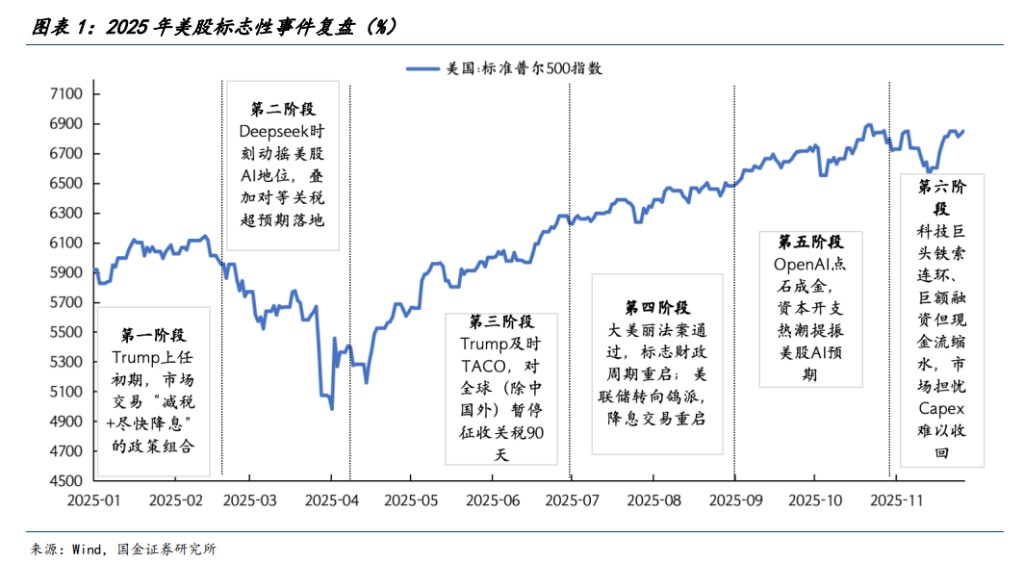
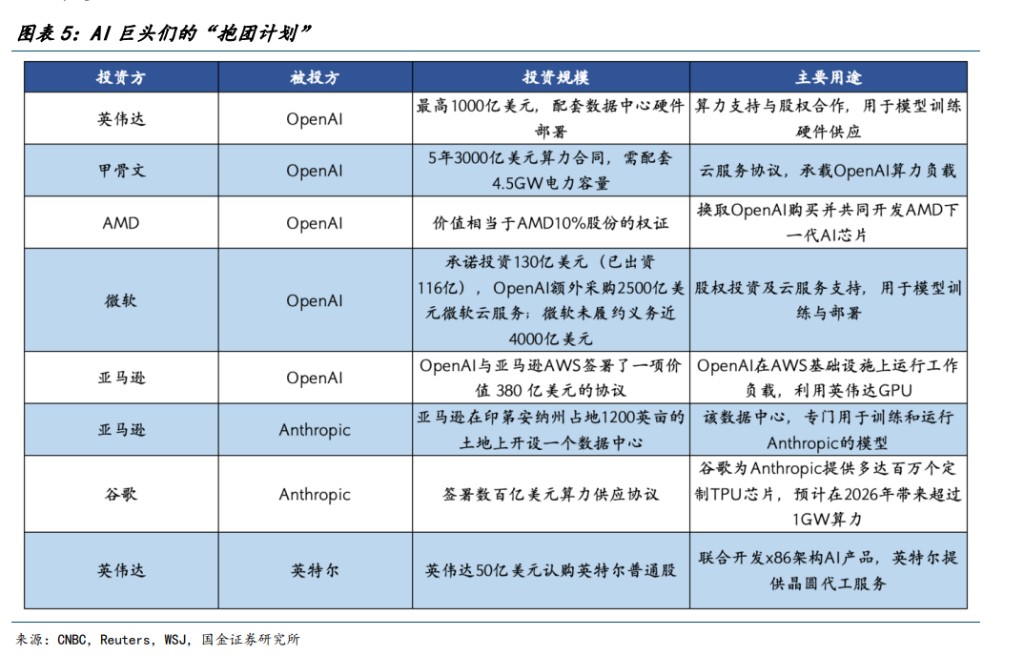
In 2025, the U.S. stock market experienced a historic year intertwined with tariff shocks, fiscal shifts, and industrial waves. The "Deepseek Moment" and the "Independence Day Tariff" in April triggered market tremors, but the resilience of the U.S. stock market continued to manifest after the shocks. Since the third quarter, the OBBBA Act and the Federal Reserve's dovish shift have brought benefits on both fiscal and monetary levels, while OpenAI announced a series of significant investment agreements with companies like NVIDIA and Oracle The AI boom has driven market sentiment to new highs.

However, recently, the AI narrative has begun to face renewed skepticism (see "The Third AI Narrative Challenge in U.S. Stocks" on 2025.10.15). Tech giants are "spending at all costs" to ignite a capital expenditure boom—cash flow is shrinking while external financing is increasing. At the same time, complex relationships involving mutual investments, related transactions, circular financing, and interconnected chains are exacerbating the market's irrational exuberance through self-reinforcing positive feedback.

Is there really a bubble in AI investments? How can its extent be quantified? Will there be a specific point in 2026 that significantly amplifies the market's vulnerability?

1. The Existence of a Bubble is Justifiable

Many viewpoints argue that there is currently no bubble in the AI investment sector, citing that compared to the numerous unprofitable companies during the 2000 dot-com bubble, today's tech giants have high revenues, healthy cash flows, and acceptable leverage. However, this simplistic comparison overlooks the fundamental differences between the entities and the players involved.

Today, the scale and concentration of AI investments far exceed those of 2000. The investment scale of AI giants in the economy and the positive externalities they bring are incomparable to those of 2000. This means that if these AI giants encounter problems, the impact on the entire financial and tech ecosystem will be catastrophic, which cannot be measured by simple revenue or valuation metrics. The mechanisms behind the formation of each bubble are similar, but the manifestations and the carriers of systemic risk are different.

From an industrial perspective, the value of AI in enhancing overall societal productivity will be a very long process. Although AI has some benefits in coding and certain aspects within tech companies, its contribution to productivity enhancement will be very limited in the short term for most industries, primarily due to the lag in organizational and process changes compared to the technology itself. Just as in the early days of the electrical revolution in the late 19th century, where electric motors simply replaced steam engines on factory spindles without improving efficiency, AI's value will be wasted unless it undergoes deep restructuring with the organization's structure, incentive mechanisms, and decision-making processes. Today, AI cannot complete the decision-making loop; it mostly "assists human predictions" rather than "replaces human decisions," which keeps high-level decision-making as a bottleneck. Additionally, the outsourcing benefits of AI for low-skilled jobs are limited, and to realize AI's value, it must replace high-skilled jobs, which requires a long time to bridge the "AI gap."

However, compared to the distant industrial prospects, investing in AI has become one of the market's consensus. The speed of bubble expansion and the timing of industrial productivity realization are two different matters; we cannot deny the rationality of AI investments simply because the industry needs time. Currently, various parties have the motivation to inflate the bubble: tech companies are "all in on AI" to avoid being eliminated, financial institutions are seeking profits through loose liquidity, and media outlets are accelerating the bubble through traffic dissemination American residents (middle class and affluent) are binding AI stocks through pensions and other means, benefiting from the stock market bubble.

Even if the bubble bursts, it is not necessarily a bad thing; new organizational revolutions often require low-cost soil to nurture them. After the burst of the internet bubble in 2000, new things truly began to grow. The excessive infrastructure brought about by the bubble (such as fiber optics and servers) became cheap after the burst, providing fertile ground and extremely low operating costs for the rise of later internet giants. After the AI bubble bursts, the cheap computing power, electricity, and infrastructure left behind will also become fertile soil for future new business models and small company innovations. After costs are significantly reduced and industry standards are unified, the organizational revolution that reconstructs the operational logic of enterprises around AI can truly unleash productivity.

For the United States, pushing the AI bubble to the end is not only an economic behavior but also related to national destiny. On one hand, American household wealth (especially among the top 1% and top 10% affluent groups) is heavily concentrated in U.S. stocks, and the prosperity of U.S. stocks is also the foundation of the dollar's credit. To support the dollar and the massive fiscal deficit, the U.S. has no reason to actively burst the bubble and must ensure the continued prosperity of U.S. stocks.

On the other hand, the AI narrative is also a covert way to reduce debt. By financializing AI, raising the value of stocks (such as the seven giants) and assets (like overvalued collateral as underlying assets for credit), it attracts international investors and allied governments to foot the bill. The U.S. "sells cards, sells stocks, sells dreams," transferring debt and risk to allies and international capital, allowing them to bear the construction costs of computing power infrastructure. In the geopolitical game, the U.S. initiates a "land-grabbing movement" through monopolizing ecosystems and consolidating itself, with costs being borne by allies through debt transfer mechanisms. Once the bubble bursts, allies, as the main payers and builders of infrastructure, will allow the U.S. to obtain a large amount of electricity, computing power, and new infrastructure at a lower cost, laying the foundation for future innovations. Therefore, for the U.S., having foreseen the outcome of "the dead friends do not die poor friends," it is imperative to push the AI bubble to the end.

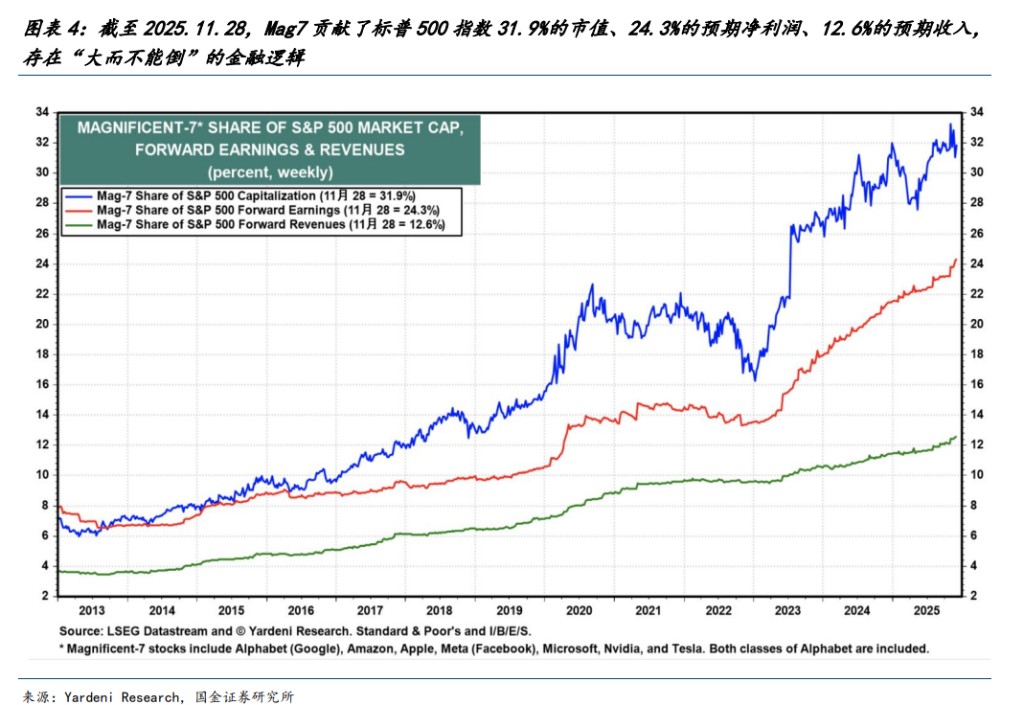
For U.S. stocks, the impact of AI is already self-evident. The excessively high valuations are primarily supported by the market's belief that AI technology can shape a bright future comparable to the industrial revolution and the information revolution. However, the "S&P 493 Index" after excluding the Mag7 has seen zero growth for two years, and the suppression of traditional sectors by high interest rates continues. Whether the value of AI can ultimately benefit society as a whole remains unknown and can only be judged retrospectively based on results.

II. "Iron Chains," Where is the Most Vulnerable Link?

The artificial intelligence industry can be divided into three levels: chip manufacturers, cloud service providers, and model providers. Chip manufacturers provide AI hardware, benefiting first from revenue and having the most abundant cash flow. Cloud service providers offer computing power facilities and services for model development, with costs mainly in hardware procurement and energy consumption, while revenue comes from cloud computing rentals Model merchants focus on AI model development and training, with major expenses coming from the procurement of computing resources, and revenue derived from API service subscriptions and other sources.

In the past year, multiple cross-level and eye-catching large investment transactions have emerged among enterprises within the aforementioned three tiers. The market integration of the industrial chain, from chip manufacturing and cloud computing to cross-investment cooperation in AI applications, has helped integrate industrial chain resources, improve chip supply, computing power support, and application scenarios, and has periodically driven performance and valuation increases, even improving financing capabilities. However, this trend has also blurred the boundaries of traditional industries, potentially creating a false sense of demand and leading to vulnerabilities in the industrial chain. If the business profit expectations of AI giants themselves cannot generate sufficient profits and cash flow, and the liquidity environment deteriorates marginally, the entire chain may face significant risks due to "damaged faith."

Currently, there is a serious lack of information disclosure regarding circular investments in areas such as related party transactions and customer concentration. Giants should be regarded as acting in concert within the complex network of capital and business relationships (such as cross-shareholding, joint investments, strategic cooperation, etc.). In circular investments, inadequately disclosed related relationships may make it difficult for investors to see the real risks, and some revenues may be double-counted, potentially exaggerating the monetization scale of the AI ecosystem, which is only temporarily masked by loose liquidity. At the same time, giants should more clearly disclose their dependence on key major customers; for example, Oracle should explicitly state in its financial report that the surge in its RPO is mainly due to a single contract with OpenAI.

In the ambiguous circular investment model, negative public sentiment related to performance often amplifies market sensitivity. For instance, on October 7, internal documents from Oracle revealed that the gross margin of its cloud business related to NVIDIA was only 14% (overall gross margin around 70%), raising market concerns about its severe dependence on a few major customers and weak bargaining power, leading to a drop of 7.1% in Oracle's stock price during the day. Additionally, Microsoft's third-quarter report showed a $3.1 billion loss from its investment in OpenAI, an increase of 490% compared to the same period last year. Based on Microsoft's 32.5% stake in OpenAI, this means OpenAI incurred losses exceeding $12 billion in a single quarter.

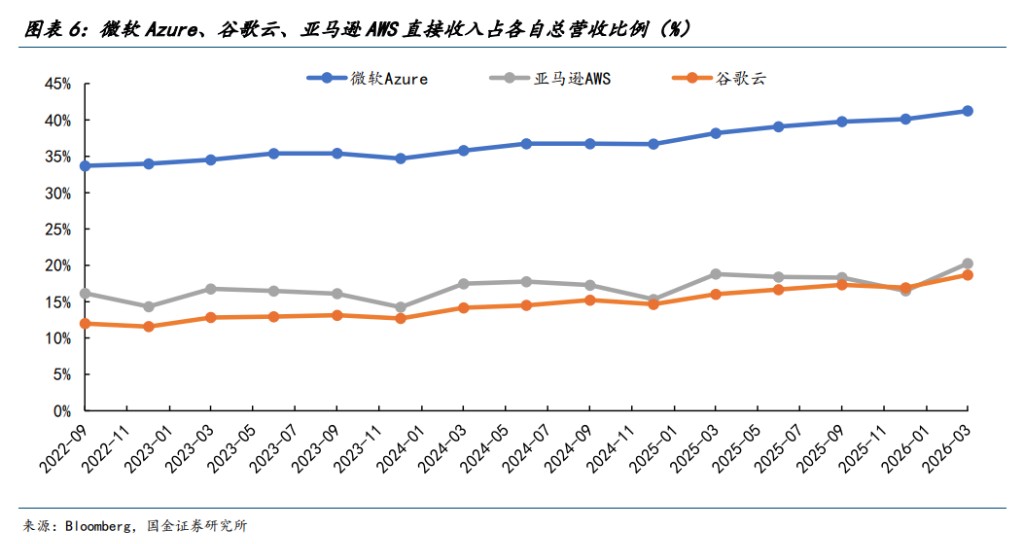
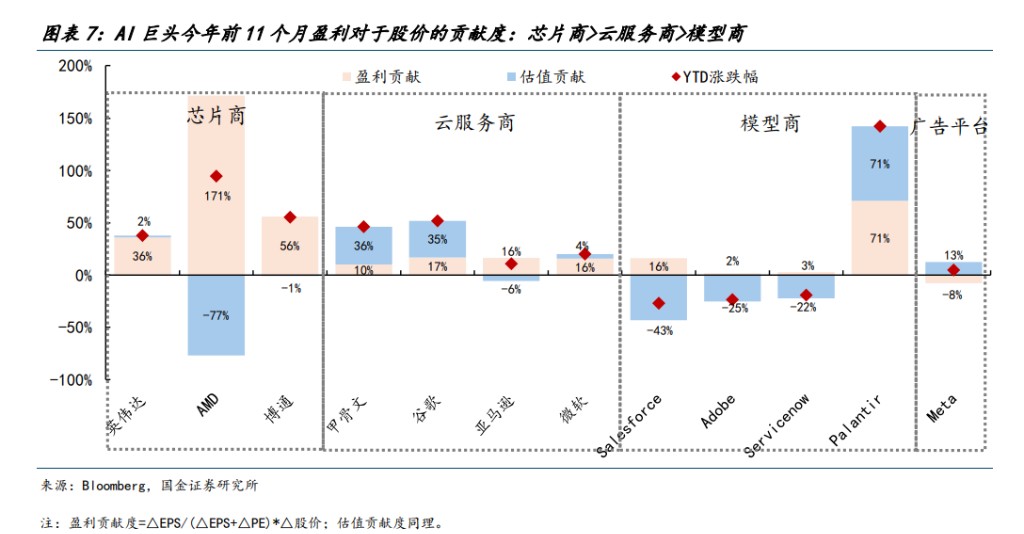
Furthermore, from the perspective of the AI industrial chain, there is a clear divergence in profitability between upstream and downstream. Represented by NVIDIA, upstream chip manufacturers are the first to enjoy high profits, benefiting from the explosive demand for AI chips, with strong product pricing power and order visibility. Midstream cloud service providers also have clear business models. Amazon, Google, and Microsoft have built highly resilient business models, deeply integrating AI into their core businesses, forming a solid moat. In the past two years, the revenue share of cloud businesses for these three giants has also shown a gradual upward trend. Oracle has seized the enormous computing power demand required for AI training and inference, locking in huge revenues for the coming years with its cloud infrastructure and high-priced contracts with leading AI companies like OpenAI, Meta, and xAI However, competition among downstream model providers is fierce. Profitability has shown significant differentiation. General large model providers like OpenAI have to bear exorbitant R&D and computing costs, while enterprise application vendors like Salesforce and Adobe can overlay AI on their mature SaaS products, resulting in lower marginal costs. From the profit and valuation contribution rates of AI giants' stock prices this year, it can be seen that chip manufacturers have the highest profit contribution rate, followed by cloud service providers, while model providers are the weakest.

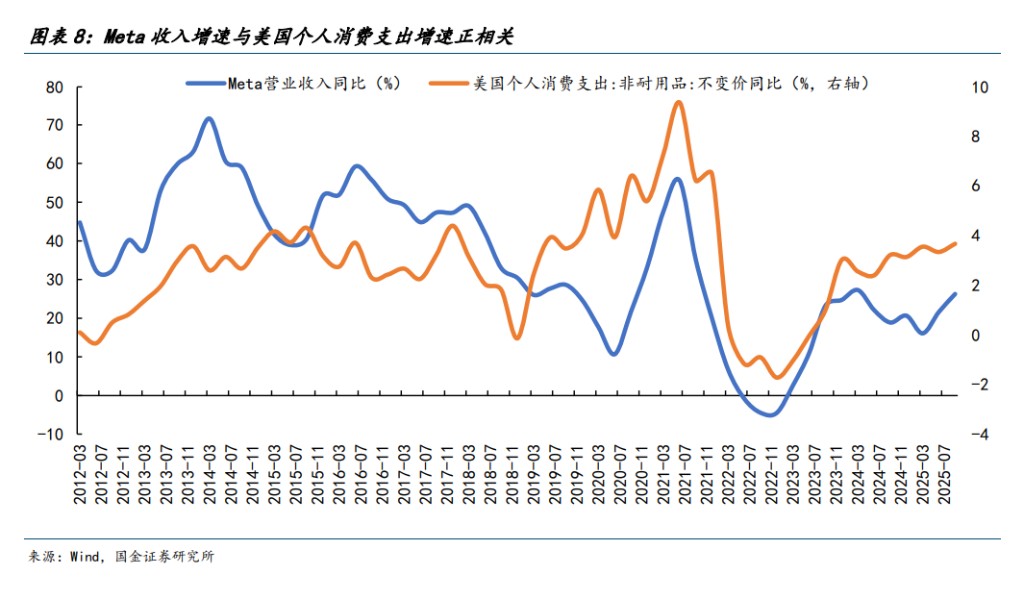
Meta belongs to a very special category. Unlike Microsoft, Google, and Amazon, which have cloud service businesses and profit from AI capabilities as tools and services, Meta has the largest exposure to economic fundamentals, with 99% of its revenue relying on digital advertising (related to the U.S. real economy). It has invested heavily in building a powerful AI social engine, but the commercial returns depend more on the advertising demand of the real economy and the future prosperity of the business ecosystem.

The U.S. is experiencing a typical "stagflation" environment, with the wealth gap continuing to widen and consumption polarizing. The wealthy class, who own more assets and stocks, have become richer in the AI bull market, while the lower and middle classes, burdened with student loans, car loans, and mortgages, are under greater living pressure. From the third-quarter reports of U.S. stocks, high-end consumption (such as luxury goods and airline first-class sales) remains strong, while low-end consumption continues to downgrade, with more people turning to McDonald's "value meals," Walmart, or even cheaper supermarkets. When the weakness of the U.S. real economy allows Meta's advertising clients to cut budgets, it may be a more fragile moment for the AI chain.

III. The Fragility of Trillion-Dollar Capital Expenditures

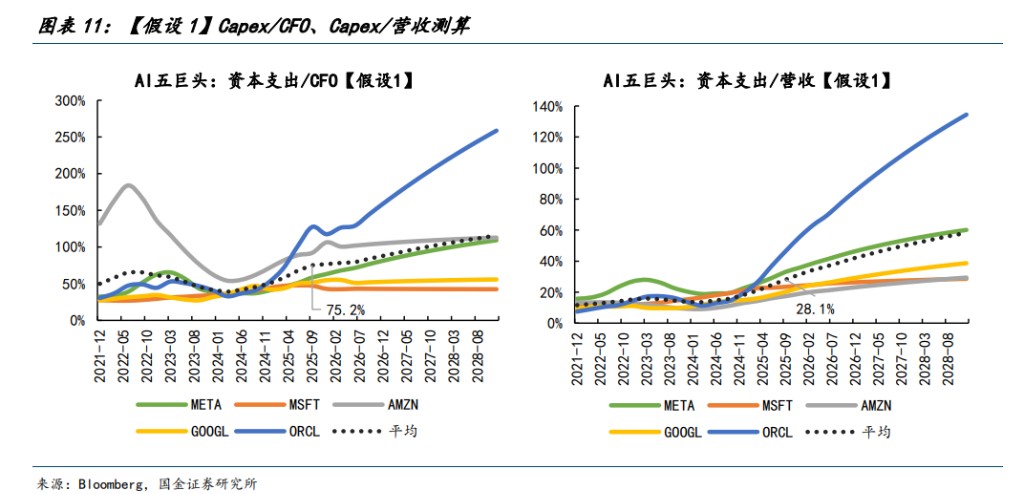
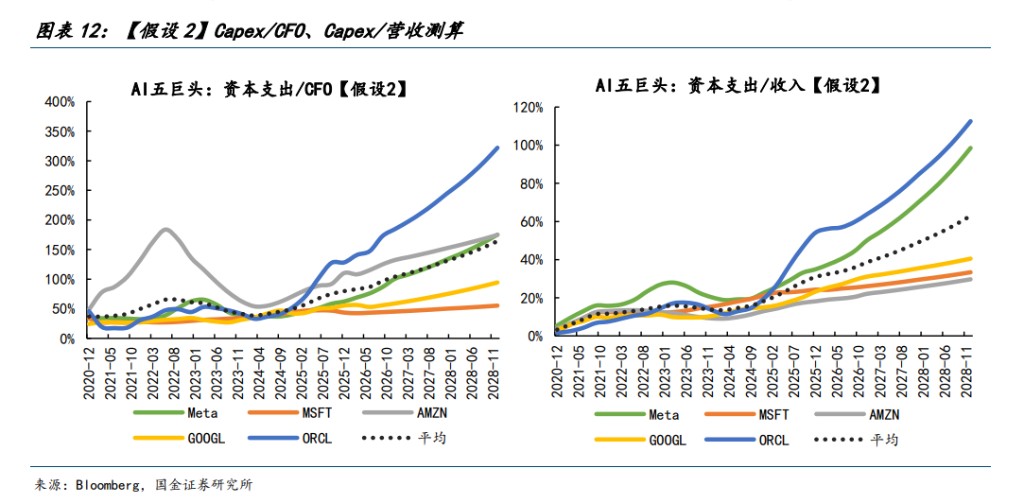
Starting in 2025, capital expenditures of U.S. tech companies are showing competitive increases, and sustainability is beginning to be questioned. In the third quarter of 2025, the five leading companies heavily investing in AI (the "AI Five Giants": Microsoft, Meta, Amazon, Google, Oracle) had a combined capital expenditure of $105.773 billion, a year-on-year increase of 72.9%. The enormous capital expenditures have brought cash flow challenges; as of the third quarter of 2025, the average Capex (capital expenditure)/CFO (operating cash flow) ratio for the AI Five Giants was 75.2%, an increase of 29.7 percentage points from a year earlier; the average Capex/revenue ratio was 28.1%, an increase of 12.3 percentage points from a year earlier From the perspective of free cash flow (CFO-Capex-net debt repayment-dividends-repurchase), as of Q3 2025, except for Microsoft, the other four heavily invested giants are all "underwater." Free cash flow is no longer sufficient to support the massive capital expenditures during the same period and can only rely on consuming existing cash and increasing external financing to maintain operations.

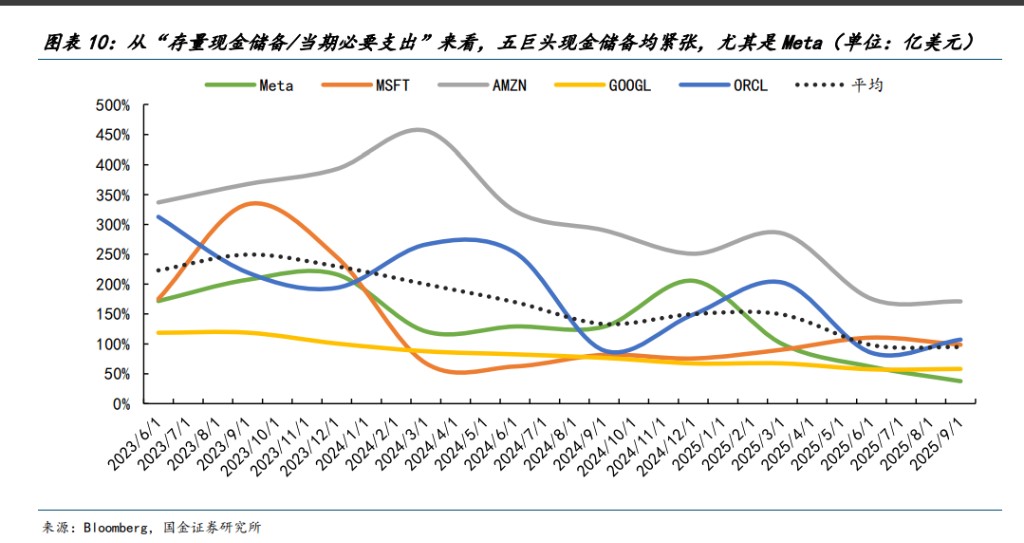
From the coverage ratio of average cash reserves at the end and beginning of the period to necessary expenditures (Capex + net debt repayment + dividend payments + repurchase expenditures), as of Q3 2025, the average for the five companies is 94.4%, a decrease of 39 percentage points from a year ago, with Meta at only 37.3%.

Based on this, we make the following calculations:

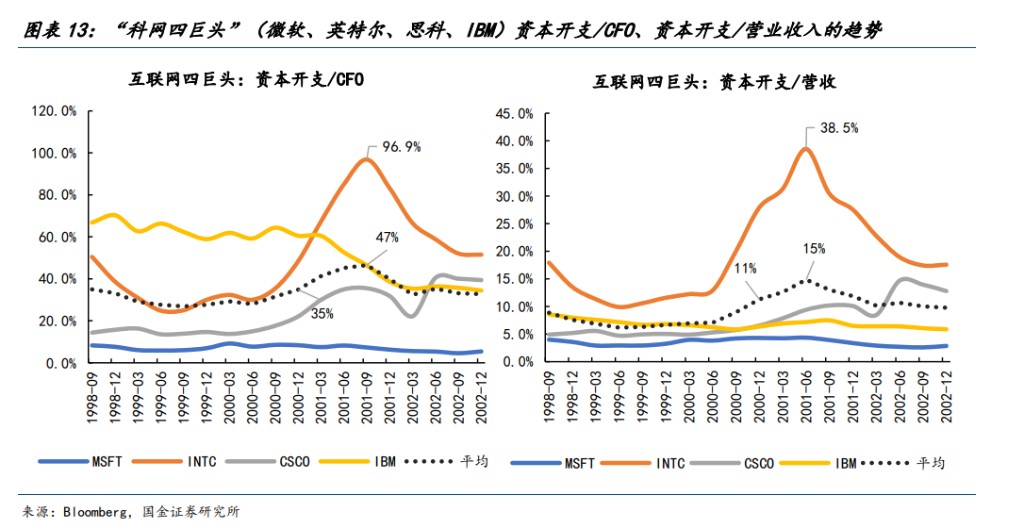
【Assumption 1】Projecting the capital expenditures, operating cash flow, and operating revenue of the five AI giants using the average growth rate over the past year: by Q2 2027, the average Capex/CFO will reach 95.9%, approaching the peak of the highest among the "four tech giants" (Microsoft, Intel, Cisco, IBM) after the bubble burst (Intel); by Q3 2026, the average Capex/revenue of the five AI giants will reach 39.5%, exceeding Intel's peak after the bubble burst.

【Assumption 2】Calculating the capital expenditures of the five AI giants based on the market expected median compound annual growth rate (CAGR) from 2025 to 2028, with operating revenue and net profit based on Bloomberg consensus expectations, while maintaining the trend ratio between operating cash flow and net profit: by Q3 2026, the average Capex/CFO of the five AI giants will reach 96.9%, which is Intel's peak after the bubble burst; by Q4 2026, the average Capex/revenue of the five AI giants will reach 38.7%, approaching Intel's peak after the bubble burst.

Therefore, overall, the vulnerability of capital expenditures may gradually intensify in the second half of next year. However, considering that tech companies will continue to "all in AI" to avoid being eliminated, capital expenditures have a certain rigidity. Thus, when companies save on other expenditures (such as dividends, repurchases, and equity incentives), it may become a turning point in the narrative.

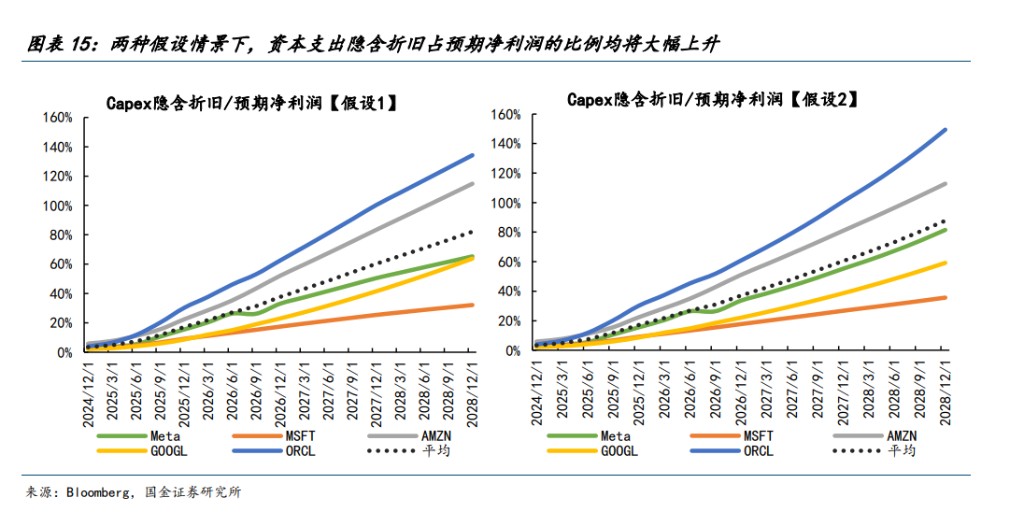
In addition, due to the significant increase in capital expenditures by the giants over the past year for data center construction, depreciation will not be recognized until they are officially put into use, so its impact on the income statement has not yet manifested. Assuming that from Q4 2024, capital expenditures gradually transfer to fixed assets and are depreciated linearly over a 6-year period, by the third quarter of 2025, the ratio of potential depreciation/net profit for the five AI giants' Capex will reach 11.8%, and will rise exponentially in the future.

Based on [Assumption 1], implied depreciation from Capex will grow from USD 14.9 billion in Q3 2025 to USD 114.5 billion by the end of 2028, approximately a 7.7-fold increase. By the end of 2026, 2027, and 2028, the implied depreciation/net profit from Capex will reach 37.6%, 60.2%, and 82.0%, respectively.

Based on [Assumption 2], implied depreciation from Capex will grow from USD 14.9 billion in Q3 2025 to USD 123.9 billion by the end of 2028, approximately an 8.3-fold increase. By the end of 2026, 2027, and 2028, the implied depreciation/net profit from Capex will reach 37.0%, 60.5%, and 87.7%, respectively.

4. High Leverage and Off-Balance Sheet Financing Risks

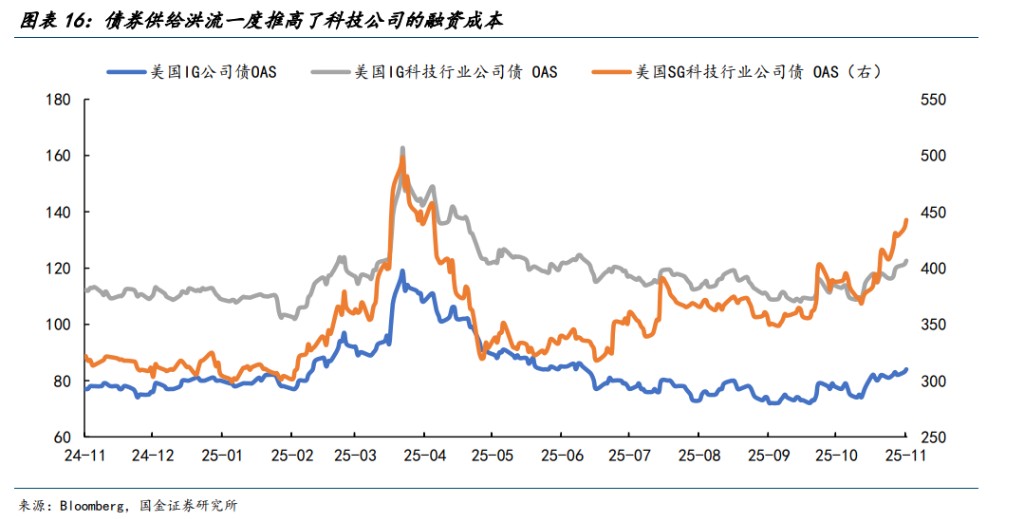
In the first 11 months of this year, the total issuance of corporate bonds by U.S. Hyperscaler companies reached USD 103.8 billion (excluding loans and private credit), more than 5 times the total issuance for the entire year of 2024 (USD 20.1 billion), and the weighted average interest rate rose from 4.75% to 4.91% (see "Panoramic Scan of AI's Impact on the U.S. Economy" 2025.11.12). The surge in supply has already pushed up bond spreads; from October 1 to November 18, the 5-year CDS for Oracle and Coreweave rose by 49 basis points and 304 basis points, respectively, while the OAS spreads for U.S. investment-grade (IG) tech corporate bonds and speculative-grade (SG) tech corporate bonds also widened.

The market generally believes that merely issuing corporate bonds publicly is unlikely to fill the huge funding gap faced by giants. It is predicted that from 2025 to 2028, global data center construction will generate a capital expenditure (Capex) demand of $2.9 trillion, of which $1.5 trillion will come from external financing (including $200 billion in corporate bonds, $150 billion in ABS and CMBS products, $350 billion in PEVC and sovereign capital, and $800 billion to $1.2 trillion relying on the private credit market). The opacity of private credit product ratings and holders will pose significant risks.

Taking Meta as an example, a set of off-balance-sheet financing plans was designed for the $27 billion Hyperion data center project—establishing a joint venture, Beignet Investor, in which investment management company Blue Owl Capital holds 80%, and issuing $27.3 billion in bonds, with Meta holding only 20% of the shares and not consolidating the financial statements, so that the massive debt does not appear directly on its balance sheet. However, Meta provides substantial implicit guarantees for the joint venture, becoming a contingent liability.

Meta is not an isolated case; companies like xAI and Anthropic have also adopted similar SPV financing models. This reflects the common dilemma faced by tech giants in the AI arms race, needing to meet astronomical funding demands while maintaining attractive financial statements and credit ratings. However, such off-balance-sheet financing operations carry significant potential financial risks, and when these operations reach trillion-dollar levels, systemic risks cannot be ignored. If the technological iteration speed of AI chips and data centers exceeds expectations, it means that the assets held by the SPV may significantly depreciate before generating sufficient returns, with the risks ultimately passed on to bond investors.

Historically, off-balance-sheet financing tools have been associated with major crises such as the Enron bankruptcy in 2001 and the subprime mortgage crisis in 2007. Currently, the capital demand for AI investment is enormous, and if a large number of companies rely on such concealed leverage, a single default event could trigger systemic risks through highly intertwined capital chains when the technology bubble bursts or the market turns. Even though the current tech boom is different from the internet bubble, with giants enjoying extremely high profit margins, strong earnings growth, and mature and diversified core businesses, the opaque private credit market and off-balance-sheet financing methods may still amplify market volatility and risk transmission effects.

V. Political uncertainty leading to liquidity tightening is an external risk for the AI bubble

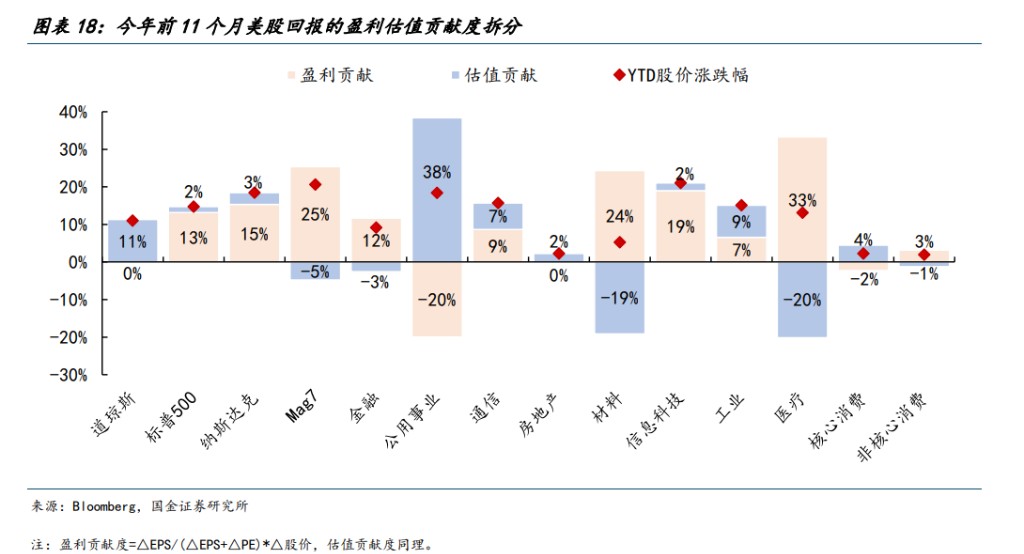
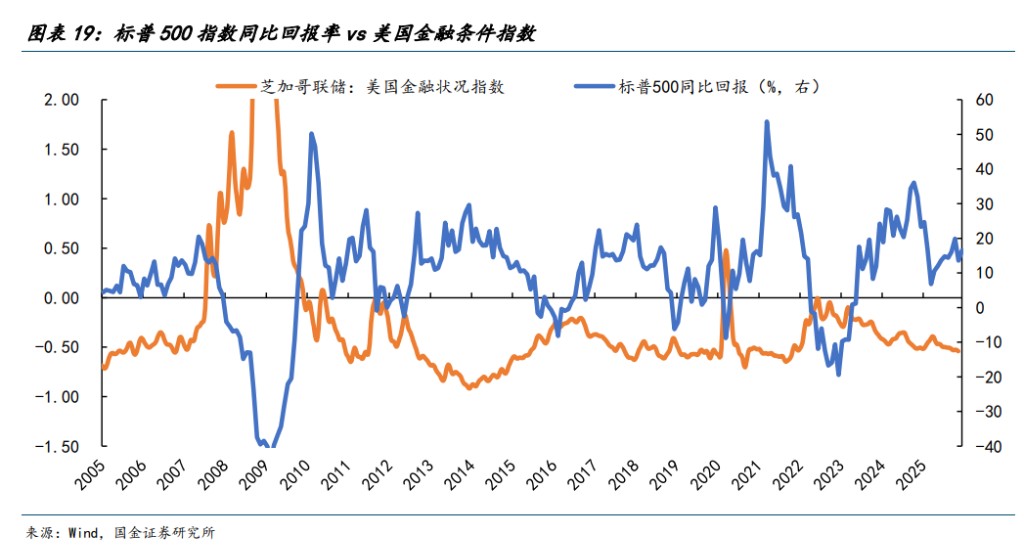
Narratives are often chosen by liquidity. A key factor for the sustainability of the AI narrative is the incremental liquidity brought about by the 150 basis points rate cut since last September, as well as the widespread under-allocation of funds by U.S. institutions and retail investors, while AI is one of the few growth assets available (see "The Third Narrative Challenge in U.S. Stocks" October 15, 2025) In the first 11 months of this year, the stock price increases of the seven giants (and even the entire information technology sector) were primarily driven by earnings, while the rises in traditional sectors such as utilities, real estate, and consumer goods included valuation contributions to varying degrees. This also explains the high concentration of the U.S. tech sector and the crowded nature of market trading.

Next year's U.S. AI narrative and the real economy are both demanding a more accommodative monetary policy; Trump's "everything for the midterms" will seek looser fiscal stimulus to address the "Affordability Crisis" faced by American residents, which in turn will limit the space for monetary policy easing to demonstrate a tough stance on inflation. Trump's efforts to avoid a more pronounced "re-inflation expectation" before the midterms essentially lead to a conflict between "votes" and "stocks" in 2026 (see "2026 U.S. Economic Outlook: Moving Towards Greater Imbalance" December 1, 2025), thus U.S. stocks will inevitably bear greater volatility.

For the Federal Reserve, there is now "no way out," and it can only shoulder the political responsibility to carry through with interest rate cuts. However, under the pressure of "votes" in 2026, fine-tuning will become more difficult. If the new Federal Reserve Chair adopts a dovish stance, then in the stagflation environment of supply contraction and demand expansion, the "side effects" of interest rate cuts will be hard to control. Once "both fiscal and monetary policies are eased," leading to re-inflation, even without rate hikes, the rise in interest rates will exert liquidity pressure on U.S. stocks, and the upward risk of long-term U.S. Treasury yields will become increasingly prominent.

Whenever liquidity marginally tightens, the market's attitude towards the AI narrative tends to be more cautious. In October of this year, the U.S. government shutdown led to a backlog in the TGA account, preventing fiscal funds from flowing out, which caused a passive tightening effect on the market. The U.S. dollar index briefly broke through the 100 mark, and more voices began to hold an "objectively neutral" view on U.S. stocks. In November, due to Trump's declining support in local elections, some Federal Reserve officials turned hawkish, further increasing the adjustment pressure on U.S. stocks.

The uncertainty of liquidity next year essentially stems from the uncertainty of the midterms. If Trump's support continues to decline, his control over fiscal and monetary policy will also weaken, and his influence over allies who have made substantial investment commitments will diminish, leading to a passive increase in the fragility of the AI narrative. In other words, the chain of "politics - liquidity - narrative" may be the root cause of volatility in the U.S. stock market. When Trump shifts to "midterm mode" will also be the most important macro node in the first half of next year, with the baseline scenario likely occurring after his visit to China in April, turning towards "domestic affairs" with relevant outcomes; however, this is a dynamic process, and if Trump's support remains weak, the timeline will be forced to advance.

Guojin Securities Research Institute

Risk Warning and Disclaimer

The market has risks, and investment requires caution. This article does not constitute personal investment advice and does not take into account the specific investment goals, financial situation, or needs of individual users. Users should consider whether any opinions, views, or conclusions in this article are suitable for their specific circumstances. Investing based on this is at one's own risk