"New Federal Reserve News Agency" comments on non-farm payrolls: unlikely to significantly change the Federal Reserve's assessment when considering another rate cut

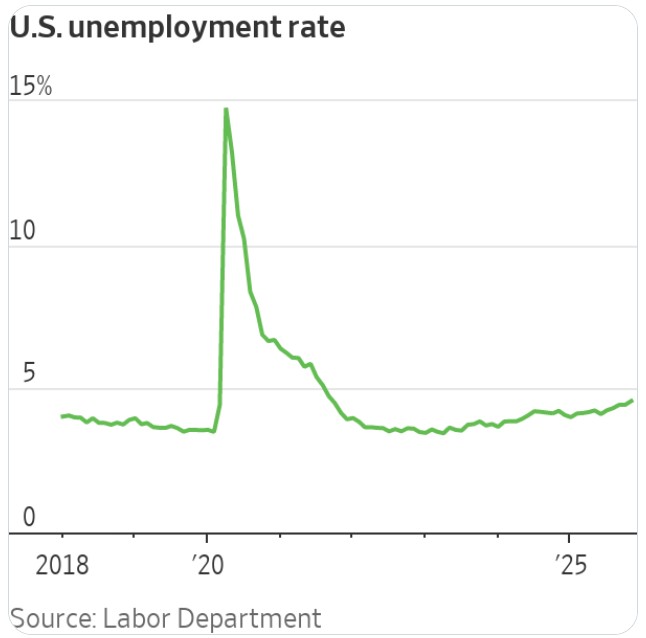
Timiraos pointed out that as of November, the average monthly increase in private sector employment over the past six months was 44,000, marking the slowest hiring pace in the six-month recovery period of the U.S. economy post-pandemic. The unemployment rate rose from 4.44% in September to 4.56%, nearing the year-end unemployment rate predictions made by several Federal Reserve officials last week. The current hiring situation is weak enough to support Powell's stance on pushing for rate cuts in the last three FOMC meetings, but not bad enough to necessitate another rate cut in January
On Tuesday, the U.S. Bureau of Labor Statistics (BLS) released the non-farm employment data for October and November in one go. The data showed that the U.S. economy added 64,000 jobs in November, following a decrease of 105,000 jobs in October; the unemployment rate slightly rose to 4.6% in November.
Renowned financial journalist Nick Timiraos, known as the "new Fed correspondent," recently wrote that the non-farm employment data released on Tuesday is unlikely to significantly alter the Federal Reserve's judgment when weighing whether to continue cutting interest rates. Timiraos pointed out:
The current hiring situation is weak enough to support Fed Chair Jerome Powell's push for rate cuts in the last three FOMC meetings, but not so bad as to necessitate another rate cut in January, especially given that the federal government shutdown has affected data collection.
The unemployment rate rose from 4.44% in September to 4.56% in November, a level close to the year-end unemployment rate predictions made by several Fed officials last week.
Timiraos believes that the December employment report, to be released in early January, should be of greater reference value and provide a "cleaner" data reading as emphasized by Powell. If the unemployment rate remains stable overall, Fed officials may feel comfortable pausing rate cuts; if the unemployment rate rises further, it may test their patience.
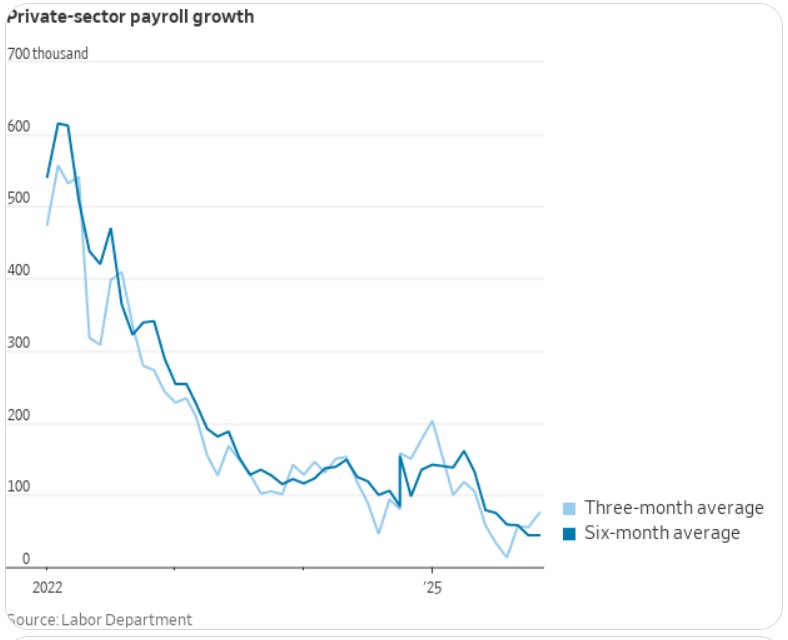
There are signs of stabilization in private sector hiring, with the three-month average of new jobs rising to 75,000, up from a low of 13,000 earlier in August. This is roughly what Fed officials hope to see. Powell stated last week that recent rate cuts should position policy neutrally, allowing the unemployment rate to "remain stable or rise by at most one or two tenths."
According to data from the CME Group, the market expectations for a rate cut in January remained nearly unchanged after the non-farm report was released on Tuesday, still around 25%.
Timiraos noted that in the absence of sustained evidence of weak hiring, another rate cut could deepen the divide with officials who opposed last week's rate cut decision; these Fed officials want to see clearer evidence that inflation is returning to the Fed's 2% target.
Timiraos cited Powell's recent remarks:
Recent revisions to employment data indicate that the non-farm employment report may overestimate job gains by about 60,000 each month, suggesting that the monthly job growth since May may be flat or even negative. He mentioned that there are "significant downside risks" in the labor market.
Powell hinted that Fed officials are not in a hurry to cut rates again, stating that the current policy stance is "in a good place." However, he also warned: "If job creation turns negative, we must pay very close attention and ensure that our policy does not impose additional pressure on employment."
Renowned financial journalist Nick Timiraos, known as the "new Fed correspondent," analyzed the latest non-farm data on the X platform. He pointed out:
- In the private sector, 52,000 and 69,000 jobs were added in October and November, respectively
- Affected by the government's efficiency department DOGE/key node-style delayed layoffs, the total employment increase over three months fell to -8,000 in October, rebounding to +22,000 in November. The six-month employment increase dropped to +9,000 in October and rose to +17,000 in November.
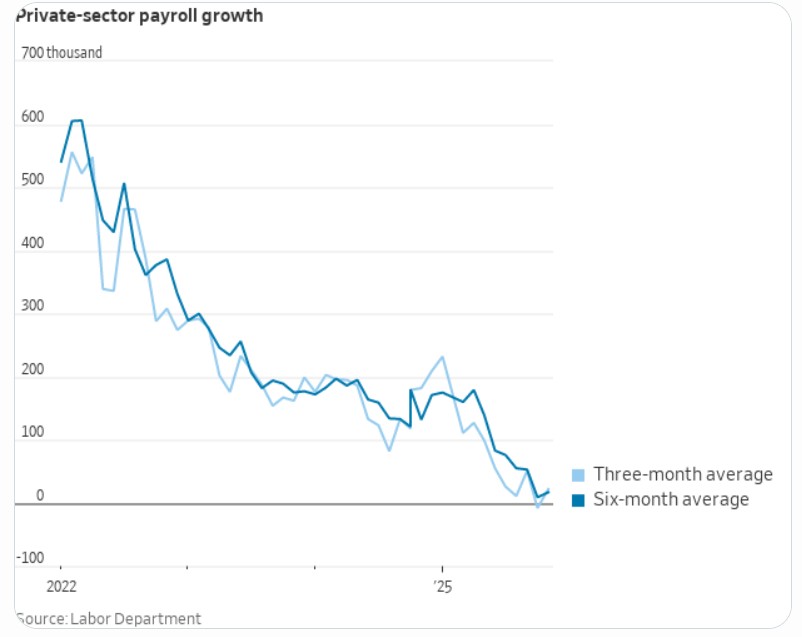
- As of November, the average monthly increase in private sector employment over the past six months was 44,000 (unchanged from October). This is the slowest hiring pace in the six-month economic recovery cycle in the U.S. after the pandemic. The three-month average employment increase rose to 75,000 in November, the highest level since May.
- Without rounding, the unemployment rate in November rose to 4.564%, an increase of 12 basis points from 4.440% in September. Powell stated last week that the Federal Reserve believes the current policy stance will keep the unemployment rate stable or "at most rise by one or two tenths."