The decrease in foot traffic and the disappearance of queues at most overseas stores! Wall Street questions: Is POP MART's choice of "volume model" correct?

Deutsche Bank's report questions POP MART's "volume-driven model," believing that capacity expansion, while increasing sales, has destroyed its core "scarcity" premium, leading to a sharp decline in overseas customer flow and queueing phenomena. The bank warns that if it sacrifices IP popularity for short-term sales, its high-profit business model and long-term valuation will be difficult to maintain
The market's direction is undergoing a drastic change. Deutsche Bank believes that the disappearance of POP MART's "scarcity" is stifling the brand's premium capability.
According to the Chase Wind Trading Desk, in Deutsche Bank's latest research report on December 16, the rating for POP MART has been downgraded to "hold." Deutsche Bank pointed out that since mid-October 2025, the aggressive expansion of POP MART's production capacity has eliminated product shortages, which, while satisfying supply in the short term, has also triggered fatal "fashion fatigue."
For investors, the most dangerous signal has emerged: except for newly opened stores or a few cities like Tokyo, the queue phenomenon in the vast majority of overseas markets has disappeared, and foot traffic has significantly declined. This slowdown in traffic will directly impact the company's high operating profit margins. If the company can only expand production by sacrificing IP popularity, its valuation logic will face severe tests. The so-called "super IP" cycle may be peaking, and will Labubu follow in the footsteps of Hello Kitty, entering a long downward cycle?
The Cost of Volume Model: The Collapse of Scarcity Premium
POP MART's business model is facing a gamble. According to the Deutsche Bank report, since mid-October 2025, the company's monthly production capacity has surged from 10 million to 50 million. While this move has completely resolved the out-of-stock issue, it has also greatly diminished the sense of product scarcity, leading to a significant decline in collectors' enthusiasm.
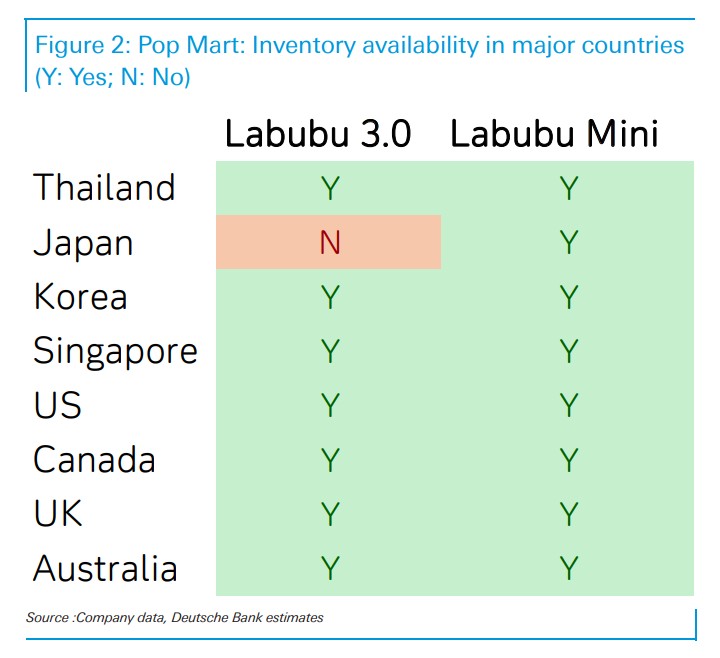
The negative effects of this strategy have already manifested in the terminal channels. For the previously sought-after Labubu series (approximately 145 million sold globally), the market is losing its novelty. Inventory tracking data shows that in the United States and other major overseas markets, the once "hard-to-find" Labubu products are now everywhere. This "easily accessible" state has directly led to a cooling of Google search popularity and social media discussions.

Extreme Dependence on "Queues" Business Model
Wall Street has raised severe doubts about the sustainability of POP MART's business model. The research report points out that POP MART's model is a typical "low unit price, high transaction volume." To maintain a store output comparable to the world's top fashion and even luxury brands, it must rely on extremely high-frequency transactions.
Data Warning: Deutsche Bank estimates that to maintain current store sales, POP MART needs to complete 63 transactions per hour globally, and 34 transactions per hour in the Chinese market.
Real Dilemma: Such a high-density transaction volume can only be achieved when customers are queuing in large numbers.
However, early observations show that stores in Bangkok, Singapore, Seoul, and many cities in the United States no longer have queue phenomena. Once foot traffic declines, the company's operating leverage will face backlash. Deutsche Bank expects its adjusted net profit margin (NPM) to reach 34.4% in 2025 (26.1% in 2024), but this is primarily based on high customer traffic If there are no longer queues of people, such high profit margins will be difficult to maintain.
Lessons from the Past: The Cycles of Hello Kitty
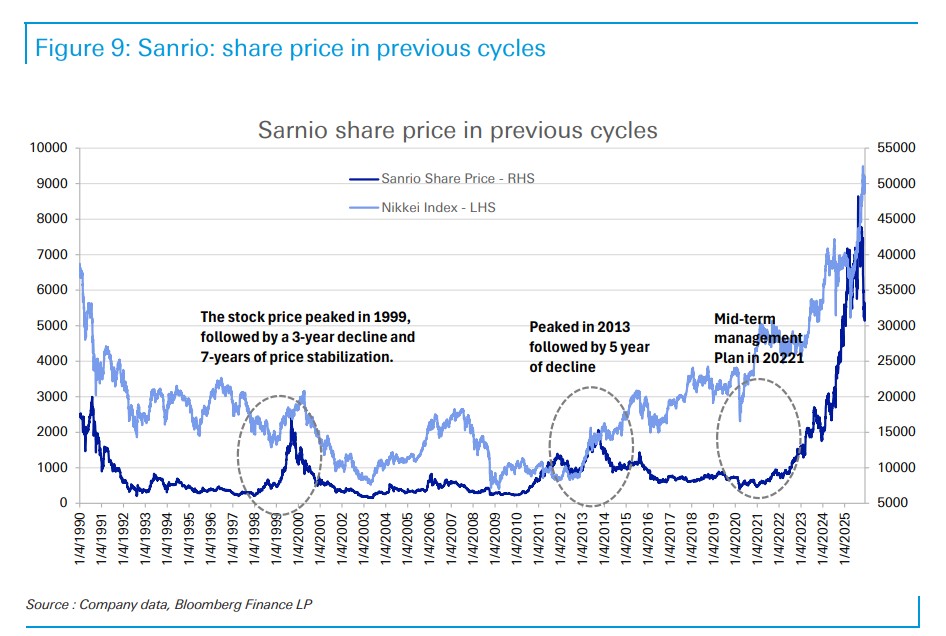
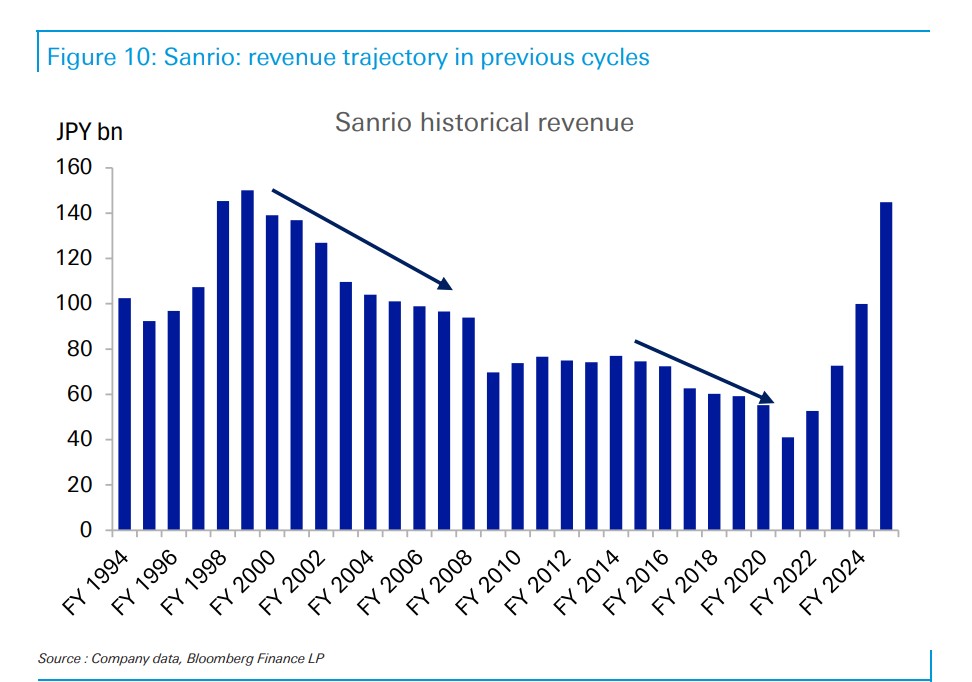
History is often remarkably similar. The research report warns investors by reviewing the two "super IP cycles" of Sanrio's Hello Kitty in the 2000s and 2010s: the trajectory of IP popularity is never linear.


Boom and Bust: Whether driven by emotional value at the end of the 1990s or the explosion in the European and American markets in the early 2010s, Hello Kitty experienced an upturn period of "price premium and extreme supply shortage," followed by a downturn lasting several years.
Causes of Decline: Over-reliance on a single IP, the shift of distribution channels from "limited" to "massive" expansion (leading to brand dilution), and the emergence of competitors (such as Disney's "Frozen") have all contributed to long-term stagnation in stock prices and performance.
Currently, the market's reaction to new products from POP MART (such as the "mini Labubu" and "The Monsters 1 a.m." series) has been tepid, and the repurchase threshold is rising. If POP MART cannot maintain the popularity of Labubu or quickly launch the next phenomenon-level IP, it may be standing on the edge of a cliff similar to the peak cycle of Hello Kitty.
Valuation and Future Catalysts
Currently, POP MART's forward price-to-earnings ratio (P/E) for the next year is 15 times. Although the valuation seems low, it reflects the market's concerns about its "fashion cycle" peaking. The future stock price trend will entirely depend on short-term catalysts:
New Product Performance: Can the new Labubu series expected to be released in the first half of 2026 continue the previous momentum?
Q4 Performance Assessment: The company's sales performance in the fourth quarter is crucial; it must achieve a quarter-on-quarter acceleration to meet the sales guidance of approximately 8 billion RMB for the U.S. market.
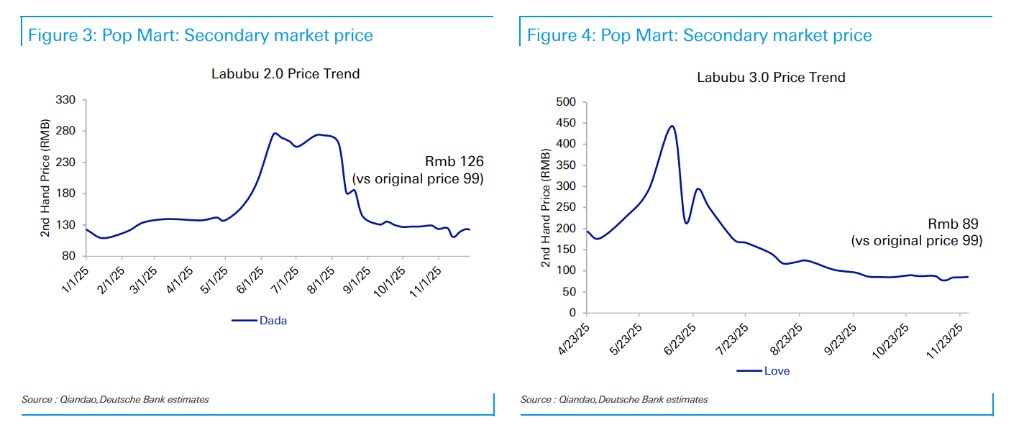
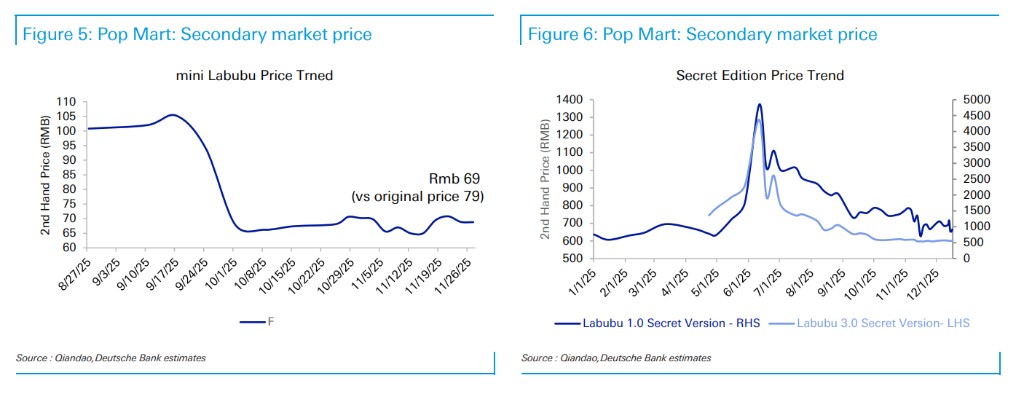
If recent revenue growth is merely based on expanding production at the expense of IP popularity, leading to a decline in secondary market prices (data has shown that the secondary market prices of Labubu's second, third generations, and hidden versions are all on a downward trend), then the company's long-term valuation logic will be rewritten.

Investors need to be vigilant: in a "post-hype era," high growth sustained by volume may just be an illusion