


Two Americas: Causes and Solutions of the "K-shaped Economy"

Since mid-2025, the U.S. economy has shown characteristics of "no job growth" and a "K-shaped recovery." The article analyzes the causes of the "K-shaped economy," including economic slowdown, monetary easing, and the impact of Trump policies, and explores whether the economy can move beyond the "K-shaped" characteristics in the future
Abstract
Since mid-2025, the United States has once again exhibited characteristics of "jobless growth" and a "K-shaped recovery." In 2026, will the U.S. economy be able to break free from the "K-shaped" characteristics, with the path being "jobless" dragging down growth, or high growth driving full employment?
I. Hot Thoughts: Two Americas: Causes and Solutions of the "K-shaped Economy"
(A) Two Structural Imbalances in the U.S. Economy: "Jobless Growth" and "K-shaped Economy"
Since early 2025, the U.S. economy has been characterized by "jobless growth." Since Trump began his presidency in early 2025, the number of new non-farm jobs in the U.S. has started to decline, averaging a drop to a low of 18,000 per month from June to August 2025, far below the historical average in non-recession periods. However, supported by AI capital expenditures, the U.S. GDP growth rate has remained at a relatively high level.
Since mid-2025, the U.S. economy has once again shown characteristics of a "K-shaped economy." This is specifically manifested in the "K-shaped" differentiation of consumption, employment, wages, and wealth, such as: the consumption growth rate of high-income groups significantly exceeds that of low-income groups; high-end consumption outperforms mass consumption; and the "scissors gap" between high-income and low-income groups in wages and wealth continues to widen.
(B) Causes of the "K-shaped Economy": Economic Slowdown, Monetary Easing, Trump Shock, and Structural Bull Market in U.S. Stocks
The characteristics of the U.S. "K-shaped economy" are a cyclical phenomenon in the short term, but a structural contradiction in the long term. From the structural perspective of income and wealth distribution, it can be argued that "jobless" is the reason for the formation of the "K-shaped economy." Meanwhile, "jobless" itself is the result of multiple factors such as the late cycle of the economy, the Federal Reserve's interest rate cuts, the Trump shock (immigration and tariffs), and the structural bull market in U.S. stocks.
In the short term, the "loosening" of the labor market is the main explanation. A typical fact of the U.S. economy is that the "vulnerable groups," characterized by low wages, are the first to feel the "chill" of the economy and the last to feel the "warmth." By 2025, the U.S. economy has entered the late cycle. This is detrimental to the "vulnerable groups," and thus to income and wealth distribution.
In the long cycle, the "K-shaped" characteristics of income and wealth in the U.S. began in the 1980s and have continued to diverge for nearly half a century. Since the early 1980s, the increase in real labor income in the U.S. has significantly lagged behind the increase in labor productivity, reflecting the decline of labor and the rise of capital and technology against the backdrop of financial liberalization, economic globalization, and technological waves.
(C) The Unbridgeable "K-shaped Gap": Inclusive Growth or Recession Eliminating Wealth?
Jobless growth and the "K-shaped economy" are common economic phenomena in the early stages of economic recovery. Typical cases include: after the 1990-1991 recession, after the 2001 recession, and after the 2008 global financial crisis, with the common characteristic being that after economic recovery, the unemployment rate continues to rise. The path out of the "K-shaped recovery" is: continuous expansion of total demand - increase in labor demand - tightening of the labor market 2025 is a late-cycle, atypical "K-shaped economy" case, and 2026 may not see significant improvement. In 2026, the U.S. economy may shift from "no job growth" to "low job growth," but the characteristics of the "K-shaped economy" may not change significantly, as the labor market is likely to maintain a "weak balance." However, AI capital expenditure will continue to expand, and the wealth effect of the U.S. stock market will still support high-end consumption.
In the long term, the "K-shaped" characteristics of the U.S. economy are not just a cyclical phenomenon but a trend. The decline in asset prices during economic recessions can only temporarily "eliminate" wealth, but vulnerable groups are likely to face permanent unemployment. From a broader historical perspective, the four structural forces that can sustainably eliminate inequality are: large-scale mobilization wars, transformative revolutions, state decline, and deadly infectious diseases.
Report Body
Since mid-2025, the U.S. has once again exhibited characteristics of "no job growth" and "K-shaped recovery." In 2026, whether the U.S. can move away from the characteristics of the "K-shaped economy" depends on whether "no jobs" drag down growth or high growth drives employment.
1. Hot Topic Discussion: Two Americas, Causes and Solutions of the "K-shaped Economy"?
(1) Two Structural Imbalances in the U.S. Economy: "No Job Growth" and "K-shaped Recovery"
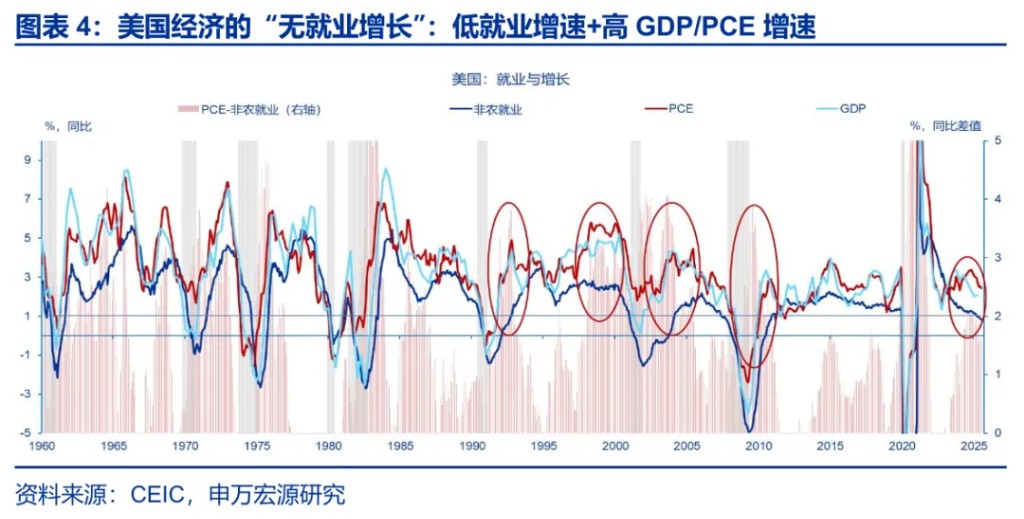
Since mid-2025, the U.S. has once again shown the coexistence of jobless growth and K-shaped economy. These are two related but distinct economic phenomena; the former describes the coexistence of low job growth and high economic growth, while the latter describes significant differences in income, consumption, or "perception" among different groups during economic cycles. From a definitional standpoint, when PCE is primarily supported by property income or savings, or when GDP is mainly driven by non-PCE components, jobless growth and K-shaped recovery often coexist.
Since 2020, jobless growth has almost become a high-frequency term every year, but K-shaped recovery has only appeared in 2020 and 2025. In terms of new non-farm employment numbers, the U.S. has experienced three phases since 2020: high growth (monthly average >200,000), medium growth (100,000-200,000), and low growth (<100,000). Therefore, "no jobs" can sometimes be an illusion. Since the beginning of 2025, under Trump's administration, new non-farm employment has continued to decline, averaging only 18,000 from June to August, far below the historical average level during non-recession periods (the 12-month moving average as of September 2025 is approximately 109,000).
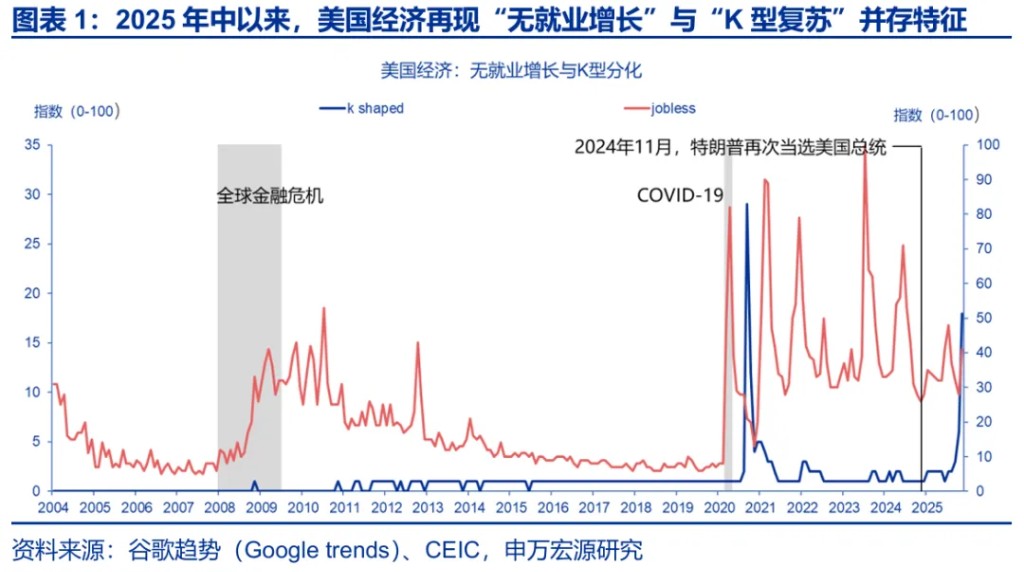
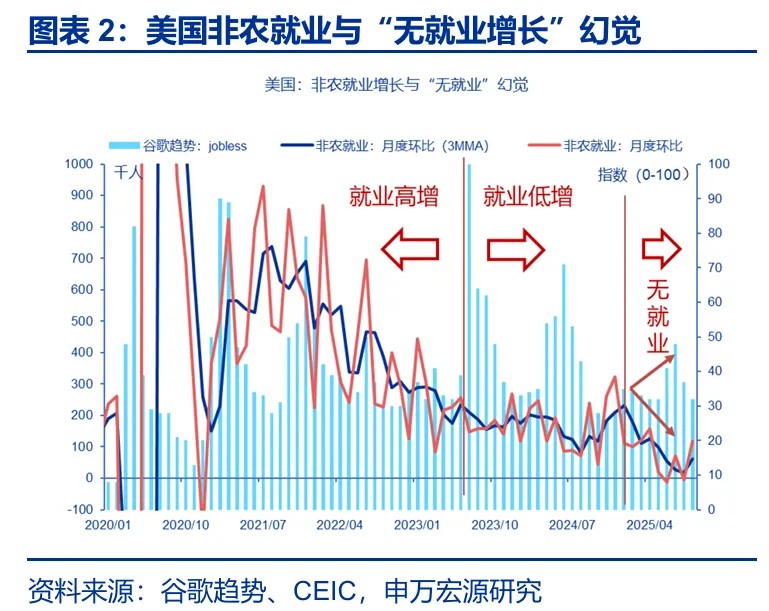
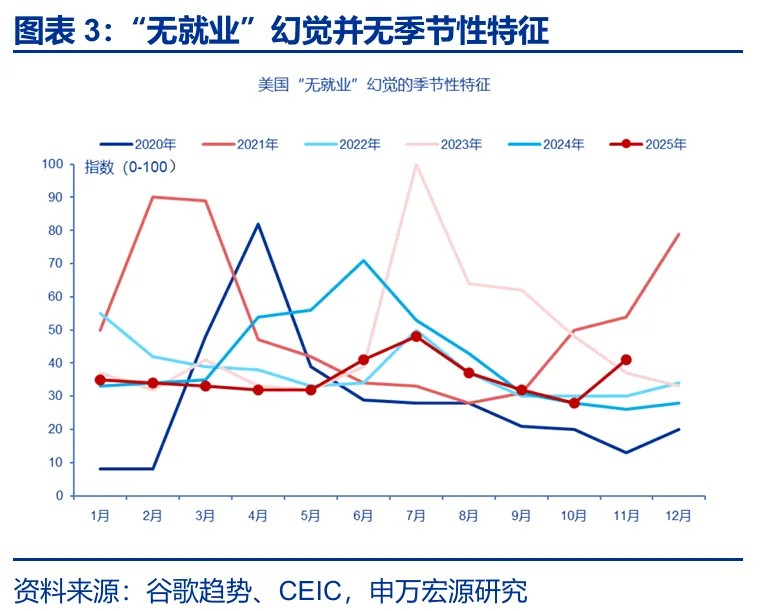
The U.S. economy remains resilient, and recession expectations continue to decline. As of the third quarter of 2025, the year-on-year growth rate of real PCE is still as high as 2.4%, and the year-on-year real GDP remains above 2%—with a quarter-on-quarter annualized rate of 3.8% in the second quarter and an estimated 3.6% in the third quarter (according to the Atlanta Fed's GDPNow forecast). The difference between the growth rates of PCE and non-farm employment is 1.6% (with a peak of 2.1% in January 2025).
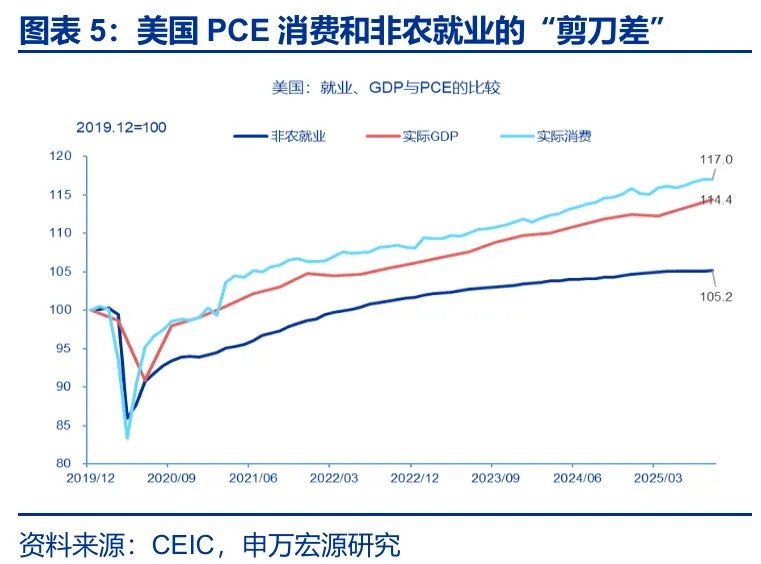
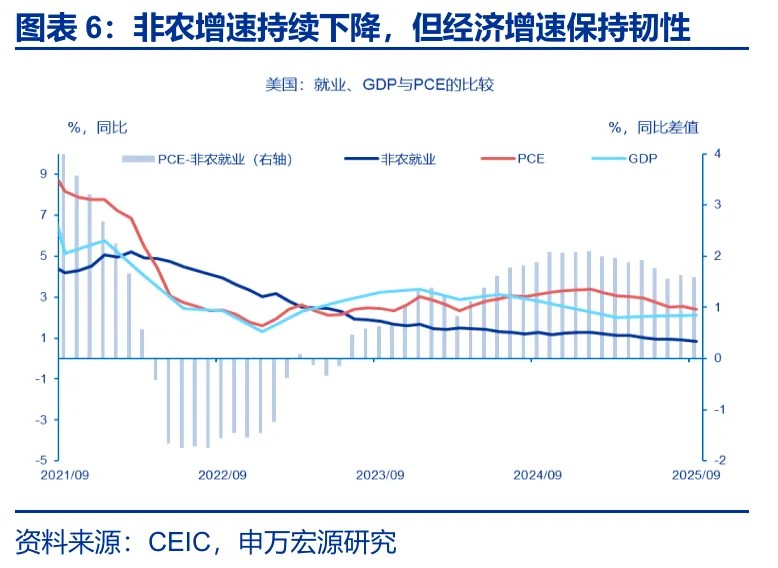
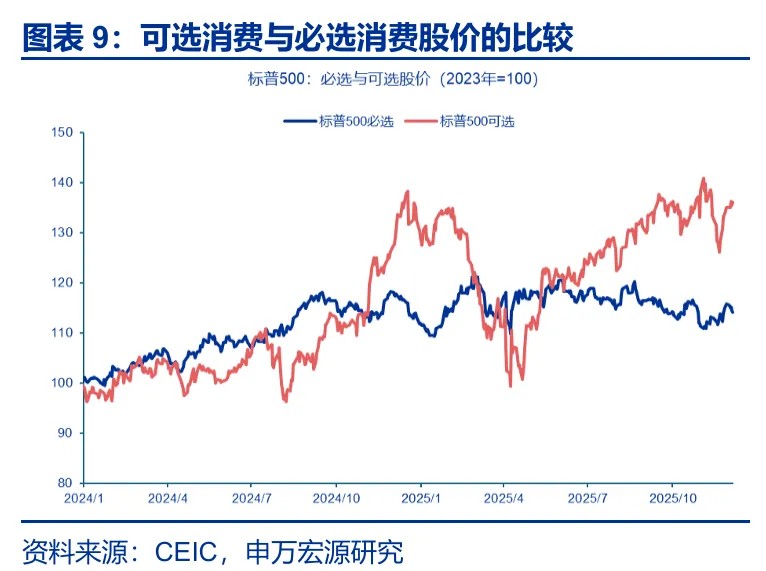
The "K-shaped recovery" is reflected in various aspects such as consumption, employment, wages, and wealth. First, in terms of consumption, the consumption growth rate of high-income groups is significantly higher than that of low-income groups; in terms of the structure of goods or services, high-end consumption is clearly better than mass consumption, such as the increase in market share of discount retailers; in discretionary consumption, the differences between high and low-income groups are even more pronounced. According to Bank of America consumer prism data, in the quarter ending November 1, the year-on-year growth rate difference in spending on air travel and furniture between high and low-income households reached 10.5 and 10.2 percentage points, respectively; in terms of consumer confidence, high-income groups are more confident; in terms of stock prices, the stock prices of discretionary consumption are significantly better than those of essential consumption, with discount retail giant Dollar Tree showing a rebound.

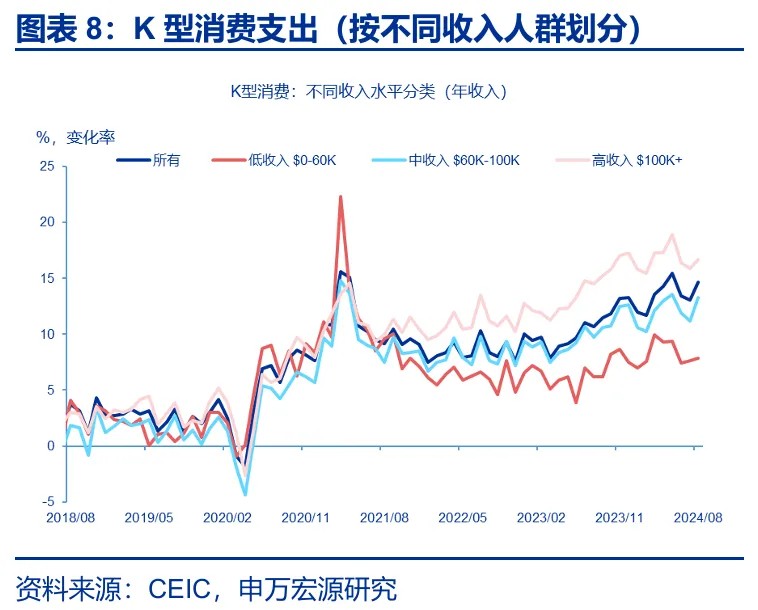
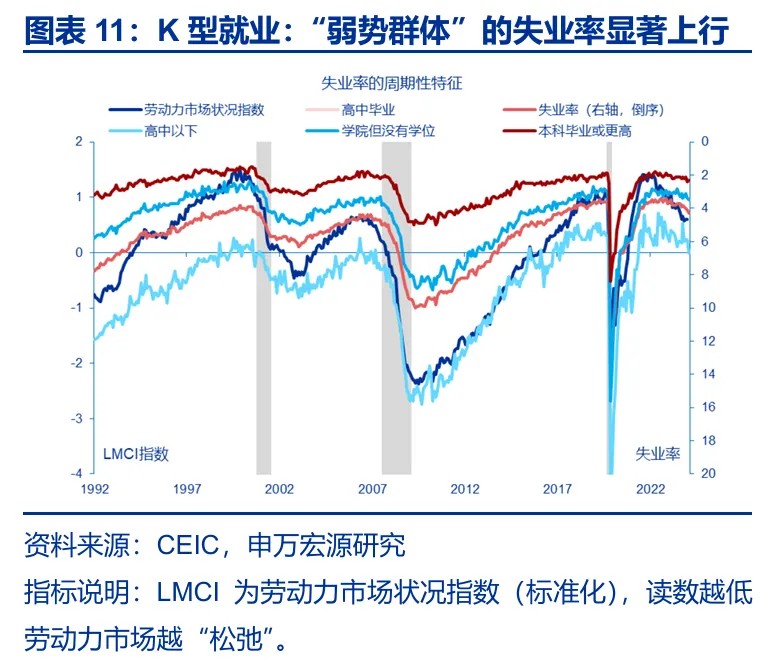
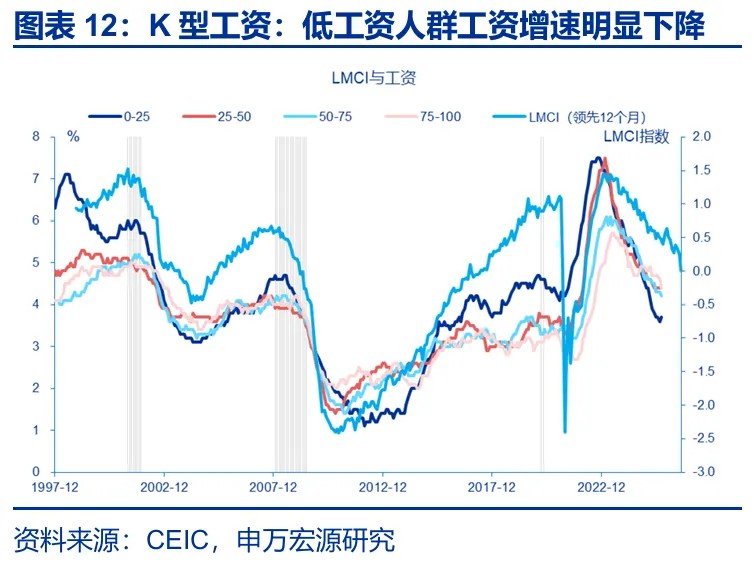
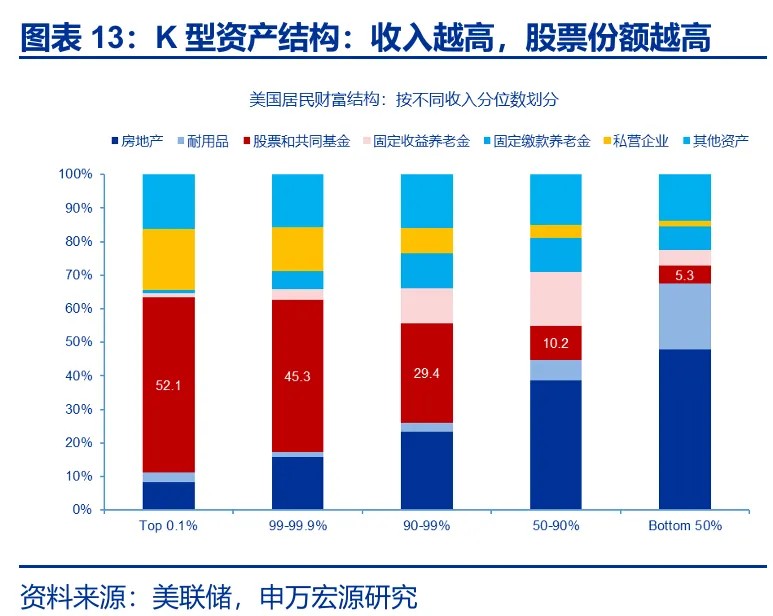
 The direct explanation of K-shaped consumption is K-shaped employment, K-shaped wages, and K-shaped wealth distribution. In terms of employment, relevant employment indicators representing vulnerable groups (such as low education levels, minorities like African Americans, and part-time workers) have shown some marginal deterioration; in terms of wages, the decline in wages for low-income groups is significantly faster; in terms of wealth, a typical fact is that there are significant differences in the proportion of labor income to total income among different income groups—higher income levels correspond to a lower proportion of labor income and a higher proportion of property income. Another typical fact is that the higher the income level, the higher the proportion of stock and other broad asset income.
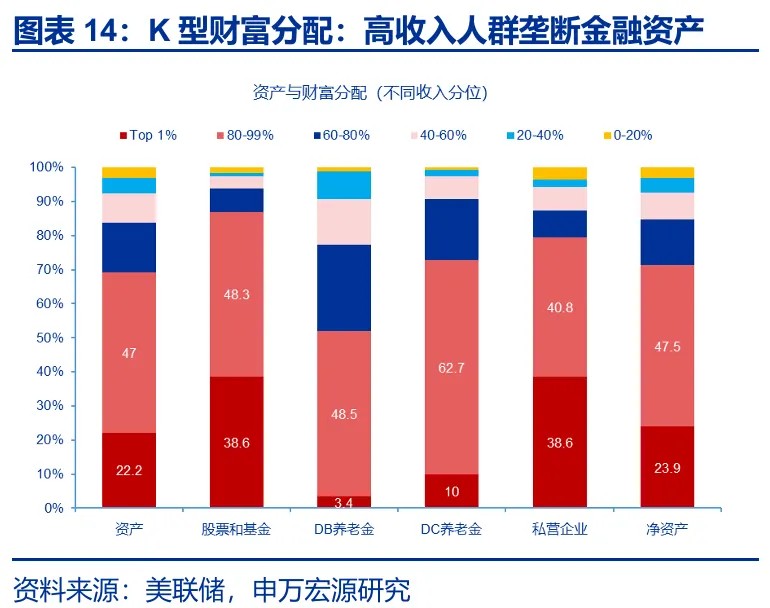
According to the Federal Reserve's 2025 second quarter "Survey of Consumer Finances" (SCF) data, the top 20% of American households hold 71% of the nation's net worth and 87% of corporate equity and mutual fund assets. In contrast, the bottom 20% of households hold only about 3% of net worth or total assets—consumption is highly dependent on wage income or government transfer payments. This means that the wealth effect generated by the U.S. stock market bull market has mostly been captured by high-income groups—naturally translating into strong momentum for their high-elasticity consumption of luxury goods, high-end travel, private aviation, and luxury real estate purchases.
A conclusion that coexists with "no employment growth" and "K-shaped economy" is that the momentum of U.S. economic growth has shifted from labor-driven to capital and technology-driven. Economic growth, corporate profits, and the good performance of U.S. stocks are not in conflict with the shrinking of job opportunities, stagnation of income growth, and decline in financial security. Without fundamental reforms, the "K-shaped gap" may be difficult to close, potentially evolving into social conflicts that threaten social cohesion and long-term growth potential. This is because, empirically, economic inequality can trigger political and social unrest. The frequent changes of the ruling party in the U.S. in recent years and the "swinging" of voters in swing states may be indicative of this.
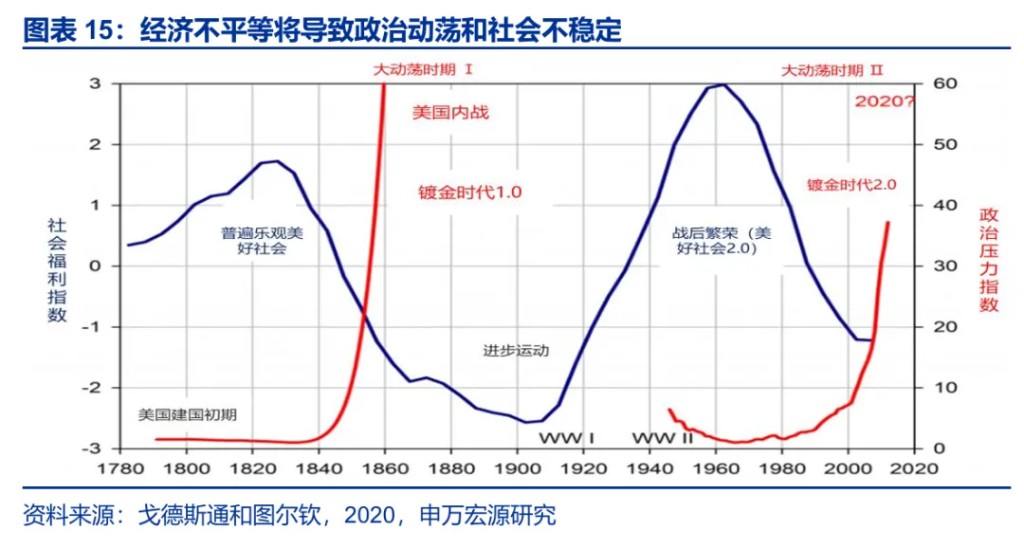 (2) Causes of the "K-shaped Economy": Cycles, Monetary Policy, Trump Shock, and AI Revolution
From the perspective of income distribution, "joblessness" can be considered a reason for the formation of the "K-shaped economy." Since early 2025, "joblessness" itself has been a result of multiple "shocks" including the U.S. economic cycle, Federal Reserve monetary policy, Trump's immigration and tariff policies, and AI. In 2025, the further loosening of the labor market, uncertainty in tariffs, and the "inflation effect," along with the continuation of the structural bull market in U.S. stocks, are all unfavorable to low-income groups in terms of both labor income and property income distribution. However, in reality, since the 1980s, driven by structural factors such as financial liberalization, economic globalization, and technological advancement, "two Americas" have already begun to form.
The loosening of the U.S. labor market is the primary and direct explanation. A typical fact about the operation of the U.S. economy is that the "vulnerable groups," characterized by low wages, are the first to "feel" the "chill" of economic slowdown and the last to "feel" the "warmth" of economic recovery. In other words, during the economic recovery phase, the recovery of employment and wage increases for "vulnerable groups" lags significantly; during the economic slowdown to recession phase, the employment slowdown for "vulnerable groups" occurs earlier, and wage declines are more pronounced. The LMCI has a good explanatory power for the wage growth of the bottom 25% relative to the top 25%, with both nearly peaking and declining simultaneously in early 2022. Since mid-2025, the unemployment rates for minorities such as African Americans and Hispanics have significantly increased, while the unemployment rate for whites remains low.
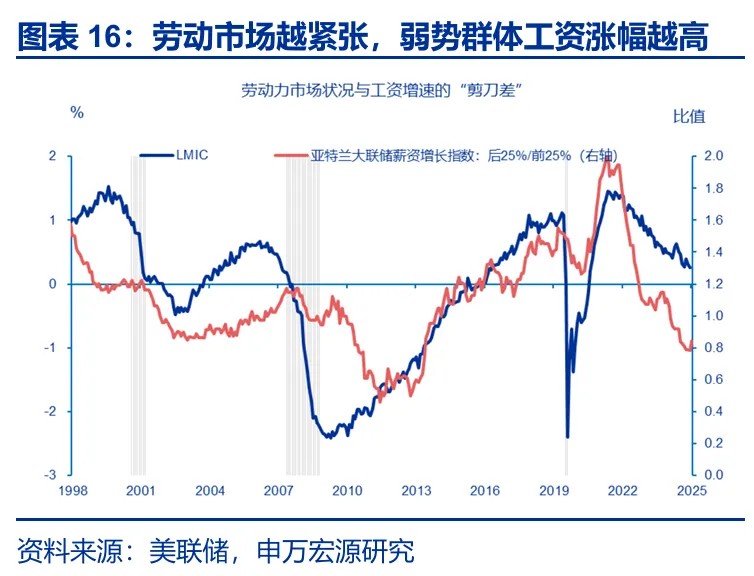
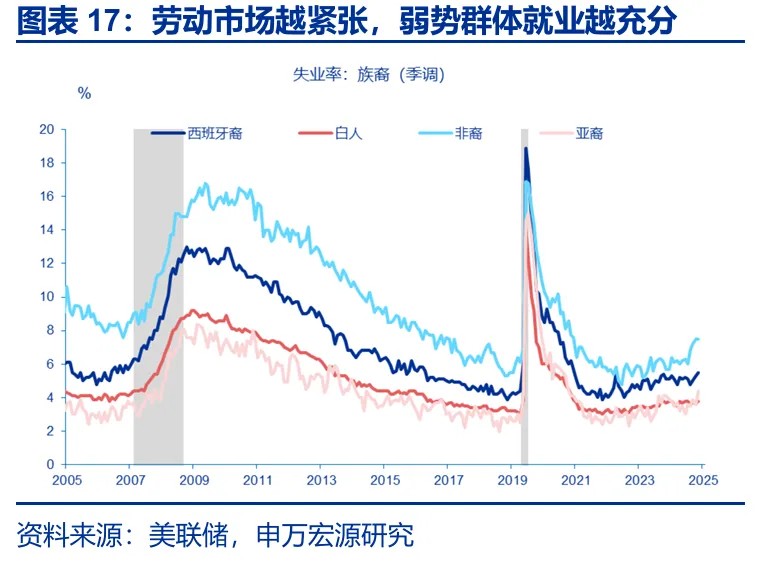
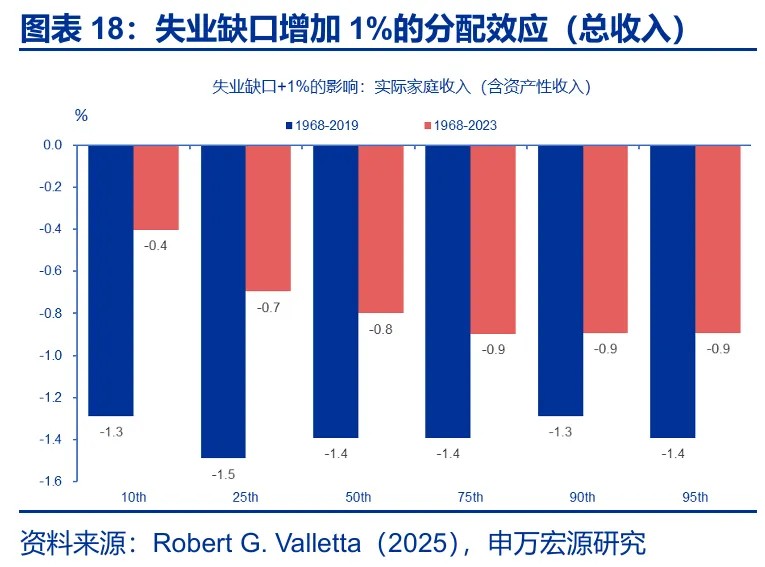
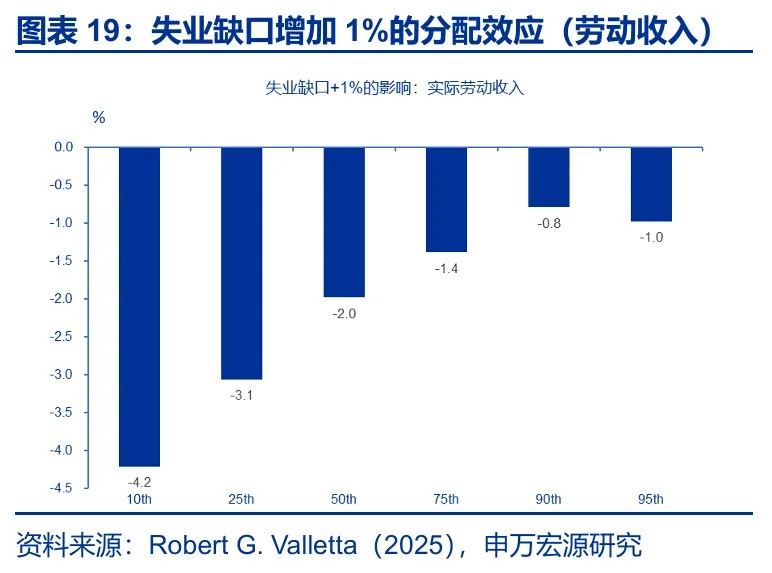
The U.S. economy has entered the "late cycle," and the labor market has shifted from a supply shortage to an oversupply, with the contradiction of insufficient demand becoming increasingly significant. This state is detrimental to "vulnerable groups," and thus to income and wealth distribution. According to the LMCI, the tightest point of U.S. labor supply was in January 2022 (with the LMCI peak at 1.46), after which the LMCI continued to decline, dropping to 0.25% by August 2025. Since February 2025, the LMCI momentum indicator reflecting marginal changes has remained negative Combined with total or structural indicators such as unemployment, layoffs, vacancies, and hiring rates, it indicates that the U.S. labor market has shifted from a tight and balanced phase to a relaxed phase.

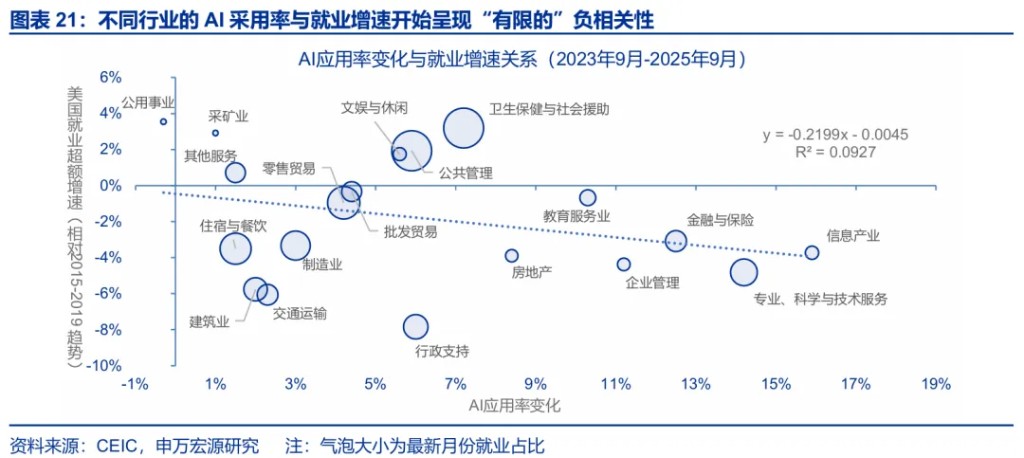
The reasons for this are as follows: On the supply side, the decrease in net immigration may explain about half of the significant decline in new employment in 2025. According to forecasts from the CBO and the San Francisco Federal Reserve, the net inflow of illegal immigrants to the U.S. in 2025 is expected to decrease by 1.6 to 2 million compared to last year, which roughly explains about 50% of the cooling in non-farm payrolls this year. On the demand side, government layoffs, the "cost shock" of tariffs, and the "substitution effect" of AI are the main explanations. In the cooling of non-farm employment in 2025, the impact of the government sector accounts for 37%; the growth rate of tariff-sensitive employment has slowed by two-thirds compared to last year, and the impact continues to expand; the explanation for this year's weakness in non-farm employment related to the "substitution effect" of AI in white-collar industries is only about 7.6%.
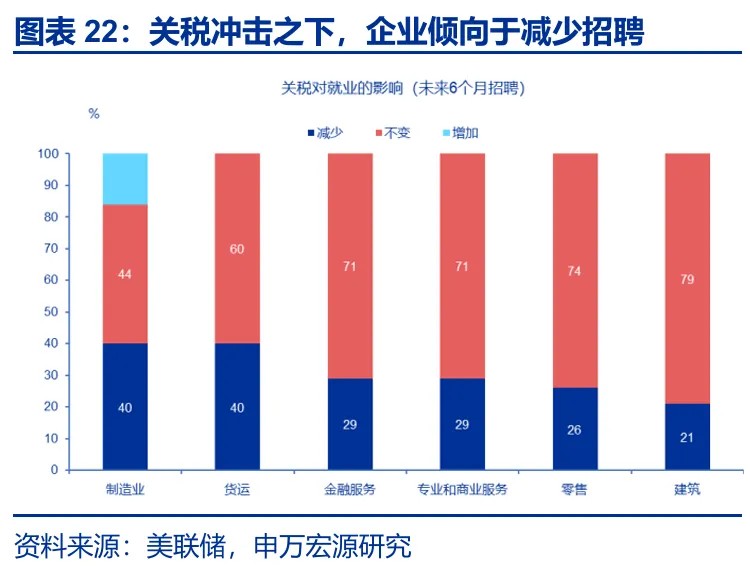
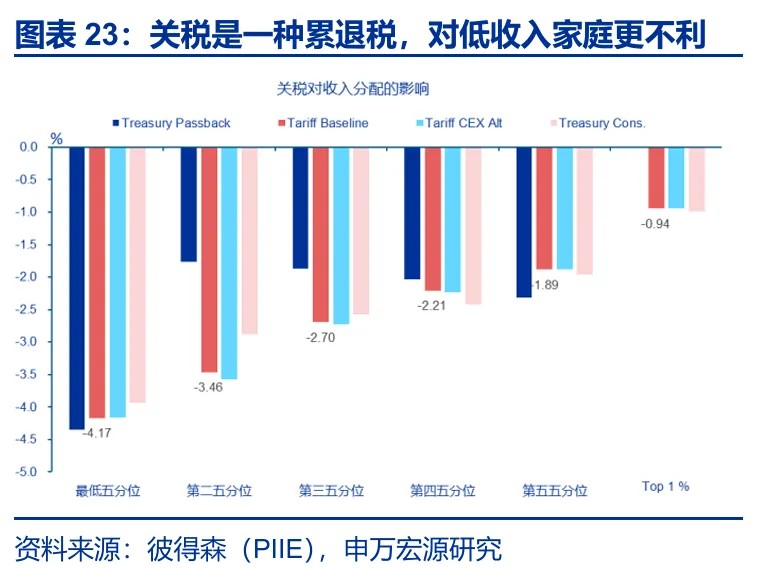
"Reciprocal tariffs" will worsen the income distribution pattern through three channels: (1) Uncertainty of tariff policy - decline in total demand. Trade policy uncertainty suppresses total demand, and low-income groups, being more sensitive to cycles, are the first to be affected in terms of income and employment; (2) Cost shock - corporate layoffs. Tariffs on imported intermediate goods have raised production costs in manufacturing, compressed corporate profits, and triggered structural layoffs. Studies of tariff cases from 2018 to 2019 show that manufacturing, which should have been protected by tariffs, actually experienced layoffs. (3) Tariffs - inflation (a regressive tax) - worsening income distribution. Tariffs on consumer goods directly raise the prices of imported consumer goods and the CPI. Since low-income households spend a higher proportion of their income on necessities such as food, energy, and daily goods, the price increases triggered by tariffs effectively constitute a hidden regressive tax—i.e., the tax burden as a proportion of disposable income systematically increases as income decreases, thereby worsening the Gini coefficient.
The Federal Reserve's interest rate cut cycle, combined with the structural bull market in U.S. stocks driven by AI industry trends, has exacerbated wealth distribution inequality. The distribution of financial assets among American households, especially stocks and mutual funds, is extremely uneven, with the beneficiaries of the recent bull market in U.S. stocks primarily concentrated in the top 20% income group—although the wage income growth rate for this group is also declining, the rate of decline is slower, and more importantly, there is an increase in broad asset income The resonance between the Federal Reserve's interest rate cut cycle and the structural bull market in AI has not led to inclusive wealth growth, but rather systematically concentrated the economic recovery dividends at the top through asset price channels. When aggregate tools cannot bridge class divides, and industrial trends naturally favor capital and technology, the Matthew effect in wealth distribution becomes a natural result.
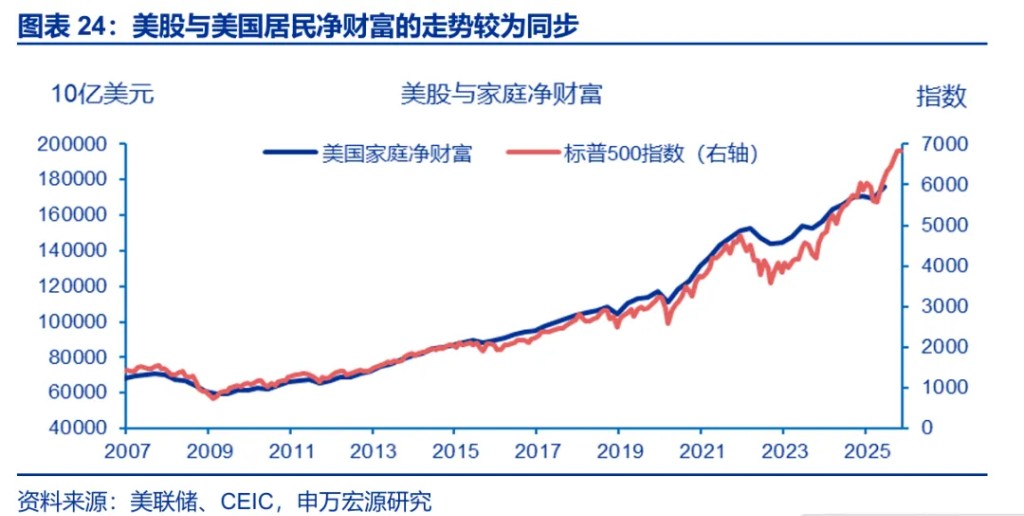
Looking at it over a longer time frame, the divergence in income and wealth distribution in the United States began in the 1980s, and the degree of inequality has continued to intensify over the past half-century. Since the early 1980s, the increase in real labor income in the United States has significantly lagged behind the increase in labor productivity, reflecting the decline of labor and the rise of capital and technology against the backdrop of financial liberalization, economic globalization, and technological waves. The internal differentiation of the labor force has also become increasingly prominent, with high-income groups represented by high education or high skills experiencing significantly higher wage increases. As of 2023, the income share of the top 1% in the United States has risen to 21%, the highest point since the end of World War II, an increase of 10 percentage points compared to 1979; the share of wealth held by the top 1% has risen to 35%, an increase of 12 percentage points compared to 1979 (23%).
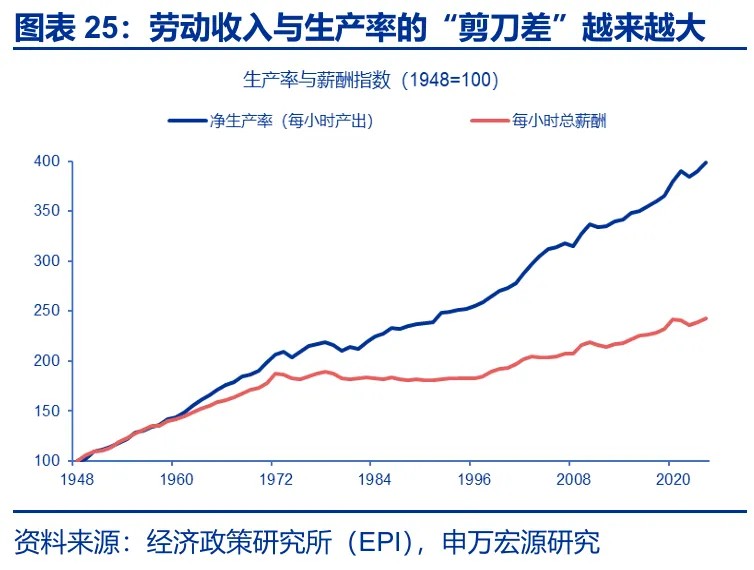
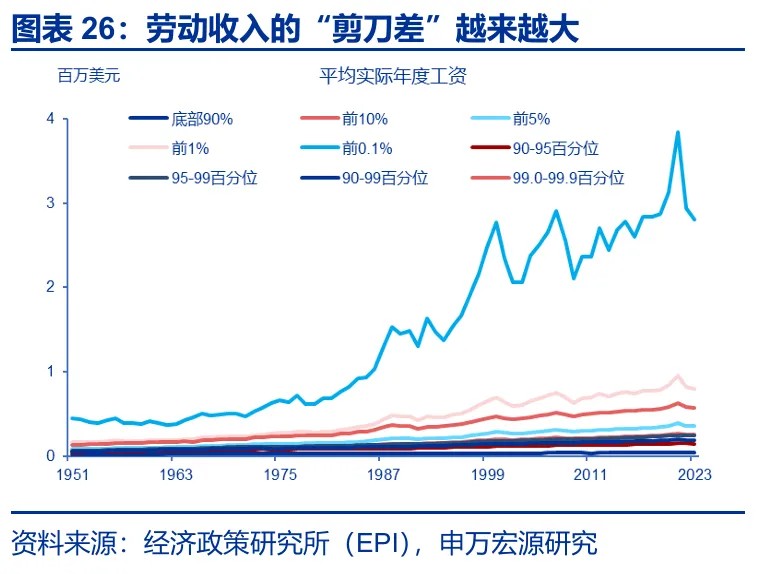
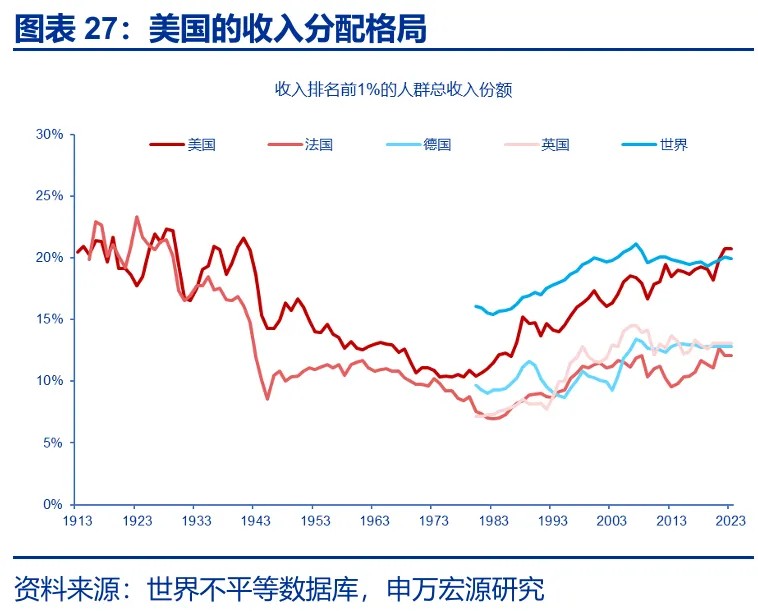
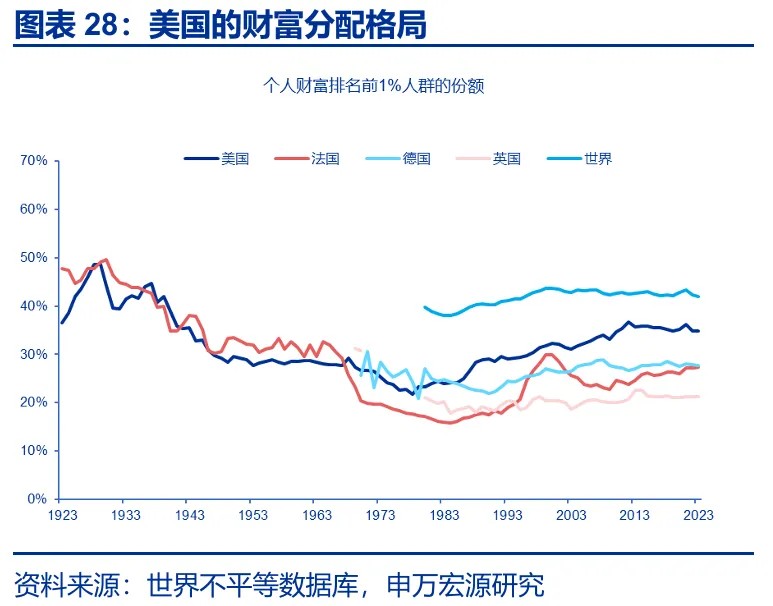
In summary, the "no job growth" and "K-shaped recovery" that have emerged in the U.S. economy since early 2025 are primarily due to the fact that the U.S. economy has already entered the late cycle, compounded by the impacts of Trump's immigration and tariff policies (total demand effects and distribution effects), leading to a "relaxation" of the labor market in a dynamic balance of weak supply and demand. At the same time, AI capital expenditures continue to support the resilience of GDP growth, bringing about a structural bull market in U.S. stocks. Due to the sensitivity of low-income groups to economic cycles and their reliance on labor income, and the insensitivity of high-income groups to cycles and their reliance on broad capital income, "no job growth" and "K-shaped economy" have formed (3) The Unbridgeable "K-Shaped Divide": Inclusive Growth or Wealth Destruction by Recession?
Jobless recovery and "K-shaped recovery" are common economic phenomena in the early stages of economic recovery or at the tail end of expansion. The most typical cases include the post-recession periods of 1990-1991, 2001, and the global financial crisis of 2008. All three cases occurred in the early recovery phase following a recession, characterized by rising (or persistently high) unemployment rates, lasting 15 months, 19 months, and 16 months respectively. Each case has its own background, but the path out of the "K-shaped recovery" is consistently: sustained expansion of total demand - rising labor demand - tightening labor market.
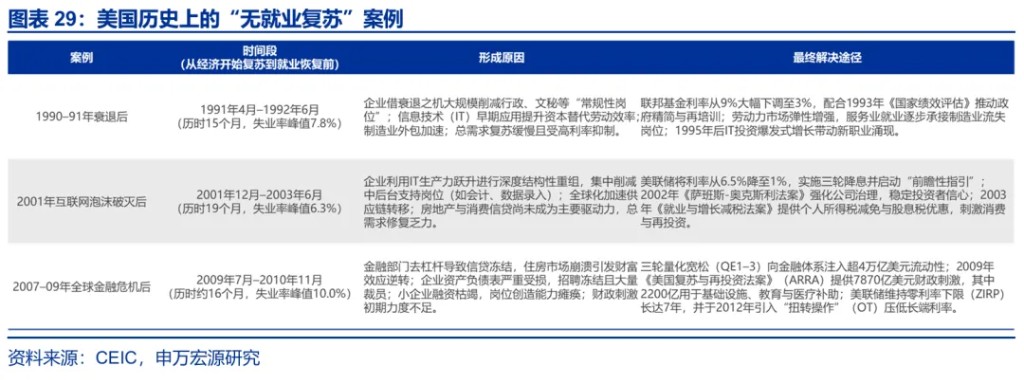
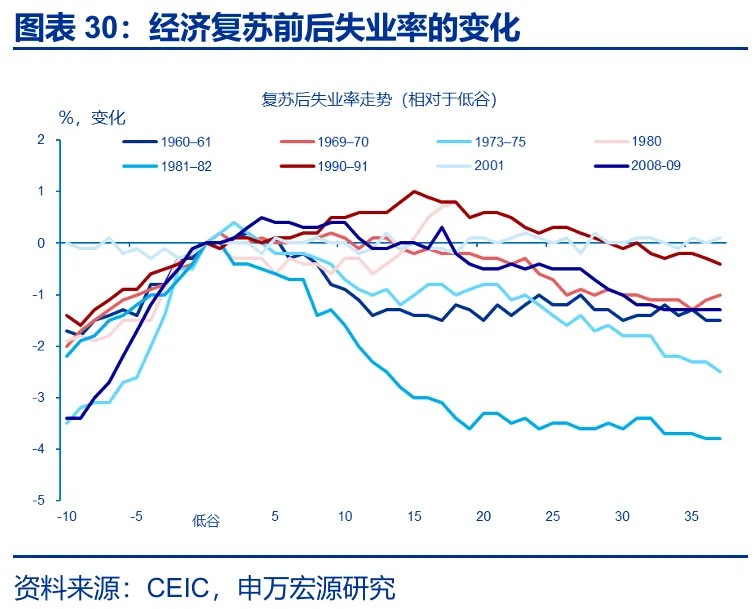
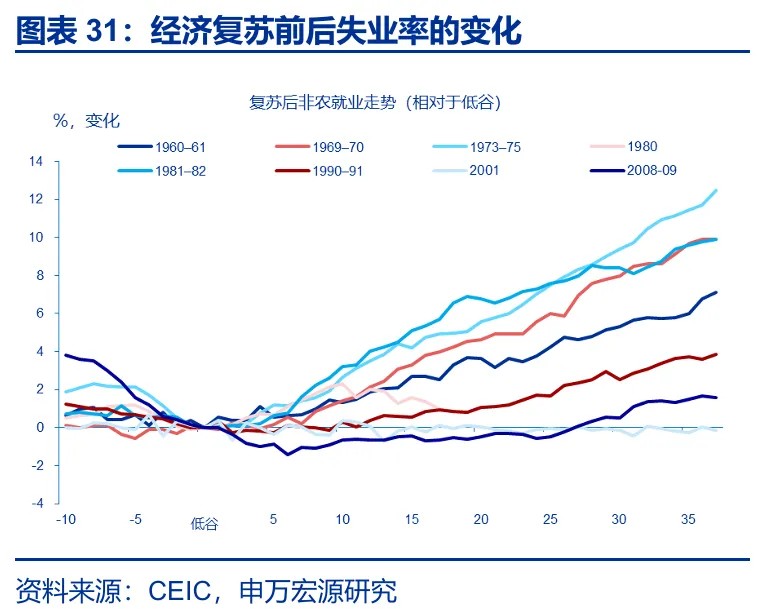
2025 represents a late-cycle, atypical "K-shaped economy" case, mirroring the atypical "full employment recession" of 2021-2023. The public health crisis in 2020 created a labor shortage, and under the support of ultra-loose monetary policy and active fiscal policy, total demand remained strong, leading to a phenomenon of labor hoarding in the corporate sector; since early 2022, with the beginning of the Federal Reserve's interest rate hike cycle, demand in interest-sensitive sectors began to contract, manufacturing remained in a state of "weak recovery," and the service sector's prosperity continued to decline (but remained in a high prosperity range). The labor market completed the process of rebalancing from shortage to equilibrium during this phase; in the third phase, at the beginning of 2025, due to the economy being in a late cycle and the negative impact of the "Trump shock" on labor supply and total economic demand, along with AI capital expenditure and labor substitution, the U.S. economy once again experienced "jobless growth."
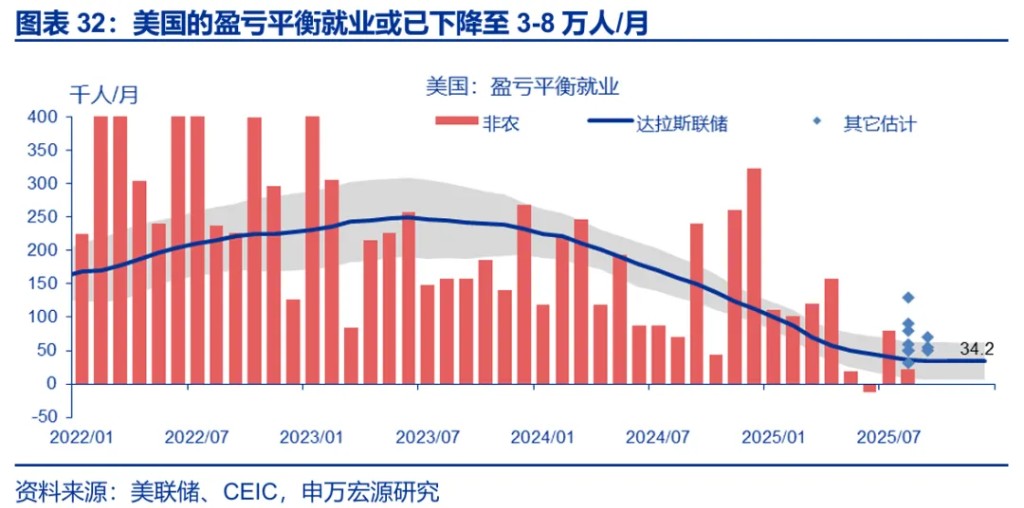
In 2026, can the U.S. escape the "K-shaped economy"? The path is whether "jobless" drags down growth or growth drives employment. The former leads to recession destroying wealth, while the latter is "inclusive" growth. In the report "The Great Reversal and Rebalancing - 2026 Outlook for the U.S. Labor Market," we believe that the U.S. labor market in 2026 may maintain a state of low employment growth and weak supply-demand balance. Due to the ongoing contraction on the supply side, the breakeven employment number in the U.S. has fallen to 30,000-80,000 people/month—while the threshold for maintaining a low unemployment rate is not high, it is not conducive to the U.S. economy returning to a high employment growth state, nor is it favorable for changing the characteristics of the "K-shaped recovery."
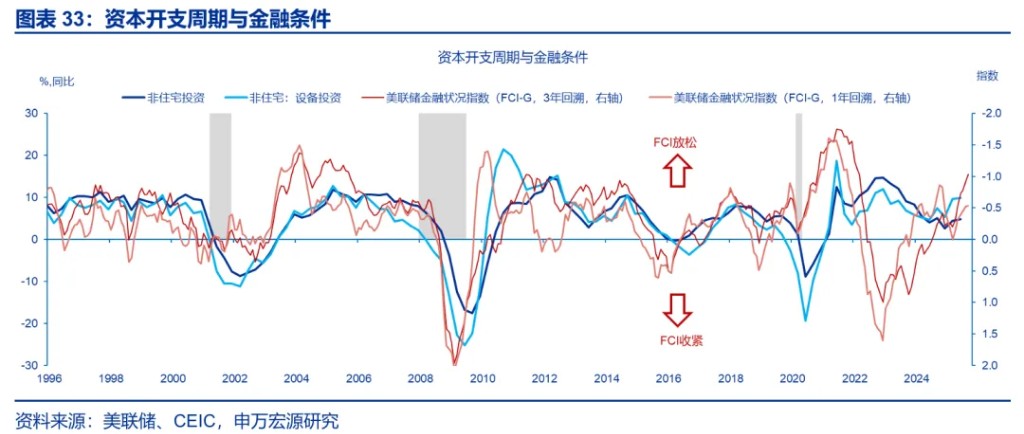
However, AI capital expenditure will continue to support the U.S. economy, and the beneficiaries of the structural bull market driven by AI in the U.S. stock market are still limited to the top 20% of income earners. On one hand, financial conditions remain a tailwind for the continued expansion of the AI capital expenditure cycle in the U.S. Empirically, financial cycles are highly correlated with capital expenditure cycles. From 2021 to 2022, under the influence of expectations and actions of the Federal Reserve's interest rate hikes, U.S. financial conditions tightened rapidly, but supported by fiscal policy, non-residential investment and manufacturing equipment investment showed more resilience. Since 2023, as the Federal Reserve's interest rate hike cycle approaches its end, the market has begun to anticipate interest rate cuts, and financial conditions have turned to easing, becoming a "tailwind" for the continued upward trend of the capital expenditure cycle. In 2026, the Federal Reserve will still be in a rate-cutting cycle, so financial conditions will remain a "tailwind."
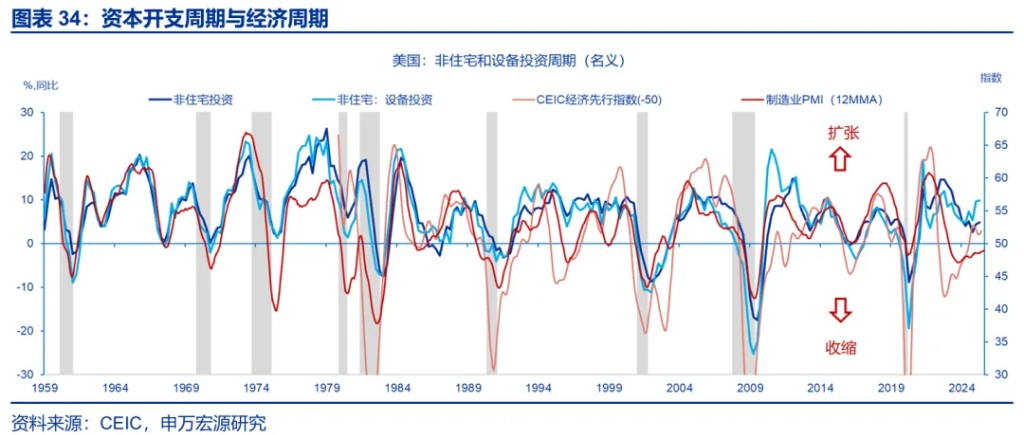
On the other hand, the U.S. economic cycle in 2026 may struggle to become a headwind for AI capital expenditure. Capital expenditure is pro-cyclical. During economic expansion cycles, companies hold optimistic expectations for future earnings, profitability increases, and external financing is readily available, thus they have the willingness and ability to increase capital expenditure. Since early 2025, investment in AI-related equipment has grown rapidly, essentially following the pattern of building factories and purchasing equipment. However, this resilience is still based on the foundation of a "soft landing" for the U.S. economy. Currently, cyclical industries represented by manufacturing are in a slow recovery state, and the cooling of the service industry is also gradual, making it difficult for the economic cycle to constitute a headwind for the AI industry trend in the short term.
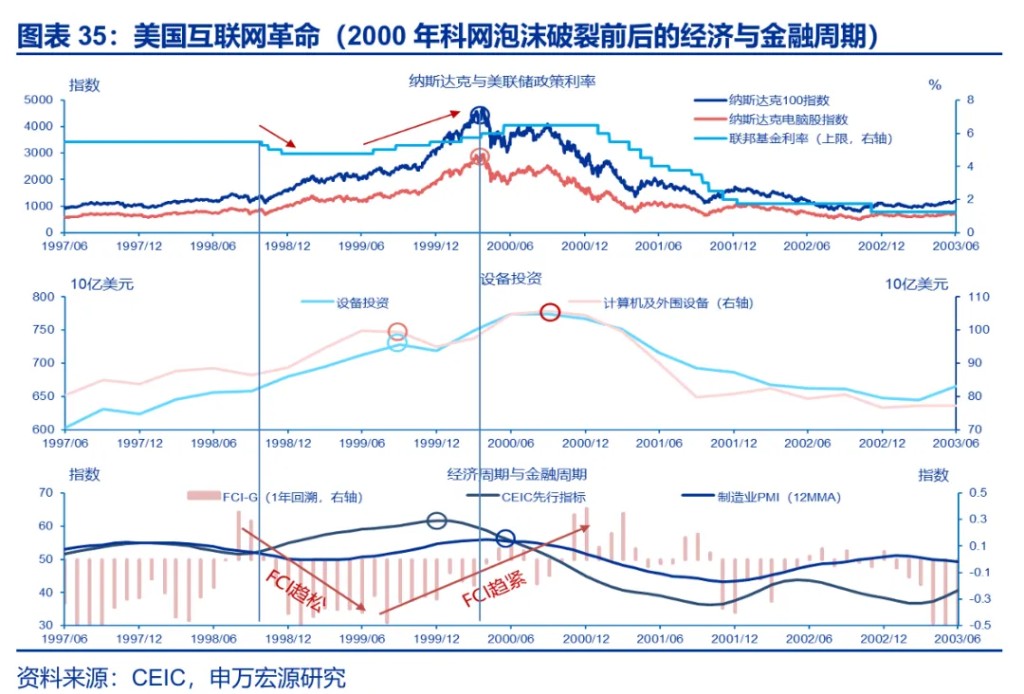
From a macro perspective, taking the U.S. "Internet Revolution" in 2000 as an example, before and after the bubble burst in March 2000, characteristics such as Federal Reserve interest rate hikes, tightening financial conditions, and the peak of economic and capital expenditure expansion cycles emerged. In September 1998, under the impact of the Russian sovereign debt default and the bankruptcy of Long-Term Capital Management (LTCM), the Federal Reserve implemented three "preemptive rate cuts," totaling 75 basis points, which improved U.S. financial conditions and extended the economic and capital expenditure cycles, accelerating the rise of U.S. stocks. After mid-1999, in order to prevent the economy from overheating and the "irrational exuberance" of U.S. stocks, Alan Greenspan led the Federal Reserve to initiate a rate hike cycle, but under the narratives of capital expansion, foreign capital inflows, IPO booms, and the "new economy" of the Clinton era, U.S. stocks accelerated again until the bubble burst in March 2000
In the long term, the "K-shaped" characteristic of the American economy is not just a cyclical phenomenon, but a trend—asset price declines caused by economic recessions can only temporarily and insignificantly adjust income distribution. From a broader historical perspective, the true "four horsemen" that can eliminate inequality are: large-scale mobilization wars, transformative revolutions, state decline, and deadly pandemics. The two World Wars are typical examples. “...A combination of factors such as the material destruction caused by war, confiscatory taxation, government intervention in the economy, inflation, and the disruption of global goods and capital flows eliminated elite wealth and redistributed resources. They also served as a unique and powerful catalyst for changes in egalitarian policies, providing strong momentum for franchise expansion, unionization, and the expansion of the welfare state.” Other examples include the October Revolution in the former Soviet Union, the decline of the Roman Empire, and the Black Death, all of which achieved a "great compression."
In terms of transformative revolutions, typical cases include the Russian Bolshevik Revolution and the French Revolution. The former abolished private ownership through the promulgation of the Land Decree and industrial nationalization, confiscating the wealth of landlords and the bourgeoisie and redistributing it, leading to a sharp decline in inequality. The latter, represented by the Paris Commune movement, violently impacted the property rights of feudal nobles and the church, fundamentally reshaping the social structure. Scheidel points out in "The Great Leveler" that such revolutions forcibly changed existing property relations and power structures through violent upheaval, thereby achieving forced redistribution of wealth. This confirms his core argument: historically, the forces that significantly correct inequality are often such destructive "corrective forces," rather than mild social policies.
Zhao Wei's macro exploration
Risk warning and disclaimer
The market has risks, and investment requires caution. This article does not constitute personal investment advice and does not take into account the specific investment goals, financial situation, or needs of individual users. Users should consider whether any opinions, views, or conclusions in this article are suitable for their specific circumstances. Investment based on this is at their own risk
