


CICC: Who is "wrong" between Hengke and the Renminbi?

CICC analyzes the recent phenomenon of the strengthening of the RMB and the divergence from the stock market correction. The RMB has appreciated against the US dollar, but the Hong Kong stock market has seen significant declines. Historically, exchange rates and stock markets are usually positively correlated, but the recent divergence may be due to different driving factors. China's trade surplus has reached a record high, and there are strong expectations for RMB appreciation, which may bring new momentum for asset revaluation
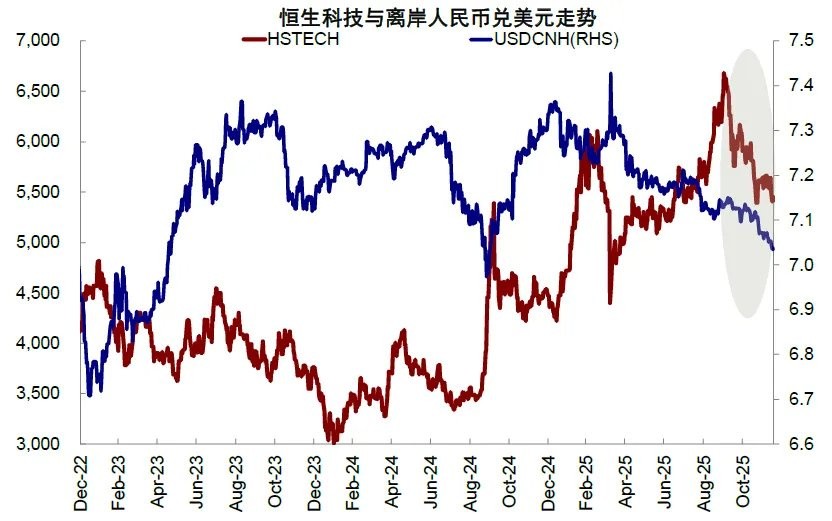
Recently, an interesting yet surprising phenomenon has emerged: on one hand, the renminbi continues to strengthen and reach new highs, with the offshore renminbi appreciating by 1.3% against the US dollar since early October, just "a step away" from the integer level of 7; on the other hand, the stock market has been in continuous decline, especially in the Hong Kong stock market, which should be more sensitive to exchange rates and capital flows, experiencing even larger declines, with the Hang Seng Index dropping 15% from its early October peak.
Historically, there has been a strong positive correlation between exchange rate movements and the A-share and H-share markets, as a stronger exchange rate often indicates foreign capital inflows and an improving Chinese economic outlook. Not to mention, the Hong Kong stock market also benefits from the additional enhancement of renminbi appreciation when converted to Hong Kong dollar-denominated EPS.
Chart: Recently, the stable negative correlation between the Hong Kong stock market and the renminbi to US dollar exchange rate has been broken.
Source: Bloomberg, Wind, CICC Research Department
However, this recent pattern has been "broken," with a stronger exchange rate coinciding with a declining stock market. How should we understand this divergence? Is it the exchange rate that is wrong, or the stock market? It is important to note that in the first 11 months, China's surplus reached a historic record of USD 1.08 trillion, and with the imminent nomination of a new Federal Reserve chairman, the market's expectations for renminbi appreciation driven by a weak dollar and strong demand for surplus settlement have become increasingly strong. If this conclusion holds and the traditional logic of the exchange rate and stock market still applies, it would mean that the revaluation of Chinese assets is about to receive new momentum and stages.
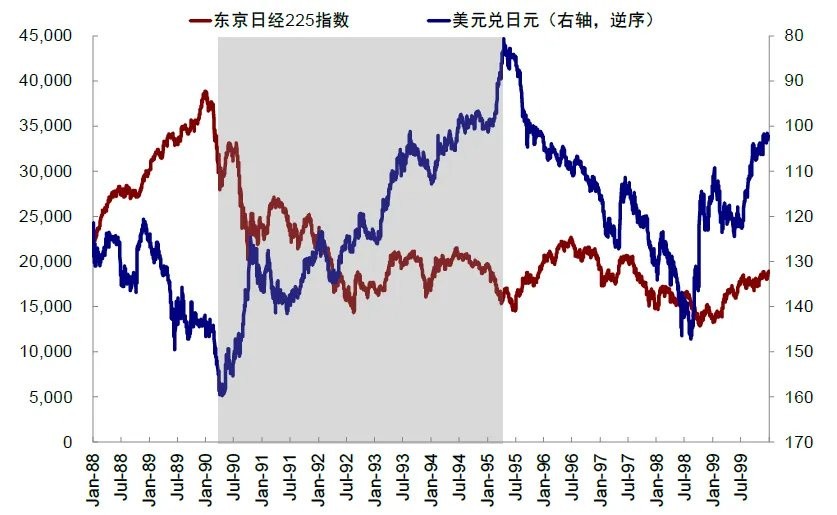
However, upon further reflection, it is not difficult to see that this logical chain is still worth scrutinizing. Just like the recent divergence, a simple explanation is that the driving factors for the two are completely different, hence the divergence is not contradictory. Japan also experienced a divergence where the exchange rate appreciated for as long as five years (1990-1995) while the stock market did not rise.
Chart: From 1990 to 1995, Japan also experienced a sustained appreciation of the exchange rate while the stock market did not rise, showing a "divergence."
Source: FactSet, Wind, Bloomberg, CICC Research Department
Historical Relationship Between Exchange Rates and Markets: Same Direction is the Mainstream; Strong Exchange Rate with Weak Stock Market Occurred Only Twice, Convergence Direction Depends on Fundamentals
From the historical relationship between the renminbi exchange rate and the Chinese market, the two have mostly moved in the same direction. The divergence, especially the recent combination of a stronger renminbi and a weaker stock market, is particularly rare in history. The fundamental reason lies in the fact that growth and capital inflows are important pricing factors for both the exchange rate and the stock market, resulting in a strong correlation between the two.
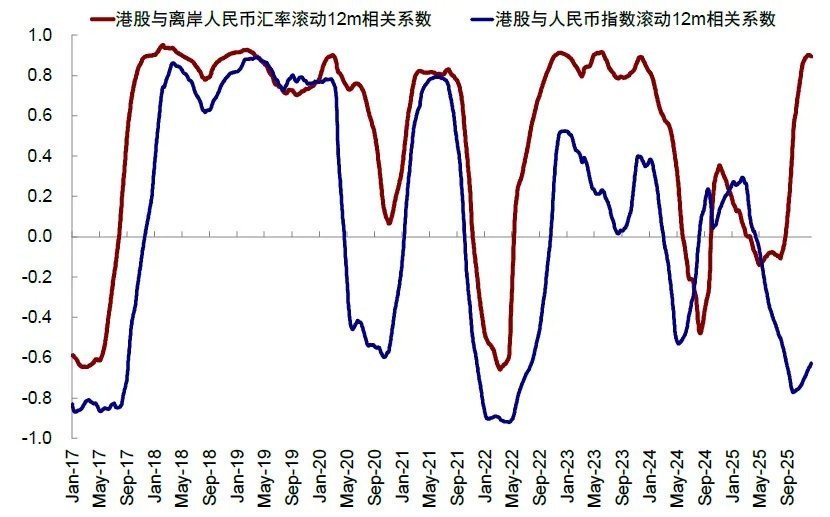
In analyzing the relationship between the exchange rate and the market, we choose the renminbi against the US dollar rather than against a basket of currencies, mainly considering that the relationship between the stock market and the renminbi against the US dollar is statistically stable, while the relationship with the renminbi index is unstable. The deeper reason is that the US dollar holds a high position in global trade and capital flows, and the renminbi to US dollar exchange rate embodies both "trade exchange rate" and "financial exchange rate" attributes The RMB exchange rate index is calculated based on the bilateral trade volume between China and various economies, giving it a stronger "trade exchange rate" attribute. Therefore, the relationship between the RMB against the US dollar and the stock market is more significant and stable, which is particularly evident in the Hong Kong stock market.
Chart: The Hong Kong stock market has a significant negative correlation with offshore RMB, while the correlation with the RMB index is not significant.
Source: Bloomberg, Wind, CICC Research Department
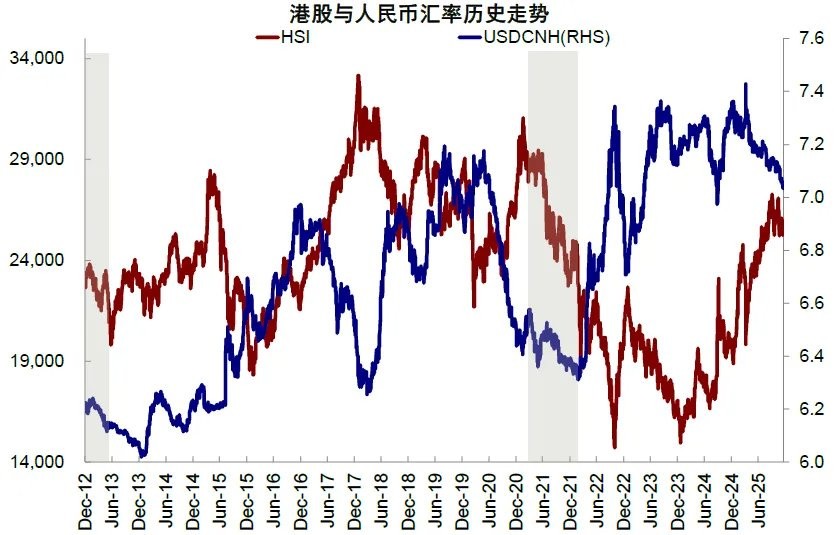
Historically, the divergence of a stronger RMB and a weaker stock market has only occurred twice: once from March to June 2013, and the other from July 2021 to October 2022. In the end, the former saw the stock market converge towards the exchange rate, while the latter saw the exchange rate converge towards the stock market. Although the directions of convergence appear different, both are related to whether policy measures were implemented; the former had policy support, while the latter lacked fundamental backing.
Chart: Historically, in the first half of 2013 and the second half of 2021, there was a significant divergence between the Hong Kong stock market and the RMB trend.
Source: Bloomberg, Wind, CICC Research Department
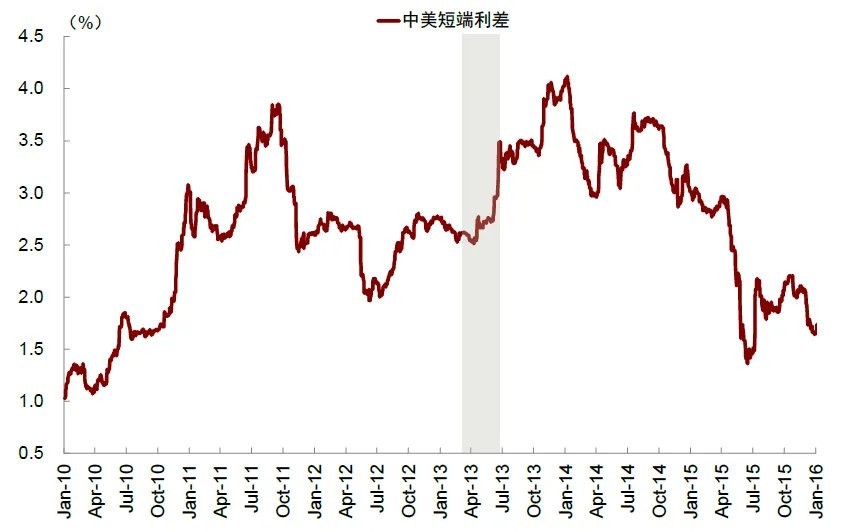
► From March to June 2013, the interest rate spread between the RMB and the US dollar widened, leading to a strong RMB but a weak stock market. Subsequently, thanks to the implementation of counter-cyclical policies, the stock market converged towards the exchange rate. After the first quarter of 2013, China's economy faced increasingly prominent issues of slowing growth and structural "unevenness": on one hand, indicators representing production and consumption, such as PPI, PMI, and marginal retail sales, were declining; on the other hand, there were overheating risks in real estate and local financing platforms. The policy authorities had a weak willingness to cut interest rates and preferred to achieve "structural adjustment and stable growth" through a combination of tightening financial conditions and structural policies. During this period, the stock market weakened due to downward pressure from fundamentals and financial conditions; the RMB exchange rate benefited from tight liquidity and even a "money shortage," leading to a significant widening of the interest rate spread between domestic and foreign currencies, resulting in a temporary divergence between the stock market and the exchange rate. In the second half of the year, structural policies aimed at stabilizing growth in areas such as infrastructure, shantytown renovation, and the information industry were implemented, coupled with an improvement in external demand, leading to a stabilization and rebound in the stock market, while the exchange rate continued its appreciation trend. The divergence ended with the stock market converging towards the exchange rate, with the core reason being not the previous divergence, but the implementation of counter-cyclical policies.
Chart: In the second quarter of 2013, China's financial conditions tightened, and the interest rate spread between China and the US widened.
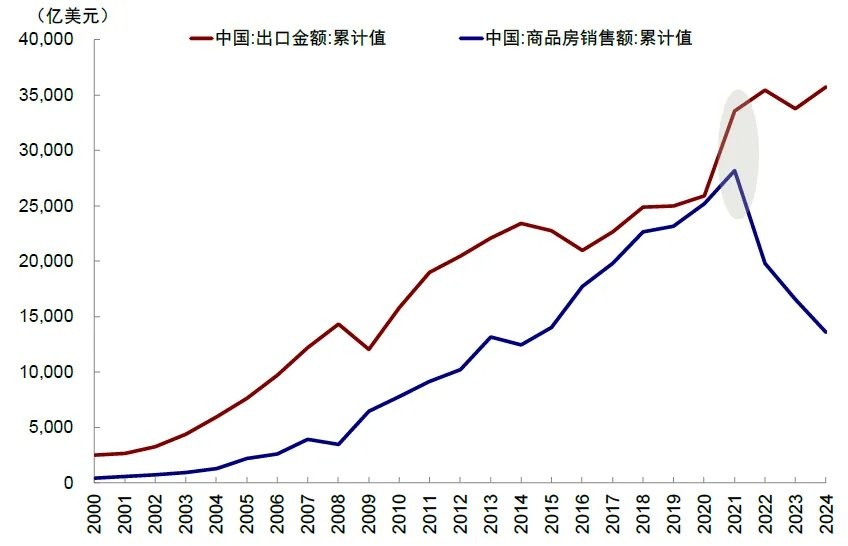
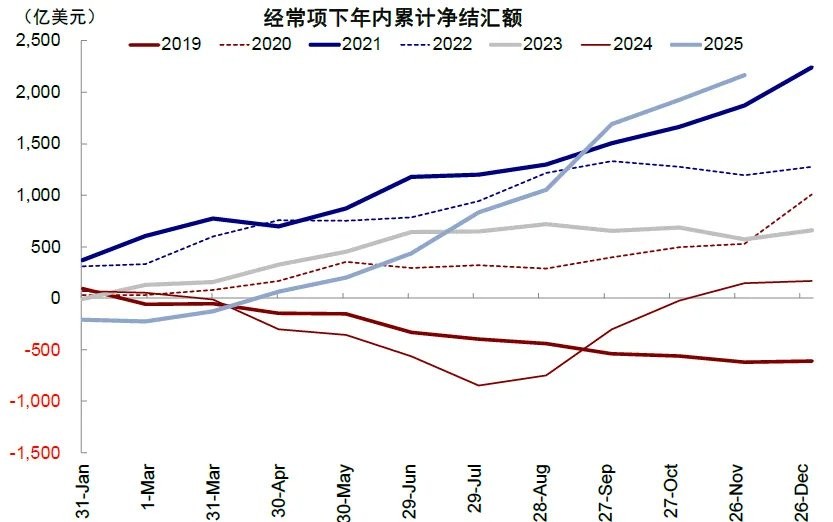
Source: Haver, CICC Research Department ► From July 2021 to February 2022, strong exports led to a significant demand for currency settlement, while domestic demand slowed, resulting in a divergence between the stock market and the exchange rate, similar to the current situation. Ultimately, exports cooled down, the economy clearly declined, and the exchange rate converged towards the weaker stock market. Entering the second half of 2021, China's economic momentum marginally slowed, especially as domestic demand significantly declined due to tightening policies in the real estate, internet, and education training sectors, while exports maintained a high growth rate of around 30%. At that time, in the mainstream AH broad-based indices, non-trade sectors such as the internet and consumption accounted for a large proportion, leading to a sluggish stock market, with the CSI 300 and Hang Seng Index falling by 12% and 21% respectively during this period. Meanwhile, the strong exports created a large demand for currency settlement, pushing the RMB to appreciate by 2.4%. Subsequently, the Federal Reserve began raising interest rates, Chinese exports cooled down, and downward pressure on the economy further increased, causing the exchange rate to converge towards the weaker stock market.
Chart: After 2021, a significant gap appeared between China's commodity housing sales and export trends
Source: Wind, CICC Research Department
Chart: The strong export growth in 2021 brought a large demand for currency settlement
Source: Wind, CICC Research Department
In summary, the divergence of a strong exchange rate and weak stock market is historically rare. The core contradiction lies not in the divergence of stock and exchange rates concerning growth, but rather in the asymmetric impact of factors such as interest rates and exports on the stock market and exchange rate. Over a longer period, it is difficult for factors like interest rates and exports to detach from the trajectory of growth, and the divergence of stock and exchange rates will converge due to these driving factors returning to a co-movement.
What are the recent reasons for a strong exchange rate and weak stock market? The exchange rate is resonating with the weakening of the dollar and record surpluses, while the stock market reflects a weakening fundamental.
First, looking at the exchange rate, it is important to clarify that since October, the RMB has primarily strengthened against the dollar, appreciating by more than 1.3%, while the trade-weighted exchange rate against a basket of currencies has only moderately appreciated by 0.6%. So, what is the reason for the RMB's strength against the dollar?
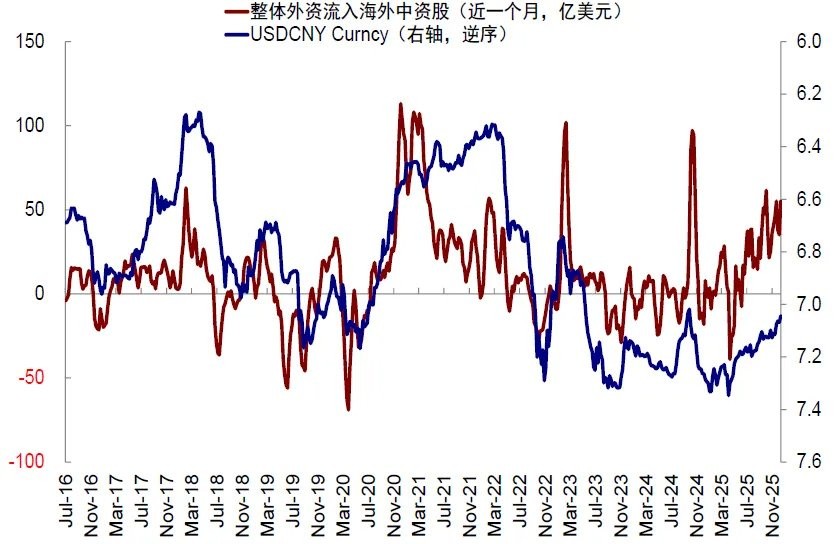
► Is it due to foreign capital inflow? Most likely not. On one hand, the stock market is weak, with the CSI 300 and Hang Seng Index falling by 1.6% and 4.3% respectively; on the other hand, the foreign capital inflow as per EPFR statistics has been relatively volatile recently, and active foreign capital has continued to flow out, which seems to have a weak correlation with the RMB's smooth upward movement. So, could foreign capital be flowing into the bond market? Since October, interest rates have risen, and the outstanding amount of Bond Connect has decreased by more than 50 billion yuan, making it difficult to be a major reason. Additionally, the Bank of Japan's interest rate hike may cause marginal disturbances to overseas liquidity. Therefore, it can be largely ruled out that foreign capital inflow is the main driver.
Chart: Recent foreign capital inflow has been relatively volatile, with weak correlation to the smooth strengthening of the RMB
Data source: Bloomberg, Wind, CICC Research Department
Chart: This year, foreign capital inflow into Hong Kong stocks shows a "dual differentiation," with a significant convergence in the underweight ratio of funds in the Asia-Pacific region excluding Japan.
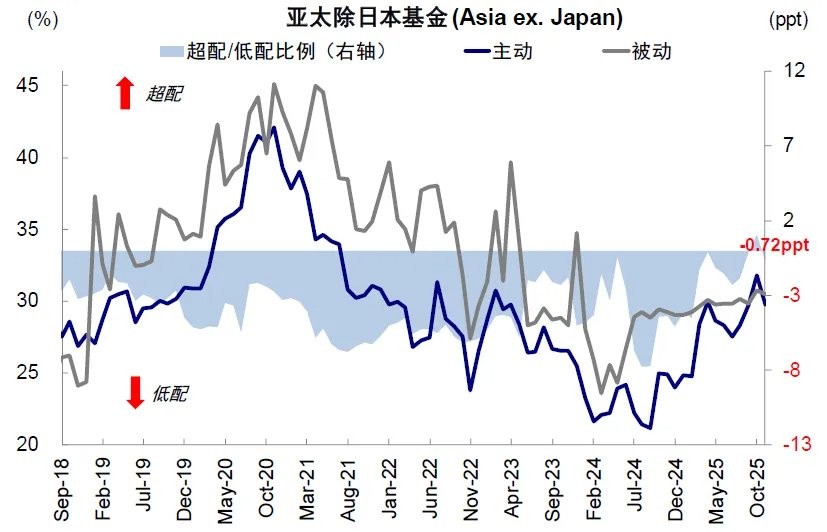
Data source: EPFR, CICC Research Department
Chart: However, for foreign capital mainly directed towards global markets excluding the U.S., the underweight extent in Chinese assets is even increasing.
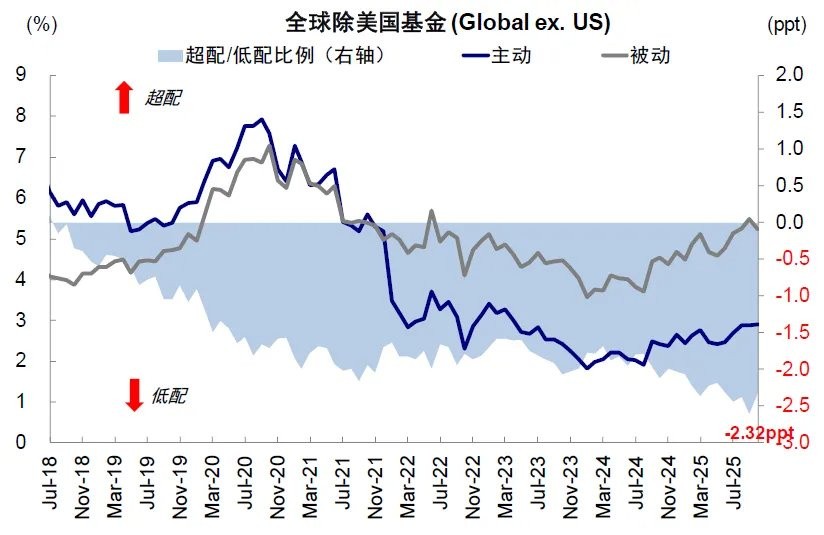
Data source: EPFR, CICC Research Department
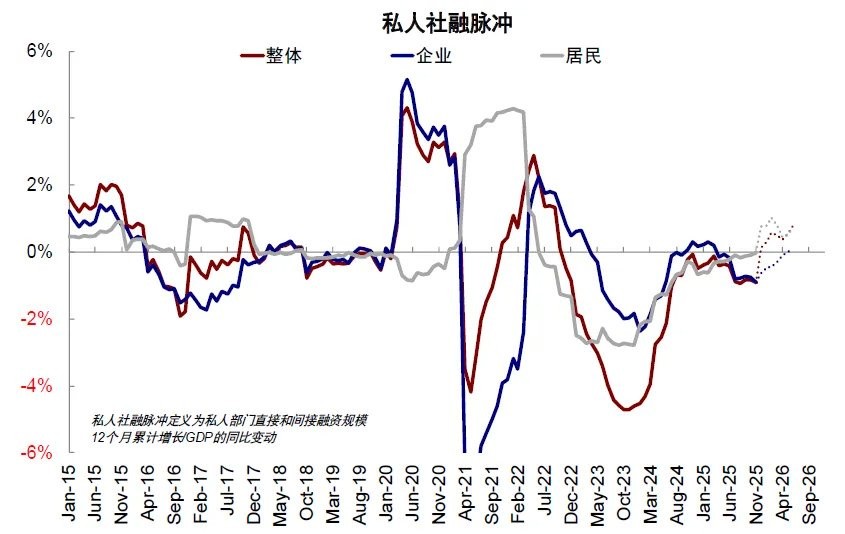
► Is it due to fundamental improvement? It shouldn't be. Recently, domestic demand has continued to weaken, with PMI remaining below the boom-bust line, fixed asset investment experiencing three months of negative growth, and retail sales declining from 4.6% in August to 4.0% in November. The cold economic backdrop is due to weak credit demand: since September, the broad social financing pulse has turned negative, fiscal pulse has receded, and the endogenous credit demand from the private sector has remained sluggish. Moreover, the Central Economic Work Conference in 2025 released a relatively mild signal for overall stimulus, making it difficult to reverse the weak credit situation in the short term. With leading indicators not showing a reversal, it may be challenging for the market to form expectations of RMB appreciation driven by fundamentals.
► Is it policy guidance? No. In terms of operations, the central bank's intervention in the foreign exchange market may be weakening: during the first half of the year, when there was significant depreciation pressure, the onshore RMB swap was significantly more discounted compared to the offshore RMB swap, meaning the difference was negative, indicating that foreign capital investing in Chinese assets for onshore exchange rate hedging had higher returns than offshore. After September, the discount of onshore swaps has become smaller than offshore, which may indicate a reduction in the intervention strength of policy authorities. Additionally, logically, in an environment where domestic demand remains weak, significant appreciation may harm China's export competitiveness and hinder the economy from emerging from a low inflation environment. Furthermore, from the central bank's statements, as the RMB continues to strengthen, the third-quarter monetary policy implementation report has softened the wording on "preventing excessive exchange rate adjustment risks" by removing the term "resolutely." Moreover, the second-quarter report's suggestion to "enhance the resilience of the foreign exchange market" has been replaced with "maintain exchange rate flexibility."
Chart: The difference in discount between onshore and offshore RMB swaps has turned from negative to positive, which may indicate a reduction in the intervention strength on the onshore exchange rate.
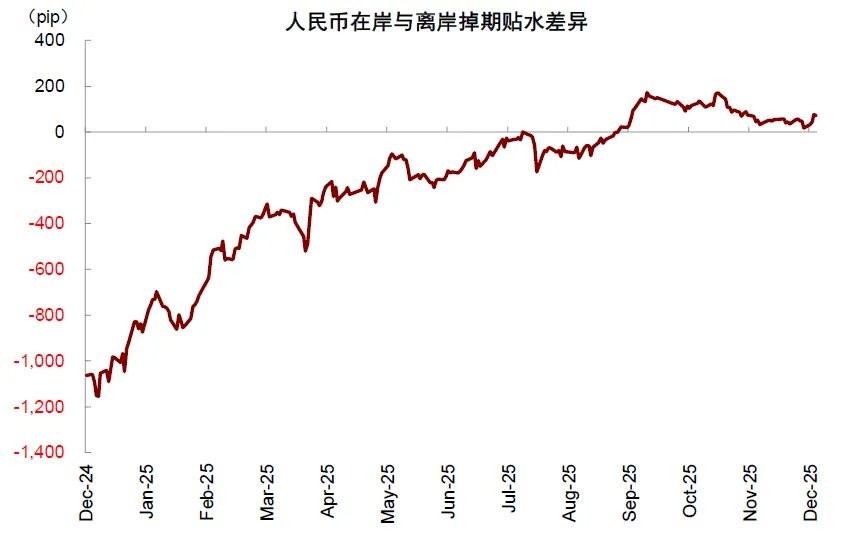 Source: Bloomberg, China International Capital Corporation Research Department
► Excluding the above factors, the recent trend may mainly be driven by the weakening of the US dollar and the industrial capital settlement brought about by export resilience. On one hand, there is a possibility of passive appreciation of the Renminbi: the Federal Reserve restarted interest rate cuts in September and the easing transactions brought about by the change of the Federal Reserve Chairman have put pressure on the US dollar index, while the appreciation of the Renminbi against a basket of currencies is significantly weaker than that of the US dollar, thus there is a possibility of passive appreciation of the Renminbi against the US dollar. On the other hand, since the beginning of this year, driven by industrial transformation and upgrading, the expansion and deepening of the foreign trade market, and the overseas capital expenditure cycle brought about by the reconstruction of the industrial chain, China's export resilience has been strong. At the same time, the year-on-year Producer Price Index (PPI) has not yet turned positive, further increasing the price advantage; however, imports have continued to decline due to weak domestic demand and factors such as domestic substitution, leading to a historical high trade surplus of USD 1,075.8 billion in the first 11 months. Meanwhile, the weakening of the US dollar has enhanced the willingness to settle the huge surplus under the current account, and the end of the year is also a seasonal peak for settlement, so the net settlement of USD 47 billion at the historical high of the current account in October-November 2025 is not surprising, which may have recently strengthened the appreciation trend.
In contrast, since October, the A-shares and Hong Kong stocks have corrected by 1.6% and 4.3% respectively, with domestic demand accelerating its decline, insufficient expectations for policy increments, and lingering concerns about the bubble in the technology sector, accompanied by the impact of significant events such as the conclusion of important meetings and liquidity disturbances from new public fund benchmark regulations, which have temporarily amplified the negative factors. However, the core still lies in the fundamentals and the downward turning point of the credit cycle. "How to make choices among the US, A-shares, and Hong Kong?"
In summary, we believe that, similar to the second half of 2021, the recent divergence between stocks and exchange rates does not stem from differences in growth: 1) The strength of the Renminbi may more likely originate from the settlement of record surpluses, and the recent weakening of the US dollar under easing transactions has further boosted settlement demand, thereby reinforcing the appreciation trend of the Renminbi; 2) In contrast, the stock market reflects the downward pressure faced by the overall economy after the credit cycle has weakened.
How will it unfold in the future? Short-term exchange rate tailwinds still exist, but a strong currency does not necessarily lead to a strong stock market
From the above analysis, it is not difficult to see that the recent divergence between stocks and exchange rates is precisely due to different driving factors, thus it is not contradictory.
However, ultimately, whether one converges to the other or whether convergence is possible depends on: 1) How long the short-term factors causing the divergence will last; for example, Japan experienced a divergence of currency appreciation and stock market decline for as long as 5 years; 2) The direction in which the fundamental factors determining the joint movement of the two are heading, and whether they can return to a common path.
► How long the divergence will last depends on how long the factors causing the divergence can persist. In the short term, the tailwinds for the exchange rate may still exist: overseas temporary "easing transactions" and the more dovish statements from the new Federal Reserve Chairman have led to the need to re-evaluate the expected compensation for the US dollar and long-term US Treasury bonds (the current market expects only two rate cuts in 2026, but whether it is Hasset or Waller, the tendency for rate cuts is likely to be more than this), as well as seasonal factors such as settlement, which may continue to provide "tailwinds" for the exchange rate Chart: Current market expectations for the Fed to cut interest rates twice next year
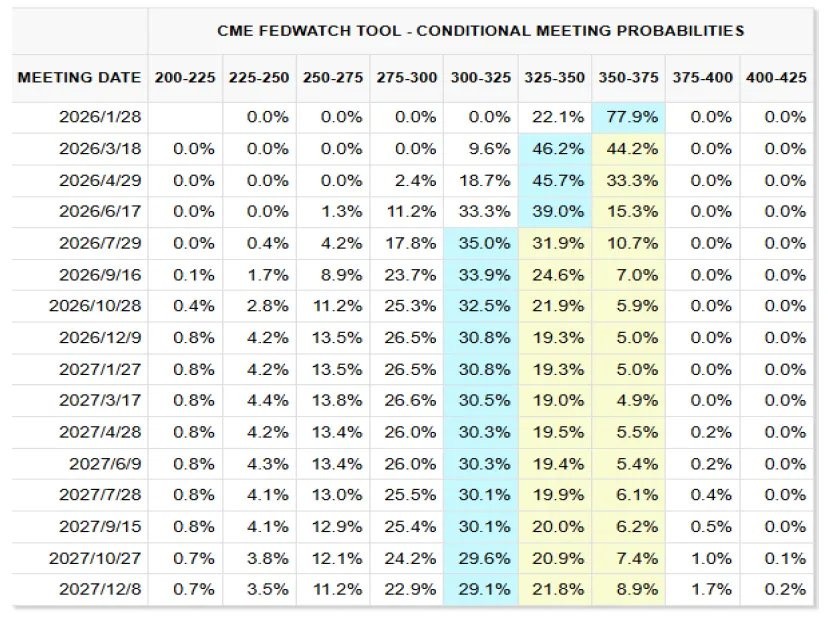
Source: CME FedWatch, CICC Research Department
However, we want to emphasize that: on one hand, the appreciation of the exchange rate caused by non-fundamental factors does not necessarily lead the stock market to converge in that direction; otherwise, Japan would not have experienced a divergence of a strong yen and weak stocks for five years. On the other hand, a continuously rising exchange rate may not be beneficial to the current macro environment in China, which is characterized by weak domestic demand and persistently sluggish prices.
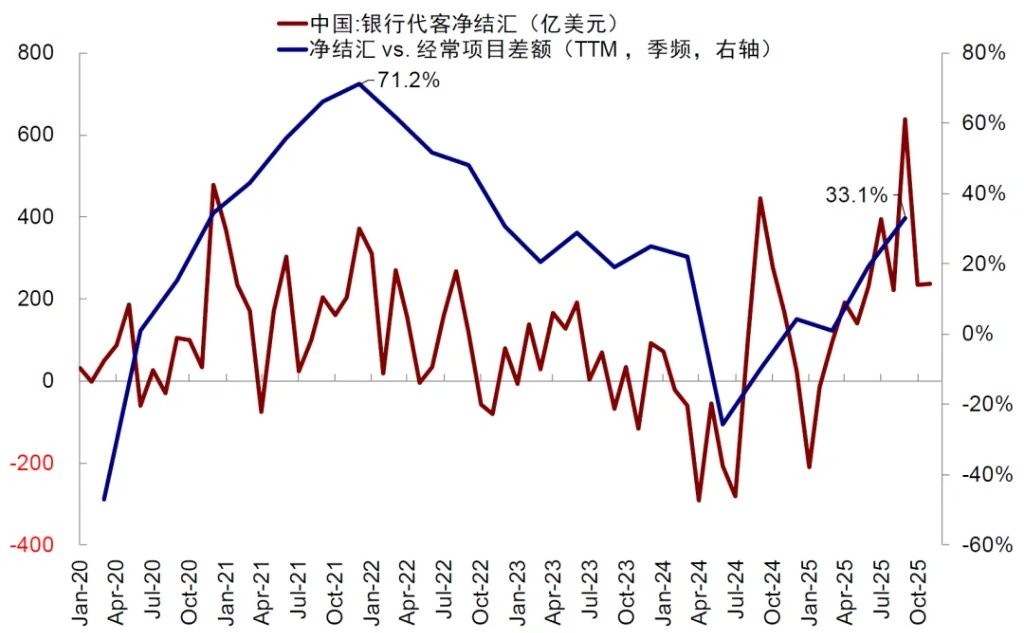
Moreover, in the long run, whether the dollar will continue to weaken and whether the willingness to exchange currency will continue to strengthen are both debatable. Setting aside short-term expectations for monetary easing, the U.S. credit cycle may gradually recover, and under certain conditions, even move towards "overheating," which could provide support for the dollar and long-term U.S. Treasury yields (Global Market Outlook 2026: Following the Direction of Credit Expansion). Historical experience shows that the dollar's movement is highly correlated with the U.S. growth relative to other countries. In the baseline scenario of the U.S. credit cycle restarting and recovering, the dollar is unlikely to weaken significantly; if the credit cycle recovers strongly or even overheats, there is a possibility for the dollar to strengthen slightly. Additionally, from the perspective of the net exchange settlement ratio (net exchange settlement vs. current account trade balance ratio), Q3 2025 is at 33%, still below the peak of 71% in Q4 2021.
Chart: As of Q3 2025, our country's net exchange settlement ratio is still below the peak in Q4 2021
Source: Wind, CICC Research Department
► Whether one converges towards the other depends on the direction of the fundamentals that determine the joint movement of the two. As we have sorted out from historical experiences of divergence at both ends, whether the weak stocks converge towards a strong exchange rate or the strong exchange rate converges towards weak stocks ultimately depends on the direction of the fundamentals; that is, if the fundamentals weaken, the exchange rate will eventually weaken, and if the fundamentals strengthen, the stock market will also strengthen.
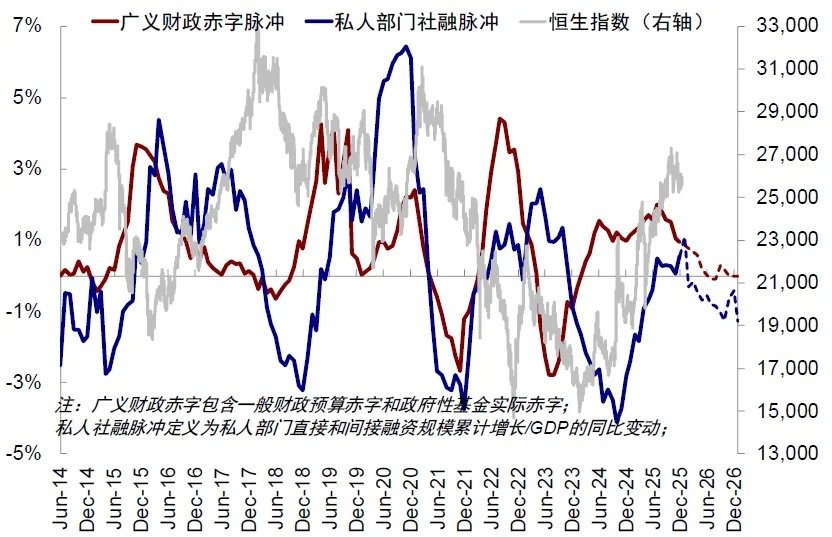
The credit cycle remains the core focus for analyzing stock market performance. Whether the M1 growth rate continues to decline or some fundamental data performs relatively poorly, it will lead to a relatively weak performance of the equity market in stages. This is also the main reason we highlighted the need to pay attention to volatility and maintained the Hang Seng Index level at 26,000 at the end of September. Therefore, in this sense, the recent market pullback and weakness are not surprising (China-U.S. credit cycle may face another turning point). In our 2026 Hong Kong stock market outlook ("Next Steps for the Bull Market"), we judge that, facing high bases, declining income expectations, and a persistent inversion of return costs, unless fiscal policies accelerate significantly, China's credit cycle is likely to trend towards fluctuations or even stage a decline. Previously, the repair of low bases, the optimistic expectations of the booming industrial structure, and liquidity narratives somewhat "masked" the structural problems that have always existed. Once the momentum of these factors gradually diminishes, the structural problems will re-emerge If at this moment some funding and external disturbances are added, it will lead to a contraction in sentiment and a pullback situation.
Chart: If there is no significant fiscal stimulus, China's credit cycle may fluctuate or even decline next year.
Source: Bloomberg, Haver, FactSet, Wind, China International Capital Corporation Research Department
Chart: The U.S. credit cycle may return to an expansion trend next year.
Source: Bloomberg, Haver, FactSet, Wind, China International Capital Corporation Research Department
Looking ahead, 1) If fiscal policy remains steady, the current direction of the credit cycles in China and the U.S. may imply that a significant appreciation of the exchange rate lacks fundamental support, and relying solely on temporary sentiment and funding-driven trends may have a certain "ceiling"; 2) However, if fiscal policy significantly strengthens, especially with the introduction of incremental policies focused on "cash flow" (income expectations, social security pensions, subsidy intensity) and stock policies to alleviate pressure (debt resolution and real estate pressure), it will lead us to be more optimistic about the prospects for credit cycle recovery and the overall equity market, and the appreciation of the RMB will also receive more solid fundamental support.
What are the market impacts if the RMB continues to appreciate? The narrative sentiment of breaking through key thresholds is beneficial for import-oriented or service trade, and enterprises with significant dollar liabilities.
The appreciation of the RMB is the final result of multiple factors such as capital flows, growth expectations, and policy changes, and its objective changes are also reasons affecting market performance. Many investors are concerned; without discussing why the appreciation occurs, what impacts might this trend bring to the market and industries if it continues?
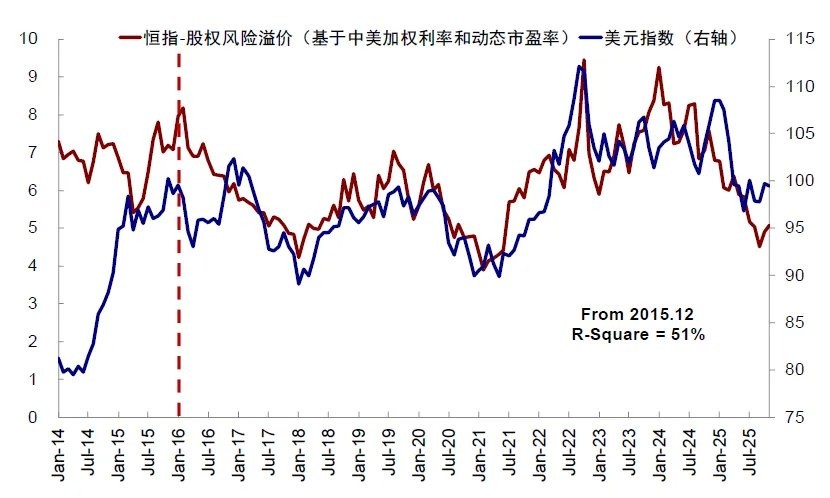
First, the sentiment boost from breaking through key thresholds. The objective change of RMB appreciation, especially when breaking through key "thresholds," may short-term trigger investors' "grand narrative" trading and market trends, which could boost market expectations from a short-term trading perspective, favoring market narratives and bringing about a phase of resonance, similar to the capital market narrative from July to September, where a weak dollar environment is also more favorable for Hong Kong stocks. At this time, it may be more beneficial for growth influenced by sentiment, and even the market "believes" that foreign capital prefers consumer blue chips. However, we caution that if it is merely a narrative environment rather than actual fundamentals, its sustainability is questionable.
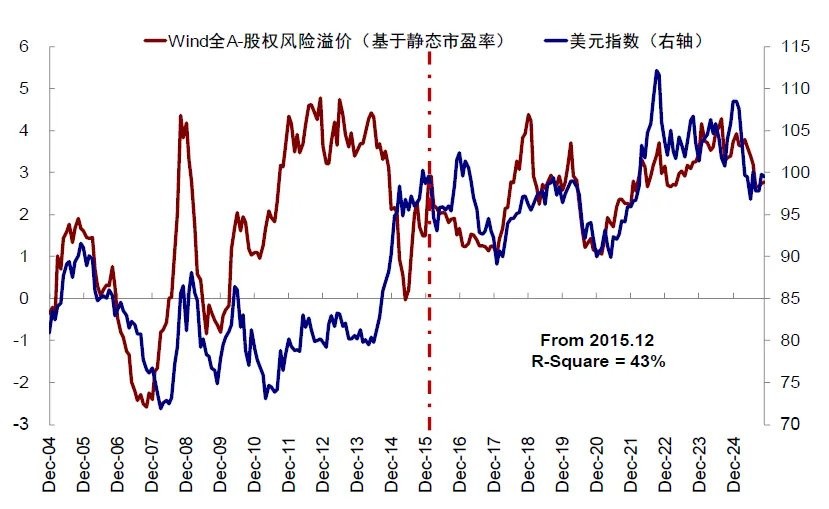
Chart: In terms of valuation, a weak dollar may boost Hong Kong stock valuations through risk appetite channels.
Source: FactSet, Wind, Bloomberg, China International Capital Corporation Research Department Chart: In terms of valuation, a weak dollar may boost A-share valuations through the risk appetite channel
Source: Wind, Bloomberg, CICC Research Department
Secondly, at the industry level, 1) the first is cost reduction, mainly benefiting import-dependent industries. We conducted a simple calculation based on revenue and import-export data of industrial enterprises disclosed by the National Bureau of Statistics and Customs. The industries with "net imports" are mainly distributed in energy, agriculture, materials, and other fields. 2) The second is on the income side, reflected in the service trade sector, such as aviation, duty-free, outbound tourism, and other related industries that may benefit from the appreciation of the RMB. 3) The third is on the liability side, where companies with significant dollar liabilities may benefit from relatively reduced costs. According to the latest data, the proportion of dollar bonds among short-term liabilities within the Hong Kong Stock Connect is relatively high in industries such as internet, shipping, aviation, public utilities, and energy. Conversely, the appreciation of the RMB is marginally unfavorable for exports and also does not alleviate the current downward price pressure.
Risk Warning and Disclaimer
The market has risks, and investment requires caution. This article does not constitute personal investment advice and does not take into account the specific investment objectives, financial conditions, or needs of individual users. Users should consider whether any opinions, views, or conclusions in this article are suitable for their specific circumstances. Investment based on this is at one's own risk
