


Metal Carnival! Gold, silver, and copper all hit new highs, while platinum and palladium surged across the board

Driven by the Federal Reserve's interest rate cuts and ongoing geopolitical tensions, precious metals have surged again. After breaking the $2000 mark early Monday morning, the spot…
A collective rise spanning precious metals and industrial metals is unfolding in global markets.
Against the backdrop of sharply escalating geopolitical risks and the repricing of Federal Reserve rate cut expectations, metal assets have become one of the most concentrated destinations for funds. On Monday, both gold and silver set new historical records, copper prices reached new highs, and precious metals like platinum and palladium strengthened across the board, resulting in a rare "full metal resonance" market.
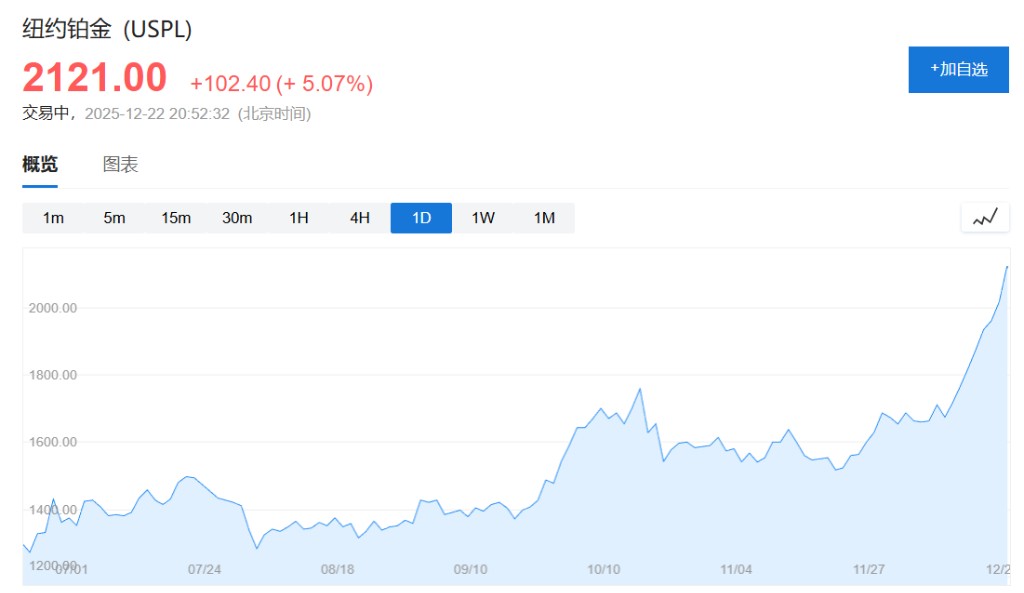
After breaking the $2000 barrier in the morning, spot platinum continued to soar, rising over 5% during the day to report $2085.95 per ounce. New York platinum rose over 5% and has now surpassed $2100 per ounce.
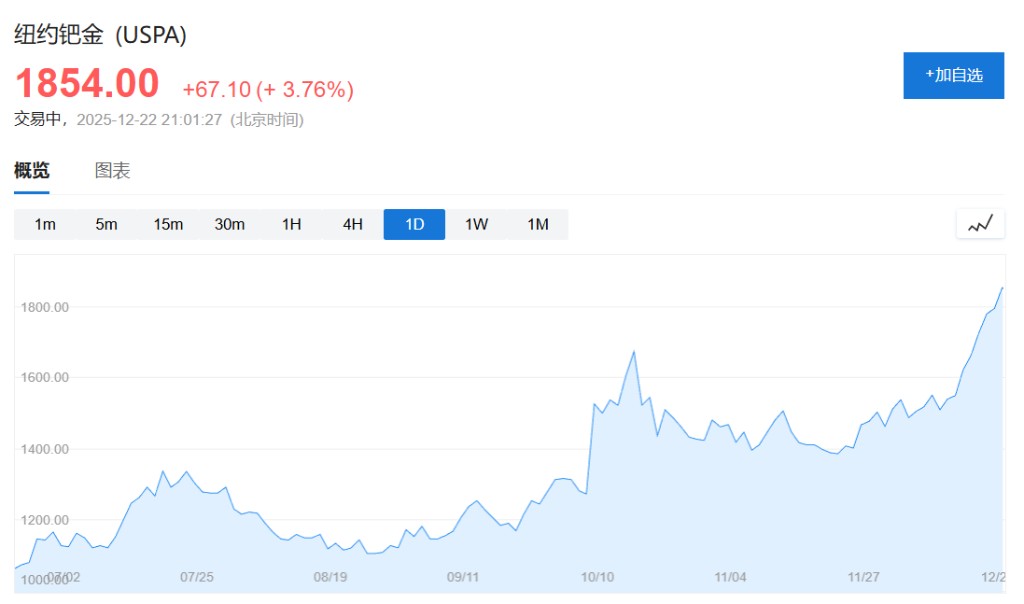
Spot palladium surged over 5% at one point during the session, reaching a nearly three-year high, though the increase has since retreated. New York palladium is currently up 3.7%, reporting $1854 per ounce.
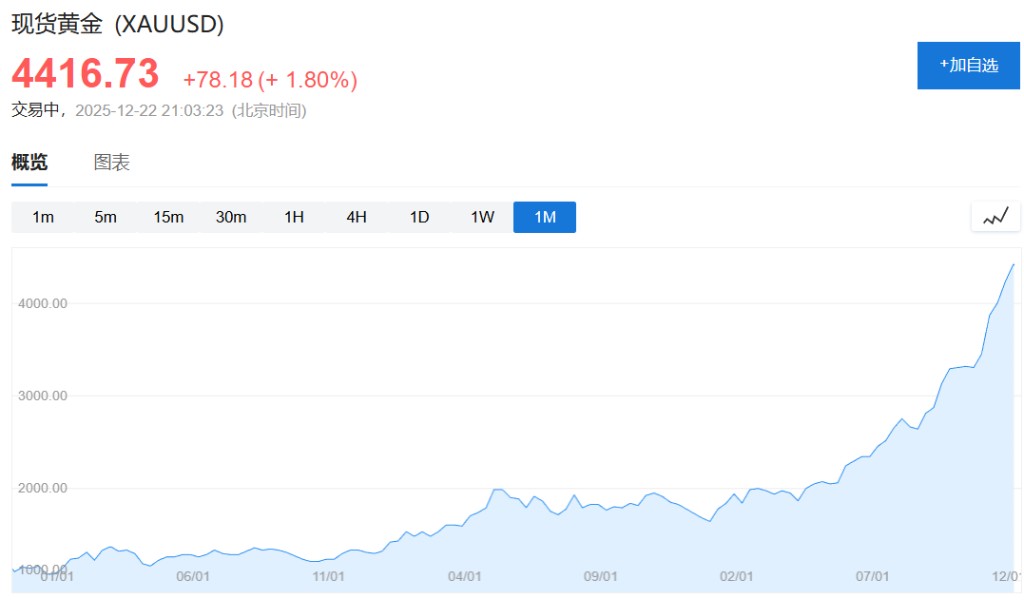
Meanwhile, spot gold has seen an increase of 2.0% during the day, reporting $4425.49 per ounce.
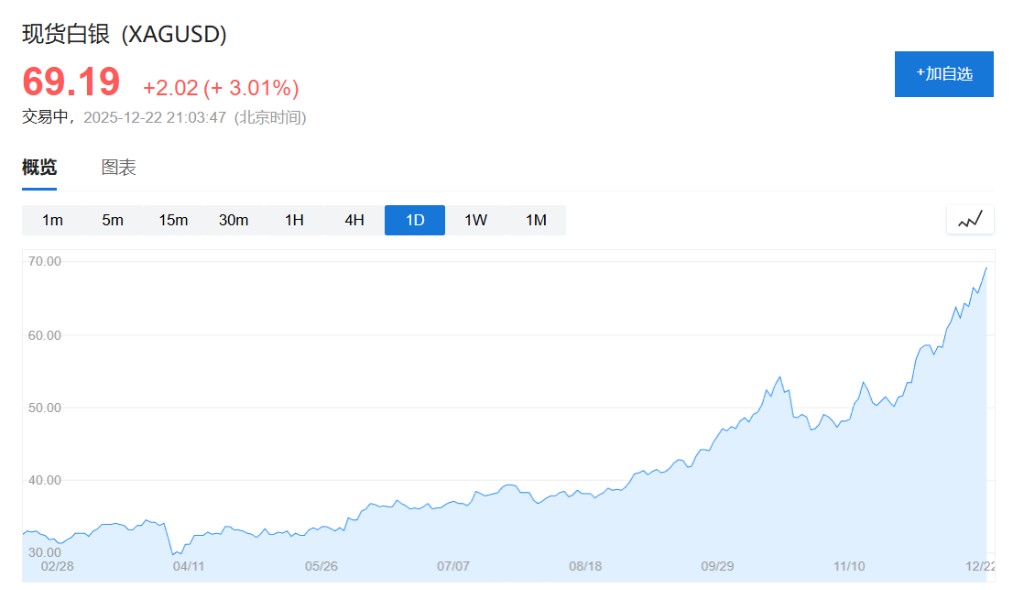
Silver has also set a new historical high, racing towards the $70 mark.
Gold and Silver Lead: Setting Records, Heading for the Best Annual Performance in Over 40 Years
Gold has become the most dazzling star in this round of market activity.
Spot gold prices have surpassed the historical high of $4380 per ounce, with a cumulative increase of nearly 70% this year, on track for the strongest annual performance since 1979. Silver is also performing admirably, with intraday gains exceeding 3%, pushing prices close to the $70 mark, showing a significantly stronger trend than gold.
The core driving force behind the new highs in gold and silver prices comes from the combination of interest rate expectations and safe-haven demand.
Traders are currently betting that the Federal Reserve will cut rates at least twice in 2026, and U.S. President Trump’s public statements on "looser monetary policy" have reinforced market expectations for the continuation of a low-interest-rate environment. For non-interest-bearing precious metals, the decline in real interest rates is itself the most direct bullish factor.
At the same time, geopolitical risks continue to escalate. The U.S. has intensified its oil blockade against Venezuela, and Ukraine has launched its first attack on Russian "shadow fleet" tankers in the Mediterranean, with energy and shipping risks spilling over, reactivating the safe-haven attributes of gold and silver.
Return of "De-Monetization Trading," Central Banks and ETFs Buy on Two Fronts
Unlike previous short-term hedging trends, this year's rise in gold prices resembles a structural capital migration.
Since the beginning of this year, central banks around the world have been continuously increasing their gold holdings on a large scale. Coupled with several weeks of net inflows into gold ETFs, the tension in physical gold supply has significantly increased. Data from the World Gold Council shows that, except for May, gold ETF holdings have almost increased every month this year.
On the other hand, against the backdrop of Trump reshaping the global trade order and frequently touching the boundaries of Federal Reserve independence, concerns about sovereign debt expansion and the "dilution" of currency purchasing power have resurfaced. The "debasement trade" has become the main theme again, with funds withdrawing from bonds and fiat assets and flowing into hard assets like gold.
In this context, investors are not simply "fleeing risk," but are choosing to hedge macro uncertainty by allocating hard assets like gold while maintaining investment exposure. This is also why expressions of risk sentiment are more evident in the commodity markets rather than in the stock and bond markets.
Goldman Sachs has raised its 2026 gold benchmark scenario to $4,900 per ounce and warned that ETF investors are "competing with central banks for limited physical supply."
Not Just Precious Metals: Platinum and Palladium Surge, Industrial Metals Also Gain Momentum
This round of increases is not solely about gold.
Palladium surged over 5% during trading, reaching a nearly three-year high; platinum has risen for the eighth consecutive trading day, with prices surpassing $2,000 for the first time since 2008. Since the beginning of this year, platinum's cumulative increase has exceeded 130%.
The structural tension in the market is driving prices up. To avoid potential tariff risks, more platinum group metals are being transferred to U.S. warehouses; meanwhile, demand in Asia has clearly rebounded, with active trading in related contracts on the Guangzhou Futures Exchange, compounded by tightening liquidity in the London market, amplifying short-term gains.
In terms of silver, after the historic "short squeeze" event in October, there are still supply mismatches in multiple global trading hubs. This month, trading volume in silver on the Shanghai Futures Market surged to levels near those during the short squeeze period, with speculative funds flowing back in.
As a "barometer" of the global economy, copper prices approached $12,000 per ton on Monday, setting a new historical high. Since October last year, copper prices have repeatedly broken records, driven by a combination of supply disruptions, tight inventories, and policy expectations.
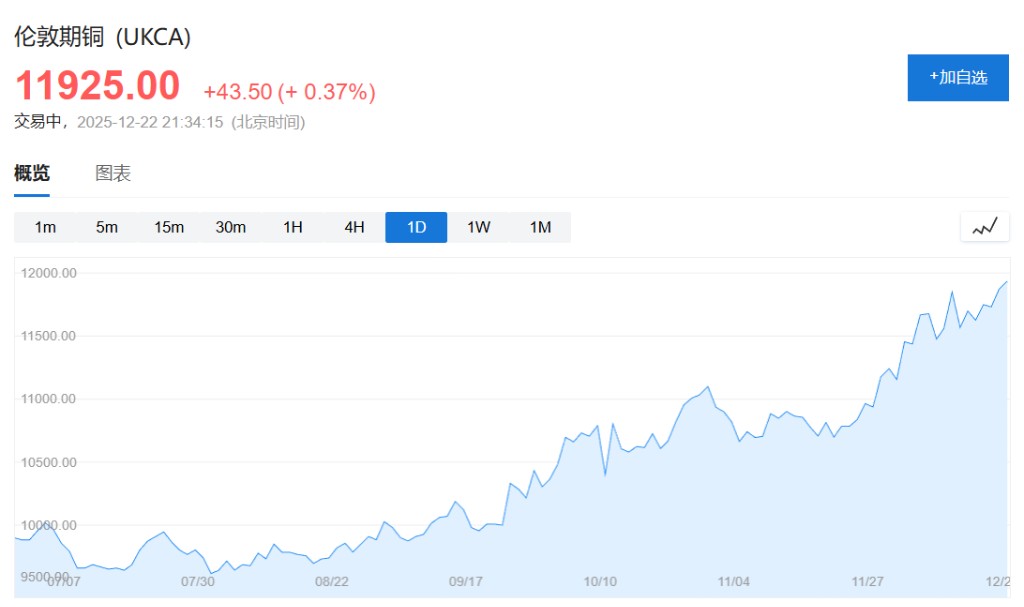
Driven by tariff risks, a large amount of copper has been shipped to the U.S. in advance, leading to a continuous decline in inventories in other regions. The market is also concerned that if the U.S. further raises import barriers in the future, the global copper supply chain will face greater distortions. This "rush to ship + hoarding" behavior is directly reflecting policy uncertainty in prices.
From Hedging to Trend: How Far Can Metal Markets Go?
In the short term, thin liquidity at the end of the year amplifies price volatility, and the market is positioning itself in advance around interest rate cut expectations; in the medium to long term, central bank gold purchases, geopolitical hedging, and new sources of funds (such as stablecoin issuers and corporate finance departments allocating gold) are building a more solid demand foundation Pepperstone pointed out that the Federal Reserve's policy and real interest rates will continue to dominate cyclical fluctuations, but over a longer dimension, the "anchor" of the metal market has changed.
When safe-haven demand, monetary logic, and supply constraints all point in the same direction, this "metal carnival" spanning precious metals and industrial metals is clearly more than just an emotional market
