


San Francisco power outage, Google's self-driving car Waymo in chaos, Tesla wins big

The massive power outage in San Francisco caused Waymo's autonomous vehicles to come to a standstill due to the loss of traffic lights and infrastructure guidance, forcing a suspension of operations and exposing the vulnerability of the "high-precision maps + rules" approach in extreme scenarios. Musk took the opportunity to compare Tesla's "pure vision" solution, sparking a debate over technical routes. The incident intensified public and regulatory concerns about the safety and reliability of autonomous driving commercialization, becoming a significant test of trust in the industry
A large-scale power outage in San Francisco unexpectedly turned into a "stress test" for autonomous driving technology. The Waymo fleet, owned by Alphabet, was thrown into chaos due to infrastructure paralysis, exposing the vulnerabilities of rule-based and high-definition map technology in extreme scenarios.
Affected by the widespread power outage that began Saturday afternoon in the San Francisco Bay Area, Waymo's self-driving taxis exhibited severe "adaptation issues" after losing guidance from traffic signals. Videos widely circulated on social media showed that multiple Waymo vehicles were stalled at intersections and in the middle of streets due to their inability to recognize traffic signal statuses, causing significant traffic congestion and forcing human drivers to detour around these "obstacles."
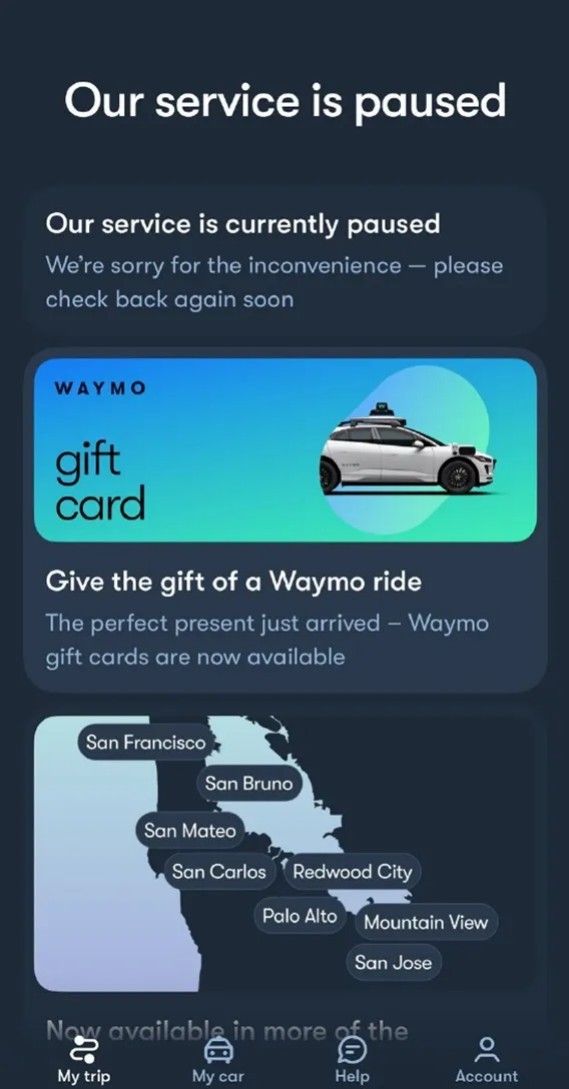
Waymo later confirmed that although its system is designed to treat intersections without signals as four-way stops, the scale of the outage caused vehicles to remain at intersections for too long while confirming their status, leading to congestion. As a result, Waymo proactively suspended its operations from Saturday evening to Sunday morning after coordinating with San Francisco municipal officials. San Francisco Mayor Daniel Lurie also confirmed on social media platform X the deployment of police and fire resources to address the chaos caused by the failure of public transportation and traffic signals.
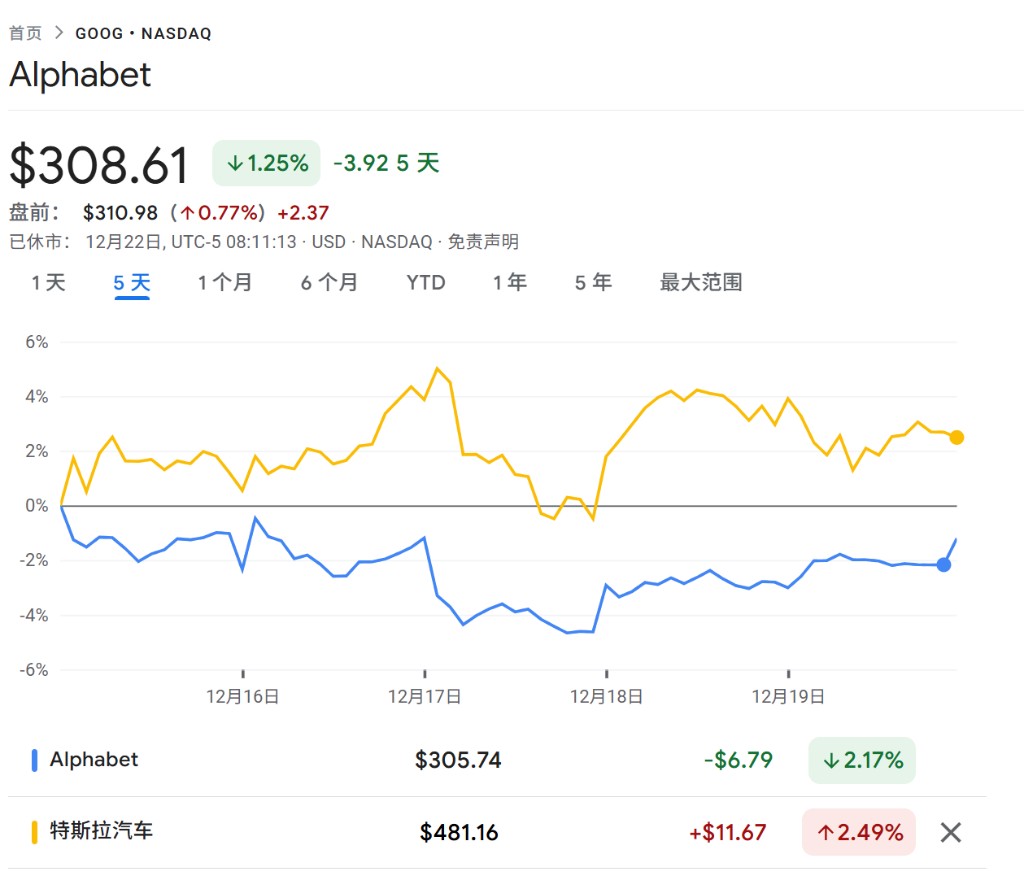
As Waymo found itself in trouble, Elon Musk posted on social media platform X stating that "Tesla Robotaxi was not affected by the San Francisco power outage." This incident drew market attention after hours, with Alphabet's stock rising 0.61% in after-hours trading, while Tesla's stock increased by 1.30%.
Waymo in "Paralysis": Infrastructure Dependency
The source of this chaos was a fire at a substation operated by Pacific Gas and Electric Company, which led to a massive power outage in San Francisco during the peak holiday shopping season, affecting approximately 130,000 users at peak times. For Waymo, which heavily relies on high-definition maps and real-time infrastructure signals, this was undoubtedly a significant blow.
According to eyewitness Matt Schoolfield, he saw at least three Waymo autonomous vehicles stalled in traffic on Saturday evening, with one stopped in the middle of the street near Turk Boulevard, "They were just sitting there in the middle of the street, completely at a loss."
Another passenger, Michele Riva, told the media that while riding in a Waymo vehicle approaching his destination, the car stopped at a busy intersection where the traffic signals were malfunctioning. Faced with numerous pedestrians crossing at will and chaotic traffic, the system seemed to be in a state of indecision, "Waymo had no idea how to handle it at that moment."
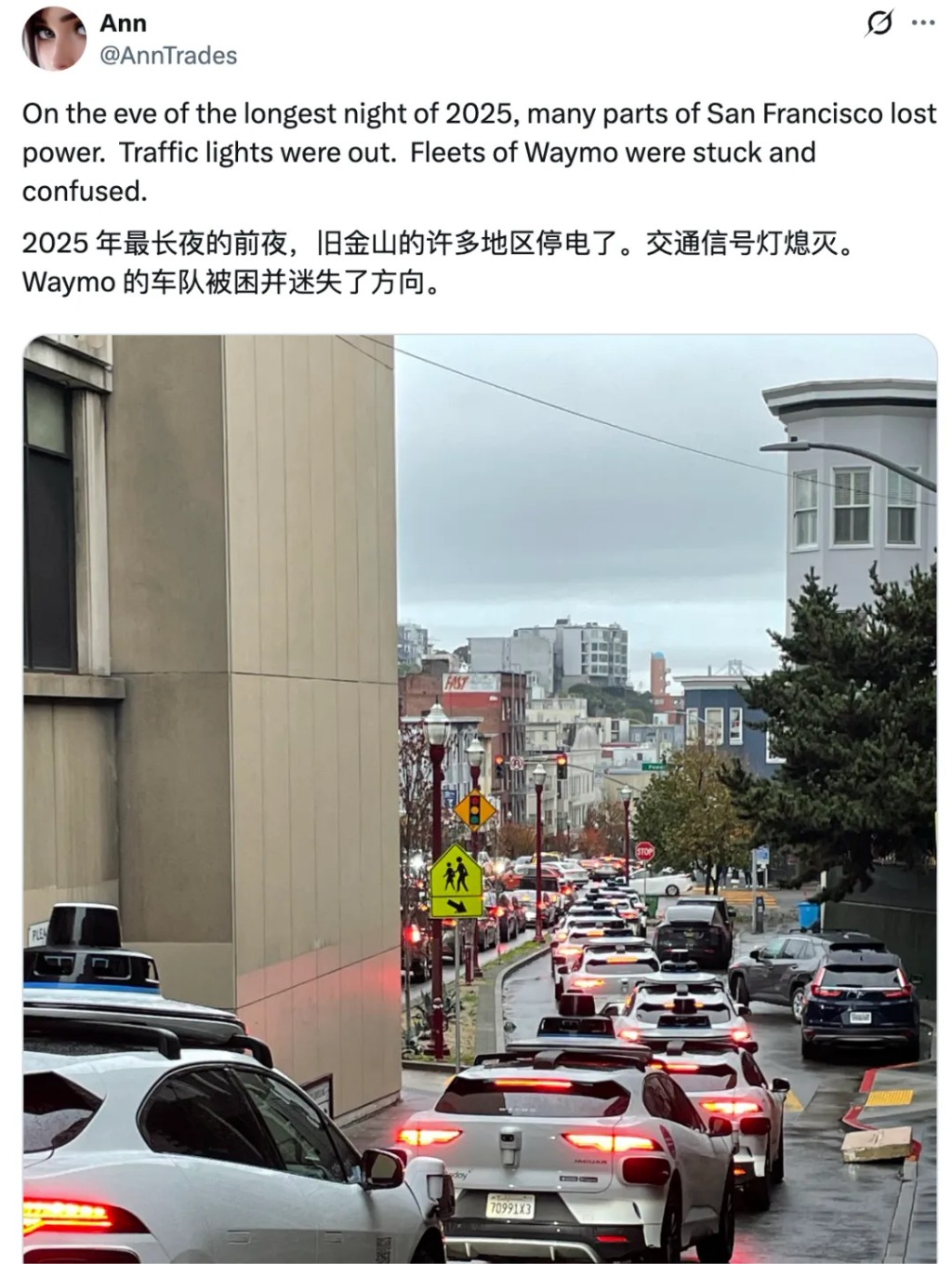 Waymo spokesperson Suzanne Philion explained that although the technology allows vehicles to handle traffic light failures, the "significant failure of utility infrastructure" combined with the resulting traffic chaos caused the vehicles to remain stopped for too long for safety reasons. The company emphasized that the vast majority of ongoing trips were safely completed before the service was suspended, with vehicles being returned to the garage or parked on the side of the road.
Technical Route Dispute: Tesla's "Visual" Counterattack
Waymo's suspension and Musk's mockery have once again brought the core technical route dispute in the autonomous driving field to the forefront. Waymo represents the "heavy map, heavy rules" faction that relies on lidar, radar, cameras, and high-precision maps. This system performs stably in clearly defined urban environments but shows shortcomings in unstructured environments where infrastructure fails (such as complete traffic light outages).
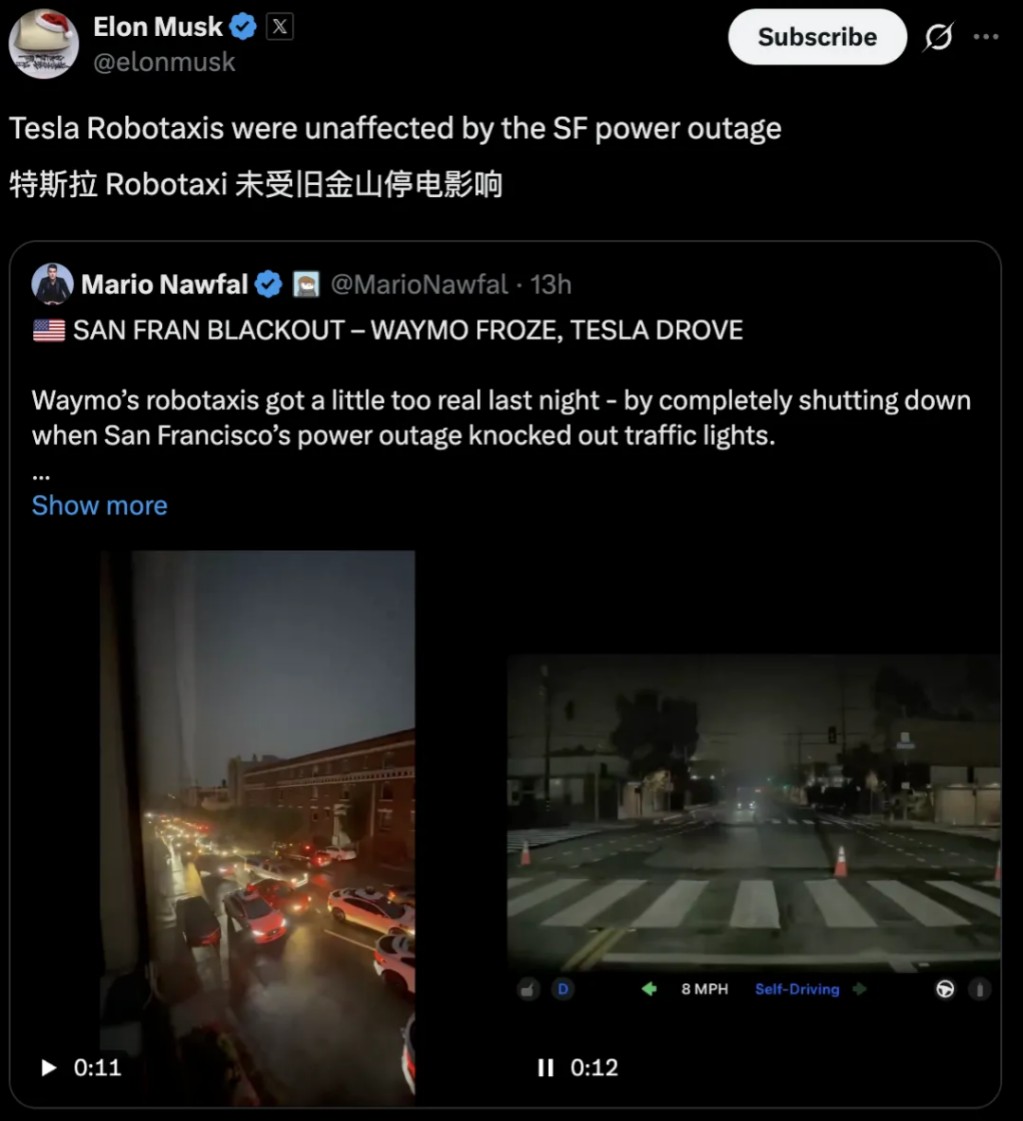
In contrast, Tesla advocates a "pure vision" approach that relies on cameras and neural networks, emphasizing the imitation of human drivers' visual processing capabilities without relying on high-precision maps and external infrastructure signals. Analysts supporting Tesla point out that in the same power outage environment, Tesla vehicles with the FSD (Full Self-Driving) feature enabled can continue to drive because they rely more on real-time perception rather than preset rules.
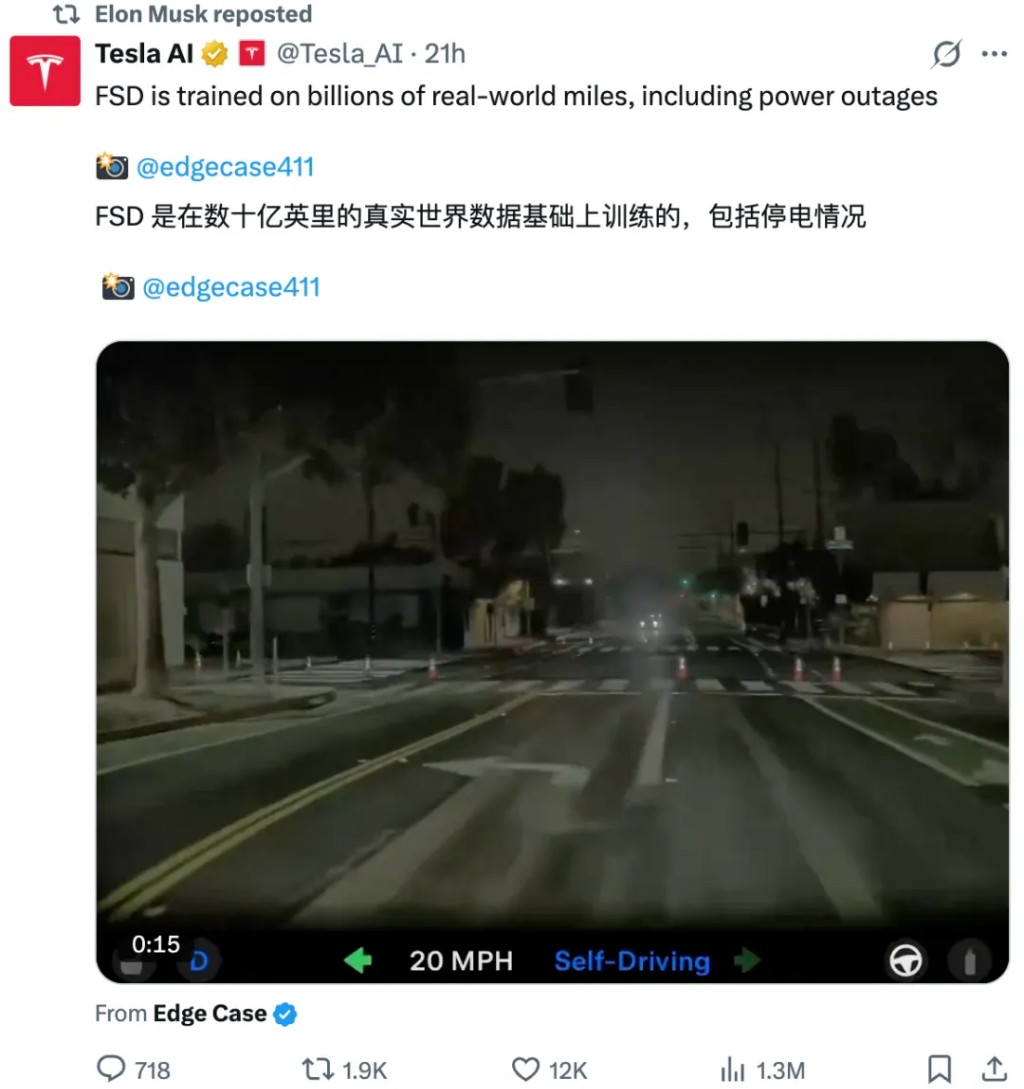
However, this is not a completely equivalent comparison. According to CNBC, unlike Waymo, Tesla is currently not operating a true "driverless" taxi service in San Francisco. Tesla's ride-hailing service uses vehicles equipped with human drivers and is equipped with an FSD system that requires supervision. Data from the California Department of Motor Vehicles (DMV) and the California Public Utilities Commission (CPUC) shows that Tesla has not yet obtained permission to conduct driverless or commercial autonomous driving services in the state without a safety operator.
Therefore, when driving becomes difficult due to a power outage, human drivers in Tesla vehicles can take over at any time, while Waymo operates completely autonomously.
Trust Test for Commercialization
Despite the differences in operational models, this incident undoubtedly exacerbates public and regulatory concerns about the large-scale adoption of autonomous vehicles (AVs). Bryan Reimer, a scientist at the MIT Transportation Center, pointed out that Waymo's suspension in San Francisco indicates that cities are not yet ready for the influx of highly automated vehicles:
"The design and development of this technology has overlooked some aspects, clearly indicating that it is not as robust as many would like to believe."
Reimer emphasized that power outages are completely predictable urban events and not acts of God. In the foreseeable future, a blend of human intelligence and machine intelligence, along with human backup systems around highly automated systems, remains necessary. This incident has also sparked discussions about accountability: when autonomous vehicles cause "chaotic traffic congestion" due to power outages, should developers bear similar responsibilities as human drivers?
A survey conducted by the American Automobile Association (AAA) earlier this year showed that about two-thirds of American drivers feel fearful of autonomous vehicles. As a leader in the Western autonomous driving industry, Waymo's performance in extreme conditions may prompt regulators to adopt a more cautious approach when approving fleet expansions, while also giving competitors like Tesla more leverage in promoting their "end-to-end" AI solutions
