


Commodity Roundtable Dialogue: The "Buy on Dips" Logic for Gold in 2026 Remains Unchanged, Silver is Racing Ahead of Inflation Risks, and the Biggest Risk Point Next Year is in the U.S. Market | Alpha Summit

Chen Dapeng stated that many geopolitical uncertainties around the world have not disappeared, and the logic of buying gold on dips remains unchanged for next year; Tian Yaxiong believes that AI investment may continue, inflation may unfold comprehensively, the credit of the US dollar will be damaged, and the US dollar index may drop to the 80-70 range, with commodities possibly reacting in advance, and silver has already started to run ahead; Xu Tao reminded that the biggest risk point next year lies in the US market, and once there is significant volatility, bulk commodities will also adjust significantly, but if there is a "big pit," it may be a better buying opportunity
On December 20th, Chen Dapeng, founder of KPResearch and author of "Pei Feng Ke," Tian Yaxiong, co-head of the Futures Research Institute at CITIC Construction Investment, and Xu Tao, chief strategist and general manager of the investment consulting department at Zheshang Futures, were guests at the "Alpha Summit" jointly organized by Wall Street News and China Europe International Business School. They engaged in a dialogue with Yu Zhijia, chairman of Paris Asset Management Group, to discuss the trends in the commodity market for 2026.
Chen Dapeng stated that many geopolitical uncertainties around the world have not disappeared, and the logic of buying gold on dips remains unchanged for next year. Based on experiences from the past few years, a dip is defined as a 10%-15% pullback from the high point. There are two factors that may lead to a correction in gold next year: one is a very optimistic economic trend, and the other is a easing of geopolitical tensions. However, this correction presents a buying opportunity, as the structural bullish factors have not disappeared.
Tian Yaxiong believes that the influence of the Federal Reserve is weakening, and fiscal policy is becoming dominant. AI is too intertwined to the extent that it is "too big to fail," but high investment does not necessarily guarantee a leap in total factor productivity. However, AI investment may continue, inflation may unfold comprehensively, and the credibility of the dollar will be damaged, potentially causing the dollar index to drop to the 80-70 range. Commodities may react in advance, and silver has already started to run ahead.
Xu Tao, chief strategist and general manager of the investment consulting department at Zheshang Futures, reminded that there may be significant volatility in the U.S. market at some point next year. When U.S. stocks are volatile, not to mention commodities, all assets will decline. Therefore, the biggest risk point for commodities next year lies in the U.S. market. Once significant fluctuations occur, commodities will also adjust significantly. However, this phase often presents opportunities; if there is a "big pit," it may be a good buying opportunity.
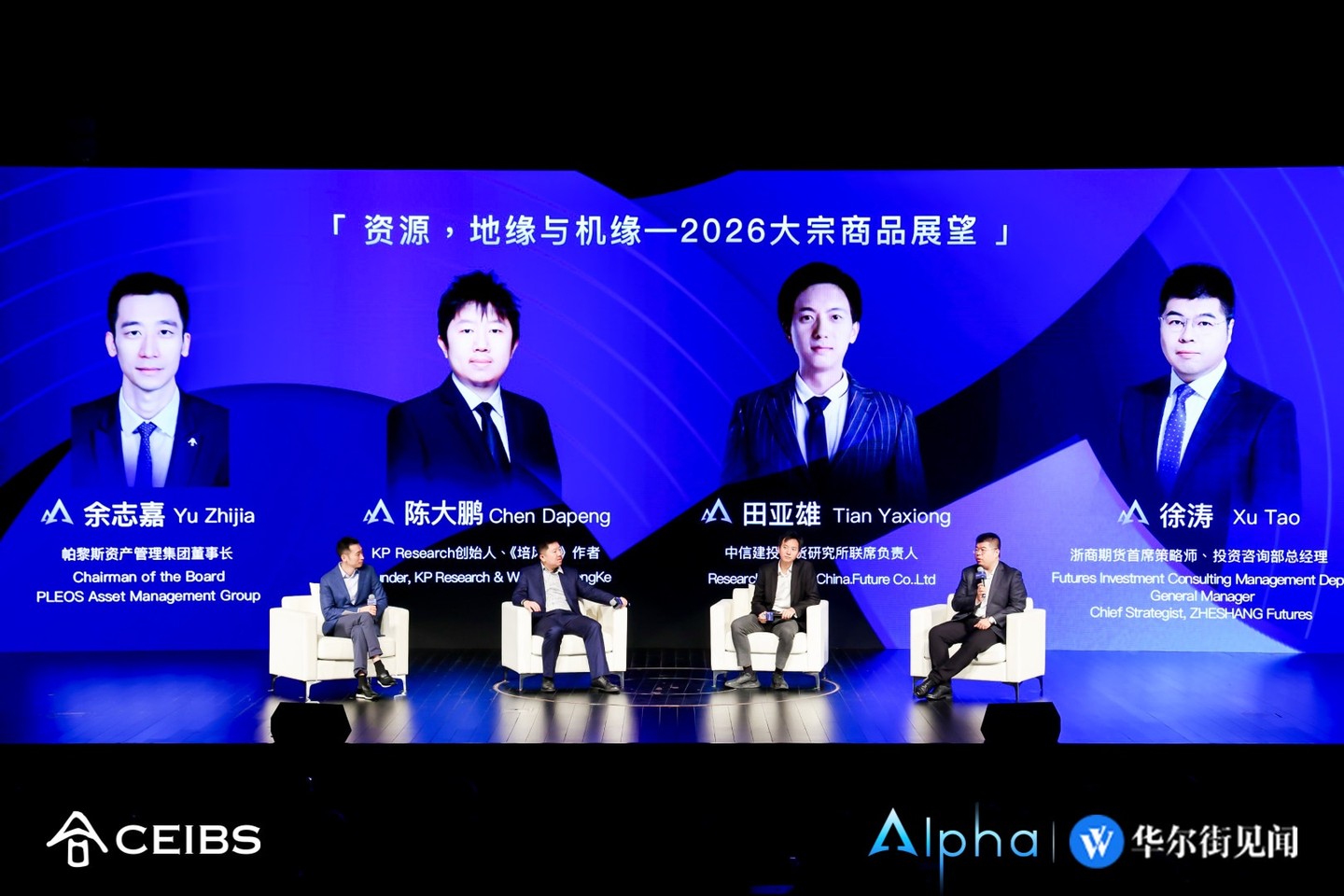
The following are highlights from the dialogue:
Chen Dapeng, founder of KPResearch and author of "Pei Feng Ke"
- The trends of gold and copper in 2025 may have unexpected developments. First, the market expected the U.S. to reduce fiscal deficits at the end of last year, but this did not happen, leading to a structural plus cyclical bull market for gold this year. Second, historically, copper prices usually decline by 5% to 10% within a year after the U.S. lowers interest rates. However, after the Federal Reserve's first rate cut on September 18, 2024, copper prices surged, with the structural market for copper driven by tariffs and inventory expectations from AI investments.
- Many geopolitical uncertainties around the world have not disappeared, and the logic of buying gold on dips remains unchanged for next year. Based on experiences from the past few years, a dip is defined as a 10%-15% pullback from the high point. There are two factors that may lead to a correction in gold next year: one is a very optimistic economic trend, and the other is a easing of geopolitical tensions. However, this correction presents a buying opportunity, as the structural bullish factors have not disappeared.
- The bull market narrative for copper in the first half of next year is not based on economic recovery, but rather because the U.S. has 440,000 tons of visible inventory, and after the Spring Festival, China will begin to replenish inventory, which may lead to price increases. This rise is not based on fundamentals; it may be due to individuals who do not care about costs hoarding, leading to shortages in other markets Whether the economy can recover in the second half of next year or later is another matter. The trading logic for copper next year will be divided into two phases: the first half and the second half may differ, and visibility for the second half is low.
- In the short term, the Federal Reserve may cut interest rates more than once next year; in the long term, it may require the U.S. Treasury and the Fed to jointly lower long-term interest rates through other methods, or the economy itself (such as fluctuations in AI expectations) may lead to a decline in long-term inflation and growth expectations. However, before seeing long-term interest rates decline, the recovery of traditional industries will not be solid and will only be the spillover effect of high-investment industries.
Tian Yaxiong, Co-Head of CITIC Construction Investment Futures Research Institute
- Next year, focus on those energy and chemical varieties where supply growth stabilizes after rapid capacity expansion, such as the polyester and benzene industries. In this process, the response of commodity prices may be slower than the valuation changes of related companies, so initially, the rise in commodity prices may lag behind energy and chemical ETFs, which is an interesting perspective—companies may run ahead of commodities.
- A highly objective reality is that when profits decline, manufacturers' first instinct is not to cut capacity but to reduce costs (to build moats and compete for incremental market share). This represents a kind of "romantic imagination" based on 40-50 years of economic growth. However, the future may not be so, and we need to recognize that excess may persist.
- The internationalization of the RMB may be faster than the market imagines. There are several dimensions to define internationalization: means of payment, reserves, trade financing. Recently, some fragmented facts have emerged: in the future, U.S. soybean farmers may start accepting RMB payments for soybeans purchased by China; the pricing power of Chinese iron ore is gradually shifting to RMB pricing. Combined with the central bank's gold purchasing trends, this trend may accelerate. The result may be reflected in the "arbitrage" of commodities, such as domestic prices potentially being weaker than overseas (due to expectations of RMB appreciation, with some institutions already looking at 6.8).
- The influence of the Federal Reserve is weakening, and fiscal policy is becoming dominant. AI is bound too much to the extent that it is "too big to fail," but high investment does not necessarily guarantee a leap in total factor productivity. However, AI investment may continue, inflation may unfold comprehensively, the credibility of the dollar will be damaged, and the dollar index may drop to the 80-70 range, with commodities potentially reacting in advance; silver has already started to run ahead.
Xu Tao, Chief Strategist and General Manager of Investment Consulting Department at Zheshang Futures
- This round of "anti-involution" is completely different from the past; its essence is to hope that enterprises shift from squeezing costs on the production side to optimizing the sales side. That is, instead of competing on who has lower costs, the expectation is to improve quality and technological content on the sales and product sides in the future, thereby optimizing sales revenue. This is essentially not closely related to commodities (which compete on costs), but prices have significantly risen in the third quarter.
- Looking ahead to 2026, in the black industrial chain, such as crude steel, flat glass, and alloys, there has been no new capacity added for two to three consecutive years. When prices are suppressed to the cost line stage, their second-order feedback on future demand will be relatively sensitive. Therefore, there is some hope for certain building materials and some black varieties in the second half of next year.
- Currently, the world is investing in the AI industrial chain; taking the U.S. as an example, this will squeeze a large number of jobs and consumption in traditional industries. The Federal Reserve, seeing these weakening data, will continue to implement loose monetary policies, leading to more intense capital concentration in the AI industry, while traditional industries will not see significant improvement This means that the Federal Reserve's monetary policy is failing in the short term, further exacerbating asset bubbles. The U.S. market may experience significant volatility at some point. When U.S. stocks fluctuate, not to mention commodities, all assets will decline. Therefore, the biggest risk point next year lies in the U.S. market; once significant fluctuations occur, commodities will also adjust significantly. However, this phase often presents opportunities; if there is a "big pit," it may be a good buying opportunity.
- From a long-term perspective, the long-term deflation of commodities may not return. Barrier trade leads to increased logistics and other costs, and the ultimate result will certainly be inflation, which will be a long-term characteristic globally. Therefore, from the perspective of global trade, there may be some opportunities for commodities.
- Geopolitical turmoil will give rise to some "speculative inventories," which cannot be predicted. It is more reflected in the accumulation of speculative inventories when prices drop to lower levels. That is, when prices drop significantly, everyone anticipates that if there is a shortage in the future, they will stock up a bit more, increasing the probability of inventory and price fluctuations moving in the same direction. When prices drop to a certain extent (especially for international commodities), some will start to stock up, even excessively, forming a price bottom.
The following is the transcript of the roundtable discussion:
Host: Before we begin, I would like to introduce our three guests. Sitting next to me is Mr. Chen Dapeng, the founder of KP Research and author of "Pei Feng Ke." Next is Mr. Tian Yaxiong, co-head of the CITIC Construction Investment Futures Research Institute, and sitting the farthest but having chatted a lot earlier is Mr. Xu Tao, chief strategist and general manager of the investment consulting department at Zheshang Futures. Welcome to all three.
Today we will discuss five questions, which are both a review of the past and a prospect for the future. I hope today's dialogue can bring inspiration to everyone.
First Topic: Unexpected and Structural Volatility in the Commodity Market in 2025
Host: What commodities in 2025 have movements that exceeded expectations? Which category experienced unexpected volatility? First, let's hear from Mr. Chen Dapeng.
Chen Dapeng: Thank you. I mainly focus on gold and copper. Both have had unexpected movements this year. First, at the end of last year, the market expected the U.S. to reduce its fiscal deficit, but that did not happen. Gold has experienced a structural and cyclical bull market this year, with increases exceeding our expectations. Second, historically, copper prices usually drop by 5% to 10% within a year after the U.S. lowers interest rates. However, after the Federal Reserve's first rate cut on September 18, 2024, copper prices surged significantly, which is unprecedented. This indicates that copper also has a structural market, driven by tariffs and expectations of stockpiling due to AI investments. In summary, the failure of the U.S. to reduce its fiscal deficit has led to a structural market for gold; at the same time, the U.S. stockpiling of copper has also brought about a structural market for copper. These are the unexpected developments I have observed in the two commodities I focus on.
Host: What do the other two guests think?
Tian Yaxiong: I agree with Mr. Dapeng's views on non-ferrous and precious metals. Regarding non-ferrous and precious metals, my thought is that we are transitioning from a pursuit of efficiency to a priority on safety. However, in the review of 2025, it seems that oil pricing is still chasing efficiency. OPEC, driven by a desire for market share, has continuously restored production that was previously cut, creating a concerning logic of oversupply, which is currently dominating oil prices There has been a significant divergence in oil and metals in a market that is not particularly bearish. This is an unexpected development in my understanding, as discussions based on safety logic and geopolitical narratives seem to have turned a corner. After the Russia-Ukraine conflict, the intensity of the conflict itself did not continue to push supply constraints higher; rather, high prices suppressed demand, and the transition from old energy to new energy led to a decline in energy prices.
Additionally, the second observation I am focusing on is about global decarbonization and green issues. This has become an unavoidable topic for the future. On one hand, it systematically supports global inflation and interest rate curves, but the reality is fraught with difficulties, especially in Asia, where the demand for coal seems hard to reduce quickly. Many countries have long-term plans for low-carbon pathways, but there are few commercially viable routes in the early stages that require subsidies, and the intensity of these subsidies represents the real demand for commodities. Recent observations show that, apart from the temporary rise in carbon prices in Europe, other countries have not significantly followed suit. The gradual retreat of the decarbonization consensus has, on one hand, led to energy maintaining a low-price state, while on the other hand, the physical demand related to new energy, such as ethanol and biodiesel, also seems to lack a trend change. This can be understood as the market chasing long-term narratives only to find a lack of demand.
In summary: First, safety has not completely overridden efficiency logic; efficiency remains crucial; second, while there is hope for decarbonization in the long term, a global consensus has not yet formed in the short term. Some bills promoted by Europe (such as the EUDR zero deforestation law and the CBAM carbon border adjustment mechanism) may become focal points in the future. In an atmosphere of global fragmentation, judgments about "carbon" will also influence future investment structures in the new energy sector.
Host: Thank you, Teacher Tian. You mentioned the impact of "carbon" on commodities, which relates to the "Zero Carbon China" forum I have been following recently. The strictness of the EU carbon tax implementation directly affects the trends of certain commodities, such as the production of Chinese steel mills being closely related to carbon. However, whether carbon will fully follow the established EU rules is currently a matter of debate, and we can discuss this further later. Next, please share your insights, Teacher Xu. We also talked backstage about the impact of OPEC production and U.S. production on crude oil, which has changed significantly this year. Please elaborate.
Xu Tao: Thank you for the invitation from Wall Street Insights. First, regarding crude oil, the current U.S. policy is clearly gradually increasing its own oil and gas extraction, and for OPEC, its optimal strategy is also to increase production further. This has led both sides to shift from a price-supporting strategy to a market share-grabbing strategy, which has significantly suppressed prices. The market trends from last year to this year illustrate this issue.
Regarding the "unexpected," what surprised me most this year is the significant reversal in prices of many commodities in the third quarter. In the second quarter, many commodity prices in China fell, driven by demand-side disturbances. However, with the market developments in the third quarter, discussions about "anti-involution" emerged. We believe that this round of "anti-involution" is completely different from the past; its essence is to hope that companies shift from squeezing costs on the production side to optimizing the sales side. That is, instead of competing on who has lower costs, there is now an expectation to improve quality and technological content on the sales and product sides to optimize sales revenue. This is essentially not closely related to commodities (which compete on cost), yet prices rose significantly in the third quarter. This is somewhat at odds with the truth, which I find surprising. During this time, I have been contemplating: we need both the ability to recognize the truth and the ability to trade on illusions
Second Topic: Investment Logic and Opportunities in Commodities for 2026
Host: Next, let's discuss the second question: which commodities are promising this year? What is the logic behind these commodities? First, let's have Teacher Xu elaborate.
Xu Tao: Our company specializes in research on the black and chemical sectors. Currently, it seems that next year may resemble the start of the "14th Five-Year Plan." We expect a relatively strong policy stance. From the perspective of the domestic economic situation, the downward trend in real estate is evident, but from the perspective of the base effect, there is a high probability that the economy will show a "low first, high later" pattern next year. After the second half of next year, the speed of decline in real estate (second derivative) may slow down.
In the black industrial chain, the production of crude steel, flat glass, alloys, etc., has not seen new capacity added for two to three consecutive years. When prices are suppressed to the cost line stage, the second-order feedback on future demand will be quite sensitive. Therefore, we have certain hopes for some building materials and certain black varieties in the second half of next year.
Host: Teacher Tian, what do you think?
Tian Yaxiong: This year, the commodity market has a resounding slogan: "The pricing power of supply is unprecedentedly strong." This reflects our understanding of demand. If we categorize commodities into macro-dominated and fundamentally dominated types, we find that demand seems to be "flat" when returning to the industrial end. An interesting summary is that when a country's per capita GDP exceeds $10,000, its commodity demand state undergoes a critical change. China is at this stage, and its consumption of crude steel, food, and energy will systematically weaken at the margin, coupled with the demographic cycle we face (aging, total increment issues), so we are not very optimistic about demand.
Another interesting topic is to focus on the key perspective of "physical commodity demand driven by unit GDP." Future economic vitality will no longer rely on "infrastructure" and real estate, as past investments can drive real consumption demand. The future development direction is the tertiary industry, which continues to increase its share in GDP, and the actual pull of unit GDP consumption on commodities is also weakening at the margin.
This is our insight regarding demand, so looking back at supply, we will highly focus on industries that may see significant changes on the supply side. On one hand, there are non-ferrous sectors with geopolitical narratives and links to precious metals; on the other hand, there are certain domestic chemical industries. There are about 80 commodity varieties in the country, with a key label being "concentration of leading enterprises." After the large-scale production era of energy and chemicals formed from 2015 to 2023, large-scale production has now ended, PTA processing profits continue to decline, and processing profits across industries are decreasing, but leading players are forming, and their pricing power is strengthening.
Therefore, we will focus on those energy and chemical varieties where supply growth has stabilized after rapid capacity release, such as the polyester industry and the benzene industry. In this process, the response of commodity prices may be slower than the valuation changes of related companies, so the initial rise in commodities may lag behind energy and chemical ETFs. This is an interesting perspective—companies may run ahead of commodities.
Another opportunity worth discussing is certain varieties within agricultural products. If we rank commodities, the highest are non-ferrous and precious metals, while the lowest are agricultural products. There are obvious pressures on domestic varieties such as live pigs and eggs, which may not reverse quickly, but some varieties gradually linked to future decarbonization consensus are worth paying attention to, such as vegetable oils behind biodiesel, and corn and sugarcane behind ethanol. These prices are currently at some sort of bottom. For example, global raw sugar prices have fallen from 28 to 14, halving, and the prices have dropped below the cost of converting sugarcane into ethanol. This means that if the surplus continues in the future, more sugarcane will be converted into ethanol rather than sugar. ** This is worth our focus.
Chen Dapeng: I only have knowledge of a few varieties, and I will share my thoughts on these varieties for next year. Let's start with gold; I believe it is a buy on dips. The reason is that many geopolitical uncertainties around the world have not disappeared. "How low" is "low"? Based on the experience of the past few years, it could be a 10%-15% pullback from the peak. There are two factors that may lead to a correction in gold next year: one is a very optimistic economic trend (such as a decline in long-term interest rates after the Federal Reserve cuts rates, and stimulus policies in China); the other is geopolitical easing. But this correction is a buying opportunity because the structural bullish factors have not disappeared. The pace of central bank gold purchases may change, but it is hard to imagine that global central banks will fully embrace the dollar again and convert all their assets into U.S. Treasuries. Therefore, the strategy for gold next year is to buy on dips, but one must accept the characteristic that it may pull back about 10% from the peak each year, and the key is to judge whether the structural market for gold has ended. When might the structural market for gold end? If we see a global economic recovery, it may come to an end, but I believe we won't see that until 2026.
The situation with copper is more complex. I believe the bullish narrative for copper in the first half of next year is not based on economic recovery (I do not believe there will be a clear recovery in the U.S. and China economies in the first half of next year), but rather because the U.S. has 440,000 tons of visible inventory, and after the Spring Festival, China will start restocking, which may lead to price increases. This is not a rise based on fundamentals; it may be due to people who do not care about costs hoarding, leading to shortages in other markets. Whether the economy can recover in the second half of next year or later is another matter. Therefore, the trading logic for copper is divided into two steps: the first half and the second half may be different, and visibility for the second half is low.
Finally, I do not understand oil and energy chemicals, but they belong to structurally and cyclically bearish varieties. As commodity observers, we will keep an eye on these varieties to see if there are reversal points or price turning points. Due to a lack of professional knowledge, we cannot make predictions and can only analyze after observing.
Host: Many people have recently asked if gold can be bought; what is your view?
Chen Dapeng: There are two types of demand for buying gold. One is allocation demand, such as allocating 3%-5% of total family assets to gold, which I believe can be done at any time; spot gold is fine. The other is speculative demand, such as trading futures or spot transactions, which may involve buying on dips or following event-driven breakouts after surpassing previous highs. If it is allocation demand, allocating part of the assets to gold in this era is unlikely to result in significant mistakes.
Host: In other words, the world's turmoil will not turn around quickly?
Chen Dapeng: You could say that. To be honest, I do not see signs of a complete easing of geopolitical tensions. Each country has its own path for technological development, and geopolitical competition has not found a long-term solution; the struggles between both sides are difficult to completely calm down. At the same time, the current global economy is fundamentally supported by AI capital expenditure, and traditional industries are performing poorly (otherwise, chemicals and black metals would not be at their current prices). In this situation, is the recovery very robust? I still have doubts If I see long-term interest rates decline in 2026, I will believe there will be a recovery later, but I don't see that now, so I will be more cautious.
Third Topic: Commodity Risks and Key Variables in 2026
Host: We will leave a more specific analysis for the fourth part. Thank you to the teachers for their analysis of the second question. Now let's move on to the third question: risk. There are always two sides to things; where there is optimism, there is also risk. The third question is: what are the key factors affecting commodities next year? Where does the biggest risk come from? Let's have Teacher Xu speak first.
Xu Tao: From a risk perspective, I believe the biggest risk may not come from the supply and demand of commodities themselves. An important focus for us in 2026 is social issues in the United States. Strongman politics (the rise of Trump) has led to a significant rightward shift in American politics, intensifying the struggle between the Democratic and Republican parties. Next year is also a midterm election year, which means internal disorder in the U.S. could manifest as resource outflows, significantly impacting the capital markets.
Currently, the global investment is directed towards the AI industry chain. Taking the U.S. as an example, this will squeeze out a large number of jobs and consumption in traditional industries. The Federal Reserve, seeing these weakening data, will continue to implement loose monetary policies, leading to a more intense concentration of funds in the AI industry, while traditional industries do not see significant improvement. This means that in the short term, the Federal Reserve's monetary policy may fail, further exacerbating asset bubbles. Amid ongoing external and internal disorder, bubbles accumulate, which may lead to severe asset fluctuations at some point. I listened to General Fu Peng's speech this morning, and I share the same view on this point: there may be significant fluctuations at some stage. When the U.S. stock market fluctuates, not to mention commodities, all assets will decline. Therefore, the biggest risk point next year lies in the U.S. market; once there is significant volatility, commodities will also adjust significantly. However, this stage often presents opportunities; if there is a "big pit," it may be a good buying opportunity.
Host: What do you think, Teacher Tian?
Tian Yaxiong: Over the past year, our feelings are consistent with everyone else's: macro pricing power is unprecedentedly strong. I will focus on some "obvious" risks and then mention a "hidden" risk. Obvious risks: first, the AI capital expenditure bubble may burst; second, the market may have overly high expectations for domestic "anti-involution" policies.
Hidden risks: First, if AI capital expenditure is sustainable, pricing will transmit from leading companies to physical demand, such as data center construction (U.S. banks expect a demand for an additional 200,000 tons of copper and 3 million tons of aluminum by 2030), as well as subsequent energy storage construction. But the question is, is it sustainable? In 2025, AI-related growth may account for 80% of U.S. GDP growth. AI capital expenditure has become a "too big to fail" narrative, linked to many risk assets. Supporting this narrative are, first, the dominance of U.S. fiscal policy, and second, before the expansion of the balance sheet, we need to pay attention to the core risk—will U.S. Treasuries "collapse"? It indicates the strength of U.S. fiscal policy. Currently, U.S. Treasuries are supported by the Federal Reserve's monthly purchases of about $40 billion. Does this mean the risk is gone? Can it sustain the trend? My thought is: before the expansion of the balance sheet, the risk lies in U.S. Treasuries; after the expansion, we will see if there is risk in U.S. stocks. If there is, it will lead to a systemic decline in valuations Secondly, there is the risk of decarbonization. If countries fully embrace traditional energy based on their own considerations, the initial high investments will decline as subsidies fade. This could impact commodities such as ethanol and certain fuels. Third, there is the risk that the market has not yet fully recognized. We have an optimistic view of the static fundamentals; for example, the current surplus in oil prices seems to be priced in the range of $55-60. However, my prominent perception is that the surplus may continue further. We do not see substantial endogenous growth momentum. In the domestic market, a highly objective reality is that when profits decline, manufacturers' first instinct is not to cut production capacity, but to reduce costs (to build a moat and compete for incremental market share). This represents a kind of "romantic imagination" based on 40-50 years of economic growth. But the future may not be the same. We need to be highly aware that the surplus may persist. This persistence is related to the impressive export data from China in 2025 (at the cost of China's low prices) and also implies that such high-profile exports may be difficult to sustain in 2026. Therefore, the bearish situation for some domestically priced commodities may not end quickly.
Summary of risks: First, pay attention to U.S. AI capital expenditures; second, pay attention to changes in decarbonization consensus; third, pay attention to the effects of domestic "anti-involution" policies and whether deflation and surplus pricing have completely ended.
Chen Dapeng: For me, the only risk with gold is: it is necessary to observe ETF holdings daily. If ETF holdings do not grow, short-term prices may face risks, as this is the main channel for capital inflow after each interest rate cut. Gold is a buy-on-dips commodity, but whether "low" occurs is determined by these short-term factors.
Copper is more complex. I will mainly focus on two indicators (of course, there are many): first, the U.S. 10-year Treasury yield. If long-term interest rates do not decline, traditional industries will not recover. Second, the performance of the Nasdaq. If the Nasdaq continues to perform well, it indicates market optimism for technology investments; if expectations for AI capital expenditures reverse, it will worsen. Additionally, there are several fundamental indicators: first, I hope the Contango structure of U.S. COMEX copper (near month low, far month high) can continue; second, the price difference between COMEX and LME needs to be maintained. When these indicators change, it signifies risk. Simply put, the current economy is "good for AI, bad for traditional economy." If both are bad, commodities will definitely be poor; if both are good, then they will definitely be good. Choose one indicator to observe these two sectors. I chose the indicators I am familiar with.
Host: So, the choice of indicators is closely related to personal familiarity with the field. Having briefly discussed the first three questions, let's move on to the fourth segment: geopolitical situation.
Fourth Topic: Geopolitical Situation and Its Impact
Host: I am personally very interested in this topic, so please start, Teacher Chen.
Chen Dapeng: I want to look at it from both short-term and long-term perspectives. In the long term, countries are well aware of the importance of technology and industry to their nations, and they will compete for this, so competition will continue to exist in the long term. The previous cooperation model between producers and consumers among countries will be broken, and a new model has yet to be found.
Is there a possibility of short-term easing? Yes, there is a possibility. With the rise of isolationism, there will be a period where all parties feel that time is on their side and victory is assured. This will bring some easing However, in the long term, countries will compete for high-end technology industry chains, which will ultimately lead to more differences on this issue. This is my relatively pessimistic view.
Host: In the medium to long term, what about the short term for next year?
Chen Dapeng: A good point is that today no one has the ability to judge geopolitical trends. This is both a bad thing (no expectations) and a good thing (because no one knows, there is no need to make expectations, just make judgments after key time points). Looking back at the past few years, it was not too late to reinvest after key geopolitical nodes (such as the Russia-Ukraine conflict). There is a key node next year in April. Therefore, I believe the most appropriate geopolitical approach is to wait until after the April meeting to discuss based on the results. I can guarantee that before then, not many institutions will have good insights, and asset prices will still be very attractive at that time.
Host: So, we don't bet, but wait until it's more certain to place our bets?
Chen Dapeng: Exactly. Forward-looking gambling on geopolitics is the most dangerous thing, especially in such a high-volatility era. Being able to see it clearly is akin to being a deity. This reminds me of the changes in oil prices over the past two years, which have been drastically different within a few months.
Host: Teacher Tian, please share your views on the geopolitical situation.
Tian Yaxiong: We have an interesting discussion: the previous production logic was "whoever has the lowest price produces"; now it is "whoever is safe produces." I am not a geopolitical expert, but I can provide a few key clues from the perspective of commodity mapping:
First, China's food security. China relies heavily on imports for a large amount of food (30% sugar, 20% cotton, 80%-90% soybeans). However, I am quite certain that in recent years, our country has formed a very obvious capability for food self-sufficiency, including continuously increasing reserves to achieve "full granaries," as well as diversification of imports. China's dependence on foreign food has significantly decreased. Therefore, even if geopolitical threats arise, price increases in agricultural products are unlikely to become a trend.
Second, two terms are often heard in the commodity sector: "China dominate" and "Resource Nationalism." I believe these two things can be viewed together. The premium on commodities, especially those representing advanced productive forces (such as non-ferrous metals and key energy metals like lithium), will continue to exist. This may reshape China's future energy trends, with lithium and other varieties potentially becoming focal points, in conjunction with polysilicon, photovoltaics, etc.
Third, regarding the renminbi. Recently, there has been an interesting realization in commodity research: the internationalization of the renminbi may be faster than the market imagines. There are several dimensions to define internationalization: means of payment, reserves, trade financing. Recently, we have seen some fragmented facts: in the future, American soybean farmers may start accepting renminbi for soybeans purchased by China; the pricing power of Chinese iron ore is gradually shifting to renminbi pricing. Combined with the central bank's gold purchasing trends, I believe this trend may accelerate. The result may be reflected in the "arbitrage" of commodities, such as domestic prices potentially being weaker than overseas (due to expectations of renminbi appreciation, with some institutions already looking at 6.8). These are the three clues I can abstract.
Host: Teacher Tian, I feel you have a lot of knowledge about green and new energy. I have observed that the United States gradually withdrew from some major new energy and low-carbon organizations during the Trump administration, and I would like to hear your insights Tian Yaxiong: My tracking is limited, mainly focusing on U.S. subsidies for agricultural products. There is an interesting shift happening: previously, the policy was conservative, favoring subsidies for large oil mills. However, a bill worth noting, which may become a key trading theme in 2026, is the biodiesel bill (related to 45Z and RVO). There were previously mandatory blending targets, which may increase from 20% to 40% starting next year. This could lead to a shortage of soybean oil across the U.S., but the policy has not yet been finalized. Therefore, the market is full of divergences and lacks stable expectations. The only trading method is to test based on low prices. For example, many agricultural product prices in the U.S. have fallen to near cost lines (soybean cost is about 1130, current price is about 1060; U.S. corn cost is about 400-450, current price is about 430). This provides us with space to speculate on the possibilities of biodiesel policy. However, we need to pay attention to sensitive indicators, such as U.S. carbon prices (RINs secondary market trading prices), which express the strength of the U.S. decarbonization willingness. I believe that tracking and responding is more important than predicting.
Host: Mr. Xu, please share your views.
Xu Tao: First of all, I believe that the global economic development model has shifted from globalization, and the trade model has shifted from free trade to barrier-type trade among countries. The impact on asset prices (especially commodity prices) results in rising costs. In the long term, this means that the long-term deflation of commodities may not return. Barrier trade leads to increased logistics and other costs, and the ultimate result must be inflation, which will be a long-term characteristic globally. Therefore, from a global trade perspective, there may be some opportunities for bulk commodities.
From the Sino-U.S. perspective, after the 2020-2023 cycle, both China and the U.S. have realized the importance of supply chain security. When both superpowers need to rebuild their supply chains, several outcomes will arise: first, varieties with advantageous production capacities in each country will definitely operate at full capacity (such as China's coal and steel, and U.S. crude oil), and production will be maintained at high levels for self-security. In terms of prices, the decline in coal, steel, and even crude oil prices in recent years is related to significant supply pressures. Secondly, when both countries have abundant supplies of certain goods, they will search globally for resources that neither country has (such as mineral resources in Latin America and Africa). This has led to very strong prices for many varieties (especially non-ferrous metals), essentially because countries are realizing the importance of resources. In the long term, China will seek iron ore, copper mines, bauxite, spodumene, and natural rubber in Africa, Latin America, and other regions, reflected in initiatives like the "Belt and Road"; the U.S. will also hoard resources through tariffs (leading to a large flow of copper to the U.S.). Both countries will comprehensively consider supply chain security in upstream and downstream, maximizing what they have and seeking internationally for what they lack.
Additionally, China mentioned in the "14th Five-Year Plan" the need to maintain a reasonable proportion of manufacturing in GDP. This means that the demand for bulk commodities has a bottom line and will not decline indefinitely, unlike the hollowing out of manufacturing in the U.S. The real economy remains an important focus. Therefore, I believe that domestic demand for bulk commodities will not stall.
Host: In everyone's sharing, I was reminded of a term: "decoupling." This term was quite popular a few years ago but has weakened in the past two years. However, if we reach a relatively extreme situation (such as a breakdown in tariff negotiations next year), decoupling may become a risk that exists What do you all think? For various commodities, which ones are strongly favorable and which are relatively less affected by decoupling?
Chen Dapeng: First of all, it's hard to imagine a complete decoupling between China and the U.S., but trade frictions may exist. I have a feeling about the ranking of commodities (which may not be correct): the vitality of trade is very strong. The U.S. may ultimately just change shipping routes for procurement, but the goods are still being transported.
The divergence in commodity trends in 2024 and 2025 is actually caused by economic differentiation. There is an industry that has seen a 60% annual growth—AI investment, and related copper and aluminum have performed very well; on the other hand, there is an industry experiencing structural pressure—China's real estate (of course, oil also has structural supply issues). Therefore, black commodities and crude oil have performed poorly. Looking ahead, I believe decoupling will lead to price increases in some supply-constrained varieties, but on a broader scale, I will pay attention to how the two structural trends of "AI" and "China's real estate" evolve. Their trends will determine the overall trends of copper, oil, and commodities.
Host: I recall a news item: Recently, U.S. soybean producers were quite troubled because the U.S.-China friction led to unsold soybeans. What products that are directly affected by politics and can be used as trade negotiation tools (such as agricultural products) should we pay attention to in the short to medium term?
Tian Yaxiong: I would like to continue the discussion about soybeans. Every time the geopolitical index is high, it triggers a round of global agricultural planting area expansion. This time, Brazil's soybean area has increased from about 32 million hectares to 44 million hectares, with output rising from 120 million tons to 170 million tons. Therefore, I strongly agree with Dapeng's view on "trade efficiency": Countries have formed new trade flows based on decoupling, and trade flows will "inflate." The premium for Brazilian soybeans can rise from negative 70 to 330; farmers haven't made money, but the intermediaries (similar to shadow fleets) have profited. This is my prominent feeling.
Returning to the impact of decoupling on commodities: Trade itself smooths out structural shortages to global oversupply through arbitrage. Therefore, overall, the impact of decoupling on commodities is temporary. Interestingly, if we look at commodity pricing from a longer perspective, I believe there are two key points: First, fiscal policy (for example, in the 1970s and 1980s, U.S. fiscal spending increased by 20%-50%, and commodity indices rose more than twofold); second, commodity changes closely resemble the evolution of global manufacturing (from the U.S. to Germany in the 1950s, from Germany to Japan in the 1960s, then to the Four Asian Tigers, and finally to China joining the WTO to take on global capacity). In the past year, we have felt that China's export growth to ASEAN, Africa, and Latin America has overshadowed the negative impact from the U.S., leading to an overall improvement in exports. This suggests that the restructuring of manufacturing has not yet formed. Therefore, if decoupling between China and the U.S. leads to a restructuring of manufacturing, it will unprecedentedly drive a new round of reinvestment, rapidly increasing commodity demand. So, when this pressure is truly traded, I believe it will be a buying opportunity.
Host: Professor Xu, what do you think?
Xu Tao: I think the two previous speakers have covered decoupling very comprehensively. I would like to add a point from a research perspective: Decoupling directly leads to instability in both parties' supply chains. Previously, when we studied commodities, the inventory cycle was a very important factor. However, after countries around the world decoupled, the inventory cycle has completely become chaotic, shifting from linearity to disorder This will give rise to a portion of "speculative inventory," the emergence of which is unpredictable, more reflecting that when prices drop to a lower level, speculative inventory accumulates significantly. That is, when prices drop significantly, everyone anticipates that in the future, if there is a shortage of goods, they will stock up a bit more, leading to a higher probability of inventory and prices fluctuating in the same direction. When prices drop to a certain extent (especially for internationally traded commodities), some people will start to stock up, even excessively, forming a price bottom. This is different from the original research framework. Therefore, decoupling has a significant impact on researchers' work.
Additionally, under the disturbance of inflation factors, the direct result of decoupling is that high inflation may accompany us for a long time. Previously, economic development could be combined with low inflation, but in the future, it may be difficult to eliminate high inflation over a long cycle.
Host: So decoupling has caused a reconstruction of the entire analytical framework, affecting the entire chain of commodity value, supply, etc. Of course, this is a very extreme situation, and this topic is very interesting, but time is limited, so let's move on to the last question: the Federal Reserve.
Fifth Topic: The Federal Reserve's Policy and Its Relation to Commodities
Host: Many analyses ultimately attribute the reasons largely to monetary policy, and the Federal Reserve is an unavoidable topic. Please discuss the role of the Federal Reserve and our observations. Let's start with you, Professor Chen.
Chen Dapeng: We generally look at short-term and long-term interest rates concerning the Federal Reserve. In the short term, there are concerns about the Fed's independence, while in the long term, there are concerns about its effectiveness. Let's discuss them separately.
First, should short-term interest rates be lower? I believe President Trump’s views on interest rates may be more correct than Powell's. Currently, there is about $400 billion in AI capital expenditure in the economy, so the economic data readings are good. The market thinks: the U.S. economic growth rate in 2024 will be 2.5%-2.8%, down from 1.5%-1.7% this year (a decrease of about 1 percentage point), while AI capital expenditure has increased by 60%, which means other sectors cannot perform well. In this case, the Fed makes decisions based on current data, believing that with $400 billion in AI investment, the economy is doing well, and there is no need to worry about future changes. But this is not necessarily the case. If next year, the growth rate of AI capital expenditure remains at 60%, it means that the five major investors may invest 80%-90% of their operating cash flow into technology, which is a wild assumption. Therefore, it is feasible to implement some preventive interest rate cuts. So from the short-term perspective, there may be more room for interest rate cuts at the beginning of next year than currently indicated by the dot plot. Because the dot plot is based on the assumption that "AI investment is sustainable," but this is not what the Fed believes; it is only based on current data for decision-making.
The long-term issue may be more significant. When the Fed cut interest rates on September 18 last year, long-term interest rates were in the range of 3.6%-3.8%; after a 175 basis point cut, long-term interest rates are now at 4.1%. This has led to a worse performance in U.S. cyclical industries in 2025 compared to 2024. Only 20%-30% of long-term interest rates are affected by the Fed's interest rate cuts, while the rest are influenced by other factors. Therefore, whether the Fed's policy can overcome the market's dislike for U.S. Treasuries and transmit to long-term interest rates is also a consideration.
In summary: For the short term, I believe the Fed may cut rates more than once next year; for the long term, it may require the Treasury and the Fed to jointly lower long-term interest rates through other methods, or the economy itself (such as fluctuations in AI expectations) may lead to a decline in long-term inflation and growth expectations However, before seeing long-term interest rates decline, the recovery of traditional industries is not solid and is merely an external effect of high-investment industries. This is my focus on the two points of the Federal Reserve.
Host: Teacher Tian, what do you think?
Tian Yaxiong: This is actually a discussion about research efficiency. Previously, we viewed economic investment as a linear process, with the fuse entirely in the hands of the Federal Reserve. But is the Federal Reserve really that important? Or is it a case of "dark under the lamp"? I want to make an important statement: focusing on the Federal Reserve has prerequisites, namely global low interest rates, low inflation, and all surplus countries using dollars to purchase U.S. Treasury bonds. But these three prerequisites are no longer valid. Therefore, if in the future we focus on commodities as our research object, the Federal Reserve may not necessarily remain the primary discussion topic. When there is a difference in expectations, we can trade (for example, at the end of November, the market raised the probability of a rate cut in December from 30% to 90%). However, compared to monetary policy, I believe fiscal policy is more dominant and crucial.
I have one minute left to discuss a possible scenario (also a possibility for 2026): AI is bound too much, to the point of being "too big to fail." But the question is, can high investment guarantee a leap in total factor productivity? If not, what is the cost? My conclusion is: the cost may be the dollar. How to price this? Silver has already started to run ahead. At that time, commodities are very likely to begin to devalue against the dollar (for example, falling to 80-70). This is the point I want to express.
Host: Teacher Xu, what do you think? Please keep it brief due to time constraints.
Xu Tao: I believe that the influence of the Federal Reserve's monetary policy on commodity pricing has indeed been declining over the past two years, and the market may be paying more attention to fiscal policy. The Federal Reserve's policy has more impact on the U.S. stock market. My view is that due to the significant investment in AI in the U.S. economic structure, the data for traditional industries looks poor, and this poor data prompts the Federal Reserve to further ease. However, loose monetary policy cannot improve traditional industries; instead, it exacerbates the bubble in the AI industry. Therefore, it more influences the expansion of asset price bubbles and the timing of their eventual collapse, making it difficult to comprehensively improve the demand for a single traditional industry. Thus, the Federal Reserve's monetary policy is unlikely to have a comprehensive improvement effect on the demand for bulk commodities, but rather a structural impact (such as computing power related to AI, because the end of computing power is energy, reflected in the demand for new energy sectors and copper). For traditional industry varieties, the probability of being influenced by the Federal Reserve's monetary policy is relatively low, more reflecting the overall impact when U.S. assets undergo significant adjustments (all commodities are affected). However, for a single variety or certain sectors, the feedback effect of the Federal Reserve's policy is not significant.
Host: Alright, we are about out of time today. Thank you very much to the three guests for sharing. To summarize in one sentence: the best way to predict the future is to understand the present. I am very pleased to have shared an hour with you all today; although it feels insufficient, time is limited. I hope we can discuss more in the future. Thank you all, thank you everyone!
