


Trump wants to "ensure space superiority," will American "space stocks" become the next "quantum technology"?

Trump signed an executive order to establish a lunar base strategy, coupled with Musk's ally appointed as NASA administrator, leading to a revaluation of the US stock market's space sector, with total market value tripling in a year. Goldman Sachs is optimistic about the prospects of commercial aerospace and defense contractors, and SpaceX's IPO next year will further push market sentiment to its peak, as space technology is becoming a new investment frenzy track
With the Trump administration officially signing an executive order aimed at establishing space dominance, and the dust settling on key regulatory personnel appointments, the U.S. space industry is undergoing an unprecedented valuation reassessment, from startup rocket companies to established defense contractors.
Recently, the U.S. stock market's space sector surged collectively, continuing the strong momentum since last Friday. The direct catalyst for this wave of market activity was the executive order signed by Trump last week titled "Ensuring America's Space Advantage," which explicitly outlines the strategic goal of establishing a permanent lunar base. Meanwhile, billionaire and Musk ally Jared Isaacman, after experiencing nomination setbacks, was ultimately confirmed by the Senate as NASA Administrator, further strengthening market expectations that commercial space will occupy a central role in future national strategy.
This series of policy initiatives has been interpreted by Wall Street as a significant boon for the industry. Goldman Sachs analyst Anthony Valentini's team noted in a report on the 18th that this executive order lays the groundwork for expanding U.S. presence in space and developing a commercial space economy, which will directly benefit launch service providers and related defense contractors.
Investor enthusiasm has been directly reflected in asset prices. By the end of 2025, the total market capitalization of leading U.S. space companies has nearly tripled over the past year. Some investment institutions even claim that space technology is expected to take over from quantum computing as the next technology sector to trigger market frenzy.
Goldman Sachs Breaks Down the Policy Roadmap: $50 Billion Investment and Lunar Base Countdown
According to a research report released by Goldman Sachs, the executive order signed by Trump on December 18 details the priorities for the U.S. in the space sector, focusing on achieving national security and economic goals through expanded commercial participation. Goldman Sachs believes this document provides positive fundamental support for space launch and exploration companies like Rocket Lab and Firefly Aerospace, as well as defense contractors like L3Harris and AeroVironment.
The executive order sets specific timelines and quantitative targets:
- Return to the Moon and Establishing a Base: Plans to return Americans to the Moon by 2028 through the Artemis Program and establish a preliminary framework for a permanent lunar outpost by 2030.
- Commercial Economic Growth: By 2028, the goal is to increase $50 billion in investment in the U.S. space market; and to promote the private sector to establish a commercial pathway to replace the International Space Station (ISS) by 2030.
- Defense and Security: Requires the development and demonstration of next-generation missile defense technology prototypes by 2028 to ensure the capability to address threats from low Earth orbit and lunar space. Relevant agencies are required to issue specific implementation guidelines within the next 60 to 180 days In addition, the command specifically mentioned the recent utilization of space nuclear power through the deployment of nuclear reactors, with the goal of launching a lunar surface reactor by 2030.
Market Value Soars, Are "Space Stocks" the Next "Quantum Technology"?
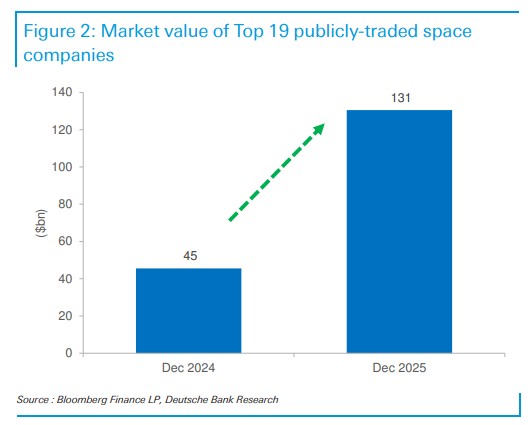
Stimulated by favorable policies, market funds are rapidly flowing into the space sector. By the end of 2025, the total market value of the top 19 listed space companies in the U.S. stock market has reached $131 billion, compared to just $45 billion a year ago, an increase of nearly three times.
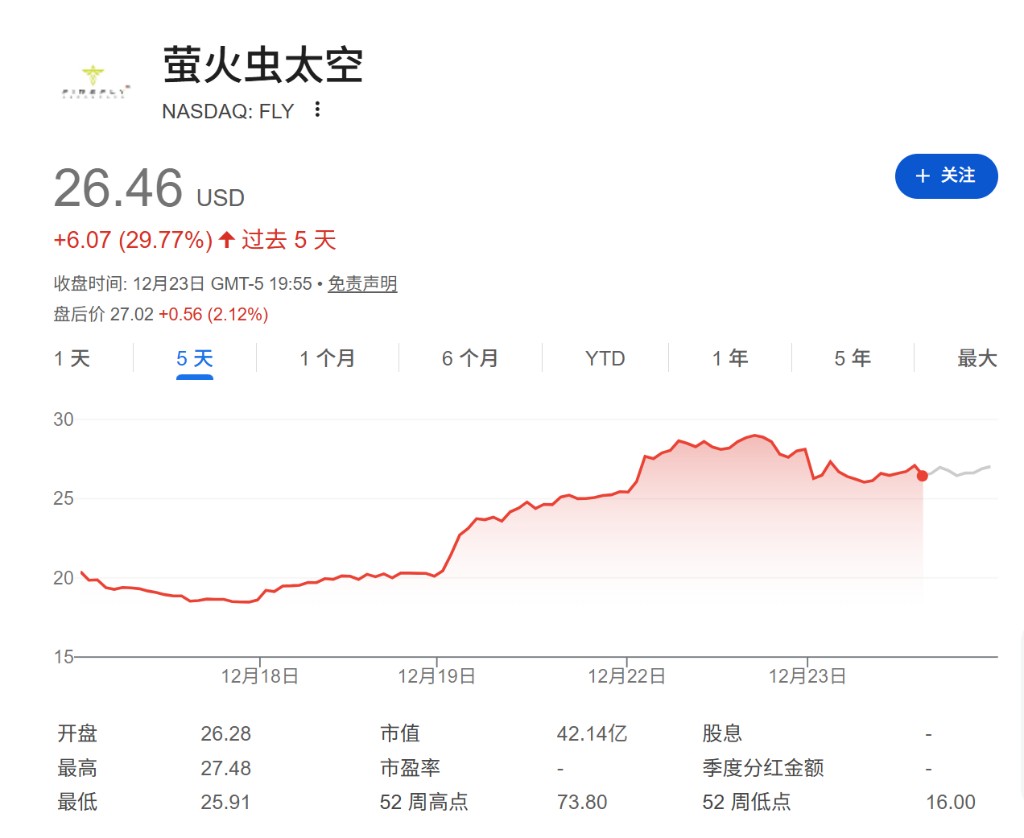
Monday's market performance was particularly eye-catching. Firefly Aerospace, a rocket manufacturer that just went public in August this year, saw its stock price soar by 16%, while Intuitive Machines surged by about 12%. Rocket Lab's stock also jumped by 10%, continuing the nearly 18% increase from last Friday after announcing an $816 million satellite contract with the U.S. Space Development Agency (SDA).
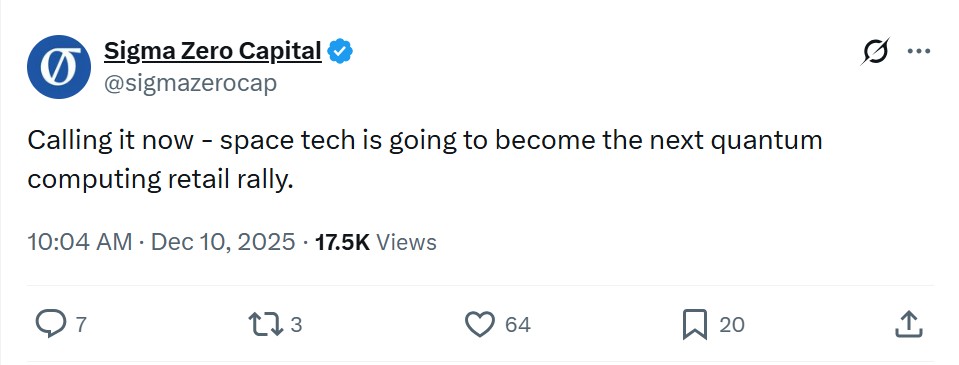
This fervent sentiment has sparked associations among market observers. Sigma Zero Capital stated on social media:
"It can now be asserted—space technology will become the next retail investor frenzy after quantum computing."
Key Catalyst: Musk's Ally at the Helm of NASA and SpaceX's Super IPO
In addition to macro policies, the appointment of key figures has injected a strong dose of optimism into the industry's outlook. According to reports, the Senate officially confirmed Jared Isaacman as the head of NASA last week.
Isaacman is not only a billionaire but also a close ally of Musk. The appointment process was dramatic; Trump had withdrawn Isaacman's nomination earlier this year due to public disagreements, but he was renominated in November. During this period, Transportation Secretary Sean Duffy was temporarily appointed to manage the space agency. Isaacman's formal appointment has eliminated uncertainties about NASA's future direction, and the market generally expects him to promote closer cooperation between NASA and commercial space companies.
Looking ahead, the market is holding its breath for another capital feast. According to sources, Musk's SpaceX plans to conduct its initial public offering (IPO) next year. As the industry leader, SpaceX's listing is seen as the "biggest firework" in this space frenzy, likely to further ignite global investors' demand for space asset allocations
