


Goldman Sachs: We are in the "optimistic phase" of the cycle! Predicting a 13% return on global stock markets by 2026

Goldman Sachs judges that the global stock market has entered a "bull market optimistic phase," with earnings in 2026 expected to continue supporting the market. If dividends are included, the total return rate will reach 15%. The market is shifting from valuation recovery to earnings-driven growth, and regional diversification is beginning to show results. The strategy emphasizes staying invested, strengthening diversified allocations, and being cautious of technology concentration, macro slowdown, and credit risks
Goldman Sachs' equity strategy team pointed out in their latest outlook report that global stock markets are currently in a typical "optimism phase," with the breadth of the bull market expected to further expand by 2026. Led by Peter Oppenheimer, the strategy team maintains a constructive view on the stock market, although they anticipate that the major index returns in 2026 will be lower than in 2025, profit growth will continue to support market performance.
According to Goldman Sachs' forecasting model, the weighted price return of the global stock market in 2026 is expected to be 13% in USD terms, and if dividends are included, the total return will reach 15%. This forecast is based on the strong performance of the market in 2025. Looking back over the past year, although the market did not rise in a straight line and the Nasdaq index fell nearly 25% at the beginning of the year due to the "DeepSeek" spillover effect in the tech sector and tariff concerns, the market subsequently experienced a sharp rebound. Since the low in April, the two major U.S. stock indices have rebounded nearly 45%.
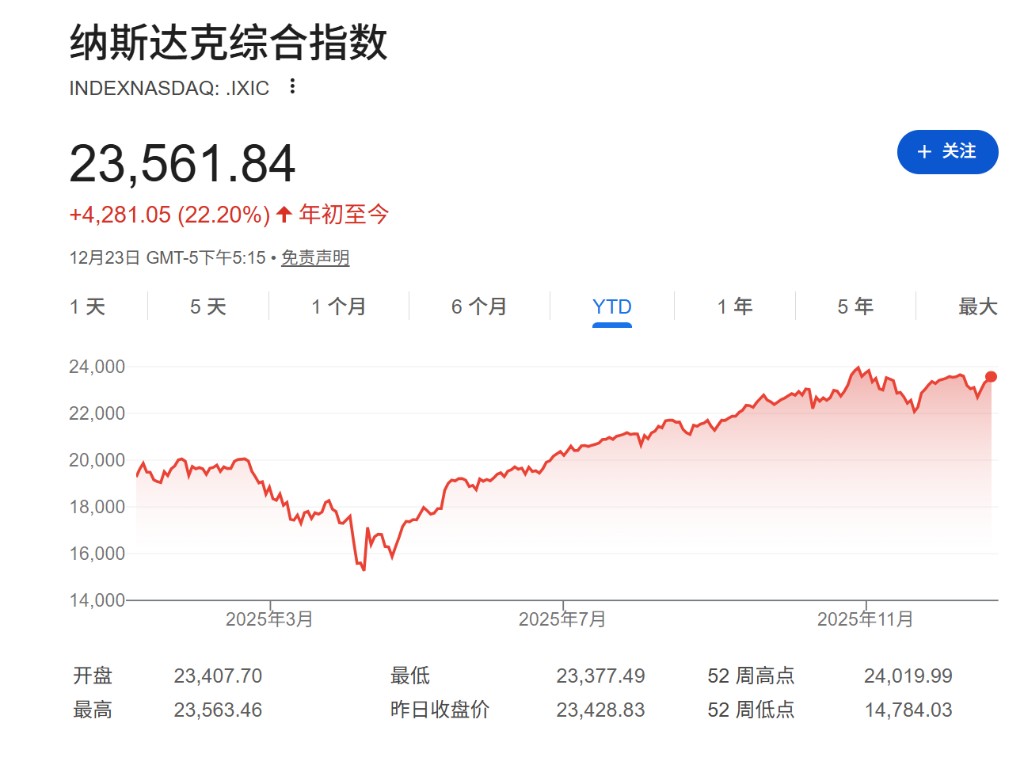
Goldman Sachs emphasizes that the current bull market is shifting from pure valuation repair to profit-driven, and market performance has begun to show characteristics of geographical diversification, with most major stock markets outperforming U.S. stocks in 2025. This marks the first time in years that investors have truly benefited from geographical diversification. Meanwhile, the strong performance of cyclical stocks relative to defensive stocks, along with better-than-expected economic data, has further boosted growth expectations.
However, Goldman Sachs also warns that given the current record concentration at the national, industry, and individual stock levels, diversified investment is particularly urgent in 2026. Strategists advise investors to optimize risk-adjusted returns through cross-regional, cross-style, and cross-industry allocations while remaining vigilant about potential credit risks and the pressure of tech stock corrections.
Cycle Evolution: Entering the "Optimism Phase"
Goldman Sachs, based on over 50 years of research on U.S. stock cycles, points out that the stock market typically undergoes four stages of evolution: Despair, Hope, Growth, and Optimism. The current market is in the final part of the cycle— the "optimism phase."
This phase is characterized by increased investor confidence, which may even lead to complacency, and valuations often rise again, exceeding profit growth. The report notes that while 2025 is the early stage of the optimism phase, many non-U.S. markets have seen valuations rise alongside profit recoveries, but Goldman Sachs believes this phase will continue into 2026.
It is worth noting that historical bubbles often see more significant stock price surges in the final year. Goldman Sachs warns that if more speculative behavior is triggered by the AI narrative, there is an upward risk of further "melt-up" and the market exhibiting bubble characteristics in 2026.
Reflecting on the year about to pass, Goldman Sachs notes that the road to recovery has been fraught with challenges. At the beginning of 2025, the S&P 500 index performed poorly and experienced a correction of just under 20% from mid-February to April, with the Nasdaq index suffering a deeper decline The report specifically mentions that concerns over tariffs and the spillover effects on the U.S. technology sector following the launch of "DeepSeek" were key factors leading to the market downturn at that time.
However, the subsequent recovery was quite significant. As tariff concerns eased and especially with the strong earnings results from large-cap U.S. tech stocks, the market regained its upward momentum. Unlike the past decade, which was primarily driven by the U.S. and growth stocks, the regional diversification strategy began to take effect in 2025, particularly with undervalued non-U.S. markets starting to outperform.
Investment Strategy: Diversification is Urgent
Facing 2026, Goldman Sachs' core recommendation is "diversification is a must." Given that the current stock market is geographically dominated by the U.S., industry-wise by technology, and stock-wise by large-cap U.S. companies, this high concentration is both a driver and a risk.
Goldman Sachs recommends that investors adopt the following strategies:
- Maintain Investment: The bull market is not over yet.
- Cross-Regional Diversification: Focus more on emerging markets (EM).
- Cross-Style Diversification: Combine selected growth stocks with value stocks. In non-U.S. markets, value stocks typically outperform growth stocks, partly because sectors like finance and mining have successfully transformed from "value traps" to value creators.
- Cross-Industry Diversification: Leverage the expansion of technology capital expenditures (Capex) to position in "old economy" infrastructure sectors that can benefit from AI development.
- Focus on Alpha Returns: Capture stock opportunities by taking advantage of the potentially low correlation among stocks.
Potential Risks: Macro and Credit Concerns
Although the baseline forecast is optimistic, Goldman Sachs also outlined several key downside risks. First, weak economic growth and rising unemployment could lead to a market correction. Given the current high valuations and strong performance of cyclical sectors, this risk is particularly relevant.
Second, there is the concentration risk in tech stocks. If quarterly performance of tech stocks disappoints or if more competition arises, it could trigger a correction in leading tech stocks, which, due to their significant weight in the index, could lead to a broader market adjustment.
Finally, debt risk cannot be ignored. The report notes that with the increase in debt issuance by tech companies, the risks in the credit market are rising. The failures of Tricolor and First Brands have heightened market awareness of potential risks. Additionally, concerns over public finances could also push up government bond yields. Nevertheless, Goldman Sachs believes that the private sector and bank balance sheets are relatively healthy, and the potential for interest rates to decline may exceed market pricing, which will somewhat limit the secondary effects of an economic downturn
