On the first day of the year, Taiwan Semiconductor and Samsung surged to new highs, driving AI stocks to rise against the market trend

Taiwan Semiconductor announced that the 2nm process will enter mass production as scheduled, and with the surge in demand for AI chips, both the US stock market and the Taiwan stock market have reached historical highs; Samsung Electronics saw a 7.2% increase in its stock price to reach a new high due to customer recognition of its HBM4 products. Analysts generally believe that the AI boom will continue until 2026. Bernstein has listed Taiwan Semiconductor as a preferred stock, and Morgan Stanley has raised its price expectations for DRAM and NAND in 2026 by 62% and 75% respectively, significantly increasing Micron's earnings expectations
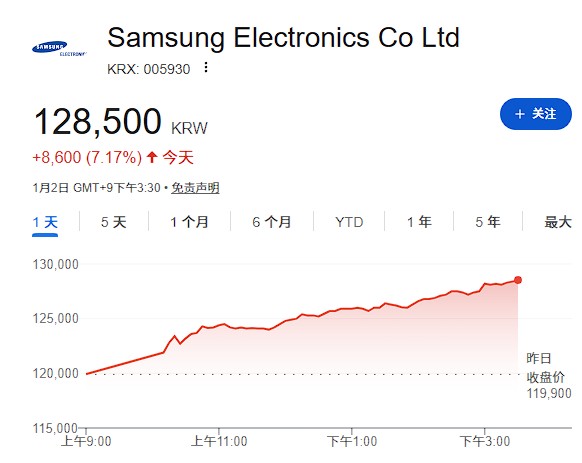
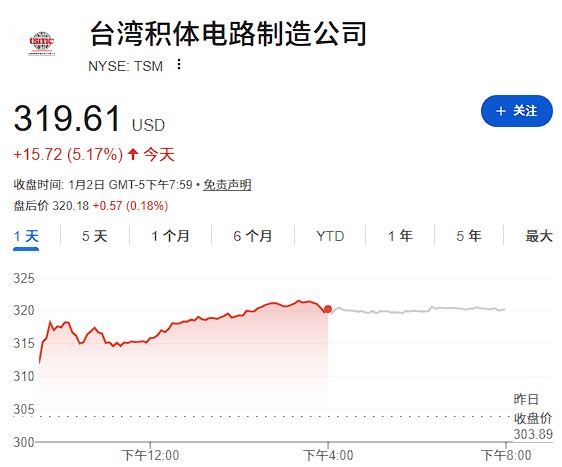
On the first trading day of 2026, AI chip supply chain stocks surged strongly, becoming the market focus against the backdrop of diverging trends in the U.S. stock market. Taiwan Semiconductor's U.S. and Taiwan stocks both hit historical highs, while Samsung Electronics' Korean stocks soared 7.2%, setting a new closing record, driving the entire AI sector to rise against the market trend.


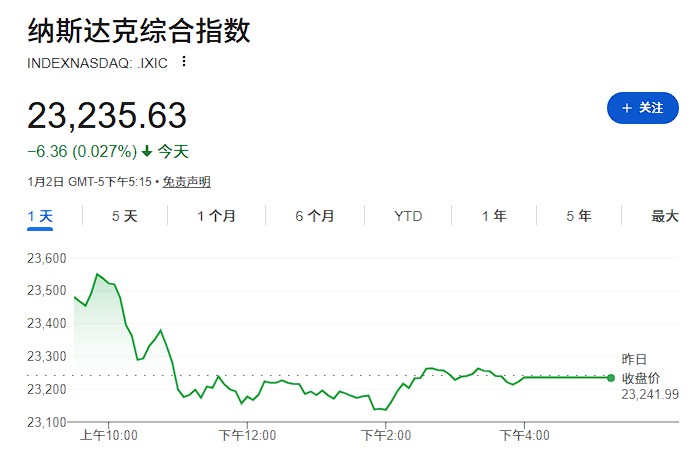
On Friday (January 2), the Korea Composite Stock Price Index rose 2.3%, breaking the 4300-point barrier for the first time in history, mainly boosted by news that Samsung Electronics' HBM4 business received customer recognition. Taiwan Semiconductor benefited from the dual good news of the 2nm process entering mass production and a surge in demand for AI chips. Meanwhile, the Nasdaq index slightly declined that day, while the S&P 500 index edged up, highlighting the independent performance of AI-related stocks.

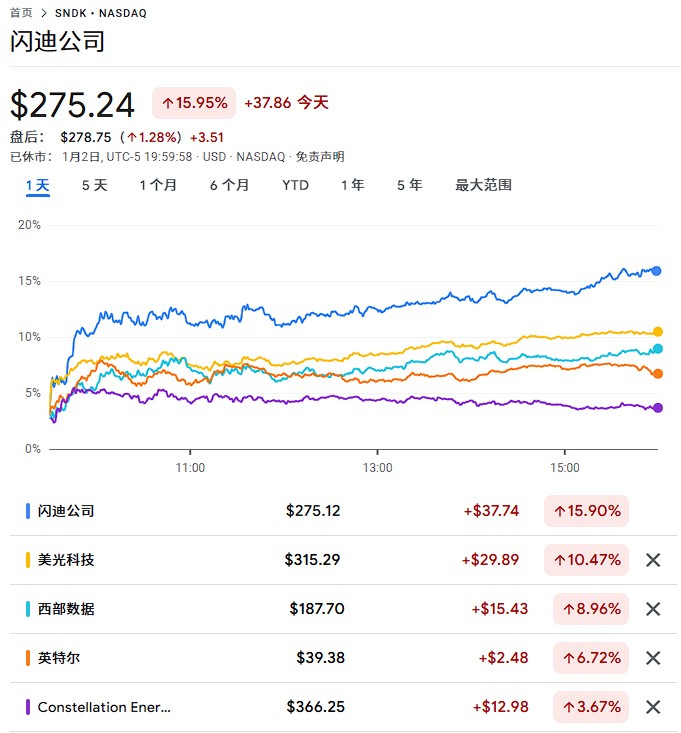
In addition to Taiwan Semiconductor and Samsung Electronics, several AI-related stocks recorded gains on Friday. Sandisk, Micron, Western Digital, Intel, and Constellation Energy topped the gainers list. Tech giants with a market value of over a trillion dollars, such as Nvidia and Broadcom, also saw increases.

The market's continued optimism about investments in AI infrastructure has driven this wave of gains. According to Reuters, Nvidia is placing additional orders for H200 chips with Taiwan Semiconductor. Morgan Stanley pointed out that the supply of memory is tightening rather than easing in 2026, raising the price expectations for DRAM and NAND by 62% and 75%, respectively.
Analysts generally believe that the AI boom will continue into 2026. Bernstein has listed Taiwan Semiconductor as a preferred stock, expecting its revenue to grow by 23% and 20% in 2026 and 2027, respectively. Jim Reid, head of global macro research at Deutsche Bank, stated that sustained global growth, optimism about AI potential, and central bank interest rate cuts will continue to drive the performance of financial assets.
Taiwan Semiconductor's 2nm Mass Production Realized, Strong Order Demand
Recently, Taiwan Semiconductor quietly announced on its official website that its 2nm process (N2) technology is scheduled to enter mass production in the fourth quarter of 2025, marking the official entry of the global semiconductor industry into the 2nm era. This technology uses the first-generation nanosheet transistor architecture, which improves performance by 10%-15% at the same power consumption compared to the N3E process, and reduces power consumption by 25%-30% at the same speed The N2 process adopts Gate-All-Around (GAA) nanosheet transistor technology, breaking through the physical limits faced by the FinFET architecture at the 3nm node. This technology transforms the current channel from vertical "fins" to horizontally stacked "nanosheets," allowing the gate to completely wrap around the channel from all sides, significantly reducing leakage and enhancing transistor density. Compared to pure logic circuit designs, the transistor density of the N2P process is approximately 20% higher than that of N3E.
TSMC CEO C.C. Wei stated in the October earnings conference that the N2 progress is smooth and the yield is good, expecting a faster ramp-up in capacity driven by smartphones and high-performance computing and AI applications in 2026. The company plans to simultaneously expand production at the Kaohsiung Wafer Fab 22 and Hsinchu Wafer Fab 20, taking the rare "dual-line operation" strategy to serve both mobile chip and AI server chip product lines.
TSMC is also advancing its layout for more advanced processes. The company plans to mass-produce N2P and A16 processes in the second half of 2026, with A16 adopting back-side power supply technology, primarily targeting AI and high-performance computing processors. The foundation engineering for the 1.4nm process plant began in November 2025, with risk trial production expected to start in 2027 and mass production targeted for 2028.
At the same time, according to Reuters, NVIDIA is placing additional orders for H200 chips with TSMC. Sources say that NVIDIA has requested TSMC to begin production of this additional batch of chips, with work expected to start in the second quarter of 2026.
Samsung HBM4 Gains Customer Recognition, Returns to Competitive Track
Samsung Electronics' stock surged 7.2% on Friday, reaching a record closing high, mainly boosted by positive customer feedback on the company's HBM4 business.
According to a previous article from Wall Street Insight, Samsung Electronics Co-CEO Jong-Hee Han revealed in a New Year address that the company's HBM4 products have demonstrated "differentiated competitiveness" and received high praise from customers, stating "Samsung is back."
This statement greatly boosted investor confidence, with the market expecting Samsung to gradually narrow the gap with SK Hynix in the high bandwidth memory market and potentially re-enter NVIDIA's core supply chain in 2026 with the next generation of HBM products.
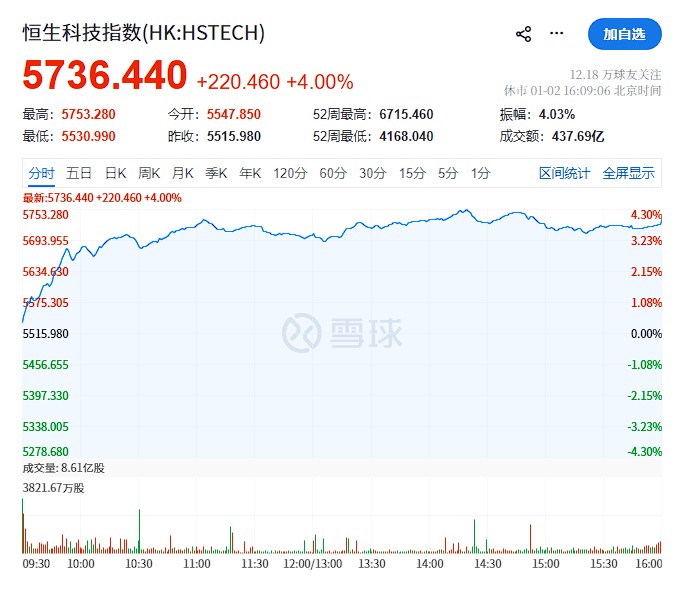
The surge in stock price was also supported by the overall resonance of Asian tech stocks and strong industry fundamentals. On Friday, influenced by the listing performance of Wall Street Technology and progress related to DeepSeek, the Hang Seng Tech Index soared 4.3% at one point.

In terms of macro data, South Korea's semiconductor exports in December surged 43% year-on-year, confirming the importance of Samsung and SK Hynix in the global AI hardware boom.
Analysts Optimistic About AI Chip Supply Chain Prospects
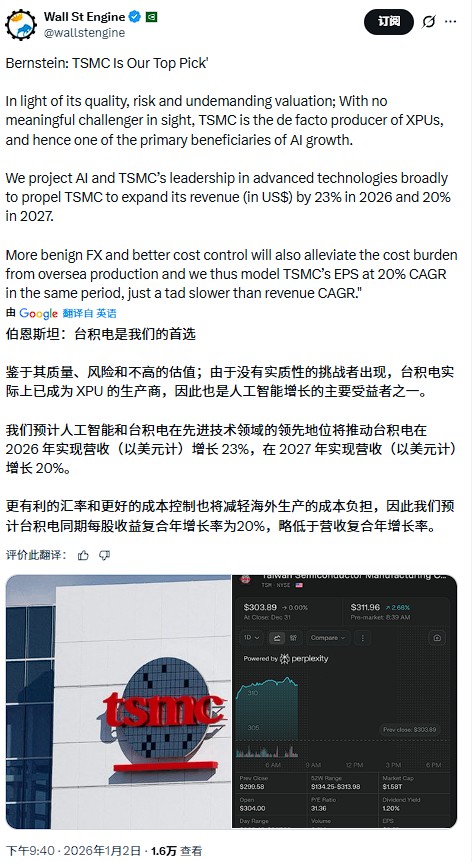
Bernstein has listed Taiwan Semiconductor as a top pick, believing it has advantages in quality, risk, and valuation. The firm pointed out that, in the absence of meaningful challengers, Taiwan Semiconductor is the actual producer of AI chips and thus one of the main beneficiaries of AI growth.
Bernstein expects that the leadership of AI and Taiwan Semiconductor in advanced technology will drive the company's revenue growth by 23% in 2026 and 20% in 2027.
The firm also stated that a more moderate exchange rate environment and better cost control will alleviate the cost burden of overseas production, expecting Taiwan Semiconductor's earnings per share to grow at a compound annual growth rate of 20% during the same period, slightly slower than revenue growth.

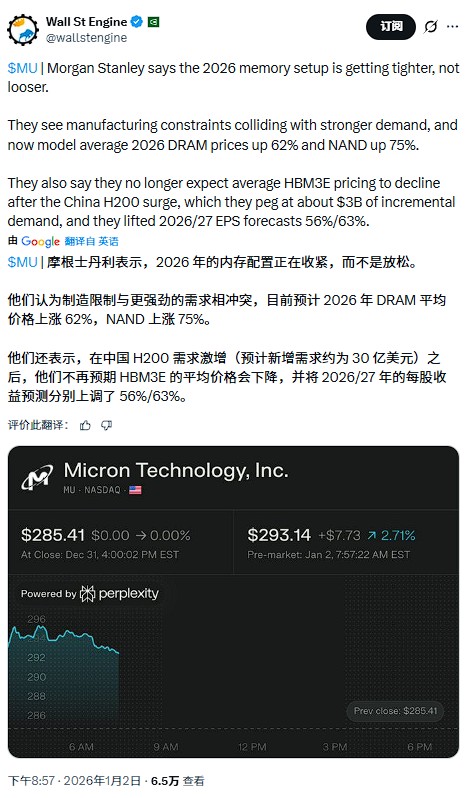
In addition, Morgan Stanley emphasized that the memory market is tightening rather than loosening in 2026. The firm believes that manufacturing constraints are colliding with stronger demand and has raised its average price expectations for DRAM in 2026 by 62% and NAND by 75%.
Due to the surge in demand for H200 chips, the firm no longer expects a decline in the average price of HBM3E and has significantly raised Micron's earnings expectations, increasing the earnings per share forecasts for 2026 and 2027 by 56% and 63%, respectively.