Currently, there are two main lines in commodity trading - "de-dollarization" buying gold and "strong security" buying metals

Zhejiang Merchants Securities believes that geopolitical risks and de-dollarization are reshaping the commodity cycle. The core trading logic is divided into two main lines: first, gold is replacing the US dollar as the central bank reserve anchor, with 95% of central banks expected to continue increasing their holdings, supporting gold prices to shift from being driven by real interest rates to being dominated by geopolitical premiums; second, the strategic material stockpiling triggered by "strong security" is driving the revaluation of military metals. By 2025, tungsten and cobalt are expected to rise by 229% and 120%, respectively
The accumulation of macro risks in developed Western economies and the tension in the global geopolitical environment are reshaping the super cycle of commodities. According to a report released by the macro team led by Li Chao at Zhejiang Merchants Securities on the 6th, two clear trading lines are emerging in the current market: one is the replacement of reserve assets around "de-dollarization," and the other is the accumulation of key metals based on the logic of "strong security."
The report believes that under the main line of reserve asset replacement, global central banks are accelerating the adjustment of their reserve structures, not only reducing dependence on dollar assets but also viewing gold as a core tool to hedge against sovereign currency credit risks. The buying by central banks has become the cornerstone supporting the medium to long-term rise in gold prices, with the pricing logic of gold gradually shifting from traditional real interest rate-driven to being dominated by official sector demand and geopolitical risk premiums.
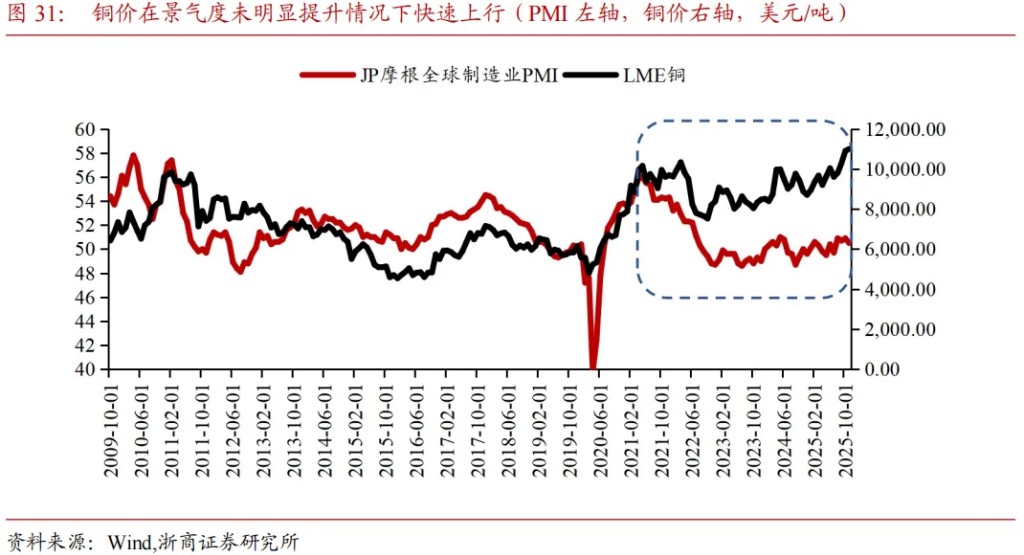
At the same time, the global trend of strengthening security is leading to a repricing of specific metal assets. Countries urgently need to stockpile key strategic materials to ensure military supply. Recently, the United States and European allies have introduced policies to increase strategic metal reserves, resulting in supply-demand gaps for key minerals such as tungsten, cobalt, and lithium. From January to November 2025, global base metal prices rose by 15%, with tungsten increasing by 229%, cobalt by 120%, and copper by 42%.
Based on the above logic, investors should focus on two major directions in future asset allocation: on one hand, gold and related precious metals with independent value storage functions to cope with the instability of the currency credit system; on the other hand, key metals closely related to military demand but with low correlation to the real estate cycle, to capture the structural premium brought by "strong security."
Central Bank Reserve Reconstruction Supports Gold Price Base
According to Zhejiang Merchants Securities analysis, the global "de-dollarization" process provides structural support for gold. IMF data shows that by the third quarter of 2025, the dollar's share in global foreign exchange reserves will drop to 56.92%, continuing a slow downward trend. In the context of high U.S. fiscal deficits and rising geopolitical risks, the primary consideration for reserve management has shifted from returns and liquidity to "whether it can be utilized in critical moments."


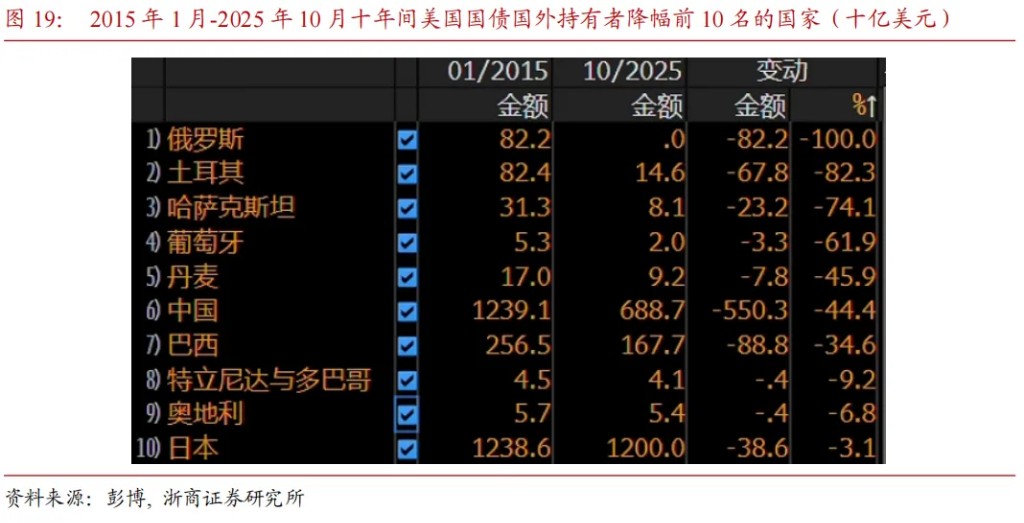
Bloomberg data shows that Russia drastically reduced its holdings of U.S. Treasury bonds around 2018, with its holdings dropping from about $82.2 billion to nearly zero; Turkey's holdings during the same period fell from $82.4 billion to $14.6 billion in October 2025, a decrease of 82%. Within this framework, gold and digital currencies are both placed in the narrative of dollar alternatives, with gold providing a hedging tool due to its independent value storage function, while digital currencies offer new pathways for cross-border payments.
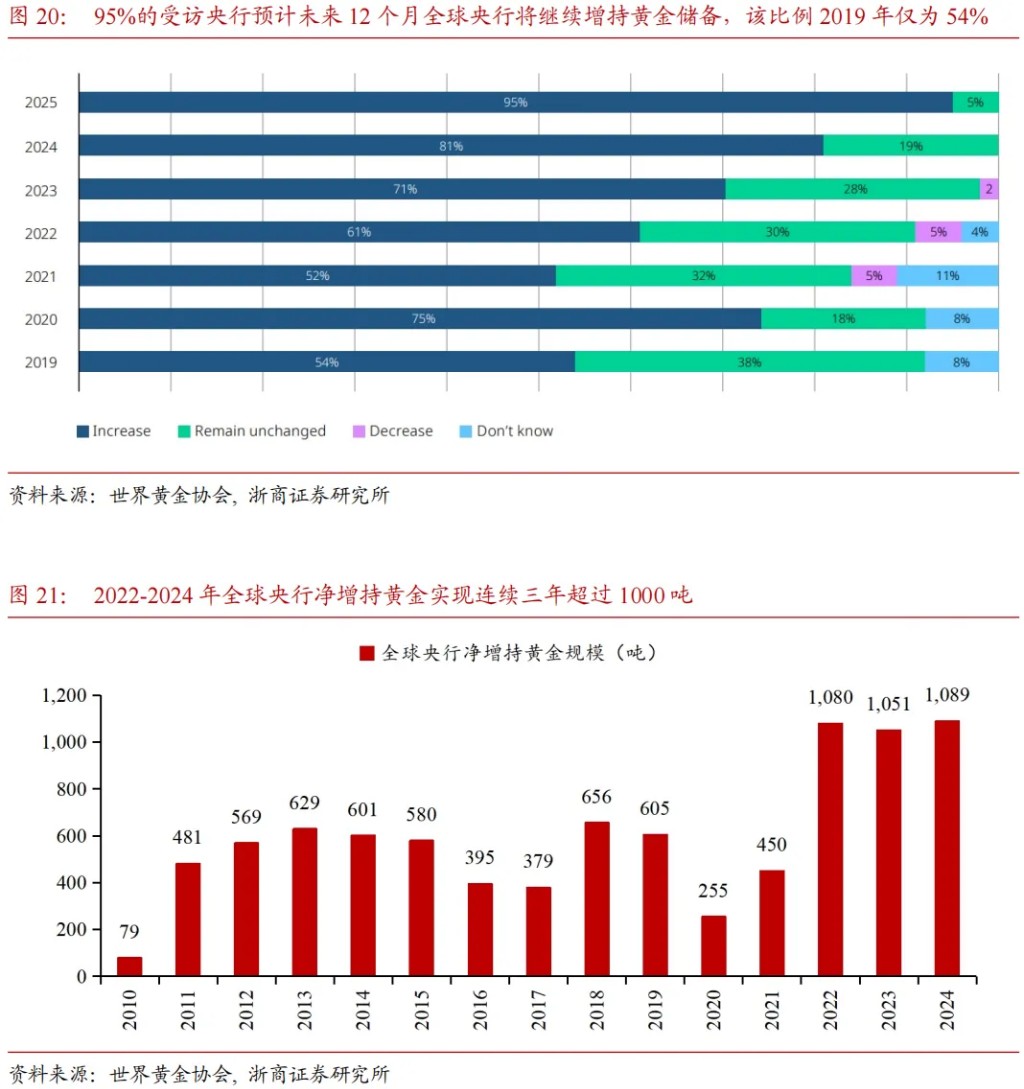
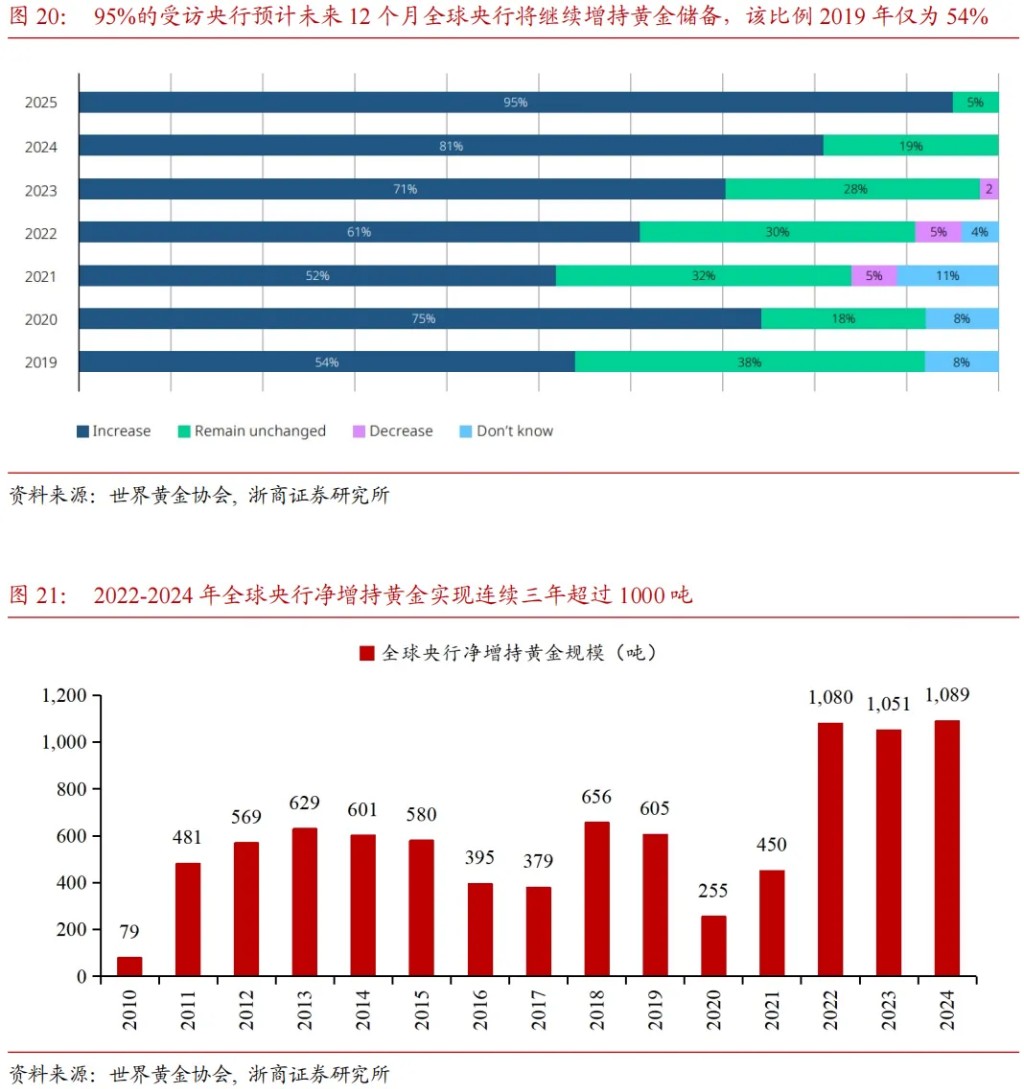
According to statistics from the World Gold Council, global central banks net purchased 1,089 tons of gold in 2024, achieving over 1,000 tons of net buying for three consecutive years. Survey data for 2025 shows that 95% of the central banks surveyed expect global central bank gold reserves to continue to rise in the next 12 months. The impact of central bank purchases on gold prices is not only about the scale of buying but also about changing the structure of market liquidity—long-term allocations continue to withdraw marginal supply, and when gold prices trend upward supported by official buying, ETFs, asset management, and hedge funds are more likely to follow the trend.

However, the report also highlights potential bearish factors facing gold in the future: first, liquidity shocks triggered by financial crises; second, the "Trump energy system restructuring" may consolidate dollar credit through energy exports; third, the productivity revolution brought by robotics applications may trigger structural deflation; fourth, controllable nuclear fusion technology may deconstruct the physical scarcity of gold in the long term.
National Security Mainline Reshapes Metal Valuation
Since the beginning of this year, the prices of base metals have significantly outperformed other primary products globally. Zheshang Securities points out that, in addition to AI computing infrastructure and expectations of Federal Reserve interest rate cuts, the strengthening of military preparedness and stockpiling of strategic materials by various countries are currently underestimated key driving forces.

Historical data shows that on the eve of World War I and World War II, copper prices performed exceptionally well among major asset classes. Currently, the United States has allocated funds for critical minerals through relevant legislation, and EU and NATO member countries have also expressed intentions to establish multinational reserve plans for critical raw materials. This reserve demand driven by national security is often fulfilled through non-public means such as directed agreements, making it difficult for traditional inventory statistics to cover the real demand gap.

Under this logic, China Merchants Securities believes that the investment mainline should focus on varieties that are crucial to the military industry and less affected by the downturn in real estate:
- Tungsten: About 8% of demand comes from the military sector (such as armor), and the supply side is highly concentrated, with significant supply-demand gaps affected by export controls and environmental restrictions.
- Lithium and Cobalt: As military equipment transitions from fuel-driven to unmanned and electrified, lithium and cobalt become key energy elements for advanced weapon systems (such as drone swarms and exoskeletons).
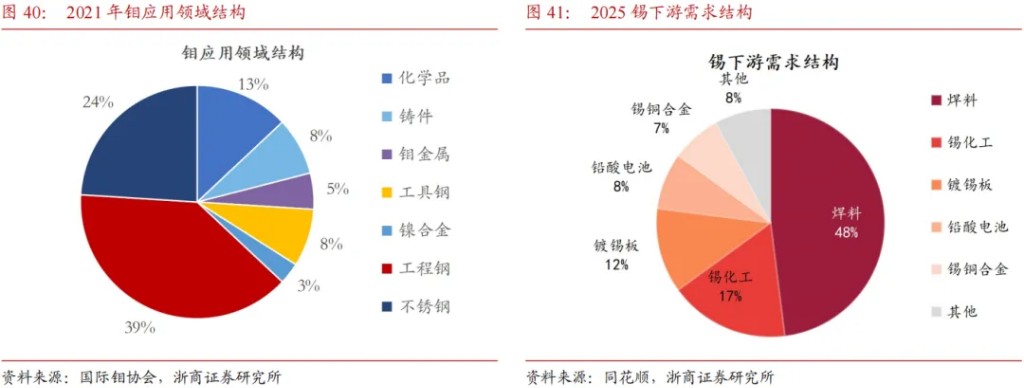
- Molybdenum and Tin: Known as "military metals," they are widely used in aerospace, wear-resistant components, and electronic welding, possessing considerable price elasticity under the national security mainline.
- Copper and Aluminum: As basic military consumables, copper is irreplaceable in AI data center construction. If copper prices are too high or supply is tight, aluminum as a substitute also has room for expansion
- Rare Earths: As a key resource for modern industry and chip manufacturing, its price is highly sensitive to the changes in great power competition and trade policies.
ZheShang Securities emphasizes that although metal prices have partially priced in expectations of technological revolution and monetary easing, the demand for strategic material stockpiling brought about by the normalization of geopolitical conflicts will provide new premium space for related commodities