Technical overbought conditions trigger a pullback, global stock markets pause their upward momentum, Nasdaq futures down 0.2%, precious metals plummet across the board, oil prices under pressure

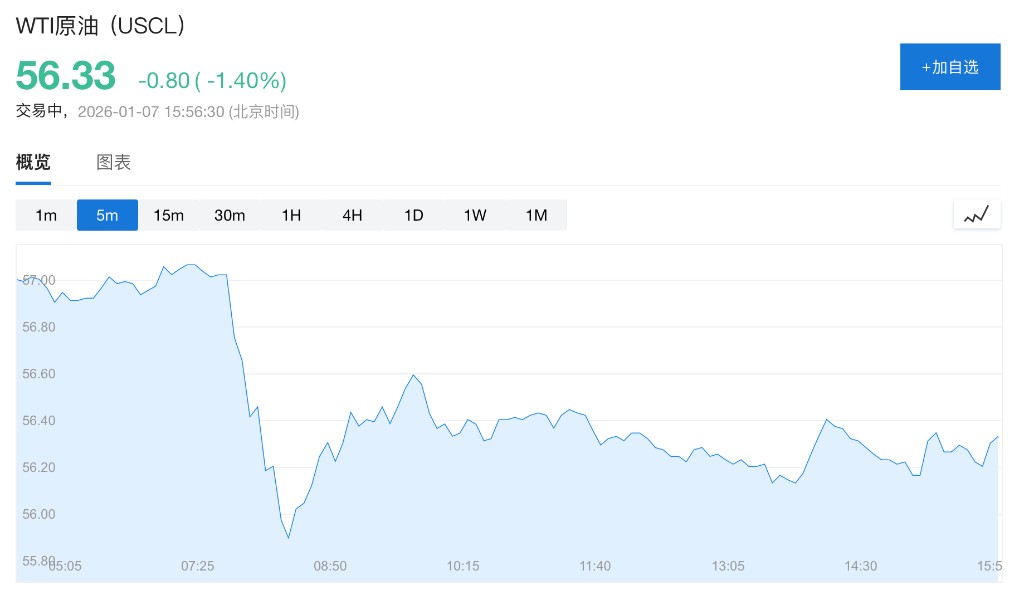
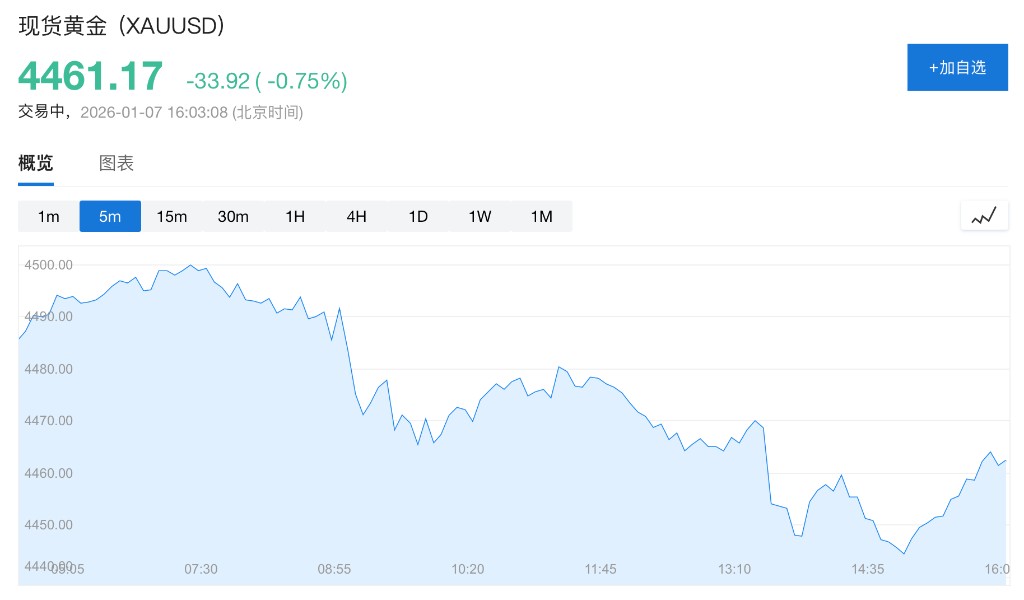
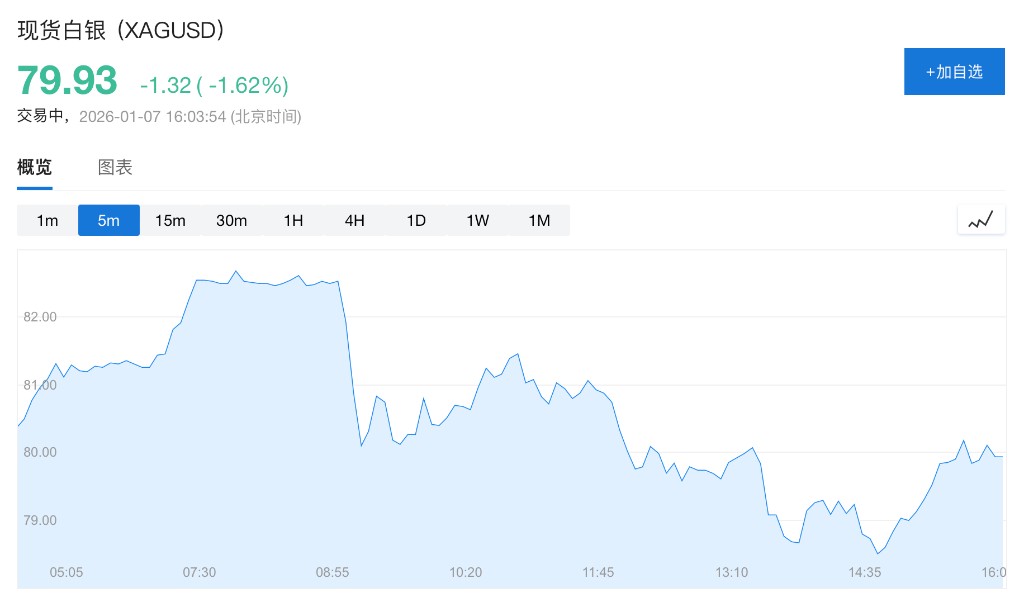
U.S. stock index futures fell, with Nasdaq 100 futures down more than 0.2%. Before the annual weight rebalancing of the Bloomberg Commodity Index (BCOM), precious metals plummeted, with spot gold briefly falling below the $4,450 per ounce mark, and spot silver declining more than 3% during the day. Trump announced that Venezuela would deliver 30 to 50 million barrels of oil to the U.S., raising market concerns about increased supply, leading to a drop in crude oil prices
The continuous rise driven by the AI boom and expectations of interest rate cuts by the Federal Reserve has pushed Asian stock markets into the "technically overbought" zone, and the upward momentum in Asian stocks has paused. In a weak market sentiment, U.S. stock index futures dipped slightly, and European stock markets opened with a lackluster performance. Precious metals plummeted across the board, and oil prices faced downward pressure.
On January 7, U.S. stock index futures showed mixed results, European stocks opened with varied performance, and most Asian stock indices declined. U.S. Treasury yields fell, and the dollar remained largely flat. Gold, silver, and palladium collectively plunged, with crude oil dropping over 1%, and cryptocurrencies faced pressure.
According to Wallstreetcn, the commodity market is facing critical technical adjustment pressures. The Bloomberg Commodity Index (BCOM) is set to undergo its annual weight rebalancing from January 8 to 14, which is expected to trigger large-scale passive fund reallocations. Market analysis indicates that the futures selling pressure resulting from this rebalancing is expected to be substantial, accounting for 9% and 3% of total holdings in silver and gold, respectively. This mechanical adjustment at the funding level is directly and significantly suppressing short-term market sentiment and price trends.
Core market movements are as follows:
Dow futures rose 0.08%, S&P 500 futures fell 0.09%, and Nasdaq 100 futures dropped over 0.2%
The Euro Stoxx 50 index rose 0.09%, the UK FTSE 100 index fell 0.25%, the French CAC40 index rose 0.24%, and the German DAX30 index rose 0.44%
The Nikkei 225 index closed down 1.1% at 51,961.98 points. The Tokyo Stock Exchange index closed down 0.8% at 3,511.34 points. The Seoul Composite Index closed up 0.6% at 4,551.06 points
The yield on the 10-year U.S. Treasury bond fell 2 basis points to 4.16%, while the yield on the UK 2-year Treasury bond fell 3 basis points to 3.67%, the lowest level since August 2024
The dollar index remained largely flat, the yen rose 0.2% against the dollar to 156.35
Spot silver fell 1.6% to $79.9 per ounce. Spot gold fell 0.75% to $4,461 per ounce. Spot palladium dropped over 4% to $1,740 per ounce; WTI crude oil fell 1.4% to $56.33 per barrel
Bitcoin fell 0.6% to $92,623.82, and Ethereum fell 0.7% to $3,250.08
After reaching new highs in the S&P and Dow overnight, U.S. stock index futures temporarily lost upward momentum, with Nasdaq 100 futures dropping over 0.2%. Investors are focusing on the labor market data set to be released this week.

Before the annual weight rebalancing of the Bloomberg Commodity Index (BCOM), precious metals plummeted, with spot gold briefly falling below the $4,450 per ounce mark, and spot silver experiencing a daily decline of over 3% This is one of the most important liquidity events in the global commodity market. According to the rules, the index will be adjusted between January 8 and 14, 2026, during which the large passive funds tracking the index must mechanically adjust their positions to match the new weight distribution.
Market data shows that this adjustment has created significant selling pressure on the precious metals sector. In addition to gold facing selling equivalent to 3% of total holdings, the silver market is under particularly heavy pressure, with expected sell orders reaching up to 9% of total holdings. This "non-fundamental" sell-off triggered by index rules has forced speculative funds that previously chased prices to choose to exit and observe before the event occurs, thereby exacerbating short-term price volatility.
Trump announces that Venezuela will deliver 30 to 50 million barrels of oil to the United States, raising market concerns about increased supply, causing WTI crude oil prices to decline.
According to CCTV News, on January 6 local time, U.S. President Trump announced that the interim government of Venezuela would transfer 30 to 50 million barrels of oil to the United States. These oils will be sold at market prices, and the proceeds will be overseen by Trump to ensure that the funds are used to "benefit the people of Venezuela and the people of the United States."
Wall Street Insight previously mentioned that Goldman Sachs analysis believes that although the short-term supply outlook is full of uncertainties, the potential recovery of Venezuelan oil production will exert significant downward pressure on global oil prices in the long term