


Oil giants gather at the White House to discuss Venezuelan crude oil, Trump says "You invest hundreds of billions, the government doesn't spend a dime," Exxon Mobil responds "No reform, no investment"

Trump demands oil giants to invest at least $100 billion in Venezuela, but clearly states that the government will not provide funding or compensate for past losses. Exxon Mobil's CEO bluntly stated that the country is "not investable," emphasizing the need for significant legal reforms first. Companies like Chevron, which already have operations there, have shown a willingness to expand, but the market response has been lukewarm—analysts say that Venezuela's infrastructure is in ruins, and Trump's target oil price of $50 per barrel is more likely to make investments unprofitable
On January 9th, local time, U.S. President Trump convened nearly twenty executives from oil companies, including Exxon Mobil, Chevron, and ConocoPhillips, in the East Room of the White House, urging them to return to Venezuela and exploit the country's vast oil reserves.
According to CCTV News, during this highly publicized meeting, Trump stated that large oil companies would need to spend at least $100 billion to rebuild the necessary capacity and infrastructure of Venezuela's oil industry.
However, media outlets such as The Wall Street Journal reported that this ambitious plan was met with a lukewarm response from industry leaders. While executives acknowledged the resource potential of Venezuela, most were hesitant to commit significant investments immediately without legal protections and reforms to the business framework. Exxon Mobil CEO Darren Woods bluntly pointed out that Venezuela is in an "uninvestable" state under the current environment.
Trump attempted to apply pressure during the meeting with ultimatum-like remarks. He told the executives present: “If you don’t want to go in, just tell me, because I have 25 people who are not here today willing to take your place.” Although Trump promised that the U.S. government would provide some form of security guarantees and stated that the U.S. and Venezuela were "cooperating well," he also set a clear financial boundary: companies must fund the investments themselves, and the U.S. government would not provide financial support for these investments.
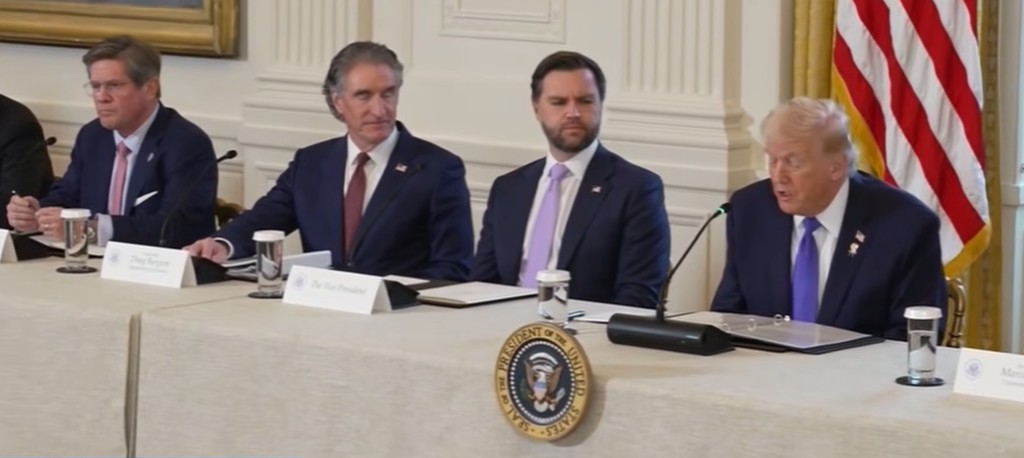
Screenshot of Trump meeting with oil company executives
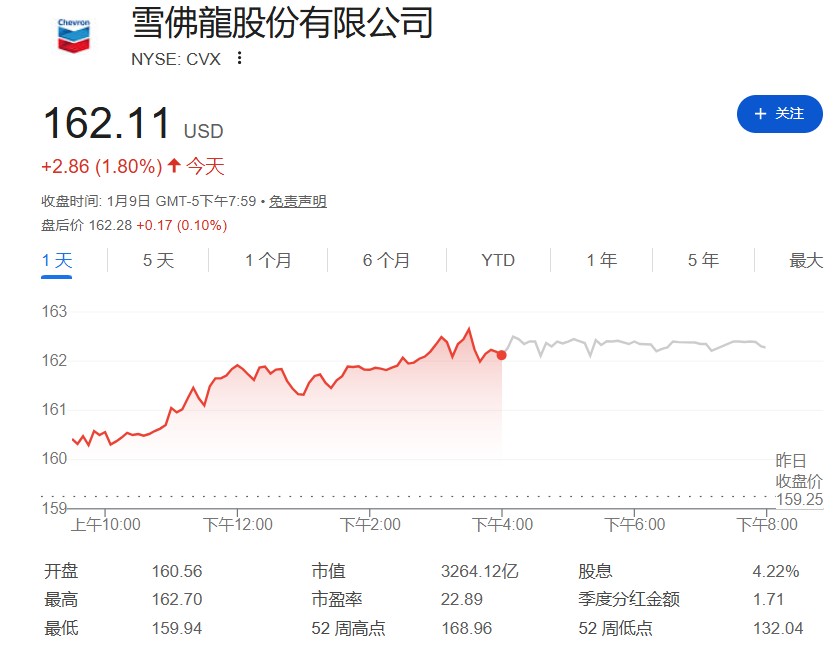
This news did not trigger significant fluctuations in the financial markets, with crude oil prices reacting mildly, indicating that investors were skeptical about whether the plan could materially change the global supply landscape in the short term. Chevron's stock even fell by 1% following the related news, reflecting market concerns about the increased exposure to geopolitical risks.
Giant Game: Past Scars and Current Thresholds
For many American oil giants, returning to Venezuela is not just an economic calculation but also a painful reminder of the past history of asset confiscation. This concern was particularly evident during the private discussions at the meeting.
Exxon Mobil CEO Darren Woods took a hardline stance during the meeting. Reports indicate that Woods directly told Trump, without "significant changes" to the country's business framework, legal system, and hydrocarbon laws, Exxon Mobil cannot invest. "Our assets were confiscated there twice," Woods said, "You can imagine that a third re-entry requires seeing significant changes that are completely different from history and the current situation." However, he also mentioned that as long-term issues are resolved, Exxon plans to send a technical team in the coming weeks to assess the status of local assets Ryan Lance, the CEO of ConocoPhillips, mentioned that the company, as Venezuela's largest non-sovereign creditor, still has about $12 billion in asset losses that have not been compensated. In response, Trump was rather cold: "We won't care about what people lost in the past because that's their fault." He added, "You will make a lot of money, but we won't go back." This statement clarified that the Trump administration would not use assistance to companies in recovering past debts as a bargaining chip, nor would it use U.S. tax revenue to compensate for investment risks.
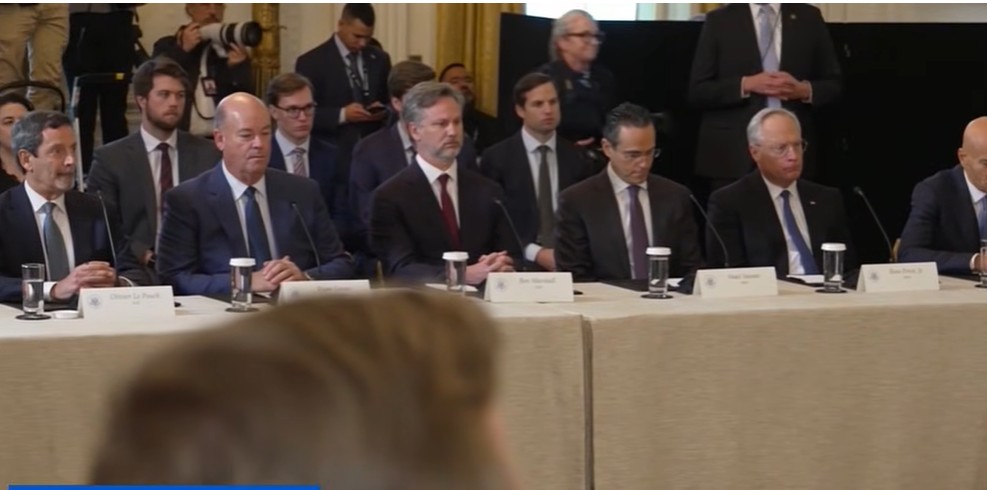
Trump meets with oil company executives, video screenshot
Different Voices: Who is Ready?
Although Exxon and ConocoPhillips are cautious, not all attendees have closed the door on Trump's proposal. Chevron, which already has operations in Venezuela, has shown a more positive stance.
Chevron's Vice Chairman Mark Nelson (representing CEO Mike Wirth, who just had knee surgery) thanked Trump for his leadership and pointed out that the company's current daily production from four joint ventures in Venezuela is 240,000 barrels. He stated, "I believe we can quickly find a way forward that can immediately double the production of these joint ventures."
Additionally, European oil giants seem to be more eager than their American counterparts. Shell CEO Wael Sawan stated that as long as the U.S. provides sanctions exemptions, the company has "billions of dollars worth of opportunities" to invest. Spain's Repsol and Italy's Eni also expressed readiness to increase investment or production. Among private companies, Jeff Hildebrand, founder of Hilcorp, known for cutting costs and squeezing profits from old oil fields, is one of the few executives who clearly said "yes" to Trump, committing to be ready to rebuild infrastructure.
Market Reality: The Paradox of Infrastructure and Oil Prices
From an investor's perspective, in addition to political risks, the fundamentals of Venezuela's oil industry also face severe challenges. Analysts point out that restoring Venezuela's oil production may require hundreds of billions of dollars. Years of neglect, underinvestment, mismanagement, and corruption have left oil and gas fields in ruins, and infrastructure needs comprehensive repairs.
What worries the market even more is Trump's oil price target. According to The Wall Street Journal, the president proposed the possibility of lowering oil prices to $50 per barrel. Analysts warn that this price level is too low and may prevent oil companies from achieving profitability on investments in Venezuela, further suppressing the willingness to spend capital.
In terms of logistics and market impact, Barron's noted that Trump's announced plan for Venezuela to "hand over" 30 to 50 million barrels of oil to the U.S. would have a minimal impact on the global market, equivalent to just half a day's consumption worldwide. While companies like Valero and Marathon Petroleum, which own Gulf Coast refineries, stated they have the capacity to handle Venezuela's heavy crude oil, actual logistics and storage still face challenges Due to the similarity of Venezuelan crude oil to Canadian diluted bitumen, it is not suitable for long-term storage in the salt caverns of the Strategic Petroleum Reserve (SPR), which limits its utility as a strategic reserve.
Uncertainties in Security and Law
Regarding the security issues that are of utmost concern to businesses, Trump's assurances appear somewhat vague. He promised executives "complete security," but suggested that this security would be provided by the Venezuelan regime rather than the U.S. military. "I think the people of Venezuela will provide you with very good security," Trump said.
Legal experts point out that while businesses have a "strong interest" in potential investments, there is a significant gap between consulting and actually "writing a check." Carlos Solé of Baker Botts law firm stated that the current landscape has not stabilized, and there are logistical and political challenges. Before businesses take action, they need to see the U.S. Office of Foreign Assets Control (OFAC) become more lenient in issuing licenses or sanctions waivers
