BAIC New Energy's "Breaking the Wall" Moment

Wallstreetcn
2026.01.13 03:20
portai
I'm PortAI, I can summarize articles.

BAIC New Energy signed a strategic agreement with Pony.ai at the Smart Mobility Technology Day, marking a key moment in its transformation into an "ecosystem builder." BAIC plans to launch the Alpha T5 Robotaxi in the Middle East and European markets, leveraging its advantages in new energy and autonomous driving technology. Within just two months, 600 Robotaxis have completed mass production and are operating in the domestic market. This move not only enhances BAIC's market competitiveness but also opens up new opportunities in the international market

Author | Chai Xuchen

Editor | Zhou Zhiyu

BAIC New Energy's counterattack has been accelerated.

On January 10, BAIC New Energy signed a "five-in-one" strategic agreement with Pony.ai at its Smart Mobility Technology Day. To the outside world, this may seem like a routine business marriage, but deep within the industry, it is seen as a key point for BAIC New Energy to attempt to break away from the role of a pure car manufacturer and transform into an "ecosystem builder." The focus is on the recently popular Robotaxi.

This time, BAIC New Energy aims to expand with the Alpha T5 Robotaxi, using the Middle East and Europe as a foothold to export its operational model and business ecosystem.

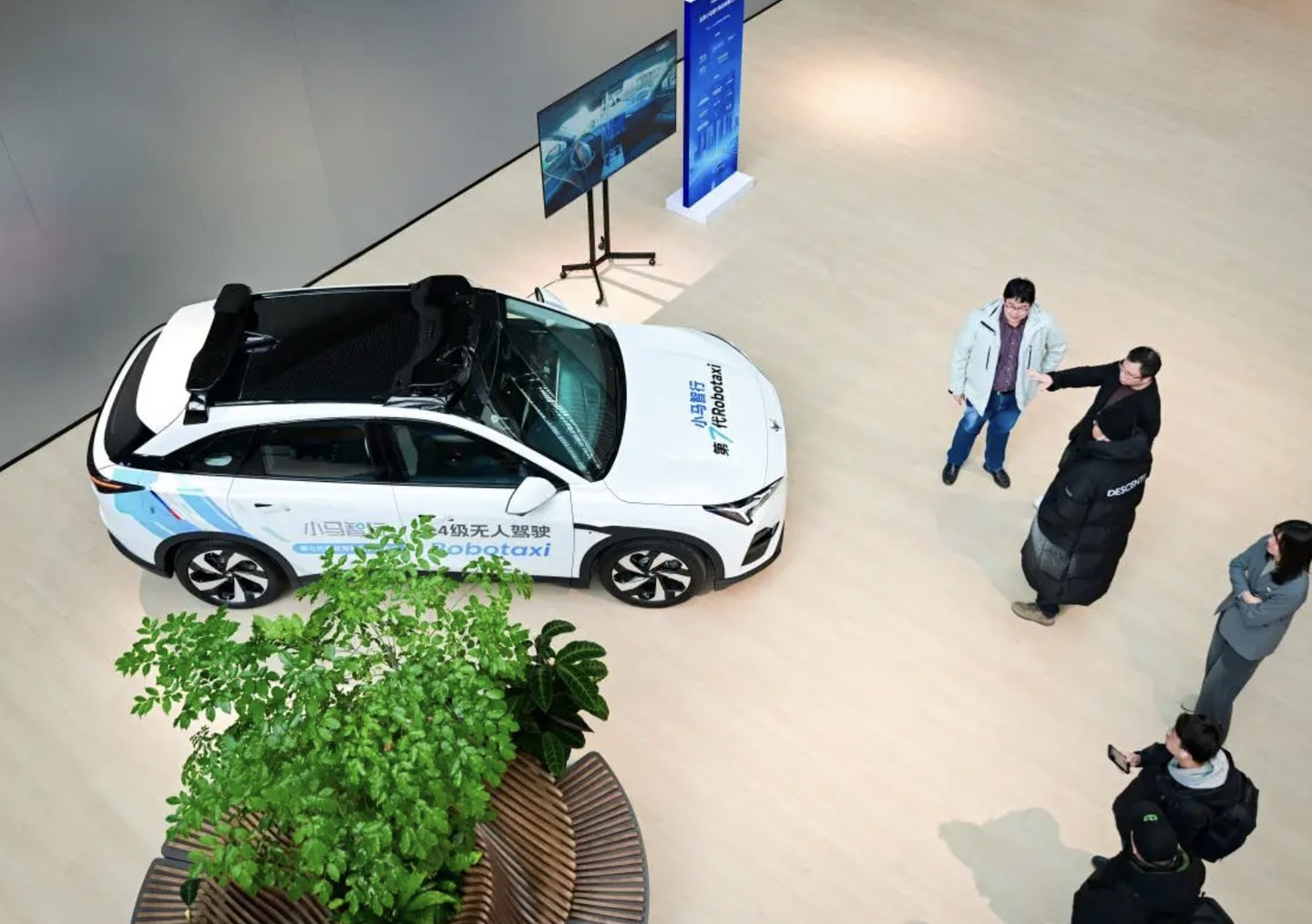
In fact, since the signing of the first Technology Day in November 2024, within just two months, 600 units of the Arcfox Alpha T5 Robotaxi have completed mass production and rolled off the assembly line.

These 600 vehicles have already penetrated Beijing and Shenzhen, creating a closed loop of data. This is precisely the "effort" signal that BAIC New Energy is trying to convey to the outside world — it is no longer just an automobile manufacturer but has become a system integrator capable of industrializing and scaling L4-level autonomous driving technology.

To this end, BAIC New Energy has put forward the Arcfox Alpha T5 platform, which clearly left space for advanced intelligent driving in its design with spatial redundancy and electrical architecture. In exchange, Pony.ai's virtual driver technology will not only empower the Robotaxi but may also feed back into BAIC's intelligent driving capabilities in the passenger vehicle sector.

This cooperation model allows BAIC New Energy to gain a "visa-free passage" to the Middle Eastern and European markets in the competition for the second half of autonomous driving.

Currently, although the domestic Robotaxi market is booming, competition is in a state of extreme internal competition due to the complexity of policies and road conditions. In contrast, the Middle East has enthusiasm and capital support for high-tech transportation solutions, and the road conditions are relatively standardized; the European market, while having strict regulations, has a high acceptance of environmental protection and shared mobility.

BAIC New Energy's decision to go out at this time is to leverage China's advantages in the new energy industry chain and autonomous driving algorithms to conduct a technical dimensionality reduction attack on overseas markets. Especially in the Middle Eastern market, the local capital's demand for high-tech transportation solutions complements BAIC's urgent need to release production capacity, which may be a profit blue ocean that BAIC New Energy has found outside the red sea of the domestic market.

If the overseas expansion of Robotaxi is BAIC New Energy's long-term layout in the future mobility field, then the intensive product offensive in 2026 is an urgent task to stabilize its domestic base. In the planning for that year, BAIC New Energy clearly focuses on the "Xiangjie" brand, which is in deep cooperation with Huawei, attempting to replicate the successful path of Aito by expanding its product matrix In the current market landscape, the Xiangjie S9 has completed its initial penetration into the executive sedan market. Next, it will break the single pattern of sedans and is expected to launch entirely new SUV and MPV models.

From the perspective of its own brand, Jihu, BAIC New Energy has chosen a route of technology sinking and inclusiveness. In addition to the Robotaxi version of the T5, the Jihu models aimed at individual users are also evolving. On January 10, the Jihu Alpha S (L3 version) officially commenced large-scale road trial operations, with the first batch of vehicles entering areas such as the Beijing-Taiwan Expressway.

This means that BAIC New Energy plans to gradually open L3 level autonomous driving functions to individual users by 2026, which will become the biggest differentiating selling point for the Jihu brand in the fiercely competitive 200,000-300,000 yuan market.

In addition to flagship models, the Jihu brand is expected to upgrade existing Koala and Alpha S/T models, further penetrating the market and expanding its user base through more competitive pricing and configurations (such as the popularization of 800V high-voltage fast charging).

On the eve of the victory of long-termism, BAIC New Energy has experienced the ups and downs of the industry and faced the growing pains of transformation. Looking back now, this old car manufacturer has found its own rhythm.

On one hand, by collaborating with Huawei on "Xiangjie," it stabilizes its high-end luxury base; on the other hand, by binding with Pony.ai on "Robotaxi," it seizes the high ground of future mobility; at the same time, it utilizes the Jihu brand to penetrate the mainstream market.

For BAIC New Energy, a deep transformation battle has officially begun.

Risk Warning and Disclaimer

The market has risks, and investment should be cautious. This article does not constitute personal investment advice and does not take into account the specific investment goals, financial situation, or needs of individual users. Users should consider whether any opinions, views, or conclusions in this article align with their specific circumstances. Investment based on this is at one's own risk.