Is the end of AI electricians?

In the AI era, the demand for electricians has surged. The U.S. Bureau of Labor Statistics predicts that between 2024 and 2034, there will be an annual shortfall of about 81,000 electricians, with employment in this field expected to grow by 9%. The rise of data centers is a major reason, driving the recovery of the blue-collar job market, including plumbers and construction workers. Tech giants have also significantly increased their hiring in the energy sector, with a year-on-year growth of 34% in 2024. Companies like Microsoft, Google, and Amazon are competing fiercely to recruit talent in this field
In the AI era, electricians have once again become a hot commodity.
The U.S. Bureau of Labor Statistics estimates that between 2024 and 2034, the U.S. will see an average annual shortage of about 81,000 electricians.
This means that the number of electricians employed will grow by 9% over the next decade.
What does this mean? To put it simply, the official statement is:
Far above the average level for all occupations.
As for the reason... I believe everyone has already guessed it.
Yes, this wave of newly released positions almost entirely comes from data centers.
Electricians Become Hot Commodities Again
The real talent battle in AI is the battle for electricians (doge).
In May of this year, the International Brotherhood of Electrical Workers, representing electricians in the U.S., Canada, and U.S. territories, sent a "happy news" message to its members:
Brothers! In some local chapters, the number of workers needed for a single data center project has already doubled, tripled, and sometimes even quadrupled the current scale!
It's not just electricians who are experiencing a springtime. Data centers have almost single-handedly driven the entire blue-collar job market, including plumbers, construction workers, and HVAC technicians.
The international representative of the plumbers' union, United Association, bluntly stated that the number of workers needed for current data center projects has exceeded any other single industry. Moreover, if we continue to develop along the current "miracle through hard work" AI paradigm, the demand for labor will continue to rise.
As the ultimate party releasing this demand, the actions of tech giants also indirectly confirm this heat.
Data shows that in 2024, tech giants' hiring in the energy sector increased by 34% year-on-year, and it remains high in 2025—about 30% higher than in 2022, before the release of ChatGPT.
Among them, Amazon has the largest footprint: since 2022, it has hired 605 new employees in the energy sector (including AWS).
Microsoft and Google follow closely, adding over 570 and 340 new employees, respectively.
Companies like Apple and NVIDIA have also each added nearly 200 related positions.
The competition for talent at the executive level is even more intense, with no pretense:
Microsoft poached Google’s global energy market and policy head Betsy Beck, and Google immediately countered by hiring Microsoft’s nuclear executive Patrick Taylor.
In any case, for the brothers, the more fiercely the big companies compete, the better, as liquidity and salaries will be driven up.
And for frontline workers, the FOMO sentiment in the AI industry is also a great thing.
According to Wired, tech companies are eager to build data centers and pay very generously; coupled with tight schedules and plenty of overtime, the overtime pay is quite substantial.
It truly echoes Hinton's words:
If someone suggests you become a plumber next time, you should seriously consider it On one hand, robots are still far from being able to handle these tasks; on the other hand, AI itself is creating a large demand for blue-collar jobs.
The first to benefit are electricians, driven by the surge in electricity consumption:
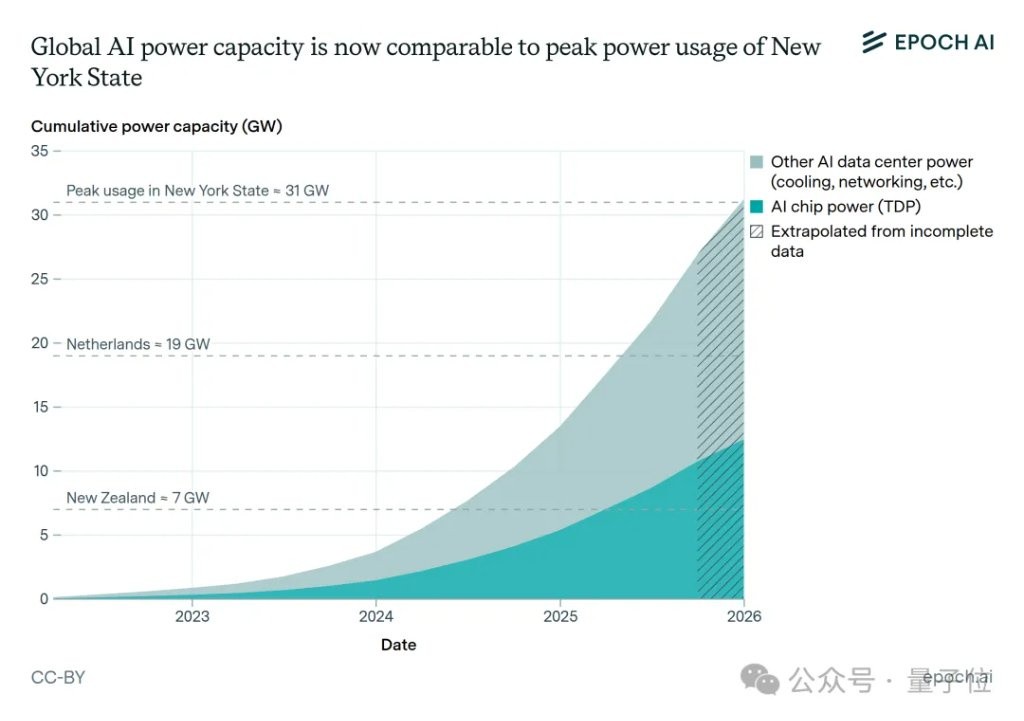
According to the latest estimates from Epoch AI, the electricity consumption of data centers has now reached 30 GW, equivalent to the peak electricity usage in New York State during the hottest times of the year.

Among this, GPUs account for about 40%, while the remaining power is used for cooling, lighting, and network interconnections between servers.
Why the rush? The supply is really too low
Having demand is certainly a good thing, but the reality on the supply side is much more severe.
It would be fine if money could attract workers, but the key issue is that there simply aren't enough workers in the United States.
The shortage of construction workers in the U.S. has persisted for many years.
Anirban Basu, chief economist of a U.S. construction industry organization, pointed out that the labor force for residential, hospital, factory, and energy facilities is already in short supply, not to mention that tech companies are now trying to get involved.
This is rooted in long-standing historical issues.
From the mid-20th century to the 1980s, skilled blue-collar jobs were once the most sought-after professions. They offered stable income and respect, and skilled workers often passed their craft on to their children.
However, with the rise of the internet industry and deindustrialization, in recent years, they have been more inclined to encourage the next generation to go to college and find white-collar jobs.
This logic was not problematic, but who could have predicted that when the most skilled group of construction workers is about to retire, and there are almost no successors among the younger generation, suddenly the monster LLM emerges.
As the heart of it, data centers will indeed drive employment expansion, but in the short term, it is difficult to fill the gap.
Under normal circumstances, apprentices learn on the job by following experienced workers, which is the most efficient and common training method.
However, in data center projects, companies are usually reluctant to see this happen.
The construction cycle of data centers is extremely strict; even a small problem can slow down the overall progress and cause huge losses. Contractors cannot afford the risks that "learning on the job" may bring.
According to Wired, nowadays, apprentices must undergo a period of rigorous training before they can actually participate in data center construction. This further amplifies the supply-demand imbalance.
Because of this, some tech companies have already sounded the alarm in advance and are proactively filling the gaps.
Last spring, Google announced a donation to the Electrical Training Alliance _ (an organization that provides training materials for electricians) _ to help 100,000 working electricians upgrade their skills and train 30,000 new apprentices by 2030 Google expects that this project will expand the overall scale of electricians by about 70% in the coming years.
It is worth noting that it is still unclear how long this sudden surge in worker demand will last.
Generally speaking, once a data center is built, only a small operations and maintenance team will remain on-site, while the remaining new workers will eventually flow to other projects.
AI Enters the Energy-Driven Era
Regardless, the current battle for scaling is at its peak, while the next phase of the energy competition has just begun.
Previously, Microsoft CEO Nadella admitted, "A lack of electricity is more fatal than a lack of GPUs."
Because of a lack of electricity and space, piles of GPUs are gathering dust.
The biggest issue is not chip supply, but power supply, and whether we can build data centers close to power sources quickly enough. > If we can't, you'll have a bunch of chips just lying in warehouses.
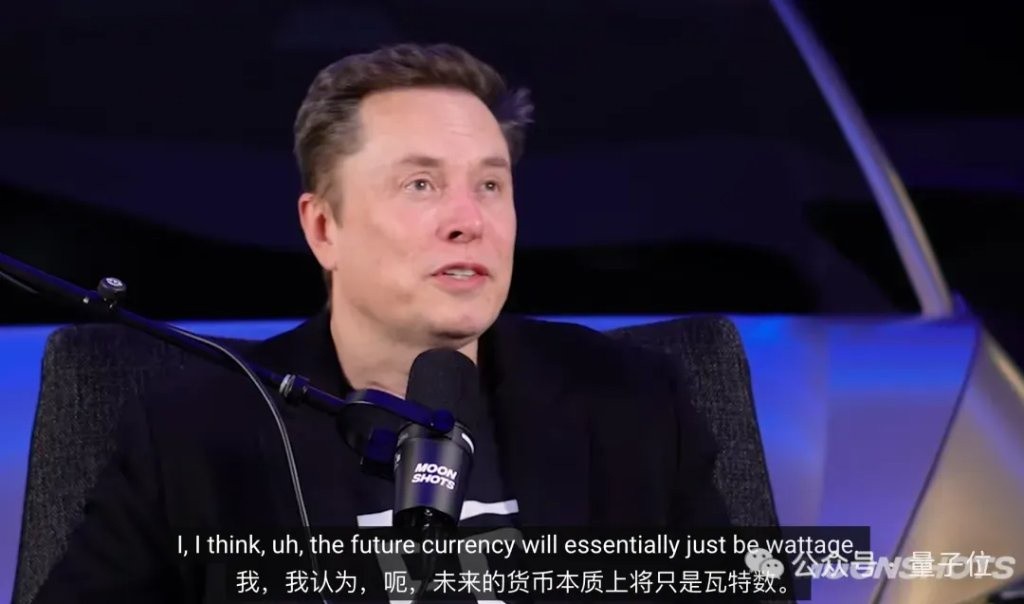
In recent days, Musk has thrown out a new "radical theory":
The currency of the future is essentially watts.

In his view, the chip shortage is no longer the biggest problem facing AI development; energy will become the new decisive factor.
This not only refers to power generation but also involves infrastructure such as transformers, grid connections, and cooling systems, requiring a collective effort from an entire industry chain.
In this new scaling race, China undoubtedly has unique advantages.
Musk bluntly stated:
By 2026, China's power output will reach three times that of the United States.
Risk Warning and Disclaimer
The market has risks, and investment requires caution. This article does not constitute personal investment advice and does not take into account the specific investment goals, financial situation, or needs of individual users. Users should consider whether any opinions, views, or conclusions in this article align with their specific circumstances. Investment based on this is at their own risk.