On February 8, Takashi Sato announced the House of Representatives election: it will end the excessively tight fiscal policy

Kishida Fumio announced the dissolution of the House of Representatives on January 23, with elections to be held on February 8, clearly stating that this election is a referendum on the legitimacy of his administration, and his position as Prime Minister depends on whether the ruling coalition can maintain a majority of seats. He also proposed a shift in fiscal policy, ending excessive austerity, increasing strategic spending, and considering the cancellation of the food consumption tax. Currently, the market reaction is cautious, with limited fluctuations in the yen exchange rate, and investors are closely monitoring the election results and subsequent policy directions
According to Xinhua News Agency, Japanese Prime Minister Sanae Takaichi announced at a press conference on the 19th that the House of Representatives will be dissolved on January 23, and she will seek voter authorization to continue in power, with the House of Representatives election scheduled for February 8. The current term of the members of the House of Representatives was originally set to expire in October 2028. The Japanese Constitution stipulates that the Diet must be convened within 30 days after the House of Representatives election to hold a prime ministerial election.
Sanae Takaichi clearly stated at the press conference that her tenure as prime minister will depend on the outcome of this election. She emphasized that if the ruling coalition maintains a majority in the upcoming election, she will continue to serve as prime minister and request authorization to lead the country. This statement directly characterizes the election as a national referendum on her governance legitimacy.
Sanae Takaichi also revealed that a series of "far-reaching" bills will be discussed at the upcoming meeting, suggesting that her subsequent policy agenda may involve significant structural reforms or economic adjustments. She pointed out that the Japanese government will end overly tight fiscal policies, and strategic fiscal spending will increase employment and household income, thereby generating higher tax revenues. Bold investments in risk management are necessary, and it is essential to break free from the constraints of excessive tightening. Preparations will be made to cancel the consumption tax on food for two years, while the funding issues related to the consumption tax reduction are still under consideration. Subsidies may be cut, and the overall budget will be revised. The sustainability of Japan's fiscal situation will be ensured by reducing the debt-to-GDP ratio.
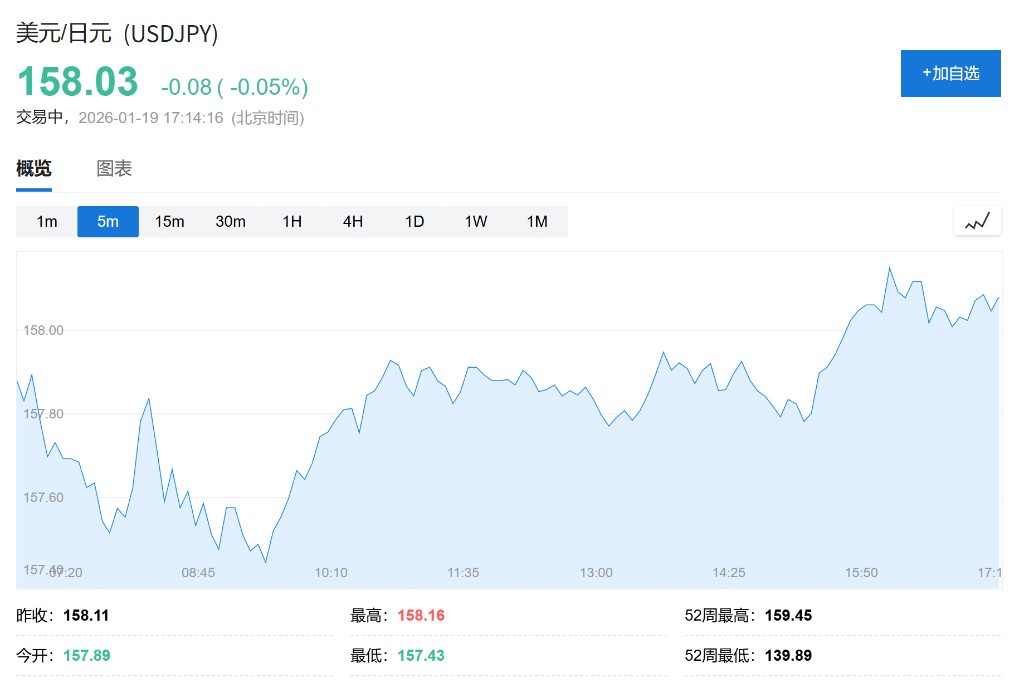
The market's reaction to this news has been relatively restrained. In the foreign exchange market, the yen exchange rate did not experience significant fluctuations. The current exchange rate of the US dollar to the yen is 158.03, down 0.08, a decrease of 0.05%. Investors are currently closely monitoring the election trends and subsequent policy details to assess their potential impact on the normalization path of monetary policy.