


Hedge funds sharply increased their short positions on the yen ahead of the Japanese elections, with the weekly increase reaching the highest level in nearly a decade

Leveraged funds increased their net short positions in the yen by 35,624 contracts in the week ending January 13, marking the largest weekly increase since May 2015. Prior to this, hedge funds had reduced or maintained their short positions in the yen for four consecutive weeks
Hedge funds significantly increased their short positions in the yen ahead of Japan's snap elections, with the scale of the increase reaching the largest in a decade, reflecting a growing bet by investors on the election results and their impact on fiscal policy.
Data from the Commodity Futures Trading Commission shows that leveraged funds increased their net short positions in the yen by 35,624 contracts in the week ending January 13, marking the largest weekly increase since May 2015. This shift is particularly notable as hedge funds had reduced or maintained their short positions in the yen for four consecutive weeks prior.
The yen fell to its weakest level since July 2024 last week, primarily influenced by the outlook for Japan's snap elections. On the 19th, Japanese Prime Minister Sanae Takaichi officially announced the dissolution of the House of Representatives on January 23 and sought voter authorization to continue governing, with the House of Representatives election scheduled for February 8. The current term for members of Japan's House of Representatives was originally set to expire in October 2028.
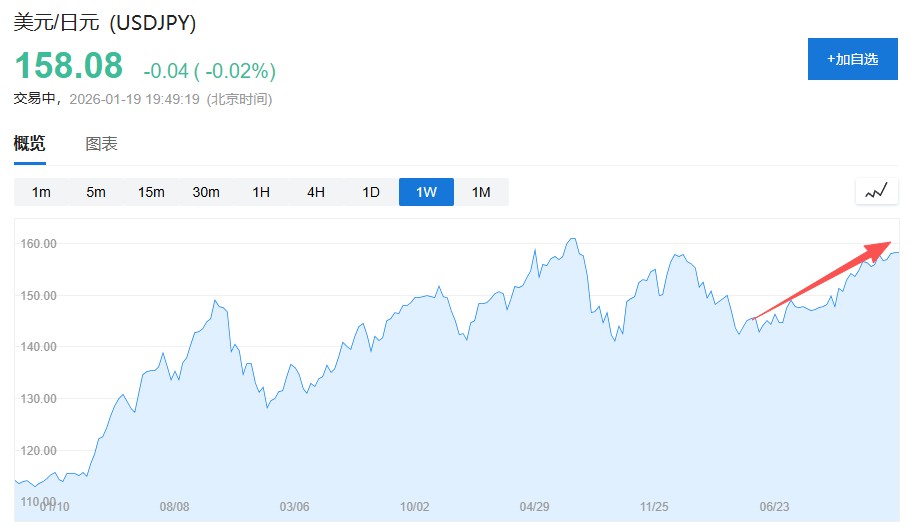
Traders are betting that Prime Minister Sanae Takaichi may win the election, advocating for more aggressive fiscal stimulus measures, which could lead to a further widening of Japan's fiscal deficit. Expectations of looser fiscal policy have diminished the yen's appeal, prompting hedge funds to increase their short positions.
Hiroyuki Machida, head of foreign exchange and commodity sales at ANZ in Tokyo, stated, "This data is sufficient for authorities to prove that the recent rise of the dollar against the yen is driven by speculation. This means that the conditions for strong intervention are increasingly present."
The depreciation of the yen has sparked heightened market attention regarding the possibility of intervention by Japanese authorities. The yen exchange rate is nearing the critical level of 160 yen to 1 dollar, where Japanese authorities last intervened in the foreign exchange market. Hiroyuki Machida pointed out that the latest positioning data provides ample evidence for authorities to demonstrate that the recent depreciation of the yen is primarily driven by speculative behavior rather than fundamental factors, thereby providing a stronger rationale for policymakers to take robust intervention measures
