JP Morgan: Don't Panic! The Greenland Crisis May Be Resolved at Davos

JPMorgan Chase holds a cautiously optimistic view on the Greenland crisis, believing that market turmoil will translate into negotiated arrangements rather than a full-blown crisis. Analyst Federico Manicardi expects that a solution may emerge during the World Economic Forum in Davos. Despite market fluctuations due to "Trumpism," JPMorgan Chase believes that investors should not overly panic about the current tariff threats, as the ultimate outcome will be an agreement rather than an escalation of conflict
Despite the market fluctuations triggered by the U.S. threatening to impose tariffs on some EU countries over the Greenland issue, JPMorgan Chase remains cautiously optimistic. The bank believes that the current chaotic situation will ultimately de-escalate and transform into a "negotiated arrangement," rather than evolving into a full-blown crisis.
The JPMorgan Chase international market intelligence team points out that the current market turmoil should be interpreted from the perspective of "the art of negotiation." The hardline stance and noise generated by the U.S. are aimed at triggering negotiations and creating leverage and urgency. Although the EU has responded by stating it will consider retaliatory tariffs and use anti-coercion tools, even warning that last year's U.S.-EU trade agreement may be jeopardized, this is more of a game-playing posture.
JPMorgan Chase analyst Federico Manicardi believes that this is not a fundamentally difficult issue to resolve. He expects that a solution may even emerge during the World Economic Forum (WEF) in Davos. Compared to the extreme consequences that the market fears, the bank believes the ultimate outcome will be an agreement rather than an escalation of conflict.
Although the volatility triggered by "Trumpism" is impacting the market, and indicators such as stock market pullback risks and emerging market risk appetite have raised "orange alerts," JPMorgan Chase is not pessimistic about the market outlook. The bank's analysts stated that they would be surprised if there were a moderate single-digit market decline as a result, meaning investors should not overly panic about the current tariff threats.

"The Art of Negotiation" and the Prospects for Davos Forum Negotiations
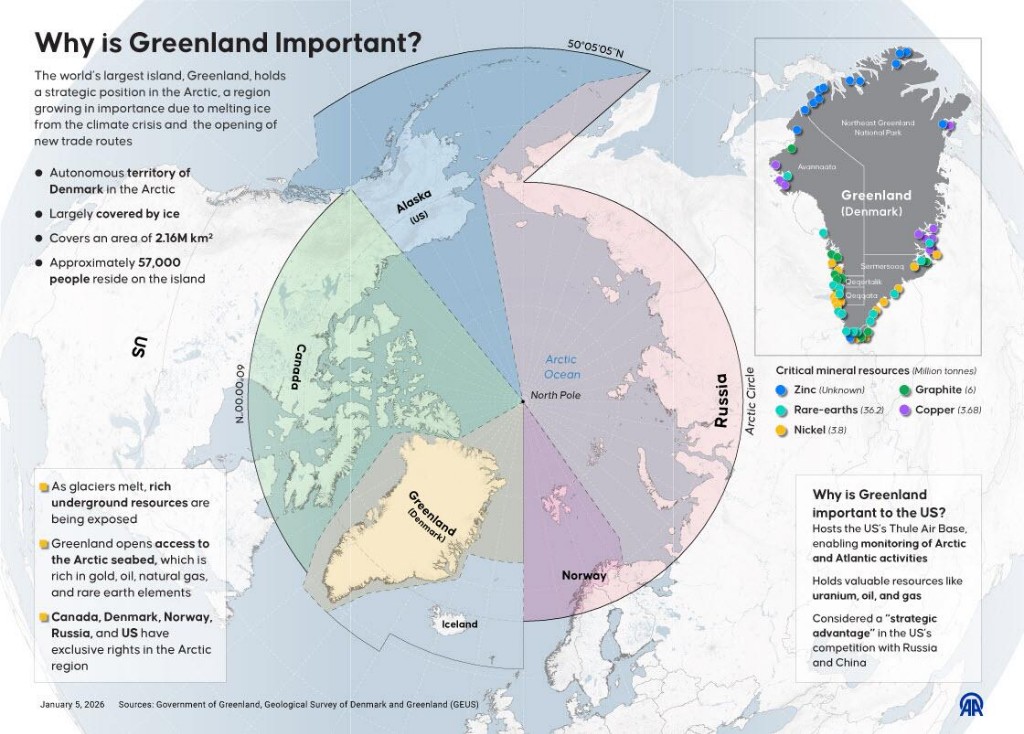
Federico Manicardi elaborated on his predictions for the situation in the report. He believes the most likely outcome is a "negotiated arrangement." This arrangement would expand the U.S. security and economic presence in Greenland, satisfying the U.S.'s established goals—namely, to strengthen Arctic security, enhance defensive early warning capabilities, and gain access to Greenland's natural resources—while Denmark retains sovereignty.
JPMorgan Chase has ruled out other extreme scenarios that the market is concerned about. The possibility of "selling" Greenland is low, as the U.S. can achieve the aforementioned strategic goals without formal territorial control, and this plan would require dual approval from Denmark and Greenland, which is quite challenging. As for "invasion," this is seen as a very low-probability tail risk, which is not only extremely unpopular among voters but could also lead to the rapid dissolution of NATO, "melting faster than Arctic ice."
JPMorgan Chase has listed a series of key catalysts that investors should closely monitor. At the upcoming Davos Forum, Trump's speech scheduled for January 21 may focus on potential candidates for the Federal Reserve Chair and affordability issues. Additionally, the U.S. Supreme Court will hear oral arguments regarding Federal Reserve Governor Lisa Cook At the macro level, JP Morgan observed a strong start to the year, with industries and regions in a leading position, and investors expect the economy to restart in 2026 for various reasons. JP Morgan's trading desk has been engaging in long positions on UK interest rates and short positions on US interest rates since September.
Risk Warning and Disclaimer
The market carries risks, and investment should be approached with caution. This article does not constitute personal investment advice and does not take into account the specific investment objectives, financial situation, or needs of individual users. Users should consider whether any opinions, views, or conclusions in this article are suitable for their specific circumstances. Investment based on this is at your own risk.