The self-dilemma of TACO trading: When the market is no longer in panic, Trump no longer needs to back down!

Wallstreetcn
2026.01.21 12:18
portai
I'm PortAI, I can summarize articles.

The market remains calm in response to Trump's latest threats, but some strategists warn that the TACO trade may be premature, as Trump's ambitions regarding Greenland seem particularly steadfast. For the TACO trade to continue to work, the market may need to first undergo a larger and more chaotic crash to recreate the kind of pain that forced Trump to change his stance last April

Over the past nine months, the popular "TACO trading" strategy on Wall Street is facing a paradoxical dilemma. This strategy is based on the assumption that "Trump always chickens out," but investors' calm reactions may be preventing Trump from making policy concessions.

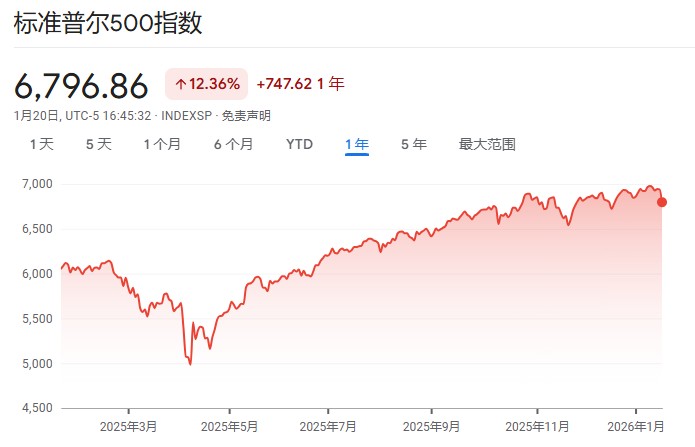
Earlier, Trump pushed for the takeover of Greenland and threatened to impose tariffs on European allies, which heightened market urgency. On Tuesday, U.S. stocks plummeted, with the S&P 500 index falling 2.1%, the dollar weakening, and volatility rising. Although U.S. stock futures showed a mild rebound on Wednesday, it remains unclear whether this round of selling can continue.

The market has reacted calmly to Trump's latest threats, but some strategists warn that the TACO trade may be premature, as Trump's ambitions regarding Greenland seem particularly steadfast. For the TACO trade to continue to work, the market may need to first experience a larger and more chaotic sell-off to recreate the kind of pain that forced Trump to change his stance last April. Current market valuations are far higher than last spring, with the S&P 500 index nearly doubling from its 2022 low and still close to historical highs, significantly narrowing the market's margin for error.

Strategy Logic in Self-Contradiction

The full name of "TACO trading" is "Trump Always Chickens Out," which originated last April when the U.S. president introduced global tariffs and then quickly retracted them. This strategy quickly became a guide for investors, encouraging them to ignore the extreme threats from the White House and continue buying risk assets.

However, this strategy is facing an inherent contradiction. Marko Papic, chief strategist at BCA Research, stated, "Is this TACO again? Absolutely. But I think we may need to experience a decline similar to last April to hit bottom." If TACO means that investors do not need to panic when Trump signals aggressive policies, then the market will not experience a severe crash sufficient to force him to concede as he did last year.

However, Tuesday's cross-asset sell-off was the most severe since last April, with stocks, bonds, and Bitcoin all declining simultaneously. The S&P 500 index erased all gains from 2026, the VIX index measuring expected stock market volatility surged to its highest level since November, gold reached a historical high, and the dollar recorded its worst two-day performance in about a month.

The current high position of the market may make it more vulnerable than during the downturn triggered by tariffs in April. The S&P 500 index is close to historical highs, while volatility indicators show that the market had previously become extremely complacent. According to Bank of America's latest global fund manager survey, positions hedging against a stock market crash have fallen to their lowest level in years, leaving many investors unprepared when volatility erupted this week.

Ed Al-Hussainy, a portfolio manager at Columbia Threadneedle, stated that investors have internalized the assumption that Trump will concede into their reactions to policy shocks. "Without TACO," he said, "we would see U.S. Treasury yields falling due to safe-haven demand, and volatility would soar significantly." "He pointed out that the model of foreign investors hedging against exchange rate risks while continuing to hold U.S. debt assets proves that even amid political uncertainty, few abandon U.S. assets.

This confidence also explains why risk premiums remain compressed even as uncertainty intensifies.

The threshold for policy shifts may have increased

Some strategists warn that the assumption that Trump will back down before the market suffers significant damage may be premature. Matt Maley, Chief Market Strategist at Miller Tabak + Co, stated: "If history is any guide, President Trump will back down from the most aggressive positions. But I don't think that will happen unless the market sees some truly significant negative moves. So far, those moves have been very mild." Maley added, "Trump's ambitions regarding Greenland seem particularly steadfast."

Papic believes that the escalation of tensions with Europe may serve multiple purposes, one of which is to divert attention from domestic policy issues, including the Supreme Court's upcoming ruling on Trump's tariff authority. This comes at a time when the White House is taking a series of disruptive actions, including pressuring the Federal Reserve and reviving trade rhetoric.

Nevertheless, some strategists remain calm. Michael Purves, CEO of Tallbacken Capital Advisors, stated: "Demands are always very aggressive, and then he ultimately finds some position between the demands and the status quo. The ultimate question is whether these policies will have a constructive impact on corporate earnings or the opposite."