


Trump TACO boosts the Asia-Pacific stock market, chip stocks surge, South Korean stocks break through the 5000 mark! Gold falls below 4800

Meta 大漲 5.6%,特斯拉漲超 4%。強勁的經濟數據降低了降息預期,2 年期美債收益率上行 2.5 個基點,10 年期收益率則持平於昨日尾盤。美元下挫 0.5%,逼近 98 關口。疲軟美元下,貴金屬表現亮眼。現貨黃金大漲 1.8%,首次突破 4900 美元。紐約期銀漲 4%,現貨鉑金漲超 6.3%,雙雙創歷史新高。
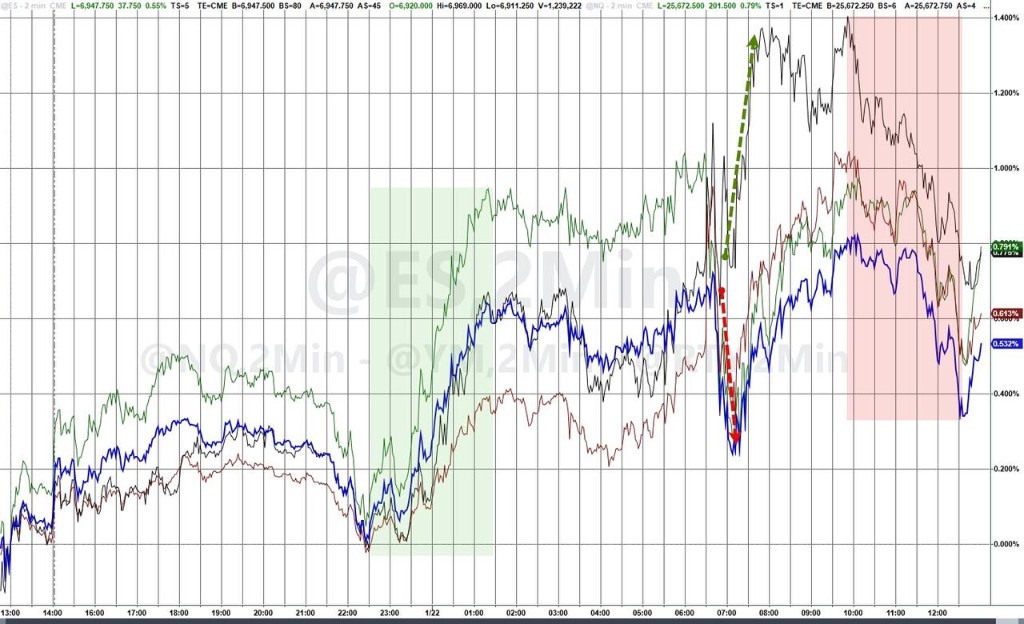
地緣政治擔憂消散,疊加美國經濟數據強勁,提振風險偏好。美股主要股指連續第二個交易日上漲,完全收復本週早些時候的失地。降息預期減弱下,短期美債承壓。
據華爾街見聞,美國當天公佈的一系列宏觀數據整體偏強。三季度 GDP 終值上修,個人消費支出保持韌性,PCE 通脹並未出現再度抬頭跡象,初請失業金人數仍處在低位區間。
美股主要股指連續第二個交易日上漲,完全收復本週早些時候的失地。小盤股指連續第 15 個交易日跑贏標普,再創新高。
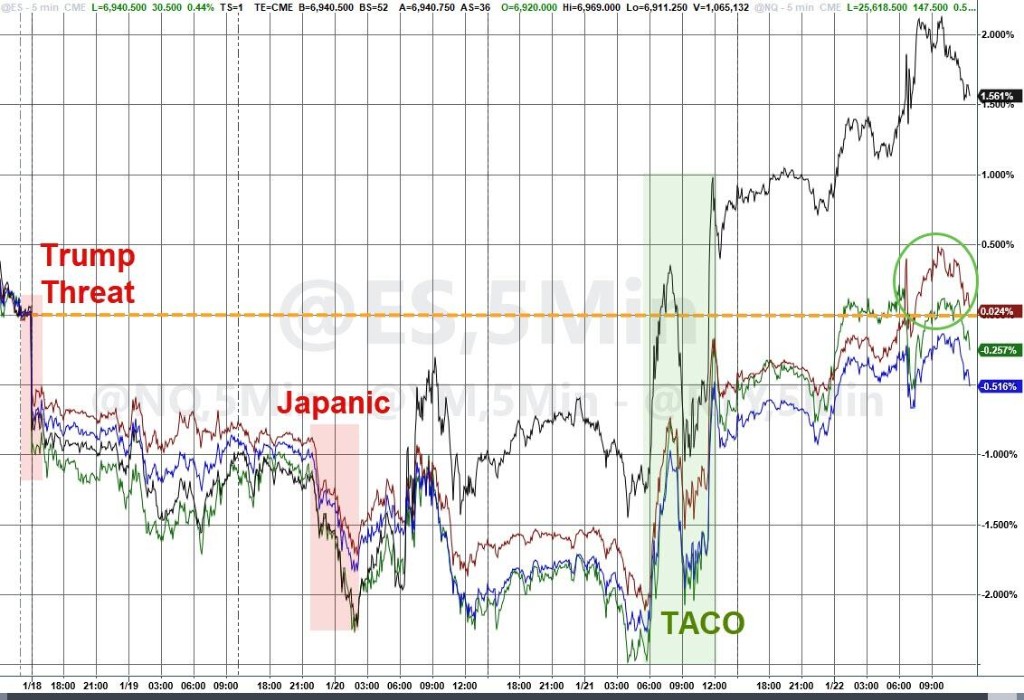 (美股基準股指收復本週跌幅)
除了小盤股表現優異,大型科技股今天同樣大放異彩,彭博科技七巨頭指數漲超 2%,Meta 大漲 5.6%,特斯拉漲超 4%。
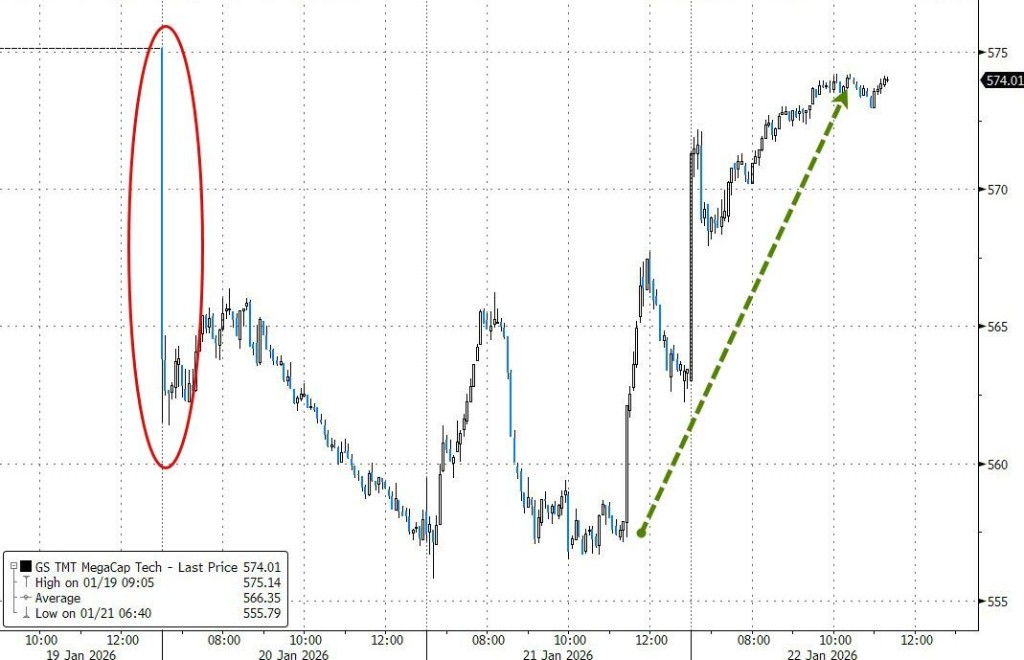 (大型科技股幾乎恢復了本週的最高水平)
瑞銀全球財富管理的 Ulrike Hoffmann-Burchardi 表示:
格陵蘭島局勢短期內可能仍將是新聞熱點,市場也依然容易受到新的政治或地緣政治事件的影響。但最近的股市反彈提醒我們,良好的基本面仍然是市場的主要驅動力。
一個值得注意的現象是,本週美股在下挫後,逢低買盤迴歸,推動股價持續上漲。摩根大通策略師 Arun Jain 表示,本週散户投資者在股票市場上投入了 “令人矚目” 的 129 億美元。他指出:
週二,散户投資者對地緣政治局勢的變化做出反應,買入股票,創下了近一年來單日第三大買入紀錄。
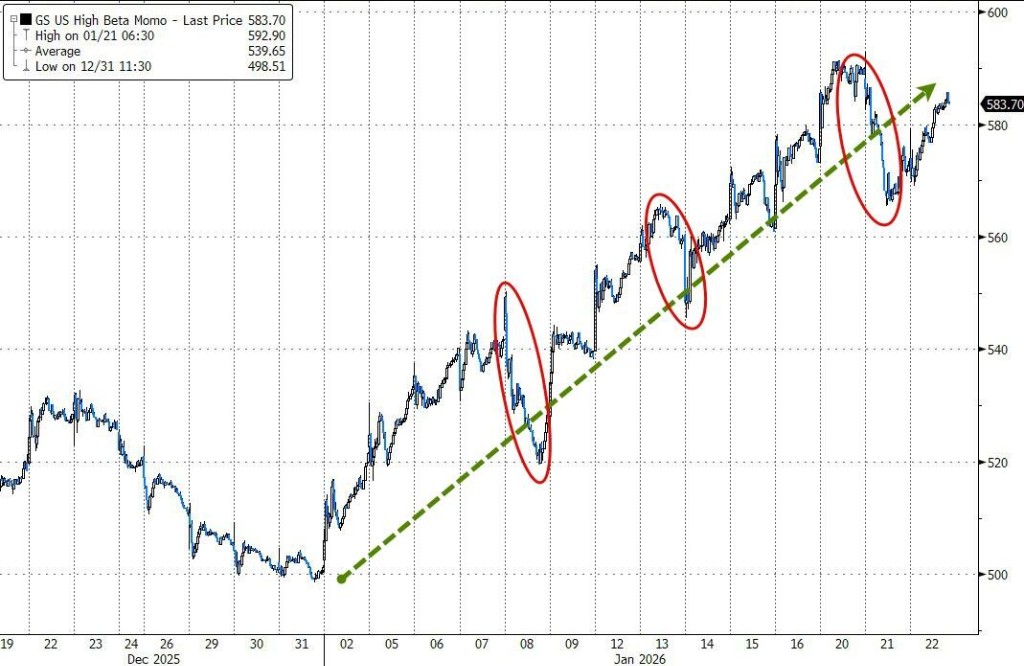
強勁數據直接將美國宏觀意外指數推升至去年 9 月以來的高點,也迅速壓低了市場對美聯儲短期降息的押注。
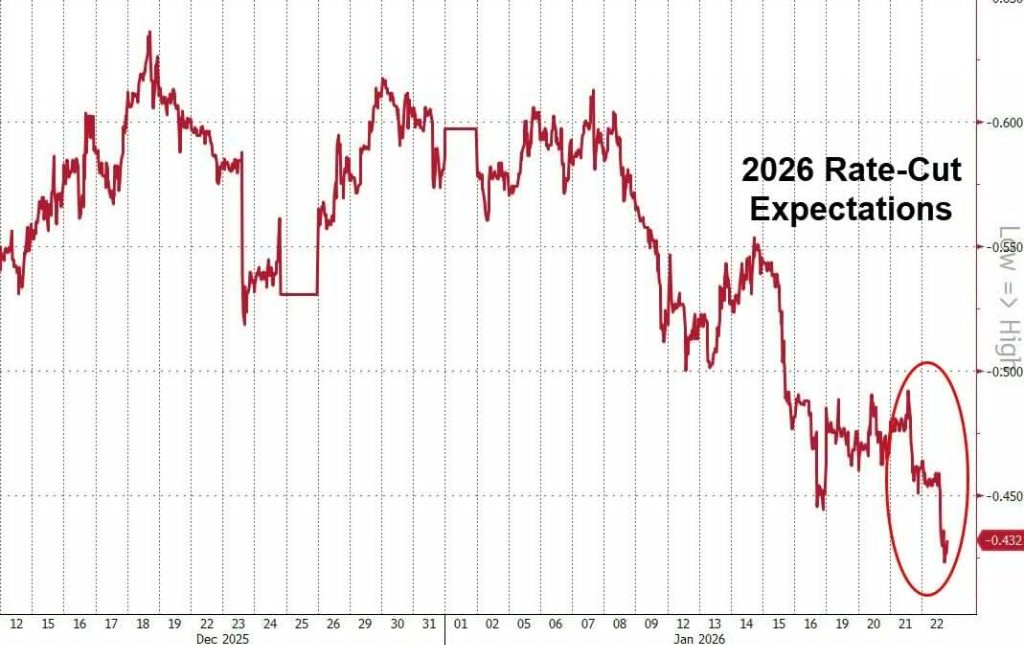
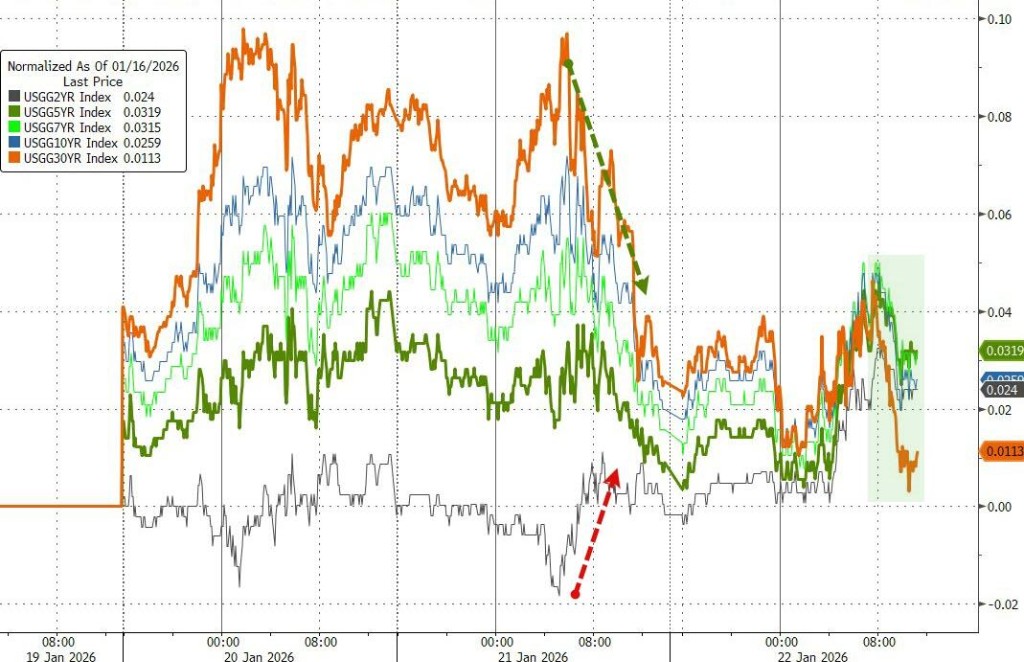
降息預期減弱下,對利率政策更為敏感的 2 年期國債收益率上行。長端國債則因隔夜日本國債市場趨於穩定而受到買盤支撐,30 年期國債收益率小幅下行 2 個基點。
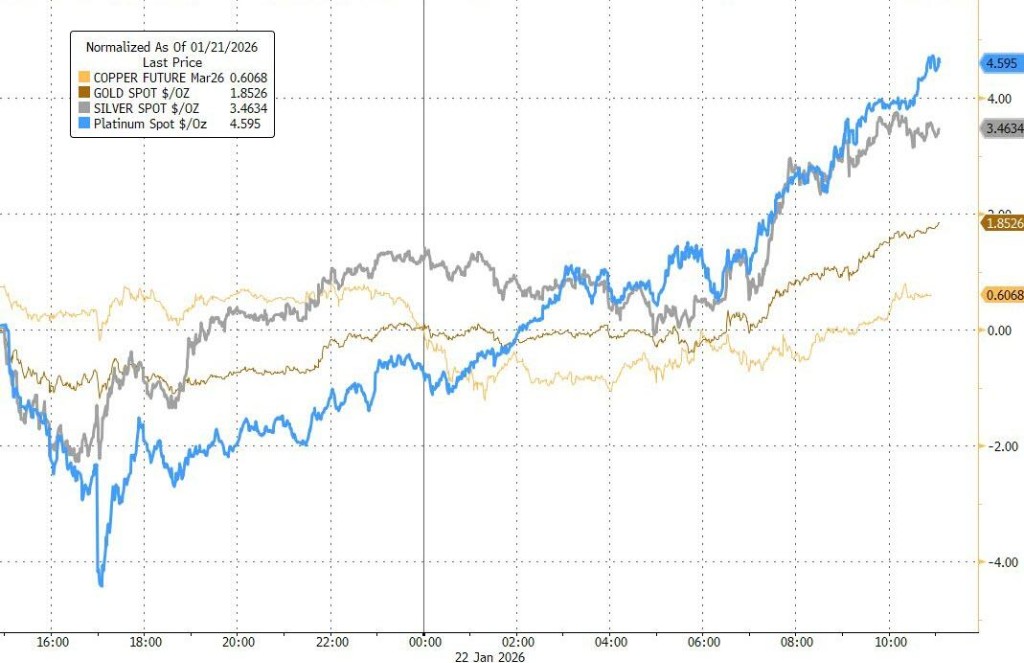
分析認為在地緣政治風險緩和後,黃金的上漲邏輯可能正轉向對長期 “貨幣貶值” 或 “再通脹” 風險的對沖。隔夜美元下挫 0.5%,逼近 98 關口。現貨黃金則大漲 1.8%,首次突破 4900 美元。
相比之下,白銀、鉑金和鈀金的表現更為激進,紐約期銀漲 4%,現貨鉑金漲超 6.3%、雙雙創歷史新高,現貨鈀金漲逾 4%。分析認為,資金開始向更具彈性的貴金屬品種擴散。
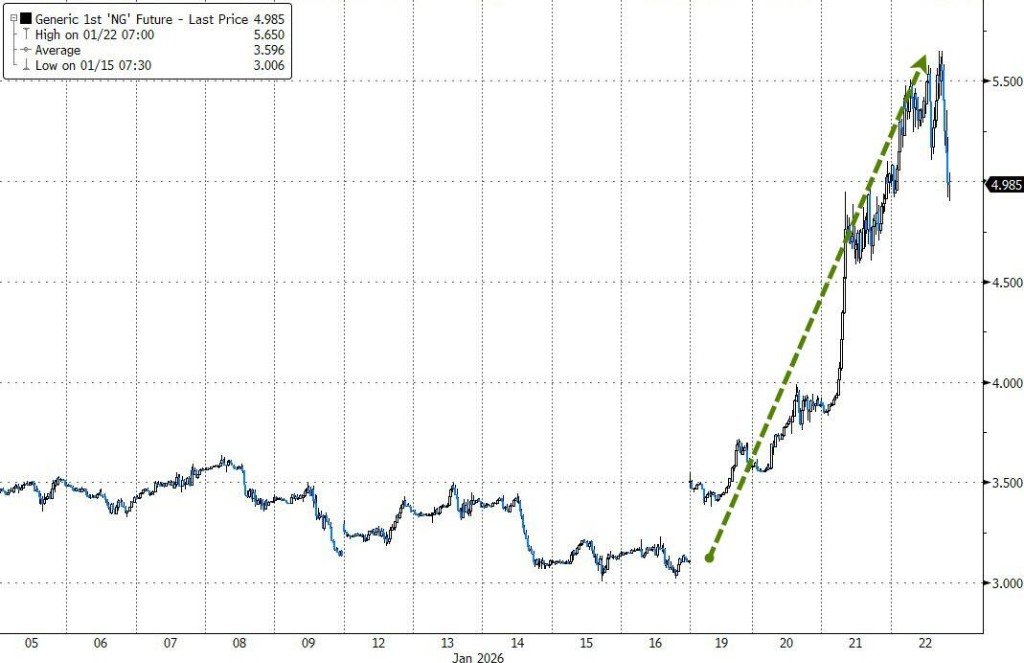
地緣政治風險溢價的消退,疊加美國上週 EIA 原油庫存超預期增加 360 萬桶,原油跌 2%,WTI 原油跌破 60 美元關口。與此同時,美國天然氣價格在連續三日暴漲超過 85% 後,出現了高位回落的跡象。
週四美股三大指數收漲,納指收漲 0.9%,生物科技指數漲超 1.6%。Meta 收漲 5.66%,創 7 月 31 日以來最大單日漲幅。
美股基準股指:
標普 500 指數收漲 37.73 點,漲幅 0.55%,報 6913.35 點。
道瓊斯工業平均指數收漲 306.78 點,漲幅 0.63%,報 49384.01 點。
納指收漲 211.195 點,漲幅 0.91%,報 23436.02 點。納斯達克 100 指數收漲 191.77 點,漲幅 0.76%,報 25518.351 點。
羅素 2000 指數收漲 0.71%,報 2718.77 點。
恐慌指數 VIX 收跌 15.88%,報 16.90。
美股行業 ETF:
網絡股指數 ETF 收漲 1.91%,生物科技指數 ETF 漲 1.42%,可選消費 ETF 漲 1%,全球科技股指數 ETF、科技行業 ETF 至少漲 0.74%。
(1 月 22 日 美股各行業板塊 ETF)
科技七巨頭:
美國科技股七巨頭(Magnificent 7)指數漲 1.42%,報 203.04 點。
成分股 Meta 收漲 5.66%,創 7 月 31 日以來最大單日漲幅;特斯拉漲 4.15%,微軟、亞馬遜至少漲 1.31%,英偉達、谷歌 A、蘋果至多漲 0.83%。
芯片股:
費城半導體指數收漲 0.16%,報 8055.173 點。
AMD 收漲 1.57%,台積電漲 0.38%。
中概股:
納斯達克金龍中國指數收漲 1.58%,報 7899.10 點。
- 熱門中概股裏,腦再生科技初步收漲 42%,燃石醫學漲 32%,阿里巴巴、小馬智行漲超 5%。
其他個股:
禮來漲 0.82%,伯克希爾哈撒韋 B 類股漲 0.14%。
Salesforce 收漲 2.94%,甲骨文漲 2.47%,Adobe 漲 1.87%,高通漲 0.91%,博通跌 1.01%,奈飛跌 2.13%。
歐元區藍籌股指收漲超 1.2%,大眾漲 6.5%、與德銀領跑一眾成分股,諾和諾德漲約 7%。德國股市收漲 1.2%,意大利銀行板塊漲超 1.9%,丹麥股市漲超 3.4%。
泛歐股指:
歐洲 STOXX 600 指數收漲 1.03%,報 608.86 點,跳空高開之後,持續高位窄幅震盪。
歐元區 STOXX 50 指數收漲 1.25%,報 5956.17 點,跳空高開之後,持續高位窄幅震盪。
各國股指:
德國 DAX 30 指數收漲 1.20%,報 24856.47 點。
法國 CAC 40 指數收漲 0.99%,報 8148.89 點。英國富時 100 指數收漲 0.12%,報 10150.05 點。
丹麥 OMX 哥本哈根 20 指數收漲 3.46%,報 1777.392 點,逼近 7 月 28 日收盤位 1799.343 點。
(1 月 22 日 歐美主要股指表現)
板塊和個股:
歐元區藍籌股中,德國大眾汽車收漲 6.51%,德意志銀行漲 4.02%,法國聖戈班、英飛凌、拜耳、西門子能源、法國巴黎銀行漲 3.80%-3.02% 緊隨其後。
歐洲 STOXX 600 指數的所有成分股中,奧地利奧合國際銀行收漲 7.05%,挪威電信、大眾、安賽樂米塔爾、Rational、波蘭國營石油股份、諾和諾德漲 6.97%-6.11%。
強勁的經濟數據降低了降息預期,2 年期美債收益率上行 2.5 個基點,10 年期收益率則持平於昨日尾盤。法國、意大利、希臘國債收益率至少跌 2 個基點。
美債:
紐約尾盤,美國 10 年期國債收益率漲 0.40 個基點,報 4.2469%。
兩年期美債收益率漲 2.35 個基點,報 3.6079%。
(美國主要期限國債收益率)
歐債:
歐市尾盤,德國 10 年期國債收益率漲 0.5 個基點,報 2.888%,日內交投於 2.858%-2.889% 區間。
英國 10 年期國債收益率漲 1.2 個基點,報 4.470%。法國 10 年期國債收益率跌 3.2 個基點,報 3.512%。
意大利、西班牙和希臘等三國 10 年期國債收益率平均跌 1.9 個基點。
美元下挫 0.5%,逼近 98 關口。 加密貨幣下挫,比特幣跌 1.13%,以太坊跌 2.7%。
美元:
紐約尾盤,ICE 美元指數跌 0.41%,報 98.355 點,日內交投區間為 98.827-98.312 點。
彭博美元指數跌 0.34%,報 1201.74 點,日內交投區間為 1206.89-1201.59 點。
(彭博美元指數下挫)
非美貨幣:
紐約尾盤,歐元兑美元漲 0.54%,報 1.1748。英鎊兑美元漲 0.51%,報 1.3498,美元兑瑞郎跌 0.75%,報 0.7897。
商品貨幣對中,澳元兑美元漲 1.19%,紐元兑美元漲 1.09%,美元兑加元跌 0.33%。
離岸人民幣:
紐約尾盤,美元兑離岸人民幣報 6.9643 元,較週三紐約尾盤漲 43 點,日內整體交投於 6.9563-6.9786 元區間。
加密貨幣:
紐約尾盤,現貨比特幣跌 1.13%,報 89129 美元。
現貨以太坊跌 2.8%,報 2942 美元。
美國上週 EIA 原油庫存超預期增加 360 萬桶,原油跌 2%。
原油:
WTI 3 月原油期貨收跌 1.26 美元,跌幅 2.08%,報 59.36 美元/桶。
(WTI 原油期貨下挫)
布倫特 3 月原油期貨收跌 1.18 美元,跌幅 1.81%,報 64.06 美元/桶。
天然氣:
NYMEX 2 月天然氣期貨收漲將近 3.49%,報 5.0450 美元/百萬英熱單位。
現貨黃金漲超 2.2%,刷新歷史高位至將近 4940 美元。紐約期銀漲 4%,現貨鉑金漲超 6.3%,雙雙創歷史新高。
黃金:
紐約尾盤,現貨黃金漲 2.22%,刷新歷史高位至 4939.41 美元/盎司,北京時間 22:00 以來持續走高。
(現貨黃金價格)
COMEX 黃金期貨漲 1.97%,在電子交易盤刷新歷史高位至 4934.30 美元/盎司。
白銀:
紐約尾盤,現貨白銀漲 3.55%,報 96.3600 美元/盎司。
COMEX 白銀期貨漲 4.05%,報 96.395 美元/盎司。
其他金屬:
- 紐約尾盤,COMEX 銅期貨漲 0.61%,報 5.8030 美元/磅,整體呈現出 V 形走勢、17:19 跌至 5.6960 美元。
- 現貨鉑金漲 6.36%,報 2647.15 美元/盎司,繼續創歷史新高;現貨鈀金漲 4.13%,報 1924.52 美元/盎司。
- LME 期銅收跌 54 美元,報 12756 美元/噸。LME 期錫收漲 460 美元,報 51877 美元/噸。
