Cryptocurrency market sentiment indicator! BitGo surged 25% on its first day of listing

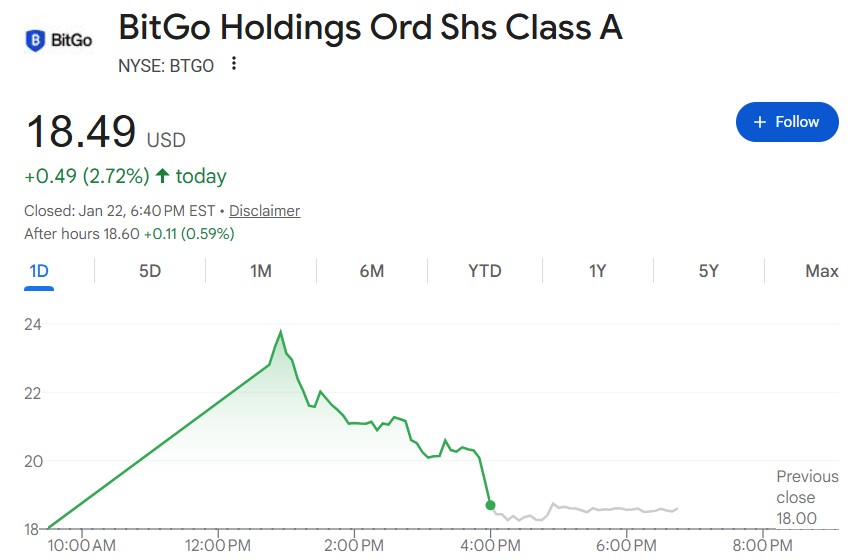
Cryptocurrency infrastructure company BitGo went public on the New York Stock Exchange on January 22, soaring 25% on its first day before retreating to a closing price of $18.49, with a market capitalization of $2.1 billion. Despite the U.S. Senate delaying the vote on cryptocurrency legislation, founder Belshe remains optimistic about the regulatory environment improving, believing that this year will be "an incredible year."
Cryptocurrency infrastructure company BitGo surged 24.6% on its first day on the New York Stock Exchange.
On January 22, BitGo opened at $22.43 and closed slightly up by 2.72%, retreating to $18.49. Based on the closing price, BitGo's market capitalization reached $2.1 billion.
Previously, on January 21, the company priced its IPO at $18, raising $212.8 million by selling approximately 11.8 million shares.

BitGo was founded in 2013 by Silicon Valley entrepreneur Belshe, who pioneered the multi-signature wallet, a digital version of a joint bank account that requires multiple passwords to transfer funds. Over the years, the company has grown and expanded its business scope to include custody, prime brokerage services, and institutional trading.
The company is also responsible for holding the reserves of the stablecoin USD1 launched by World Liberty Financial, a cryptocurrency project supporting President Trump and his family. Recently, the company received conditional approval from the Office of the Comptroller of the Currency to transition into a bank.
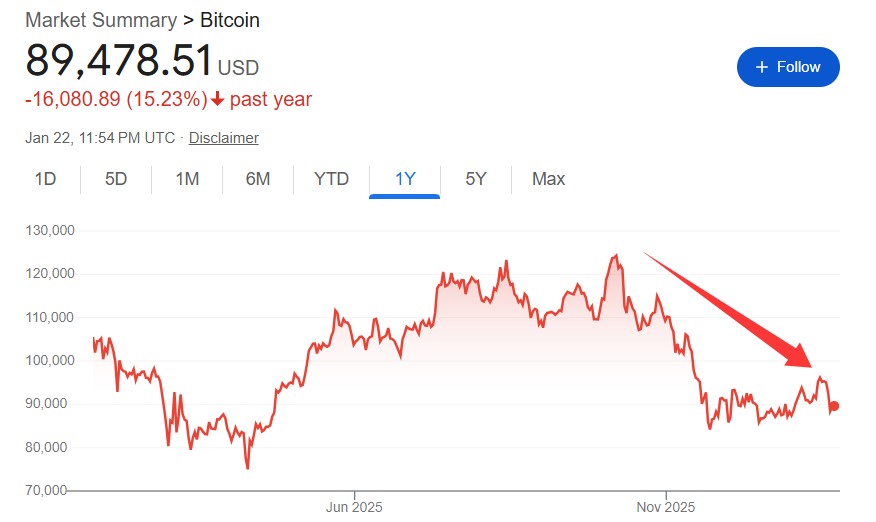
This listing comes at a critical time for the regulatory environment in the cryptocurrency industry, as the U.S. Senate Banking Committee postponed a key vote on the Clarity Act. Bitcoin traded around $89,000 on Thursday, down 15% over the past year and approximately 29% from last year's peak of $126,000.

Profitability Recognized by Investors
Financial data disclosed by BitGo last week showed that the company has become profitable.
The company reported a profit of $156.6 million in 2024 and $35.3 million in the first nine months of 2025. Revenue for the first six months of 2025 reached $4.19 billion, a significant increase from $1.12 billion in the same period last year.
BitGo operates in the traditionally low-margin custody sector, but the company stated in its filings that its more profitable revenue sources, including token trading, staking, and subscription services, are highly dependent on the volatility of digital assets.
BitGo's listing performance follows the successful debuts of stablecoin company Circle Internet Group and cryptocurrency exchange Bullish, but market enthusiasm is relatively low.
Tom Bruni, Director of Market and Retail Investor Insights at StockTwits, stated:
Those who have delved into the integration of traditional finance and cryptocurrency are very excited about this, but beyond that, it has garnered slightly less attention.
Cryptocurrency companies, including Bullish and Gemini, have reserved a larger proportion of IPO shares for retail investors. Robinhood provides traders with the option to apply for shares of the proposed public company, including BitGo, and stated that the demand for IPO access has significantly increased over the past year. According to Neil McDonald, CEO of Moomoo USA, the trading platform received just under a 10% share allocation from BitGo.
Regulatory Environment at a Critical Juncture
After the cryptocurrency price crash at the end of last year dampened investor enthusiasm, BitGo's IPO is seen as an important barometer for the recovery of the cryptocurrency industry.
Unfortunately, the U.S. Senate Banking Committee postponed a key vote on the cryptocurrency market structure bill last week, following Coinbase Global's sudden withdrawal of support.
The issue of yield payments on stablecoins has become the biggest point of contention in the bill. Banking lobbyists believe that the "Genius Act," passed last summer, while prohibiting stablecoin issuers from directly offering yields to users, left loopholes for rewards to partners and third parties.
Nevertheless, Belshe stated:
I believe this year will be an incredible year, as last year's regulatory changes allowed every financial institution to start participating, which directly doubled our potential market size