


Capital rotation drives the US dollar weaker, Asia-Pacific stock markets rise broadly, gold approaches the 5000 mark, and silver touches the 99 level

Global funds are accelerating their inflow into more attractively valued Asian markets. On Friday, the Asia-Pacific stock markets generally rose, with the MSCI Asia-Pacific Index up 0.5%. Chip stocks performed prominently, and the South Korean Composite Index broke through 5,000 points, reaching new highs. Analysts believe that due to uncertainty in U.S. policies, funds are shifting from overvalued U.S. stocks to Asia, driving the U.S. dollar weaker. Precious metals surged strongly, with spot gold breaking through $4,960 per ounce to reach a historic high, and silver touching the $99 mark
Global capital is accelerating its embrace of Asian markets with more attractive valuations and growth resilience. The Asia-Pacific stock markets rose broadly on Friday, with the MSCI Asia-Pacific Index steadily climbing. Notably, semiconductor stocks performed particularly well.
On Friday, the Asia-Pacific stock markets generally rose, with the semiconductor supply chain continuing the enthusiasm from the previous day, as major stocks such as Japanese equipment manufacturers and South Korea's Samsung Electronics recorded strong gains. The MSCI Asia-Pacific Index rose by 0.5%, with the number of rising stocks more than double that of falling stocks.
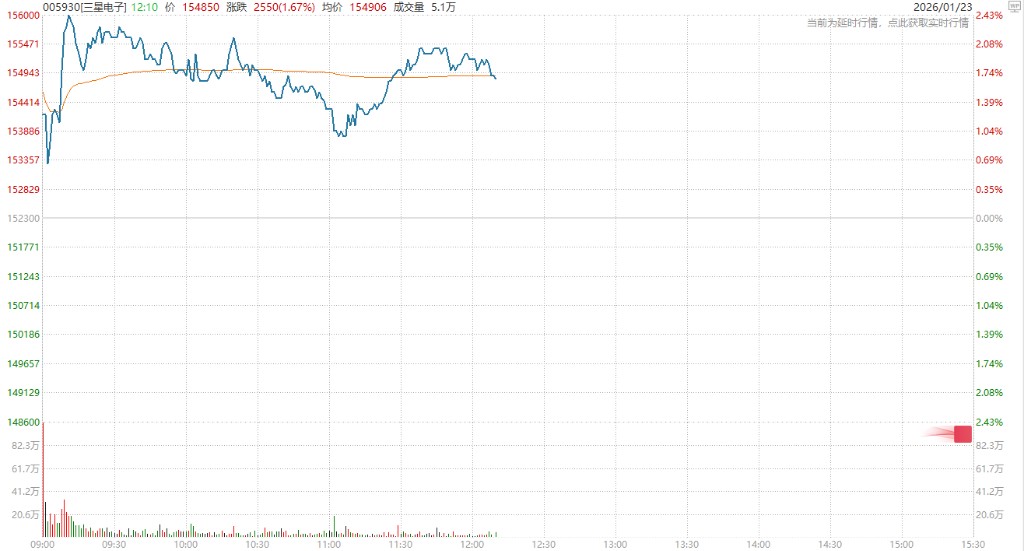 (Samsung Electronics rose by 1.7%)
The Nikkei 225 Index rose by 0.34%, and the Australian S&P/ASX 200 Index briefly rose by 0.45%. Notably, the South Korean Composite Stock Price Index, which just historically broke through the 5000-point mark the previous day, continued to maintain strength, reaching a peak increase of 1.4% during the session.
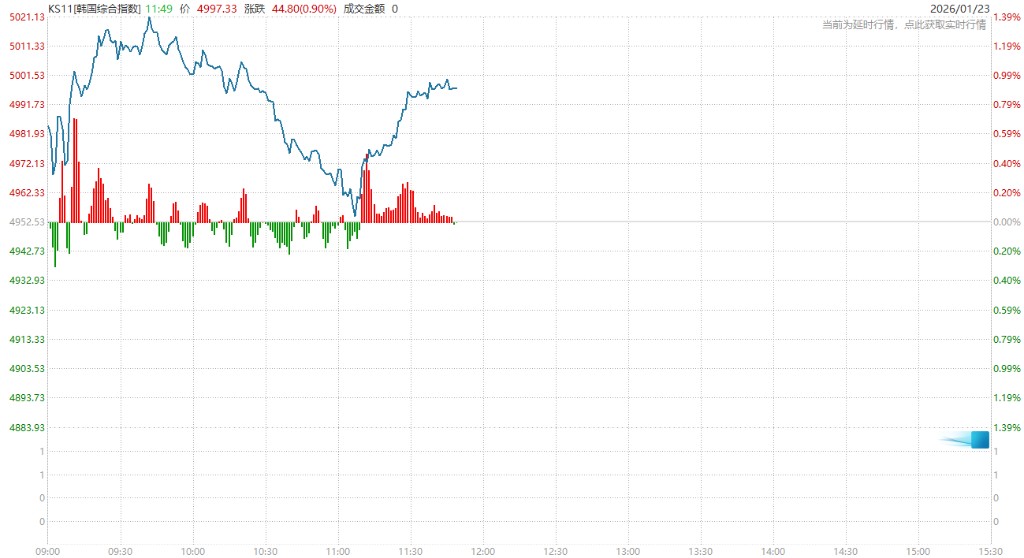 (South Korean Composite Index maintains a strong rise of 0.9%)
Analysts believe that the temporary easing of trade war alarms between Europe and the United States has significantly boosted global investors' risk appetite and accelerated a potential, deeper asset rotation.
Due to concerns over the unpredictability of U.S. policies, capital is gradually flowing out of overvalued U.S. assets and into Asian markets, which have more attractive valuations and relatively distant geopolitical risks. This rotation has directly led to a weakening of the dollar and provided strong upward momentum for Asia-Pacific stocks and assets such as precious metals.
Mabrouk Chetouane, Global Market Strategy Director at Natixis IM Solutions, stated:
The geographical distance of Asia from geopolitical centers like the U.S., EU, and Latin America acts as a barrier, allowing investors to diversify their exposure to risk assets.
It is noteworthy that the focus of the Asian market will be on the Bank of Japan's interest rate decision, with expectations that the Bank of Japan will maintain the policy rate at 0.75%. Previously, Prime Minister Fumio Kishida's proposed expansion of spending plans had caused turmoil in the financial markets, so the Bank of Japan's policy statement will be closely monitored.
After recording the largest drop in a month on the previous trading day, the dollar index maintained a weak consolidation during the Asian session, providing upward momentum for dollar-denominated commodities.
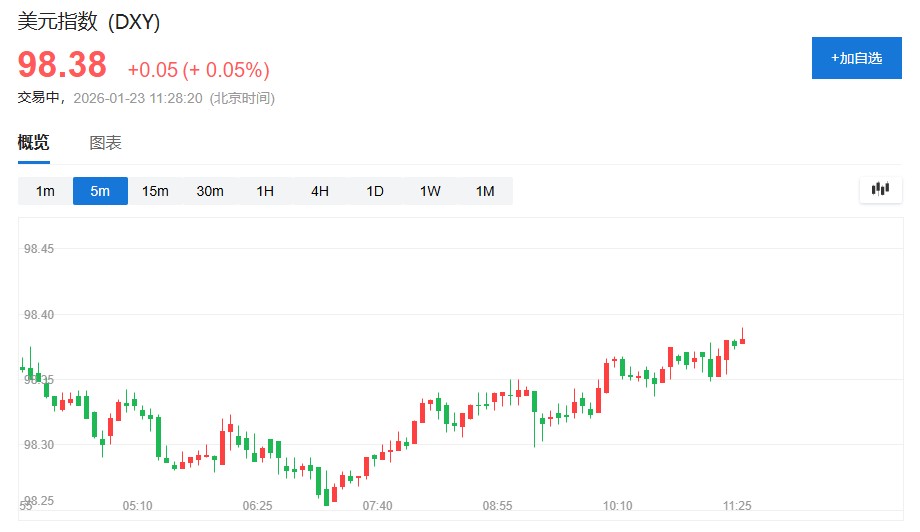 (Dollar index weakly rebounds)
Peter Grant, Senior Metal Strategist at Zaner Metals, stated:
In the current macro environment, the demand for gold is supported by the trend of dollar depreciation. Short-term pullbacks may be seen as buying opportunities, and gold is expected to break through $5000 per ounce, or even higher Spot gold prices surged, briefly breaking through $4,960 per ounce during the session, setting a new historical high, while silver also reached record highs, touching the $99 mark.
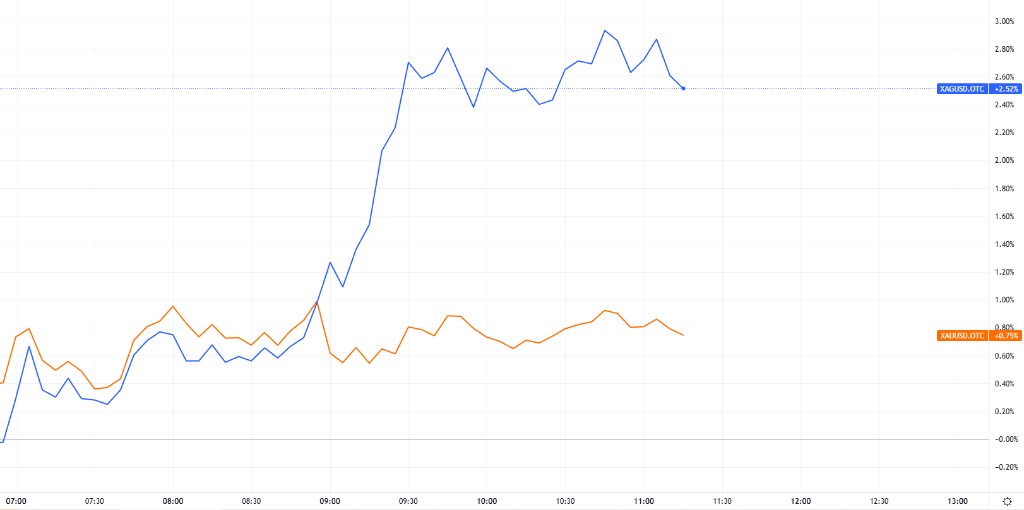 (Spot silver rose 2.5% in the morning session, while spot gold increased by 0.75%)
Spot platinum rose nearly 2% during the day, before retreating to levels near yesterday's closing price.
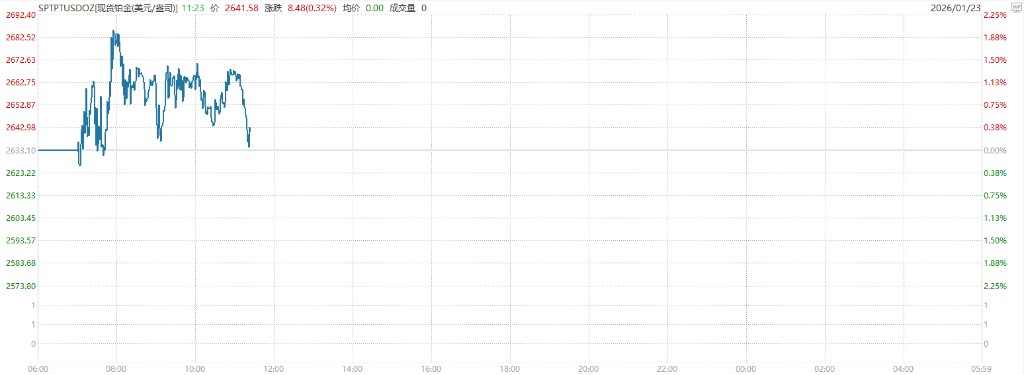 (Spot platinum surged and then retreated)
Optimistic Outlook for Precious Metals Market
Peter Grant, Vice President and Senior Metal Strategist at Zaner Metals, stated that geopolitical tensions, a generally weak dollar, and expectations of interest rate cuts by the Federal Reserve this year are all components of the macro trend of de-dollarization, which continue to influence gold demand.
The market expects the Federal Reserve to implement two rate cuts of 25 basis points each in the second half of this year, which enhances the appeal of non-yielding gold.
Meanwhile, spot silver and platinum have shown even stronger gains. Nikos Tzabouras, Senior Market Analyst at Tradu, noted that the fundamental narrative for silver is far more attractive than that for gold.
He pointed out that while silver may not be a reserve asset like gold, it still benefits from safe-haven inflows and a weak dollar
