


Greenland Island opens, followed by the collapse of Japanese bonds, Trump TACO, and the conclusion of yen intervention – a week dominated by "headlines ruling the market" has ended

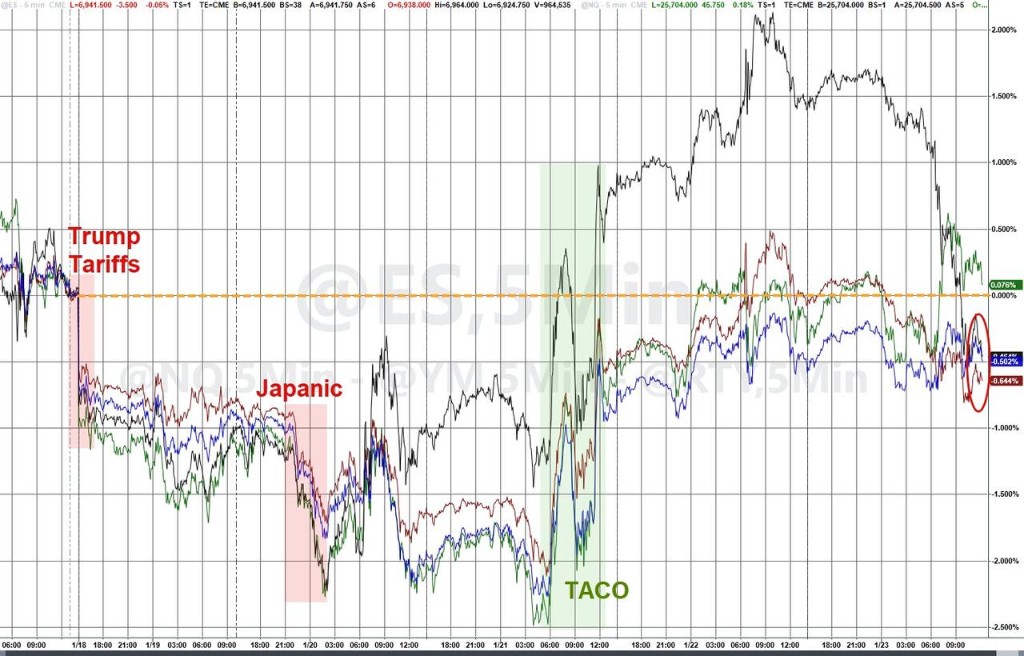
Trump's remarks about Greenland and threats of tariffs triggered a sell-off, exacerbating panic in the Japanese bond market, followed by Trump's soothing of the market (TACO model) which reversed sentiment. Ultimately, the market showed significant divergence: the stock market experienced slight turbulence and decline, the dollar plummeted, the yen surged, and precious metals reached new highs. The breakdown of the stock-bond correlation rendered traditional hedges ineffective, leaving investors with a dilemma of whether to hedge risks or ignore the noise
In the past week, global capital markets seemed to be playing a game of "Russian roulette" driven by headline news. From unexpected geopolitical threats to sudden shifts in monetary policy, a series of chaotic catalysts triggered sharp fluctuations in asset prices. In this shortened trading week, referred to by traders as "headlines dominate everything," market sentiment oscillated between extreme panic and rapid rebounds, once again validating the fragility and unpredictability of the current macro environment.
The ignition point of this week's market activity began with Trump's remarks regarding Greenland and the subsequent tariff threats, which sparked one of the most synchronized market sell-offs since the pandemic. This was followed by the collapse of the Japanese bond market, which caused turmoil in the world's largest bond market, referred to as the "Truss moment."
At the same time, tensions regarding Iran pushed up oil prices, while the competition for the Federal Reserve chairmanship intensified uncertainty. However, as Trump subsequently calmed the market (the so-called "TACO" model), sentiment reversed, though this did not fully repair the severely impacted portfolios.
Ultimately, the week ended in a highly differentiated situation: the stock market experienced a slight decline amid turmoil, volatility surged, the dollar faced a sharp setback, while precious metals exploded to new highs. Despite the U.S. macro data showing the best two-week consecutive gains since August last year, the market did not gain any respite.
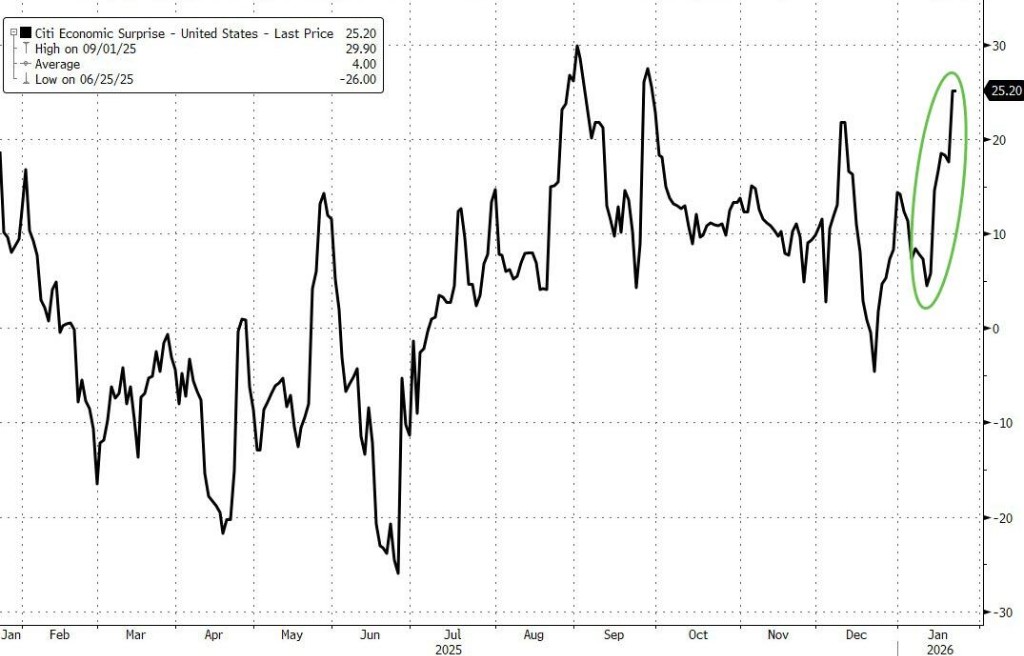
On the contrary, the renewed breakdown of the correlation between stocks and bonds forced investors to reassess whether traditional risk hedging strategies remain effective. This "roller coaster" market left investors in a dilemma: should such extreme volatility be viewed as a structural risk that must be hedged, or merely as another noise that can be ignored?
Chaotic Catalysts and Asset Divergence
The core feature of the market this week was the overlap of multiple macro shocks.
First, Trump's threat of "kinetic action" and tariff measures against Greenland triggered retaliatory threats from Europe.
Second, Japanese Prime Minister Fumio Kishida's "loose" policies and weak bond auctions triggered the collapse moment of the world's largest bond market. Subsequently, Trump again exhibited TACO characteristics, telling the world that the issues of Greenland and NATO "will be just fine."
On Friday, the Bank of Japan's "hawkish inaction" was softened by discussions on yield curve control, and the forex trading desk became active due to rumors of yen intervention.
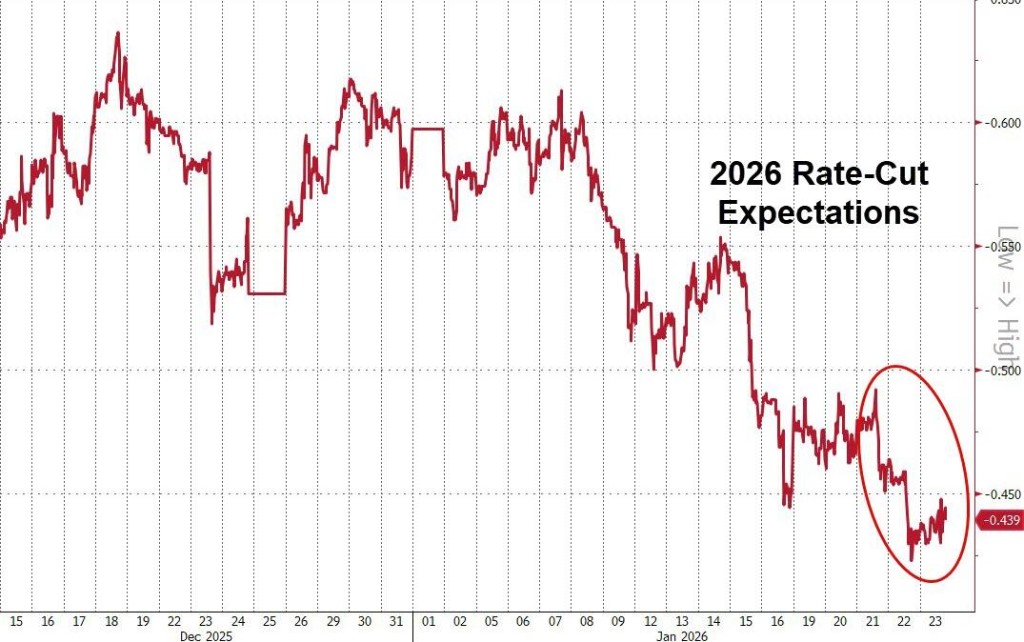
Meanwhile, expectations for a rate cut by the Federal Reserve significantly cooled this week, with the current market pricing for rate cuts far below the expectation of two 25 basis point cuts
In terms of asset performance, the divergence is very significant:
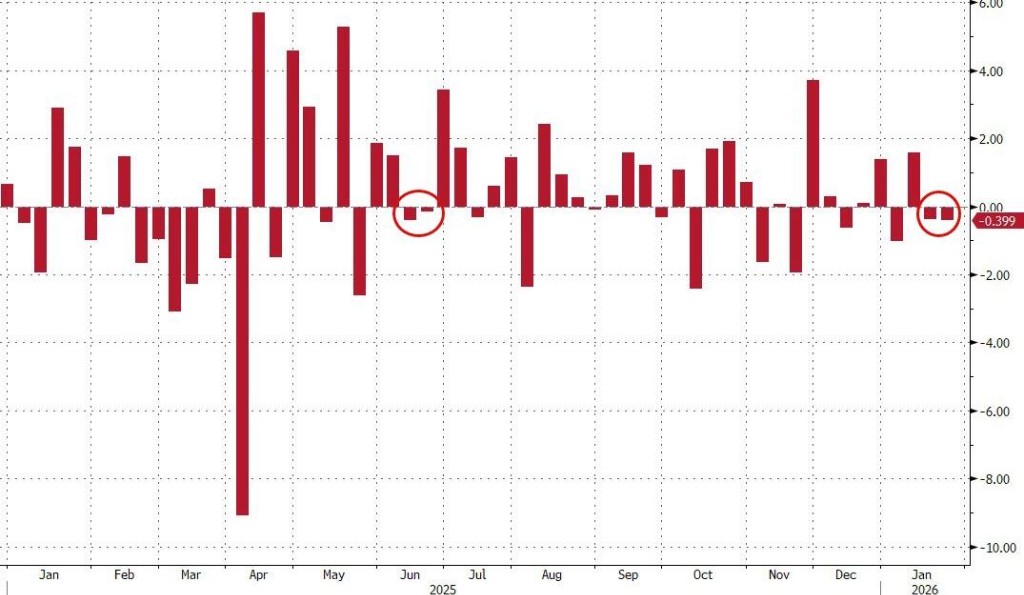
In the stock market, the Nasdaq barely maintained a slight gain, while other major indices closed lower. This marks the first time since June 2025 that the S&P 500 index has declined for two consecutive weeks.
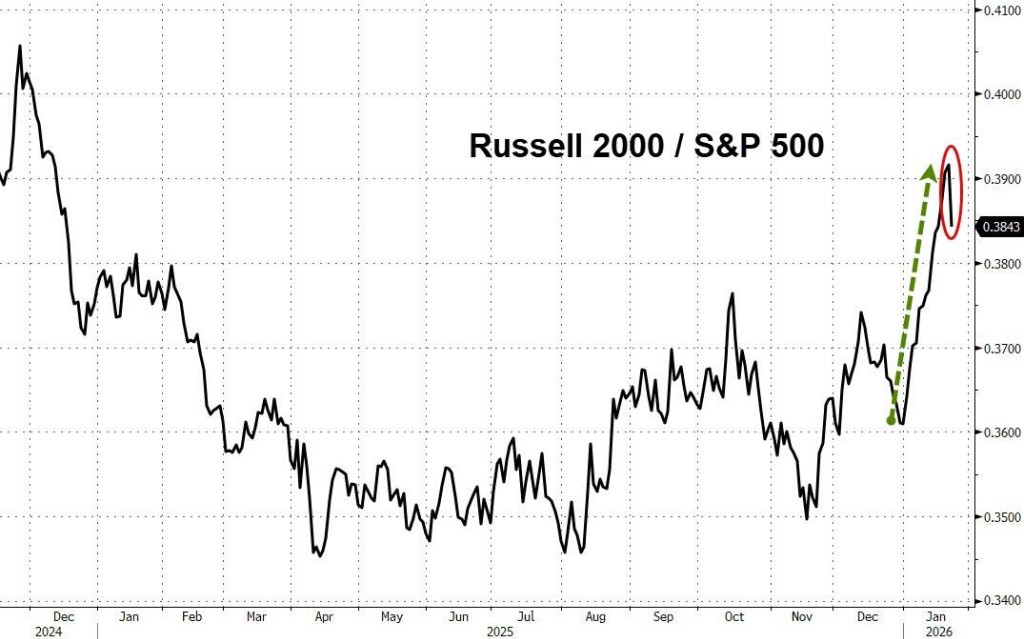
Goldman Sachs trading desk noted, "There was a significant change in narrative on Friday," with the Russell 2000 index underperforming the S&P 500 for the first time this year, ending a record 14-day winning streak.
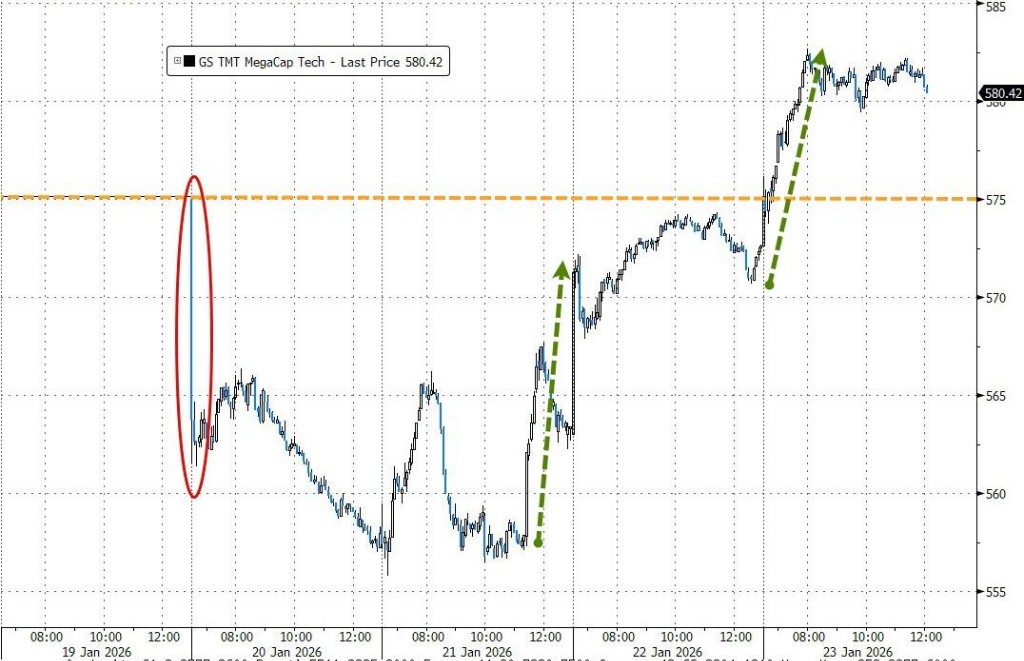
Tech giants recorded gains this week, rebounding strongly from Wednesday's TACO low.
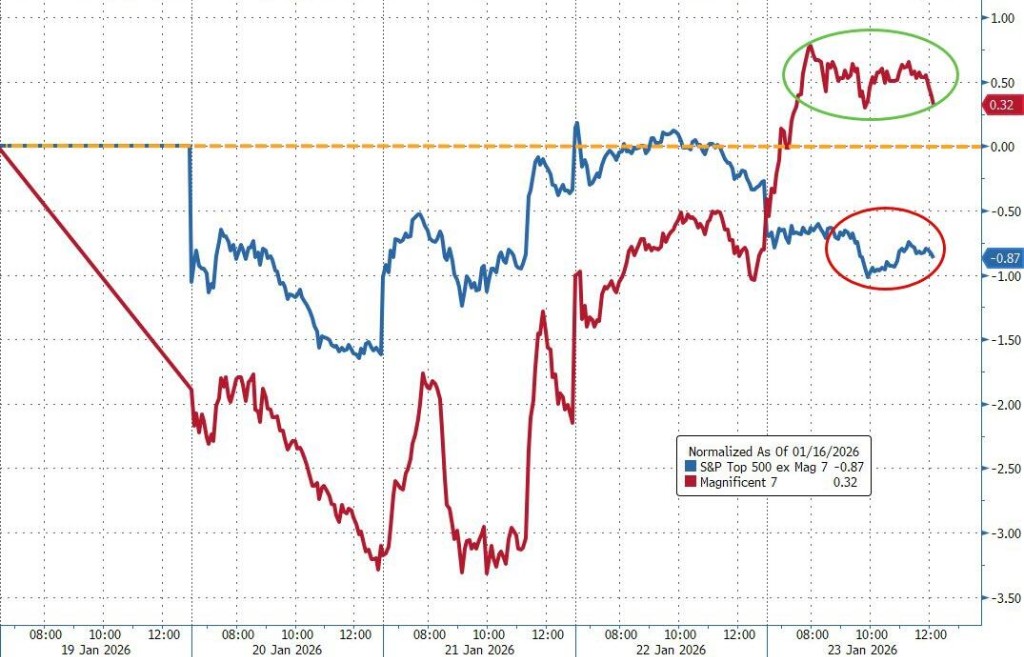
Over the week, Mag7 stocks rose, while 493 components of the S&P fell.
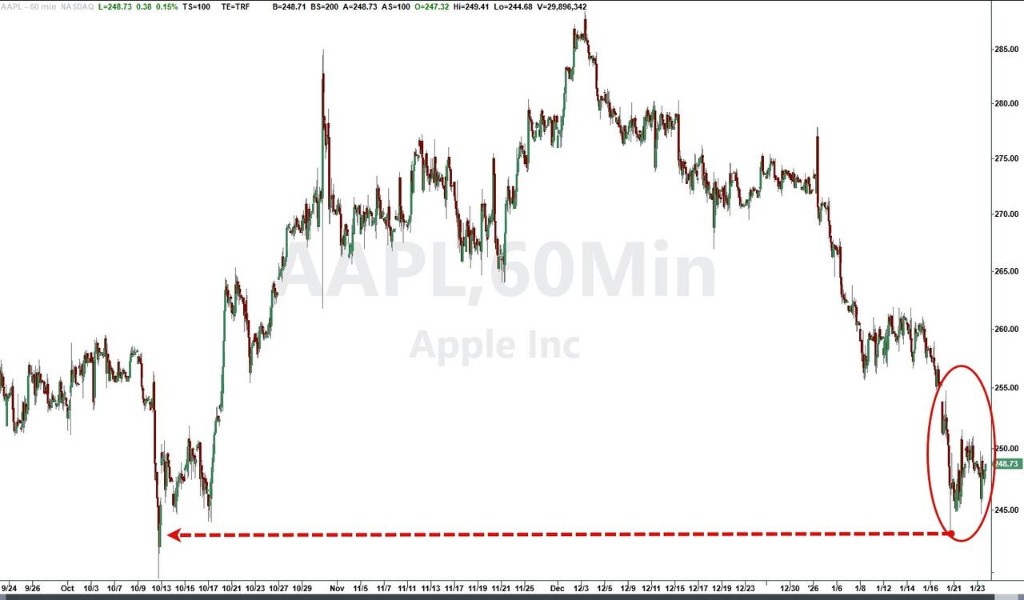
However, Apple has declined for the 8th consecutive week, marking the longest losing streak since May 2022, with capital flows significantly weaker than other tech giants.
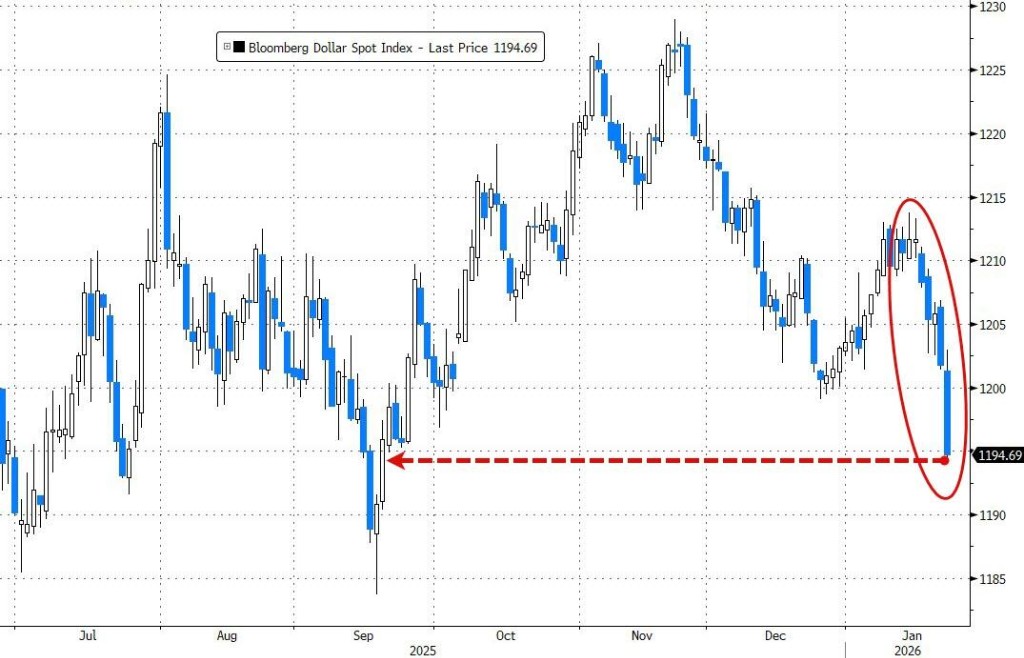
The dollar was severely impacted, with the dollar index falling to its weakest level since August, recording the largest single-day drop since August and the largest weekly drop since July.
The yen surged after intervention rumors, recording the largest single-week gain since May 2025.
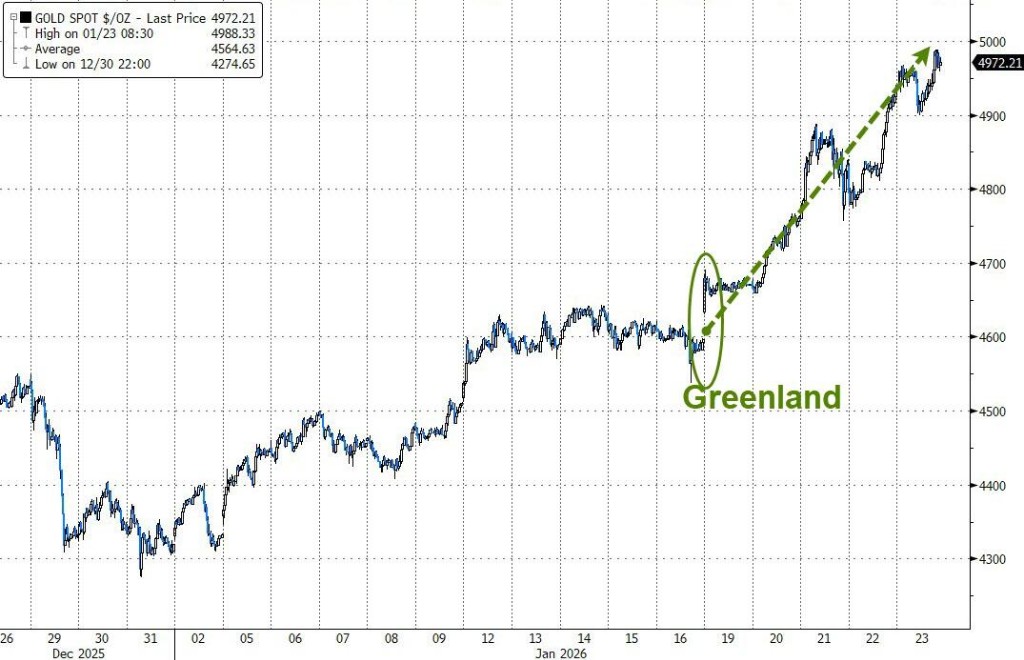
Gold has risen for five consecutive days and three consecutive weeks, approaching $5,000.
According to Rich Privorotsky, head of Delta-One trading at Goldman Sachs, "Clearly, there is hot money involved, but first and foremost, gold is a central bank trade... it is a slow erosion of the dollar's excessive privilege rather than a sudden loss of confidence."
Silver has broken through $100, reaching a peak of $103, with eight weeks of gains in the past nine weeks.
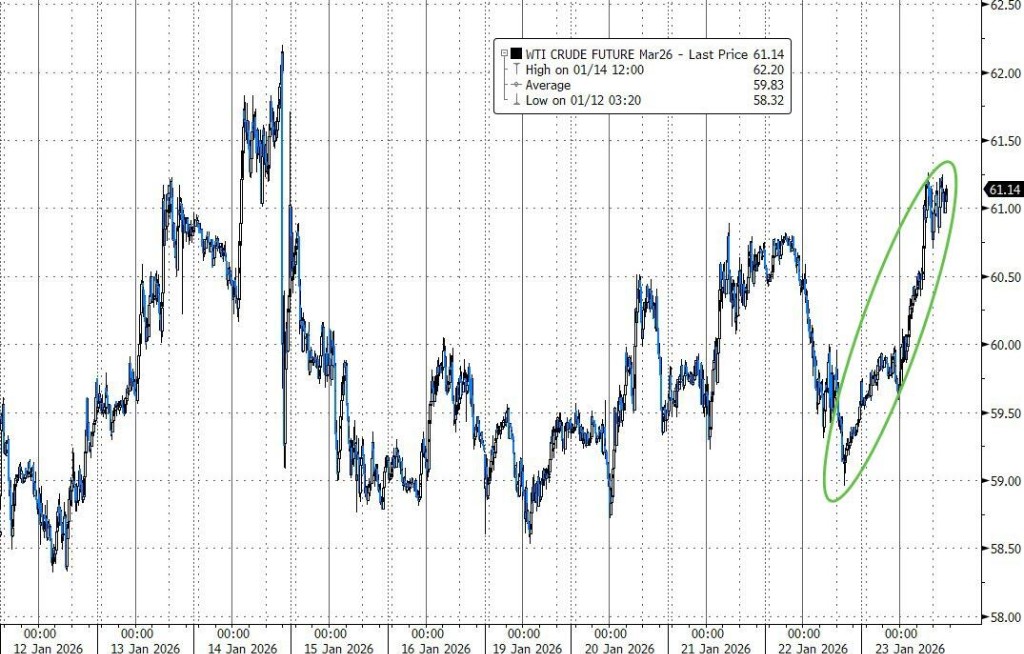
In the energy market, crude oil prices have surged significantly due to geopolitical tensions.
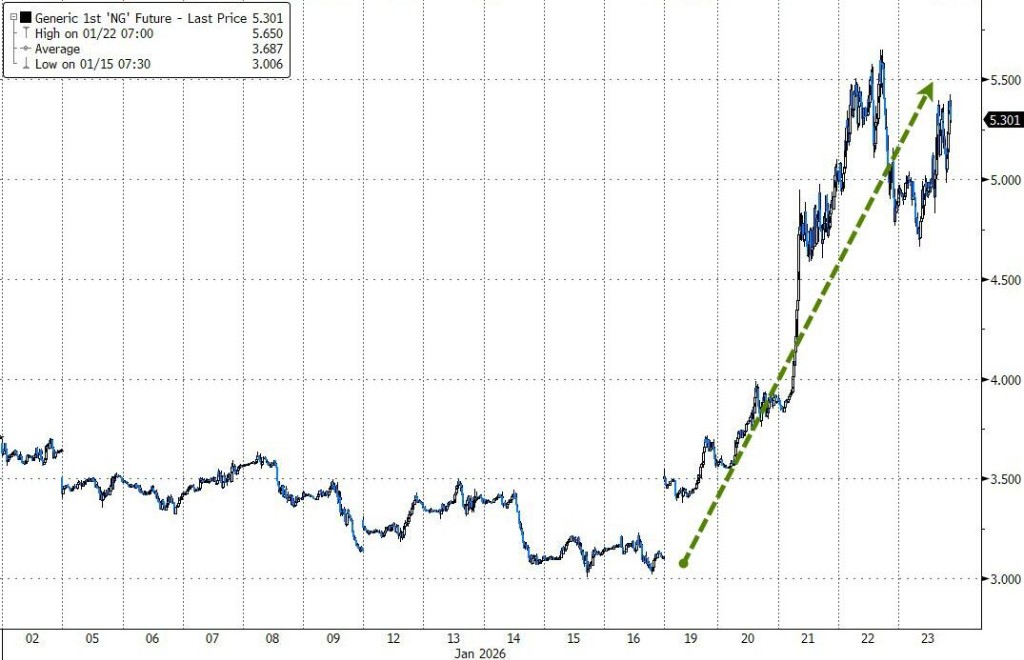
Natural gas has performed the best, skyrocketing over 85% from low to high during the week.
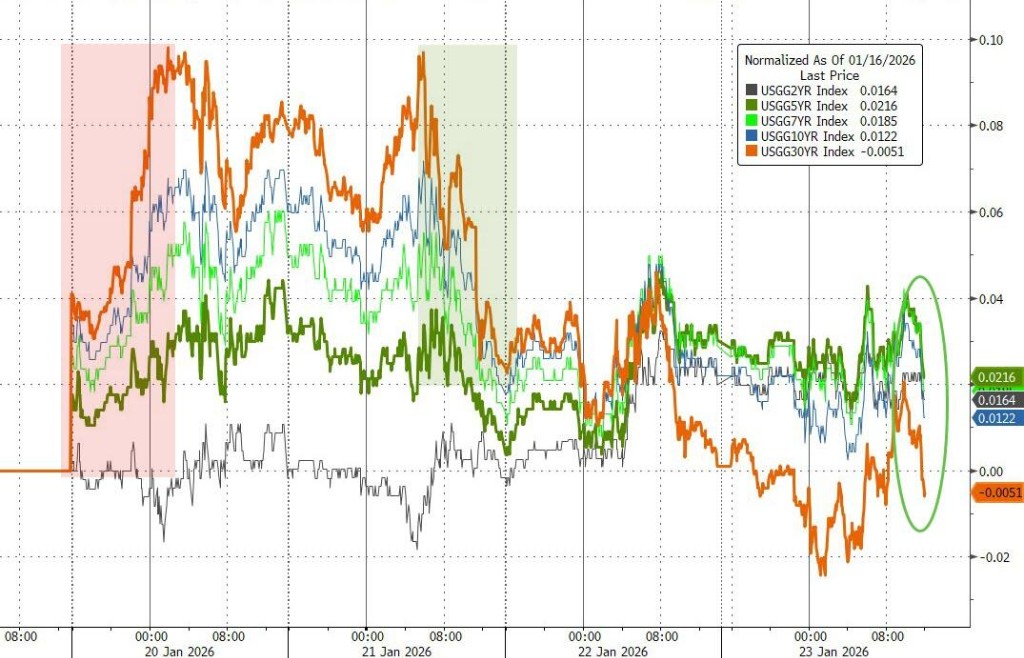
In the bond market, U.S. Treasury yields showed mixed results, with long-term bonds outperforming and mid-term bonds lagging. Expectations for interest rate cuts have significantly decreased this week, with current expectations far below two cuts of 25 basis points each.
Hedging Dilemma: Should We Pay for Volatility?
The market performance on Tuesday was particularly thought-provoking, with stocks, bonds, credit, cryptocurrencies, and emerging market assets all plummeting.
According to Bloomberg statistics, since 2020, there have been 21 instances of major asset classes experiencing simultaneous declines on days when the S&P 500 index fell by at least 2%, surpassing the total from the previous 15 years.
This "double whammy" of stocks and bonds has rendered the traditional 60/40 investment portfolio (60% stocks, 40% bonds) ineffective once again, suffering its largest single-day loss since last October.
This phenomenon has sparked intense debate on Wall Street regarding hedging strategies. Jeffrey Rosenberg, senior portfolio manager at BlackRock Systematic Fixed Income, believes that this is not just a headline effect, but reflects a deeper shift in mechanisms He pointed out that due to the loss of reliability of bonds as a hedge against stocks, investors are facing challenges of excessive asset concentration and the failure of stock-bond correlation, urgently needing to find alternative diversification solutions.
However, not everyone believes there is a need to overreact. Mark Freeman, Chief Investment Officer of Socorro Asset Management LP, stated that he has never found hedging to be a particularly effective strategy, as it often requires making the correct short-term market judgment. In fact, those investors betting on the resilience of the U.S. economy and the "TACO" effect have often achieved better returns over the past year.
Since the COVID-19 pandemic, concerns about more synchronized market reactions have intensified, driven by structural changes: bonds no longer hedge stocks as they once did, crowded trades into tech stocks amplify volatility, and global fiscal pressures limit policy buffers. Investors are not only dealing with volatility but also with more frequent fluctuations.
Earnings season arrives, and the market faces new tests
Nevertheless, this week's sharp fluctuations have clearly shaken the confidence of some investors.
In Bank of America's latest fund manager survey, nearly half of the respondents indicated that they lack protective measures against a significant decline in the stock market, the highest proportion since 2018.
Chris Murphy, Co-Head of Derivatives Strategy at Susquehanna International Group, noted that while traders initially habitually chose to "buy the dip" and sell volatility, hedging activities targeting tech stocks have noticeably increased ahead of the earnings season as the market rebounds.
Jim Thorne, Chief Market Strategist at Wellington-Altus, summarized that while the "TACO" effect may justify taking risks, it does not mean investors should "drive without a seatbelt" and run naked.
Accepting small, planned hedging costs to avoid being forced into catastrophic sell-offs during synchronized market crashes may be a more rational choice in the current environment.
As the peak of the earnings season approaches next week, tech giants including META, Microsoft, Tesla, and Apple will successively release their results, and the market will face new tests: whether the earnings data can stabilize the situation or whether the strengthening yen and macro uncertainties will continue to dominate the pricing of risk assets in this round.
