


How to view gold at five thousand and silver breaking a hundred?

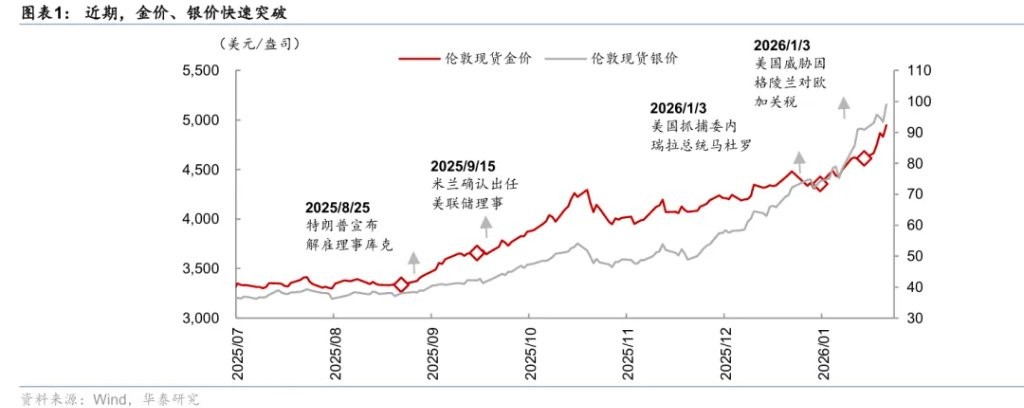
In 2023, the trend of revaluation of precious metal prices is evident, with gold and silver prices rising rapidly. The gold price has surpassed USD 4,981 per ounce, and the silver price has exceeded USD 100 per ounce, mainly influenced by global geopolitical tensions. Analysts believe that the credibility of the dollar system is accelerating its collapse, leading to increased demand for precious metals from investors. In the future, attention should be paid to the impact of changes in supply and demand balance on broader asset allocation, especially regarding the revaluation of key commodity prices in areas such as AI and defense
Core Viewpoints
Since 2023, we have consistently been optimistic about the price revaluation of precious metals represented by gold (see "A Century of Global Central Bank Gold Purchases: A Long Way to Go," 2024/5/10). As global geopolitical restructuring and deteriorating fiscal sustainability accelerate into the "fast lane," we continue to favor the long-term allocation value of these commodities with certain "monetary attributes." However, as the revaluation of precious metals enters the "consensus" stage, we further explore the implications of this trend for broader asset allocation: ① The trends of gold and silver under the global changes remind us that the "gold content" of currency is declining, and the "valuation anchor" is rapidly drifting upwards, suggesting that we may need to adjust our pricing system for supply-scarce physical assets and core equity assets. ② Changes in the supply-demand balance of global commodities, including scarce key products in AI and defense aerospace sectors, may continue to drive a broader revaluation of commodity and resource prices. Given that the global investment cycle after 2026 will be more "material-intensive" compared to before 2025, and that the price sensitivity of core demand increments in AI infrastructure and defense industries is relatively low; at the same time, the decline in material consumption related to China's real estate is nearing its end, and global resource demand will no longer enjoy the "buffer" brought by this trend (see "What Does a More 'Material-Intensive' Global Investment Cycle Mean?" 2026/1/19).
I. Why Are Precious Metal Prices "Rushing" Again?
Recently, gold and silver prices have rapidly surged. In the two months leading up to Friday (January 23), the London gold spot price has cumulatively risen by 25% to $4,981 per ounce, approaching the psychological barrier of 5000; during the same period, London silver has jumped by 112.4%, breaking through $100 per ounce on Friday (Chart 1). We believe that the short-term catalysts for precious metal prices are as follows:
- The intensification of global geopolitical conflicts—recent actions and statements by the United States regarding Venezuela, Iran, Greenland, and NATO member countries may indicate an accelerated collapse of the credibility of the dollar system.
The U.S. has withdrawn resources from global governance, imposed tariffs on imports, and exercised "long-arm jurisdiction" over overseas dollar assets, which in a sense directly undermines the credibility of the dollar system—this logic can be analyzed as follows: Under U.S. leadership, a rules-based global order was established after World War II. The U.S. provides security, infrastructure, humanitarian aid, and other public resources globally, but it does not do so without receiving "returns." The U.S. benefits from its status as the issuer of the international reserve currency, significantly lowering the financing costs for the U.S. government and companies, while boosting their net investment returns—this can be seen as one of the most direct economic returns for the U.S. in maintaining the global system. More global holdings of U.S. Treasury bonds bring a valuation premium to U.S. debt. Research shows that the status of the dollar as a reserve currency results in U.S. Treasury bond yields being 0.5-1 percentage points lower than the market fair value of non-reserve currency bonds of similar quality. From this perspective, the U.S. demanding "secondary taxation" in the form of tariffs and resources will inevitably reduce the motivation for countries to hold U.S. Treasury bonds (paying the seigniorage tax), accelerating the erosion of the dollar's intrinsic value and weakening the U.S.'s ability to collect "seigniorage tax." In just three weeks of 2026, the United States has taken military action against Venezuela, intensified sanctions and military deployments against Iran, explicitly stated its sovereignty claims over Greenland, and threatened tariffs on NATO member countries but then quickly "retreated"... Although this series of actions may not immediately trigger large-scale U.S. Treasury sell-offs by various countries, it inevitably reduces the long-term motivation for countries to continue increasing their holdings of U.S. Treasuries, and may ultimately come at the cost of sacrificing the dollar's status (see "A Brief Analysis of the Macroeconomic Impact of Changes in Venezuela's Oil Industry," 2026/1/4, and "If the U.S. Imposes Tariffs on NATO Members," 2026/1/18).
- Recently, global expectations for fiscal expansion have risen again, making the contradictions of fiscal sustainability more pronounced, pushing up medium- and long-term inflation expectations, and causing a decline in the intrinsic value of fiat currencies.
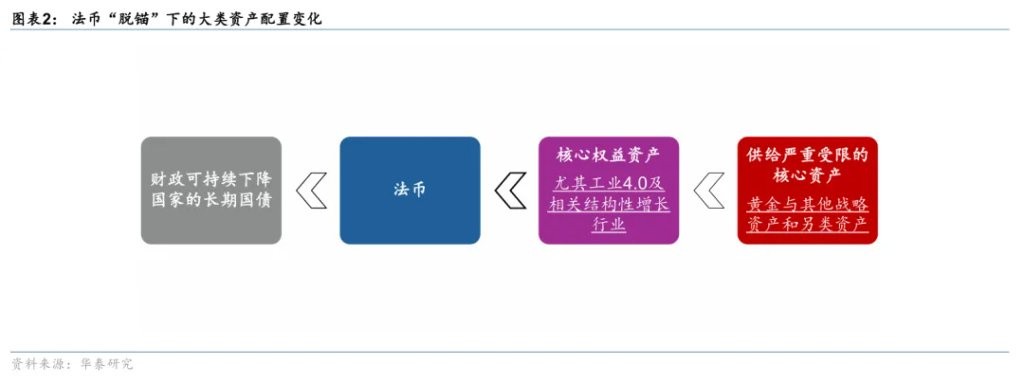
Affected by a series of recent actions by the U.S., expectations for global fiscal expansion, especially a significant increase in military spending, have clearly strengthened. At the 2026 Davos Forum, French President Macron explicitly stated that the world is turning towards authoritarianism, and Europe must increase its investment, particularly in defense and security; in response to the restructuring of the global order, Canadian Prime Minister Carney called for middle powers to unite and clearly stated that Canada's defense spending will double by 2030. Additionally, Japanese Prime Minister Sanae Takaichi recently announced the dissolution of the House of Representatives, with elections scheduled for February 8, which may, to some extent, be preparing for larger-scale fiscal expansion. To improve the Liberal Democratic Party's chances of winning, Takaichi also announced a possible two-year suspension of the food consumption tax, which will bring an additional fiscal expansion of about 0.8% of GDP. Market concerns about the sustainability of overseas fiscal policies have intensified. Recently, long-term bond yields overseas have risen significantly, indicating that funds are fleeing from countries with declining fiscal sustainability and flowing into core equity assets and severely supply-constrained core assets, consistent with our previous relative ranking of major assets under the "decoupling" of fiat currencies (Chart 2; see "Concerns About Overseas Fiscal Sustainability," 2025/11/4).
II. Why Are Precious Metal Prices "Racing" Again?
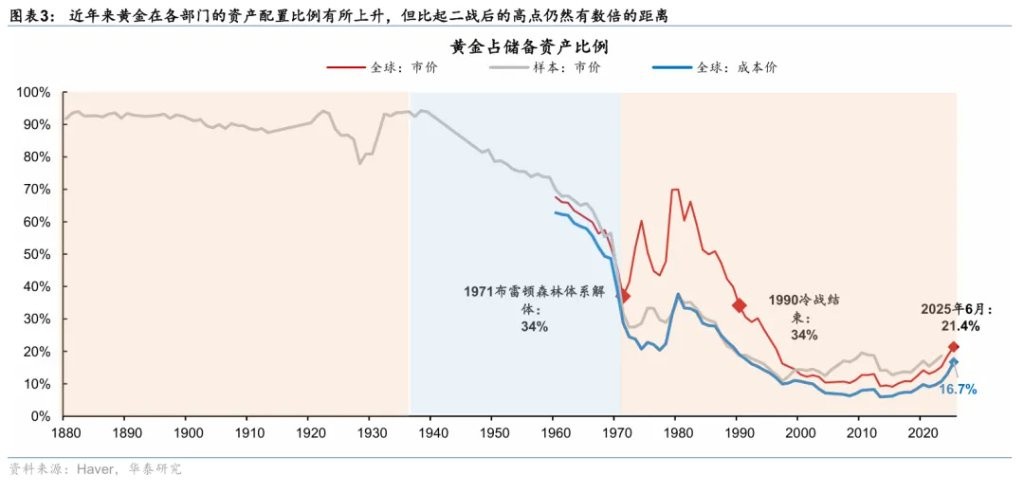
In the medium to long term, gold still has allocation value. At the beginning of the new year, three macro trends—global order restructuring, declining fiscal sustainability and credibility of fiat currencies, and a significant acceleration in AI investment—are further accelerating. Although the asset allocation ratio of gold in various sectors has increased with rising prices and accelerated global (especially central bank) gold purchases, it is still several times away from the post-World War II peak, and its proportion in household assets is even lower (Chart 3).
However, the trend of precious metals reminds us that the "valuation anchor" of core assets may also shift upwards, and we should avoid "carving the boat to seek the sword" when valuing truly scarce core assets.
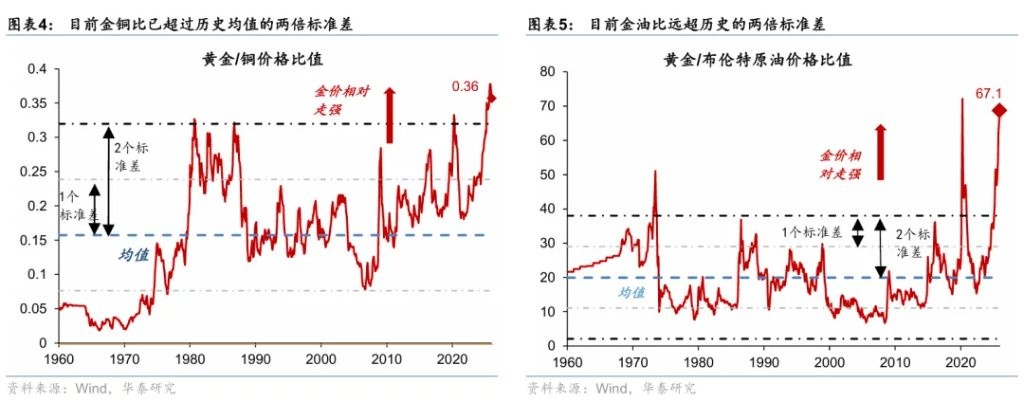
With the structural shift in medium- and long-term macro narratives and allocation logic, not only does the dollar, which currently enjoys a valuation premium, still have room for depreciation (see "The Decline of the Dollar: Space and Path," 2025/6/3), but as fiscal sustainability and inflation expectation stability decline, global funds' allocation to other overseas fiat currencies and government bonds may continue to decrease relatively. At the same time, given that the impulse for fiscal expansion is easy to rise but difficult to fall, total money supply will remain at high growth—this further highlights the allocation value of scarce assets Although this analytical perspective is somewhat one-sided, if we use gold as a valuation anchor to replace fiat currency for various commodities, resources, and major stock indices, most global assets have recently experienced "devaluation." As shown in Chart 4-5, the price ratios of gold to copper, oil, and other bulk commodities are all above two standard deviations from the historical average, with the ratio to crude oil reaching an extreme value not seen since the futures oil prices fell to "negative values" during the COVID-19 pandemic in 2020. Although major global stock indices recorded significant positive returns last year, their ratios to gold have clearly declined. Indeed, the supply and demand fundamentals of most assets cannot be compared to gold, but in the context of a significant decline in the "gold content" of fiat currency, it is still necessary to re-understand the valuation anchor.
III. Hotspots are expected to spread—Increase allocation to resources with limited supply, including high-tech "consumables" that still have room for growth
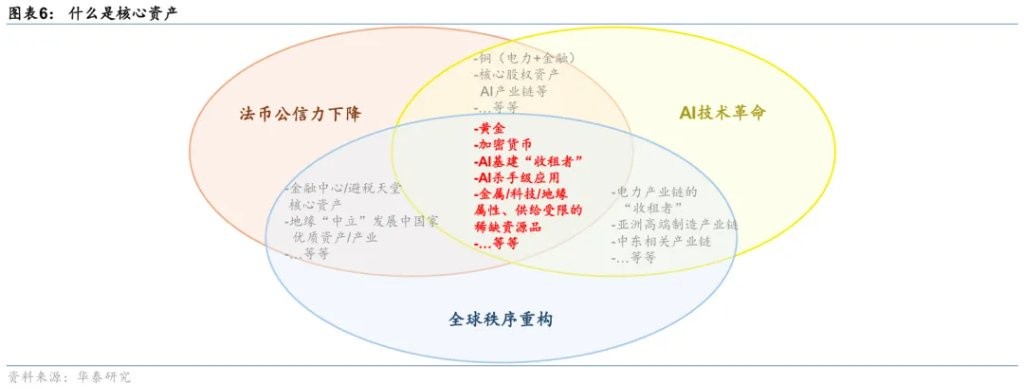
Focus on allocation opportunities for core assets beyond gold. In the fourth quarter of last year, we proposed that three macro trends—global order reconstruction, declining credibility of fiat currency, and the AI technology revolution—will impact the relative performance of global asset classes in the medium to long term (see "How Does the Erosion of Federal Reserve Independence Change the Macro Narrative?" October 29, 2025, Chart 6). Looking ahead, the trend of declining credibility of fiat currency is likely difficult to reverse in the medium term, and we might as well broaden our thinking to seek core assets beyond gold.
- Resources with limited supply
In 2026, multiple factors will resonate to push the world into a more "consumable" investment cycle, and global enterprises will enter the first large-scale leverage cycle since 2008— the allocation value of resources with limited supply (including key commodities in the high-tech field) is expected to continue to rise.
As we analyzed in "What Does a More 'Consumable' Global Investment Cycle Mean?" (January 19, 2026), starting in 2026, the physical "consumable volume" of global investment will significantly increase: ① As the AI investment cycle in 2026 spreads more towards data centers and power infrastructure, the absolute volume of consumables may rise sharply; ② Global fiscal policies will be synchronously eased, and defense and public investment expenditures will increase; ③ The global manufacturing prosperity cycle is expected to rise, and an often-overlooked point by many investors is that ④ China's investment and commodity demand "de-real estate" is nearing its end, and the "buffer" effect on global bulk commodity demand from the previous five years may no longer exist.
When both corporate and government spending leverage up and consumable-type expenditures increase, the allocation value of the large quantities of goods and resources consumed will outperform bonds and even equity assets. ① Against the backdrop of deteriorating global fiscal sustainability, the inflation center overseas may structurally rise, and the declining credibility of fiat currency globally will elevate the allocation value of gold and other bulk commodities. ② Historically, when the "consumable" capital expenditure cycle enters its second half, rising corporate leverage suppresses equity asset valuations, but the physical demand for industrial goods may continue to push up the prices of cyclical goods with limited supply. ③ In the medium to long term, the AI technology revolution will boost demand for industrial goods but increase labor supply, potentially changing the relative income distribution between capital/resources and labor, causing inflationary pressures to be more concentrated in upstream resources with limited supply 2. Core Equity Assets
Like strategic resource products, companies with excellent management, high cash flow, and significant investment returns and barriers can also be regarded as "scarce assets," and to some extent, can enjoy a premium, especially global companies with scale and technological advantages.
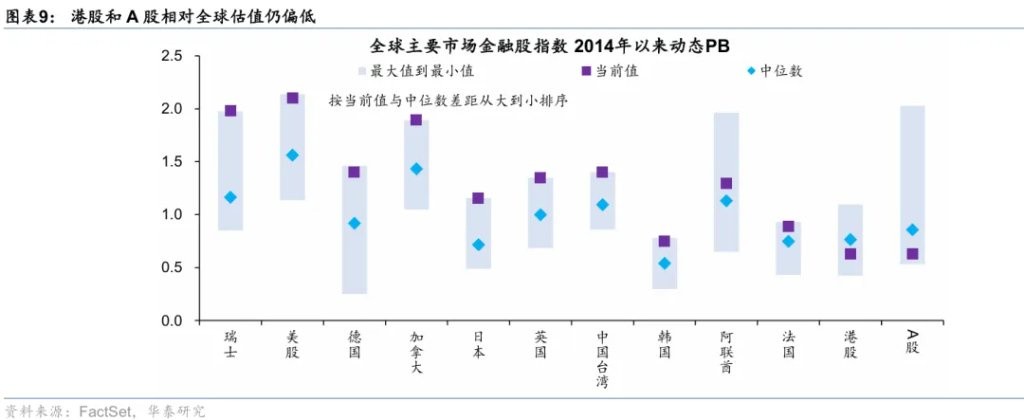
- Undervalued Currencies and Their Related Assets - Hong Kong Stocks Still Have Significant Revaluation Potential
Against the backdrop of declining credibility of the US dollar, countries and regions with undervalued exchange rates, especially those with recovering domestic corporate profitability, have the "timing and geographical advantages" for asset price revaluation. Reiterating the revaluation potential of Hong Kong assets in the context of RMB appreciation (see "After RMB Breaks 7," 2025/12/25, and "What Are the 'Exceptions' in Hong Kong Stocks?" 2025/9/14).
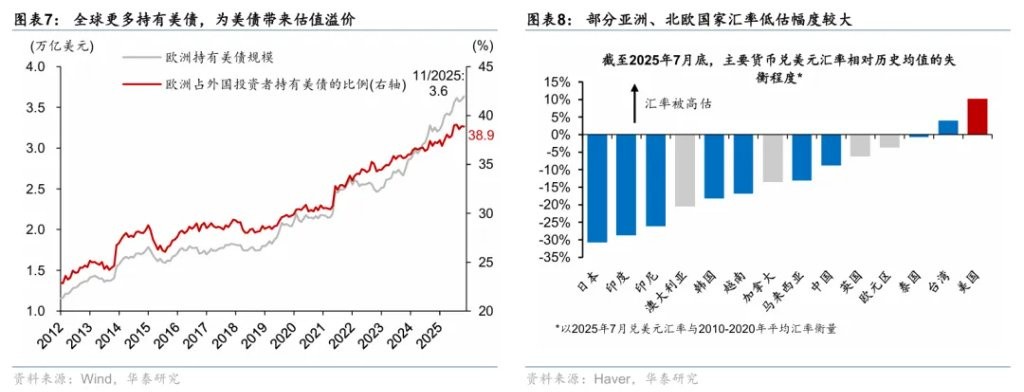
- Behind the significant undervaluation of the exchange rate may be the substantial over-allocation of domestic funds to US dollars and overseas assets. Among them, some Asian and Nordic countries have significant capital repatriation and asset price revaluation potential (Chart 7).
- In the medium to long term, the side effect of the US exiting the global governance system may be that Western countries reduce their "over-allocation" to dollar assets. Economies with rising prosperity and attractive valuations may also benefit from this "de-risking" trend. Taking European countries as an example, as of the end of November 2025, European countries held a total of $3.6 trillion in US Treasury bonds, accounting for about 40% of the total US Treasury bonds held by foreign investors (Chart 8). Although the likelihood of European countries significantly reducing their holdings of US Treasury bonds in the short term is low, in the medium to long term, these countries may adjust the proportion of dollar assets in their allocations.
 Risk Warning and Disclaimer
The market has risks, and investment should be cautious. This article does not constitute personal investment advice and does not take into account the specific investment goals, financial situation, or needs of individual users. Users should consider whether any opinions, views, or conclusions in this article are suitable for their specific circumstances. Investment based on this is at one's own risk.
