


CICC: What does Trump want?

Trump's actions and statements in early 2026 triggered market fluctuations, leading to a triple whammy in U.S. stocks, bonds, and currencies. The rise in policy uncertainty resulted in increased volatility in U.S. stocks and bonds. Trump's policy intentions mainly focused on increasing revenue, reducing costs, and repatriation, particularly achieving external revenue increases through tariff policies, which had significant effects
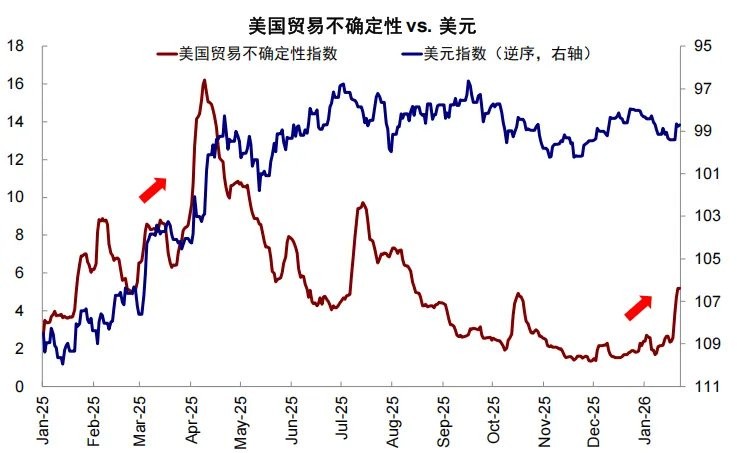
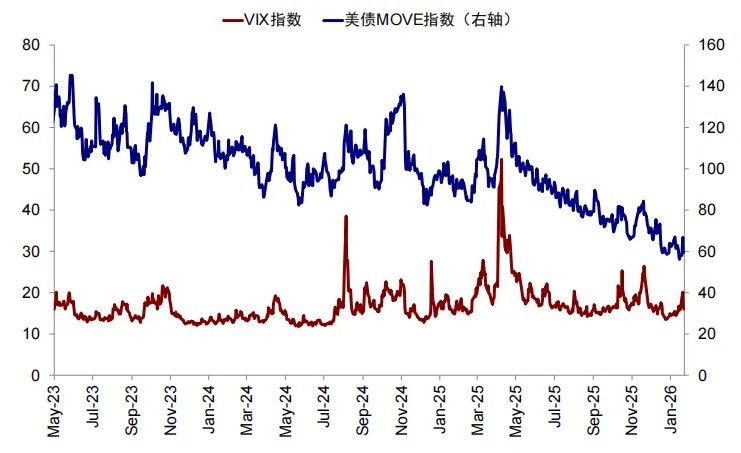
At the beginning of 2026, Trump's various actions and statements once again exceeded expectations, causing significant market fluctuations, with the U.S. experiencing a "triple kill" in stocks, bonds, and currencies at one point. After the U.S. reduced "reciprocal tariffs" on multiple economies last August and postponed tariffs between China and the U.S. for a year in October, things had calmed down for a few months. Now, everyone has been pulled back to the "familiar feeling" of "reciprocal tariffs" from last April. As a result, uncertainty in U.S. policy has risen again, and the volatility of U.S. stocks and bonds has also increased.
Chart: U.S. policy uncertainty rises again
Source: Bloomberg, CICC Research Department
Chart: Volatility of U.S. stocks and bonds rises
Source: Bloomberg, CICC Research Department
Trump's "way of doing things" that challenges the existing international order is the key reason why global markets are most uncomfortable and the source of asset volatility. However, beyond the means, understanding the purposes and intentions behind all of Trump's policies is likely more important. In the process of achieving these purposes, some extreme measures may cause severe fluctuations, while some methods may backfire. This approach of observing means while understanding purposes can help us better see the essence through phenomena, understand the impact of these policies on the U.S. macroeconomy and markets, and also observe the constraints on Trump. It should be noted that our discussion in this article focuses only on the macro-level intentions.
Trump's Three Macro Objectives: "Increase Revenue," "Reduce Costs," and "Repatriate"
As of January 20 of this year, Trump has been in office for exactly one year. From a macro perspective, the main policy objectives he has aimed to achieve since taking office can basically be summarized in three words: increase revenue, reduce costs, and repatriate.
1. Increase Revenue: Tariffs "Demand Money from Abroad," with Significant Effects and Controllable Short-term "Costs," Supreme Court Tariff Rulings are Particularly Important
To achieve revenue increases, raising taxes domestically is not feasible, as it contradicts Republican ideals; expanding debt is also unrealistic due to high financing costs, and the "fiscal hawks" within the Republican Party would not agree. Therefore, the best approach is to "demand from abroad," and one of the intentions behind wielding the tariff "big stick" from the beginning of his term is precisely this.
Chart: Trump began wielding the tariff "big stick" from the start of his term

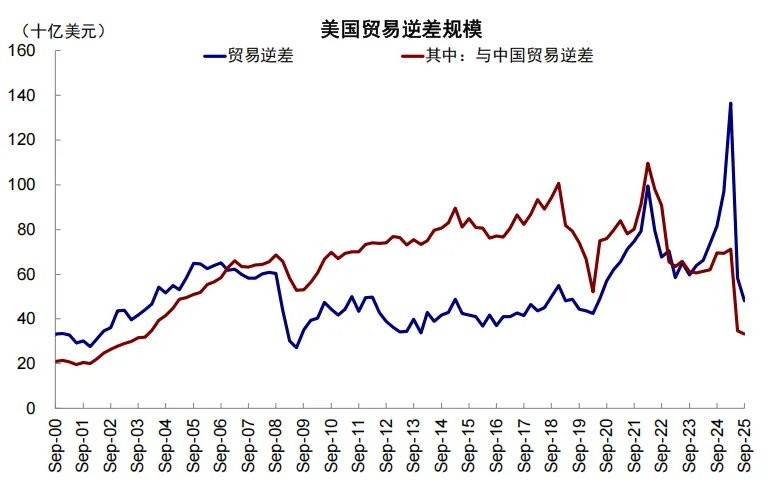
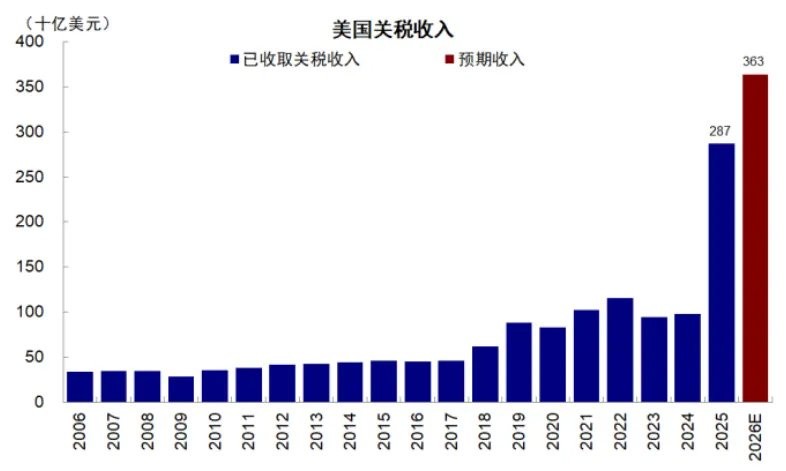
Source: PIIE, CICC Research Department Currently, the effects are also very significant. 1) Trade deficit: Starting from April 2025, up to the latest data for October 2025, the cumulative trade deficit is only $397.33 billion, a decrease of 24.6% compared to $527.06 billion in the same period of 2024. In the second and third quarters of 2025, the trade deficit between the United States and China decreased by as much as 48.3%. 2) Tariff revenue: The actual effective tax rate in the United States is 11.1%, with tariff revenue reaching $287 billion for the entire year of 2025. This money happens to become the source of funding for the "Great Beauty" Act. Thus, it achieves the effect of "spending others' money to do one's own business," with fiscal expansion but no significant increase in debt or deficit. In the fiscal year 2025, the U.S. government deficit was reduced from $1.83 trillion to $1.76 trillion, with the deficit rate dropping from 6.4% to 5.8%, and the increase in debt decreasing from $2.21 trillion to $2.17 trillion.
Chart: The U.S. trade deficit decreased by 24.6% from April to October 2025, with a decrease of 48.3% in the second and third quarters with China.
Source: Haver, CICC Research Department
Chart: The U.S. achieved $287 billion in fiscal revenue through tariffs in 2025.
Source: Haver, CICC Research Department
Chart: Tariff revenue can become the funding source for the "Great Beauty" Act.
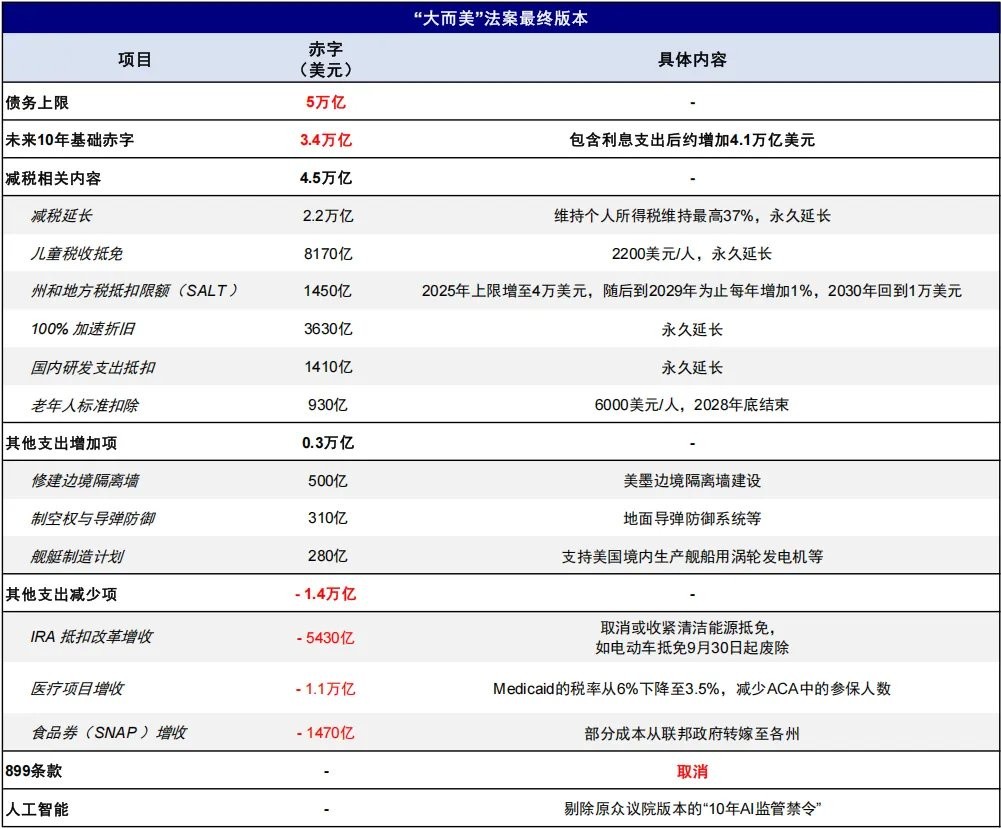
Source: CRFB, CICC Research Department
However, the backlash caused by aggressive tariff policies is also evident, including the "triple kill" in financial markets (stocks, bonds, and currencies), countermeasures from trade partners, rifts among allies, the erosion of global trust in the dollar system, and internal inflation pressures in the United States. These are all apparent costs, some of which can be quantified in the short term, while others have long-term impacts that are difficult to estimate.
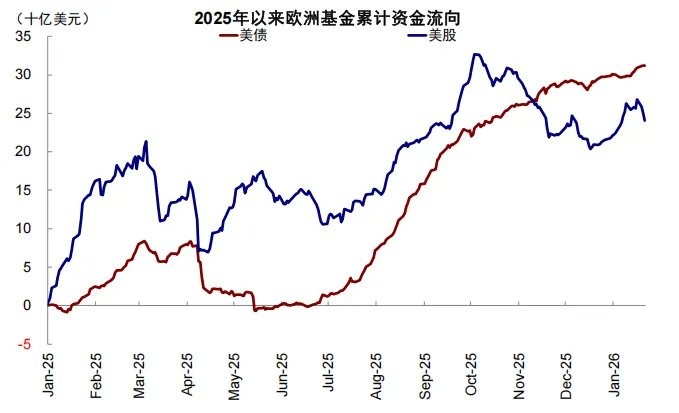
However, the short-term costs are currently still manageable. 1) Inflation has not risen sharply as feared. This is because the transmission speed of tariffs is slow, with the actual effective tax rate in the United States estimated at only 11.1%, which has not yet reached the theoretical tax rate of 15% derived from tariff policies. Additionally, the proportion of tariff costs borne by U.S. consumers is relatively low, fluctuating recently between 10-15%, with the majority being shared by exporters and importers, thus not preventing the Federal Reserve from starting to cut interest rates. 2) The global "de-dollarization" is not as severe as imagined, especially among European allies According to data from the U.S. Treasury Department, as of November 2025, among major overseas holders of U.S. Treasury bonds, China, Ireland, and India have continued to reduce their holdings, while Japan, Belgium, and the UK have increased theirs. EPFR daily frequency data shows that there was a significant outflow of funds from Europe to U.S. Treasuries in April, but it subsequently flowed back in. When the Greenland incident impacted the market, there was a noticeable outflow from U.S. stocks, but not from U.S. Treasuries. However, it is clear that they cannot withstand further significant "turbulence"; if there is another systemic escalation, it could lead to uncontrollable effects, which is one of the possible reasons for Trump's quick TACO on the Greenland issue.
Chart: The effective tax rate in the U.S. is only 11.1%, not yet reaching the theoretical tax rate of 15%
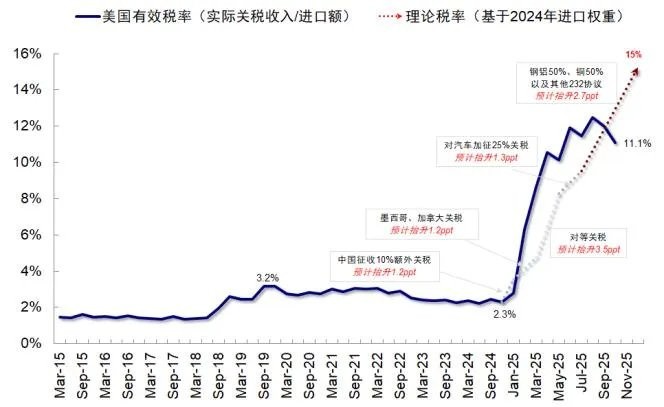
Source: Haver, CICC Research Department
Chart: The proportion of tariff costs borne by consumers is relatively low, fluctuating recently between 10-15%
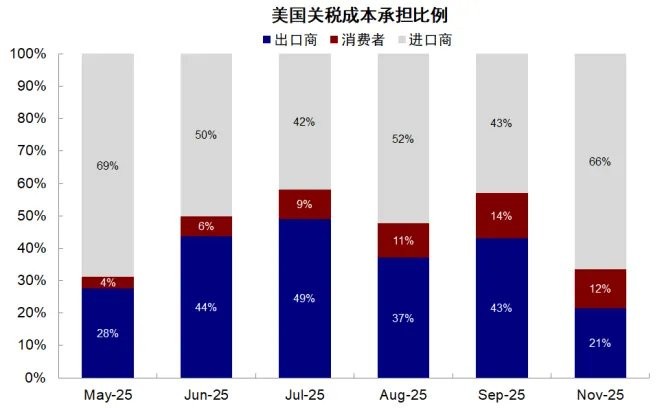
Source: Haver, CICC Research Department
Chart: Among major overseas holders of U.S. Treasury bonds, China, Ireland, and India have continued to reduce their holdings, while Japan, Belgium, and the UK have increased theirs
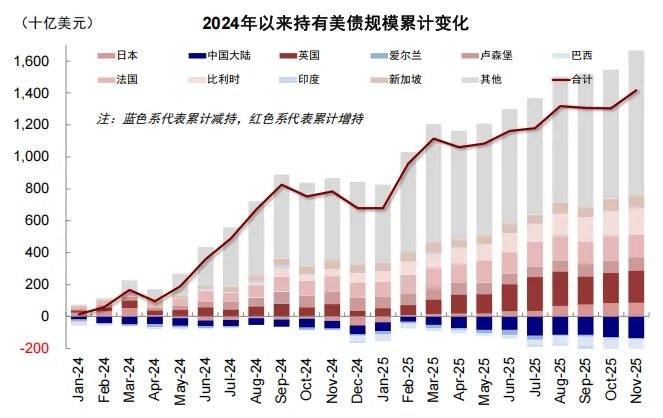
Source: Wind, CICC Research Department
Chart: When the Greenland incident impacted the market, there was a noticeable outflow from U.S. stocks, but not from U.S. Treasuries
Source: EPFR, CICC Research Department
From the perspective of "increasing revenue," Trump cannot afford to lose tariff revenue. If that happens, not only would he be unable to use this money to stimulate domestic demand, but the sustainability of fiscal policy would also be immediately questioned by the market.
Therefore, the Supreme Court's ruling on the presidential authority under IEEPA is particularly important. Polymarket data shows that as of January 24 this year, the market expects the probability of the Supreme Court ruling in favor of Trump to be only 31%, while the probability of ruling that he needs to refund tariff revenue is only 17%. According to our calculations, among the newly added 13ppt tariff rates in 2025, the IEEPA clause contributes 6ppt, and the 232 clause contributes 7ppt. If we exclude the tariff revenue brought by IEEPA (which would reduce 2026 tariff revenue from $363 billion to $195.5 billion), the fiscal deficit rate in 2026 could expand from 6.4% to 7.0%. However, since this is due to a decrease in revenue, it would instead increase concerns about fiscal unsustainability Chart: As of January 24 this year, the market expects the probability of the Supreme Court ruling in favor of Trump to be only 31%
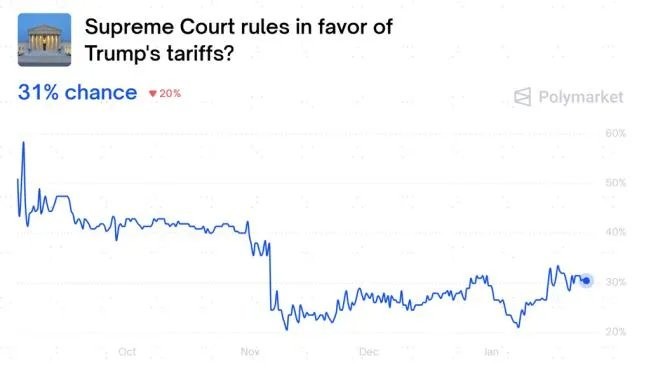
Source: Polymarket, CICC Research Department
Chart: As of January 24 this year, the market expects the probability of the Supreme Court ruling for Trump to refund tariff revenues to be only 17%
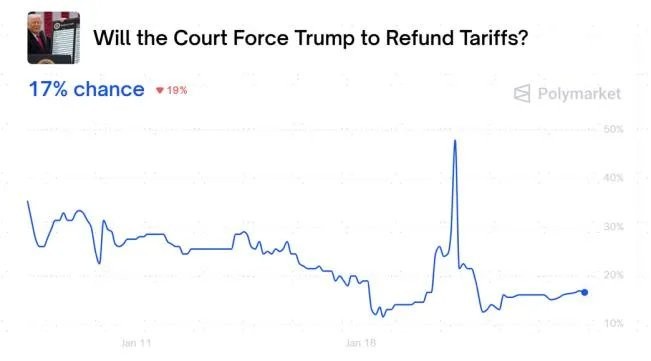
Source: Polymarket, CICC Research Department
Chart: Among the 13ppt tariff rates added in 2025, the IEEPA clause accounts for 6ppt, and the 232 clause contributes 7ppt
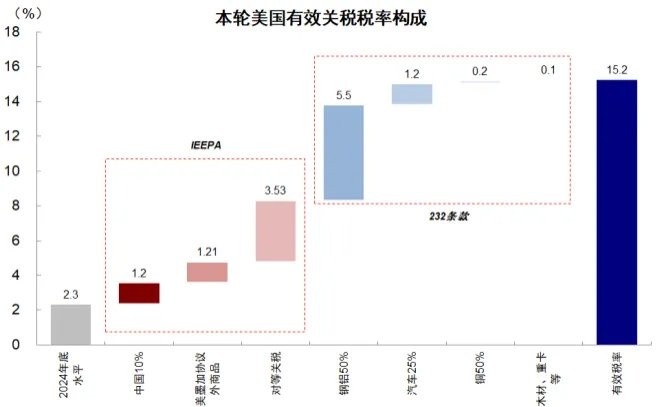
Source: Haver, CICC Research Department
Chart: The U.S. government deficit rate is expected to decline from 6.4% in the 2024 fiscal year to 5.8% in the 2025 fiscal year
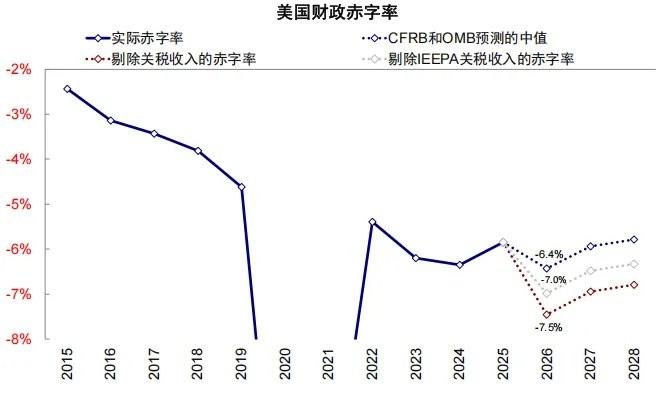
Source: Haver, CICC Research Department
If this result occurs, it will cause Trump to lose "face," but retain the "substance" of tariffs. However, since there are also investment agreements promised by various countries in the tariff agreement, the expectation for further fiscal stimulus will inevitably be affected.
II. Cost Reduction: Undermining the Independence of the Federal Reserve, Limited Effect and Serious Backlash, It’s Better to Influence Expectations Through a New Chair
Many current issues in the U.S. economy are related to high costs, such as high inflation and high interest rates, so many of Trump's policies are focused on addressing this issue. The most typical example is the continuous pressure on the Federal Reserve to lower interest rates, from initially calling out Powell, to "sabotaging" the Federal Reserve (nominating Milan in September 2025 who eventually became a Federal Reserve governor), "poaching" (suing Lisa Cook), and even directly suing Powell in the end. In addition, Trump has also attempted to require banks to limit credit card interest rates to a maximum of 10% within a year[1], requested institutional investors to avoid competing with ordinary families for housing, which raises housing prices[2], and instructed "the two housing giants" to use $200 billion of their own funds to purchase mortgage-backed securities (MBS)[3] (as of November 2025, "the two housing giants" only held $141 billion in MBS), all aimed at this goal Chart: As of November 2025, the "Two Housing" only holds $141 billion in MBS
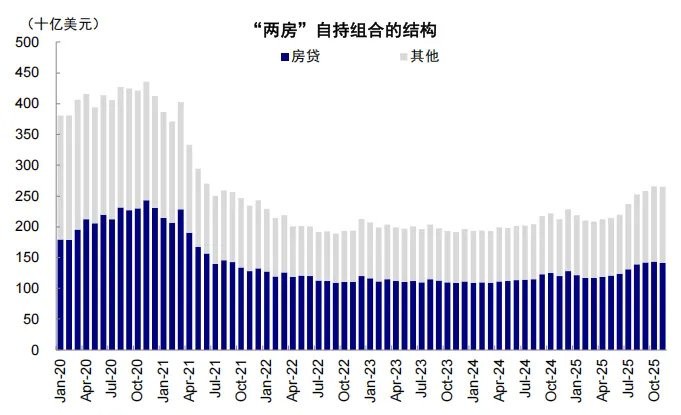
Source: Haver, China International Capital Corporation Research Department
However, compared to increasing revenue, these non-market methods have limited effectiveness in reducing costs. U.S. Treasury rates have remained high, and by the fiscal year 2025, the interest payment cost of U.S. government debt has approached $1 trillion, accounting for 3.1% of GDP, even after the Federal Reserve's interest rate cut in September 2025. The core reason lies in Trump's attempt to influence dispersed and intangible market forces through non-market administrative means, which is completely different from his tariff battles with dozens of economies.
Chart: As of the fiscal year 2025, the interest payment cost of U.S. government debt has approached $1 trillion, accounting for over 3.1% of GDP

Source: Haver, China International Capital Corporation Research Department
The backlash effect of these non-market methods is also greater; for example, the wanton trampling of the Federal Reserve's independence not only fails to gain widespread support but may even trigger market sell-offs of U.S. Treasuries, achieving the completely opposite effect. Each time U.S. Treasury rates soar, Trump will again resort to TACO. Therefore, the upcoming Supreme Court ruling on whether Trump has the authority to replace Federal Reserve Governor Lisa Cook, as well as the criminal investigation into Powell regarding the "Federal Reserve headquarters renovation project," is crucial for market sentiment. As of January 24 this year, Polymarket data shows that the probability of Lisa Cook leaving the Federal Reserve by the end of February is only 2%[4], and Powell has also received collective support from major global central banks [5].
Currently, the best and most effective approach still seems to be influencing market expectations through the nomination of a new Federal Reserve Chair within the existing framework. Polymarket data shows that as of January 24 this year, the probability of Rieder being elected as the new Federal Reserve Chair is 60%, while Warsh's probability is 22%. From past statements, both candidates appear to be more dovish than Powell's "implying no rate cuts" stance (What's More Important Than a Rate Cut in December). At that time, the market's reaction to the new Chair's moderate dovish expectations could achieve the goal of cost reduction and the restoration of real estate and traditional demand.
Chart: As of January 24 this year, Rieder's election probability is 60%, and Warsh's probability is 22%
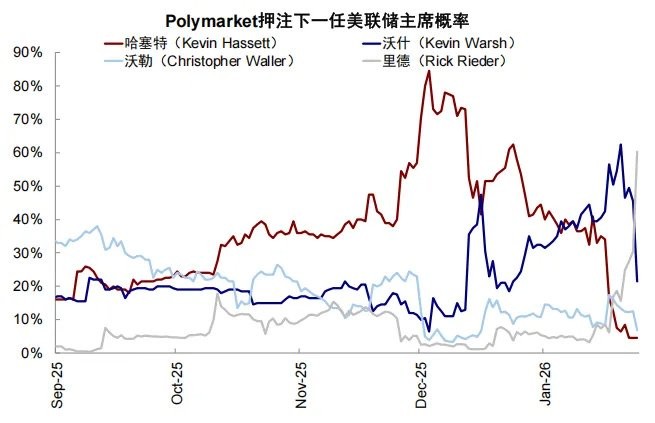 Source: Polymarket, China International Capital Corporation Research Department
Chart: Both Waller and Reed are more dovish than Powell's "implied no rate cut" stance
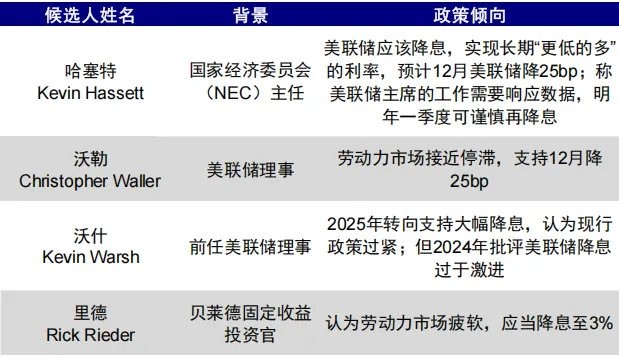
Source: Bloomberg, China International Capital Corporation Research Department
III. Repatriation: Significant repatriation of manufacturing and capital, with uncertainties stemming from challenges to the international order leading to substantial "de-dollarization"
The repatriation of manufacturing and capital to the United States is Trump's third objective. To this end, Trump has at least several initiatives: 1) Attracting companies to invest in the U.S. through tax incentives, such as providing 100% accelerated depreciation (i.e., allowing full cost deduction in the year incurred) and domestic R&D expense deductions in the "Great America" Act. 2) Forcing foreign companies to invest in the U.S. through tariff threats, such as Roche and other European pharmaceutical companies expanding their investments in the U.S. to avoid high tariffs, and Mexican auto parts company Nemak and industrial company Grupo Mexico evaluating the transfer of some production capacity to the U.S. Even American companies with more diversified supply chains, like General Motors and Tesla, are expanding their U.S. factories to cope with tariffs. 3) Requiring trade partners to commit to investing in the U.S. through tariff agreements; since May, the U.S. has reached agreements with major trading partners to cumulatively invest nearly $5 trillion in industries such as AI, energy, and semiconductors.
Currently, these measures have had significant effects. 1) Manufacturing repatriation: Under the impact of "reciprocal tariffs," the U.S. manufacturing import ratio has gradually leveled off after reaching a peak of 13.3% in March 2025, accelerating its decline since August, and falling to 8.0% by October, indicating that the share and importance of domestic manufacturing in the U.S. are continuously rising, with the effects of manufacturing repatriation gradually becoming evident. 2) Corporate investment: From a macro perspective, driven by equipment and intangible assets, fixed investment by U.S. corporate sectors has risen from 0.9% year-on-year in December 2024 to 3.9% in September 2025. From a micro perspective, capital expenditures of the S&P 500 have increased from 8.7% year-on-year in September 2024 to 19.8% in September 2025, while capital expenditures of the constituent stocks excluding the "Seven Sisters of U.S. Stocks" have also risen from 2.9% year-on-year in September 2024 to 7.4% in September 2025.
Chart: The U.S. manufacturing import ratio has fallen to 8.0% by October 2025
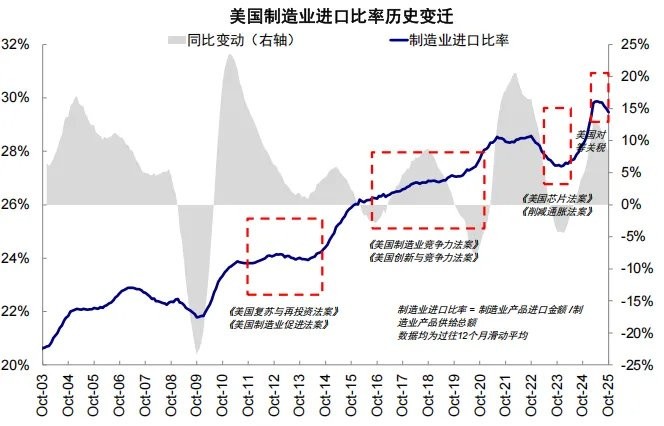
Source: Haver, China International Capital Corporation Research Department Chart: U.S. corporate sector fixed investment year-on-year increased from 0.9% in December 2024 to 3.9% in September 2025
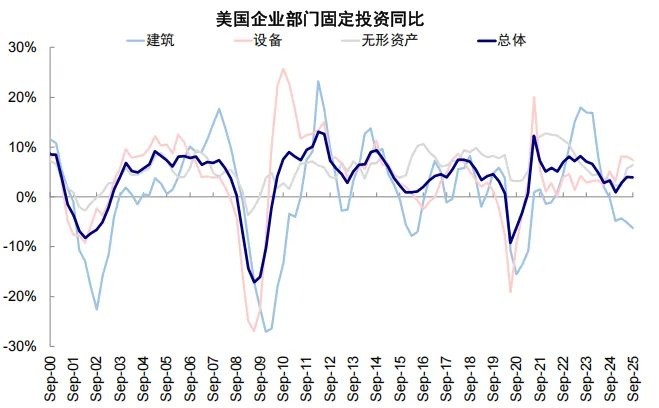
Source: Haver, CICC Research Department
Chart: S&P 500 capital expenditures increased, even excluding the "Seven Sisters" of U.S. stocks
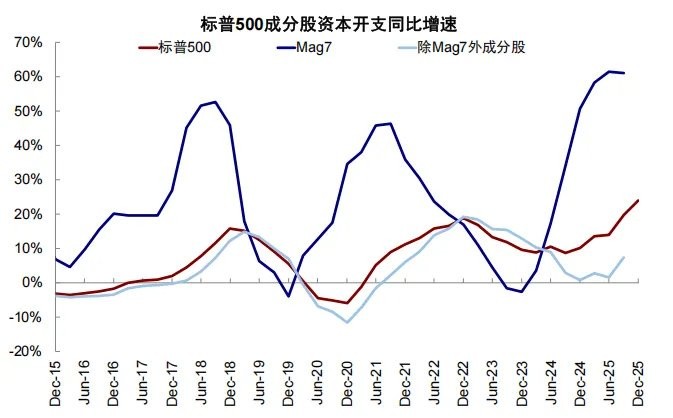
Source: Haver, CICC Research Department
However, uncertainties arise from Trump's continuous challenges to the existing international order, which may trigger an escalating and self-fulfilling trend of "de-dollarization."
► Foreign direct investment in the U.S.: The promised funding of up to $5 trillion from various countries, which could provide incremental physical investment, could release $1 trillion by 2026 if distributed evenly over the agreement period, equivalent to 3.2% of U.S. GDP. However, whether the Supreme Court's rejection of the president's legal authority under IEEPA leads to risks of trade agreements becoming ineffective, or concerns from various countries about investing in the U.S. due to "disorderly" tariffs, could create uncertainties in the pace and scale of this investment.
► Financial markets, especially U.S. Treasury investments: Whether through punitive measures (such as Denmark's pension fund Akademiker Pension liquidating its holdings of about $100 million in U.S. Treasuries, and Sweden's private pension Alecta also indicating it has started to gradually sell its U.S. Treasury holdings since early 2025), or concerns that U.S. Treasuries are no longer "safe," if this leads to capital withdrawal and a de facto "de-dollarization," it would be "fatal" to the financial system that the U.S. relies on and the dollar's cycle of borrowing without punishment.
However, so far, this concern remains more at the "narrative" level. Akademiker Pension's $100 million holding is more symbolic than substantial compared to the nearly $39 trillion size of U.S. Treasuries. The narrative of de-dollarization, which was once rampant since the imposition of reciprocal tariffs in April, has not widely occurred globally, and even the total amount of U.S. Treasuries held by foreign investors reached a new high of nearly $9.4 trillion in November 2025 (vs. $9.0 trillion in April). This issue is crucial and requires close attention, as turmoil in the U.S. Treasury market is also one of the important reasons for Trump's TACO, which cannot withstand continuous turmoil.
Impact of Recent "Chaos"? The main impact is on the timing and expectations of fiscal and monetary "dual easing," which is key to driving the recovery of the U.S. credit cycle
In 2025, the U.S. stock market and macro fundamentals are largely supported by technology alone, with fiscal policy not only failing to exert force but also contracting at times. Traditional demand continues to be sluggish or even weak due to high interest rates. Therefore, in 2025, the U.S. will have only AI's alpha, without the beta of fiscal policy and the overall economy.
► Technology: Although affected by short-term disturbances from DeepSeek, the trend of AI in the U.S. continues. According to market consensus, the investment growth rate of the AI industry chain of leading U.S. listed companies may reach 63.6% for the entire year of 2025 (including data centers and supporting infrastructure, chip research and development, and model innovation).
Chart: According to market consensus, the investment growth rate of the AI industry chain of leading U.S. companies may reach 63.6% in 2025.
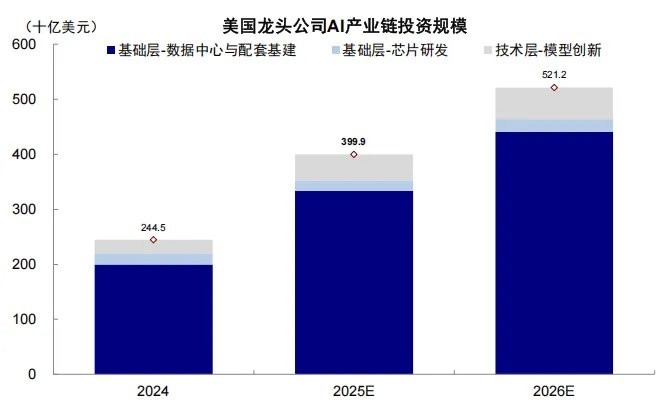
Source: FactSet, CICC Research Department
► Fiscal: The fiscal year 2025 coincides with the transition of the bipartisan government, which can only maintain spending through a Continuing Resolution. At the beginning of the year, Musk's DOGE layoffs and spending cuts led to expectations of fiscal contraction. Although the "Great Beauty" Act was passed in July 2025, the effects of tax cuts will not be realized until 2026.
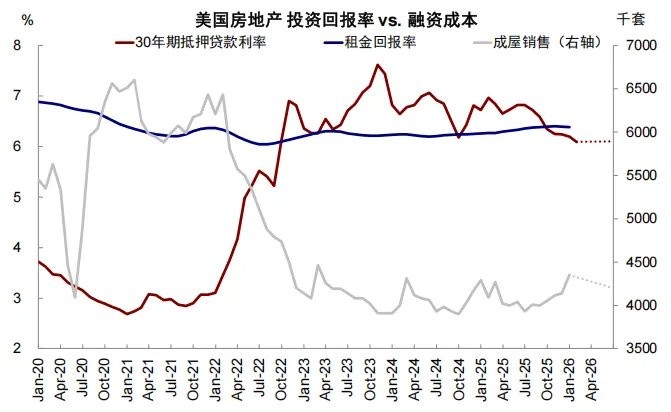
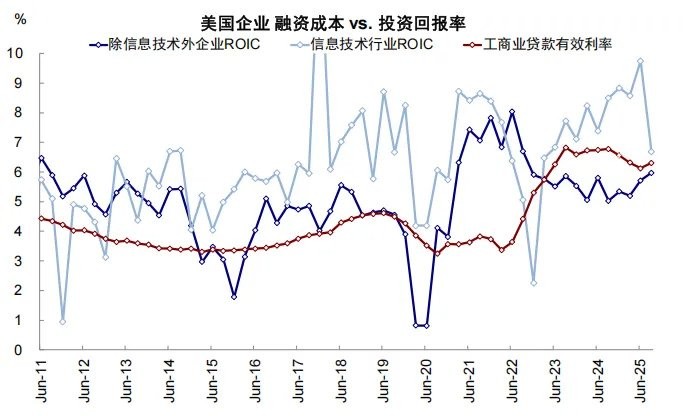
► Traditional Demand: Still facing high cost pressures. 1) Residential side: The 30-year mortgage rate has been above the rental yield from November 2024 to September 2025, reflecting in existing home sales being at a low level in 2025. 2) Business side: The effective interest rate on commercial loans remains higher than the investment return rates of industries other than information technology.
Chart: The 30-year mortgage rate has been above the rental yield from November 2024 to September 2025.
Source: Haver, CICC Research Department
Chart: The effective interest rate on commercial loans remains higher than the investment return rates of industries other than information technology.
Source: Haver, CICC Research Department
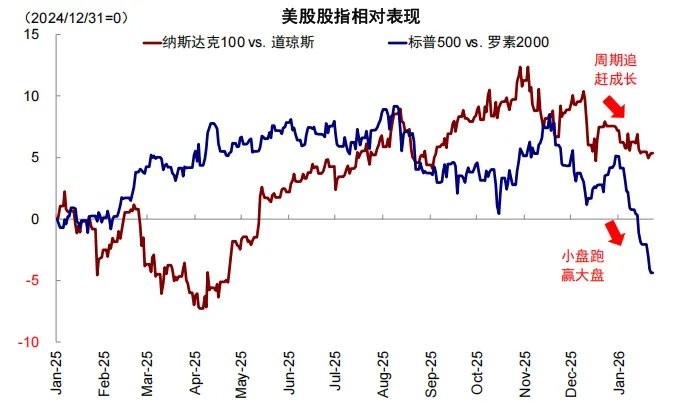
In 2026, the "dual easing" of fiscal and monetary policy is expected to achieve a resonance of traditional demand recovery and accelerated fiscal policy beyond technology, driving the U.S. credit cycle towards recovery, and in certain cases, even "overheating." This is also the basic assumption we provide in our outlook for 2026. In fact, since the end of 2025, the U.S. stock cycle has occasionally outperformed technology, with small-cap stocks (Russell 2000) outperforming large-cap stocks, all stemming from this Chart: Since the end of 2025 and early 2026, the cycle has occasionally outperformed technology, and small-cap stocks (Russell 2000) have outperformed large-cap stocks.
Source: Haver, China International Capital Corporation Research Department
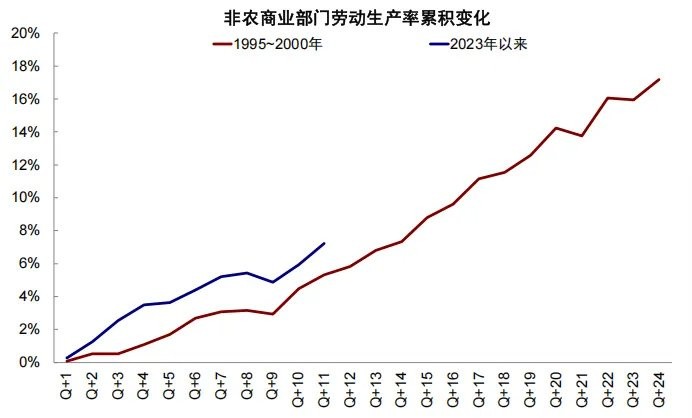
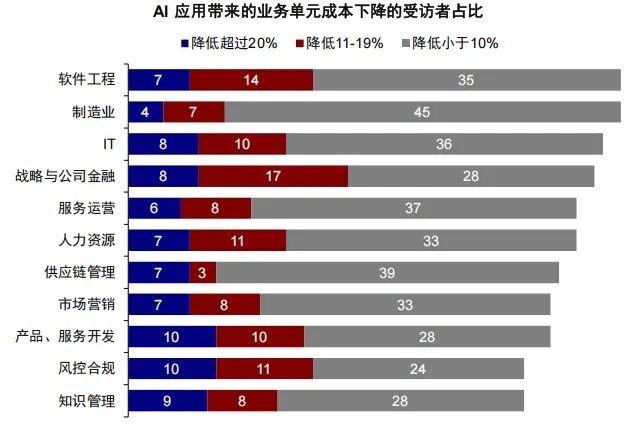
► Technology trends continue: Internal demand supports the continuation of the AI trend. 1) At the macro level, the impact of AI on labor productivity has begun to manifest, with labor productivity in the non-farm business sector rising by 7.2%, faster than during the internet revolution. 2) At the micro level, a McKinsey survey in 2025 shows that AI applications can reduce costs by 9-11%, corresponding to SG&A expenses of the S&P 500, which means an annual savings of $300 billion, equivalent to 15 times OpenAI's annual revenue.
Chart: Labor productivity in the non-farm business sector rises by 7.2%, faster than during the internet revolution.
Source: Haver, China International Capital Corporation Research Department
Chart: McKinsey's 2025 survey shows that AI applications can reduce costs by 9-11%.
Source: McKinsey, China International Capital Corporation Research Department
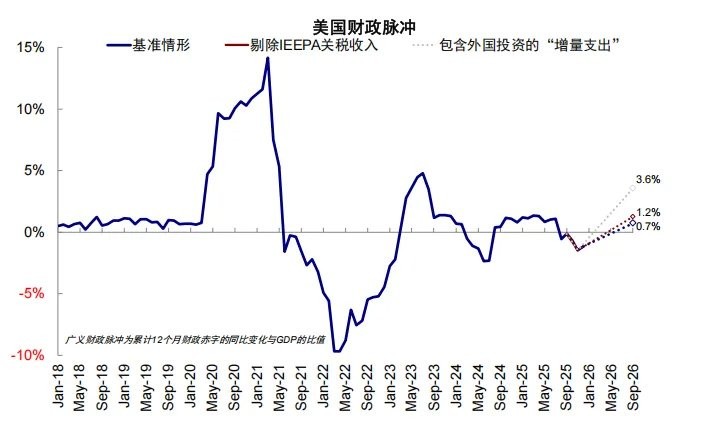
► Fiscal direction is expanding: The "Great Beauty" Act can provide $340 billion in basic deficits, accounting for more than 1% of U.S. GDP. Driven by this, the U.S. fiscal pulse will turn positive from -0.1% in the fiscal year 2025 to 0.7% in the fiscal year 2026. Considering the potential incremental foreign investment in the U.S., the positive shift in the fiscal pulse will be even greater, making it one of the sources of "overheating."
Chart: Under the baseline scenario, the U.S. fiscal pulse will turn positive from -0.1% in the fiscal year 2025 to 0.7% in the fiscal year 2026.
Source: Haver, China International Capital Corporation Research Department
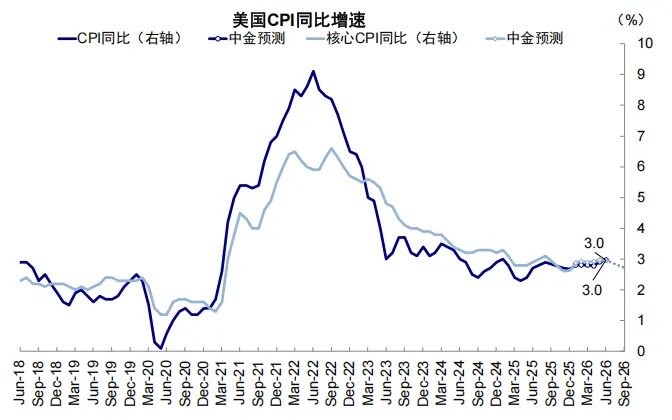
► Monetary policy still has room for easing: Currently, the U.S. natural interest rate is around 1.1%, and the real interest rate is close to 1.8%, indicating that three rate cuts are needed to resolve the 70 basis point gap between the two, but normally not many are required. Therefore, more easing expectations still require a more dovish new chair of the Federal Reserve to guide market expectations. As for inflation, we expect U.S. inflation to peak around the second quarter, with both CPI year-on-year and core CPI year-on-year at 3.0%, which will not pose a significant obstacle to rate cuts Chart: We expect U.S. inflation to peak around the second quarter, with both CPI year-on-year and core CPI year-on-year at 3.0%
Source: Haver, CICC Research Department
However, in early 2026, a series of policies by Trump created a "chaos" that delayed the market's expectations for "dual easing" in fiscal and monetary policy (the short-term focus is on Greenland negotiations, and the appointment of the new Federal Reserve Chair has also been repeatedly postponed due to several lawsuits), which is also the macro transmission path.
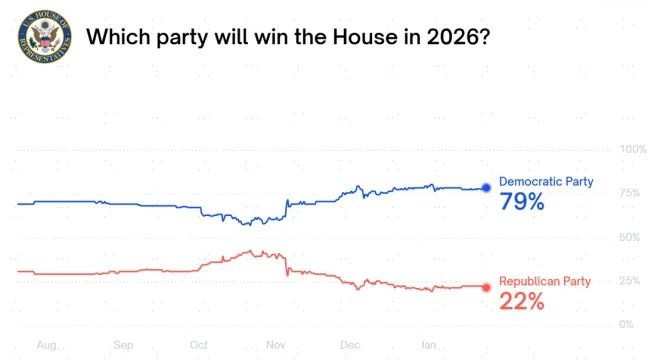
Nevertheless, we are not yet at the point of completely reversing the overall credit cycle direction, so we will not lean towards the completely pessimistic extreme. After all, the "Great Beauty" Act still has a 1% deficit expansion as a foundation, and the appointment of the new Federal Reserve Chair will still affect the market's interest rate cut expectations. There is also the practical pressure of the midterm elections at the end of the year. As of January 24 this year, Polymarket data shows that the probability of the Democratic Party winning the House of Representatives is 79%. Of course, we will closely monitor the situation and be prepared for the worst-case scenario where fiscal and monetary policies completely miss the window of opportunity, or even if they do act, they are countered by market forces.
Chart: As of January 24 this year, Polymarket data shows that the probability of the Democratic Party winning the House of Representatives is 79%
Source: Polymarket, CICC Research Department
It should be noted that even in the worst-case scenario, technology investment is independent of the aforementioned policy variables, because the funding for AI investment in the U.S. comes almost entirely from the private sector, with private funding (USD 552 billion) exceeding government funding (USD 11 billion) by 50 times (The "Differences" in AI Investment between China and the U.S.). This means it does not rely on Trump's tariff revenue or fiscal progress, but rather depends more on its own business logic and returns.
Asset Insights: If the situation exceeds expectations, it will benefit safe-haven assets and resource products, while technology should be entered on dips, and it will be bearish for U.S. Treasuries
In the short term, key events to focus on include: 1) "Purchasing" Greenland, as Trump has stated he is no longer considering additional tariffs on eight European countries, temporarily alleviating risks but requiring continued attention. 2) The Supreme Court's ruling on Trump's tariffs, as the court will enter about four weeks of "intervening recess" starting January 21, the earliest ruling date may be February 20 [11]. 3) Whether Lisa Cook will ultimately be dismissed as a Federal Reserve Governor (the oral debate was completed on January 21 [12]), and the direction of Powell's criminal investigation. 4) The nomination of the new Chair, with Bessent stating on January 20 that it could be announced as early as next week (January 26 - February 1) Under the baseline scenario, we maintain the judgment in our annual outlook "Following the Direction of Credit Expansion": that is, we are generally positive on U.S. stocks, with a focus on sectors that are catching up with technology, and we can also pay attention to small caps and financials. We do not expect a sustained significant decline in the U.S. dollar, and there are trading opportunities in long bonds. However, if developments continue to exceed expectations, we recommend: 1) safe-haven assets, such as gold; 2) technology stocks, which may experience significant volatility in the short term, but their fundamental logic independent of policy fluctuations allows for buying on dips; 3) resource products, which are the "focus" of current trade frictions and geopolitical situations, will instead strengthen their investment value; 4) avoiding U.S. Treasuries, as the erosion of the Federal Reserve's independence, concerns about fiscal sustainability, and the narrative of "de-dollarization" will bring pressure.
Risk Warning and Disclaimer
The market has risks, and investment requires caution. This article does not constitute personal investment advice and does not take into account the specific investment goals, financial situation, or needs of individual users. Users should consider whether any opinions, views, or conclusions in this article are suitable for their specific circumstances. Investment based on this is at one's own risk.
