Billion-level user competition: Besides programming, Excel is the true "killer" application scenario for AI

Freda Duan, a partner at Silicon Valley investment firm Altimeter Capital, pointed out that Excel, with approximately 1.5 billion monthly active users and its position as the underlying packaging layer of the trillion-dollar application software market (accounting for about 50%), makes it the next key battleground for AI. If AI-native Excel achieves programmability, its market will expand from office tools to application creation. Industry giants are targeting high-value sectors such as finance to compete for this billion-user scenario
Altimeter Capital, a top technology investment fund in Silicon Valley, partner Freda Duan's latest insights point out that while programming has become the strongest AI application vertical to date, with the backing of a billion-level user scale, Excel (spreadsheets) possesses the same explosive potential and is expected to become the next true "super vertical" of AI.
This trend has triggered substantial actions from industry giants. Public information shows that OpenAI and Anthropic are actively expanding into the spreadsheet and productivity workflow fields. Market analysis believes that spreadsheets not only have a larger potential market size (TAM) than programming, but their characteristic as an "encapsulation layer" for application software gives them the potential to reshape the entire software industry.
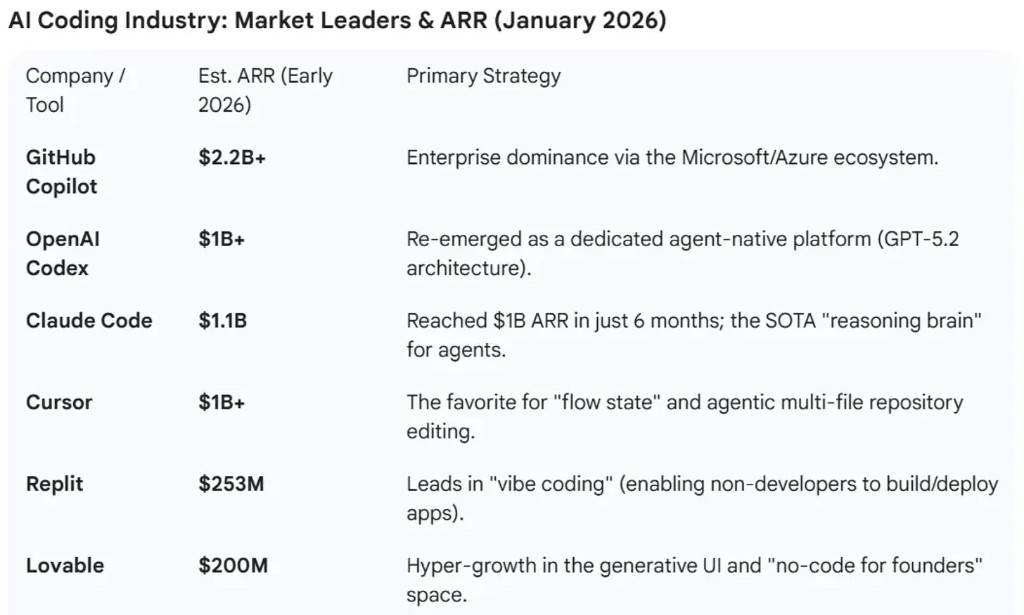
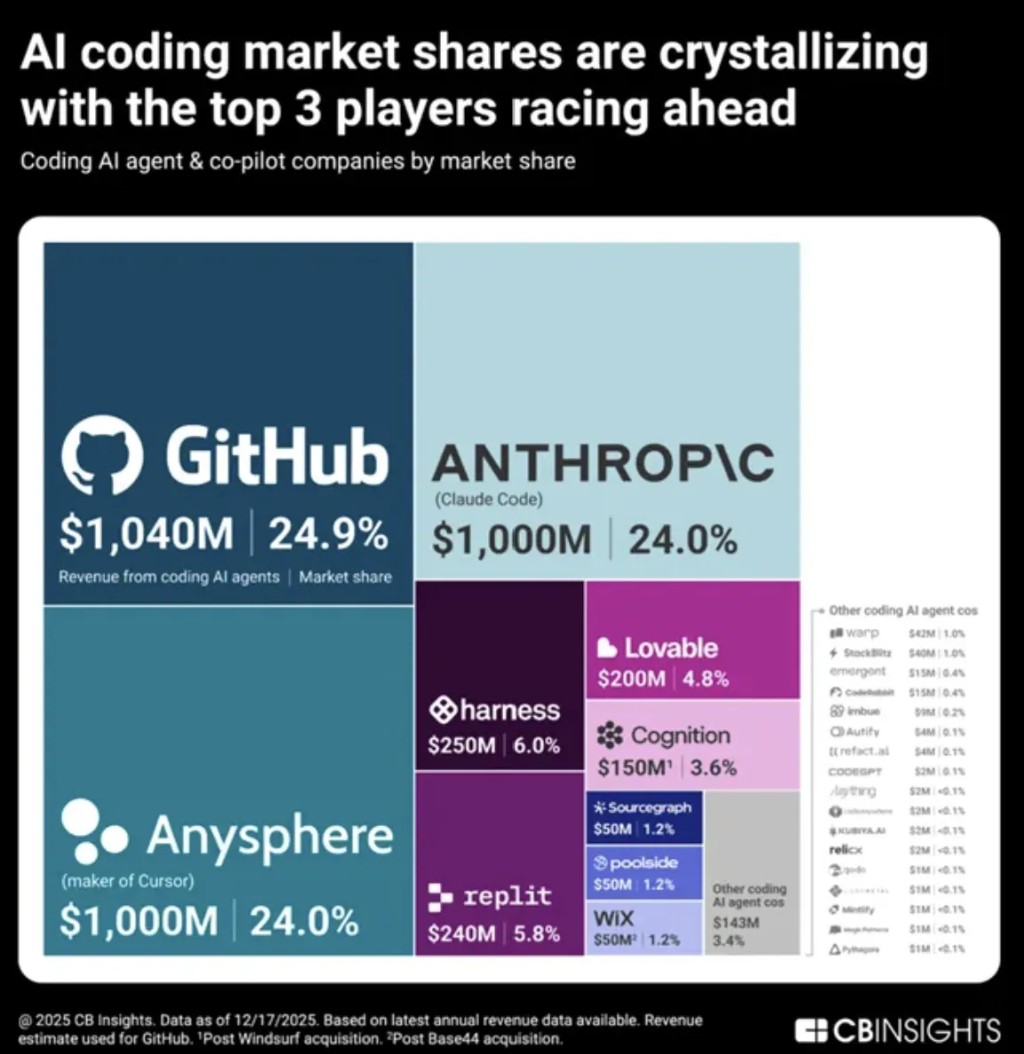
Investors are closely monitoring the replication of this logic. For example, in the programming field, four companies have emerged with annual recurring revenue (ARR) exceeding $1 billion, and at least seven companies have rapidly surpassed $100 million ARR. If Excel can replicate the "product-driven growth" model of the programming field, its revaluation in the SaaS and application software market will be disruptive.


The core of this investment logic is that spreadsheets are not only a terminal market but also a strategic entry point that can penetrate into finance, CRM, and internal tool development, showing an astonishing similarity in user base and commercialization paths to the programming field.
Insights from the Programming Field: Product-Driven Efficient Expansion
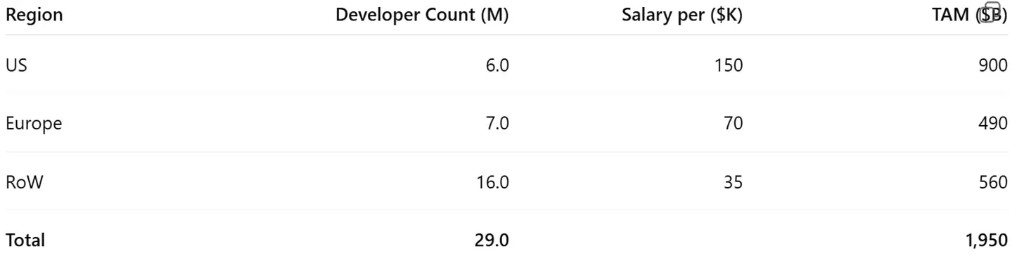
The reason programming has become the strongest AI application vertical currently is due to its three scarce attributes: a massive potential market of about $2 trillion (according to ChatGPT data), a natural advantage in entering adjacent use cases, and a product-driven go-to-market strategy (GTM) that does not require traditional sales and marketing intervention.

Structurally, the programming market is vastly different from fields like healthcare, real estate, or finance, which require complex enterprise procurement processes. Developers can quickly identify quality tools and have direct influence over tool approval or expense reimbursement. As long as the tools can improve efficiency, companies are usually not sensitive to the additional costs incurred by a single developer. This "bottom-up" dissemination model allows strong products to spread rapidly at very low sales costs.
Beyond Programming: The Billion-Level User Spreadsheet Market
Excel exhibits vertical characteristics that are remarkably similar to programming, and its scale is even larger. According to data released by Google Workspace for 2025, its paid customers have exceeded 11 million, with a user base of over 3 billion. A report from Kingsoft (WPS Office) in December 2024 shows that the global monthly active devices reached 632 million, while Microsoft has historically disclosed about 1.2 billion Office users. Comprehensive estimates suggest that the global monthly active user base for spreadsheets is approximately 1.5 to 1.6 billion.
This vast user base signifies a tremendous potential market. Within the software industry, which has a scale of about $1 trillion, application software accounts for about 50%, and a significant portion of this—including CRM, Airtable, Smartsheet, as well as financial, operational, and analytical tools—can essentially be viewed as a massive "Excel encapsulation layer." If native AI enables Excel to possess programmability, its opportunities will extend beyond single products like Microsoft Office or Google Workspace, and the competitive boundaries will expand to application creation itself.
Financial Industry: A High-Value Natural Entry Point
In terms of commercialization pathways, the financial industry is seen as the logical starting point in this field, which is also a key focus for Anthropic and OpenAI. The financial industry has extremely high per capita profits and a strong willingness to pay for productivity tools, and analysts typically have budgetary discretion similar to developers, with clear return on investment (ROI) allowing products to sell themselves.
In terms of user density, there are over 6.7 million professionals in the U.S. financial services and insurance industry, while globally, there are about 150 million people engaged in financial planning and analysis (FP&A), accounting, auditing, and cash management across various financial functions. This means that among the 1.55 billion spreadsheet users, approximately 10% belong to this high-value, easily monetizable segment, providing an excellent initial entry point for AI-driven Excel tools. As demonstrated in the programming field, a self-service, workflow-native tool with a large surface area will scale faster than almost any other software category.