


Dialogue with Tencent Cloud Vice President Eric Wu: The "Productivity War" of AI Agents has begun

Make the investment return of AI visible and tangible
 Author | Huang Yu
Editor | Zhang Xiaoling
In the past three years, the capabilities of large models have rapidly iterated, and the global AI competition is about to enter its second half.
An emerging industry consensus is that the war of chatbots has basically ended, and the next focus of competition is shifting to "work-capable" AI Agents.
It is not difficult to see that since last year, the concept of AI Agents has rapidly gained traction, and the imagination of applications has been continuously amplified. Against this backdrop, how to equip AI Agents with production-level capabilities has become a common exploration direction in the industry.
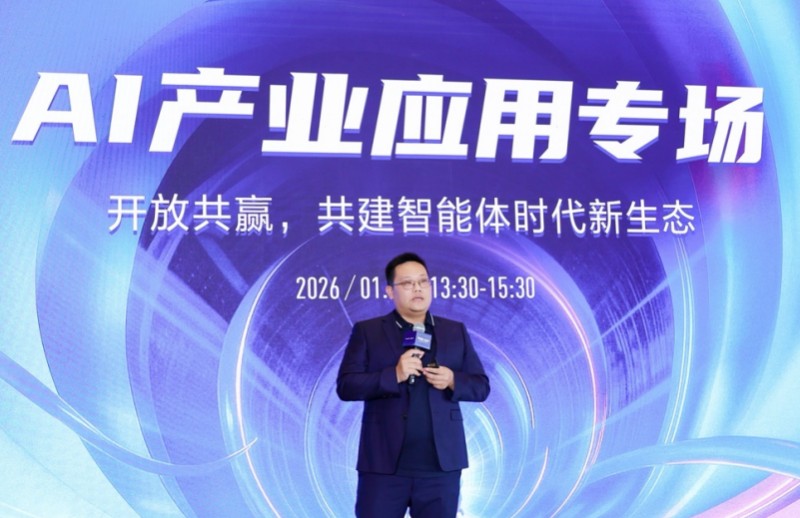
Recently, Eric Wu, Vice President of Tencent Cloud and Head of Tencent Cloud Intelligent Product Research, pointed out in an in-depth dialogue with Wall Street News that some Agent products aimed at personal scenarios have validated the potential of agents in complex reasoning and execution, demonstrating how Agents can "think and execute like humans." Tencent Cloud's ADP, on the other hand, addresses the question of "how Agents can truly land and create productivity" in the complex B-end enterprise environment.
Focusing on deepening platform capabilities, thickening content ecosystems, and strengthening upper-layer applications, Tencent Cloud ADP (Tencent Cloud Intelligent Agent Development Platform) has recently completed a new round of upgrades. An important task for the coming year is to hope that through the systematic evolution of engines, platforms, infrastructure, and ecosystems, agents can truly become a reliable, governable, and sustainably evolving productivity infrastructure for enterprises.
In Eric Wu's view, Agents are evolving from tool capabilities to a unified entry point for applications and services, but this trend will be more profound in the B-end and will not simply replicate the C-end path.
"Enterprises inherently possess multiple roles, systems, permissions, and compliance requirements, which determines that the Super Agent on the B-end cannot be a standalone intelligent agent but must be a platform-level capability. Its core is not in the scale of the model but in the scheduling, collaboration, and governance of multiple Agents," Eric Wu said.
Therefore, he believes that the requirements for intelligent agents in enterprise scenarios differ from those in personal scenarios, forming a structure based on cloud as the foundation and the Agent platform as the hub.
Recognizing the accelerating commercialization of AI Agents, Tencent Cloud upgraded its large model knowledge engine to Tencent Cloud ADP in May last year.
It is reported that Tencent Cloud ADP has released six major versions and thousands of functional requirements in the past year. Currently, the platform has been implemented in over 20 industries, including finance, media, retail, and healthcare, and has opened its capabilities to ecosystem partners, with the number of partners increasing more than threefold within a year.
Eric Wu stated that the core focus of Tencent Cloud ADP in the past year can be summarized in one sentence: around "landable, scalable, and operable," continuously solidifying the platform-level capability foundation of intelligent agents. From a technical perspective, the core investment has been placed on RAG, workflows, and Multi-Agent engines to ensure that complex enterprise scenarios "run smoothly and stably." In the highly anticipated model layer, Tencent Cloud ADP is not strongly tied to any specific model route. "We provide a unified model plaza, which not only includes built-in capabilities like Mix Yuan and YouTu but also supports third-party models such as DeepSeek, ZhiPu, and the Dark Side of the Moon, while also allowing direct access to privately tuned models on TI-One."
Eric Wu pointed out that for enterprises, models are replaceable resources rather than capabilities locked by the platform, which is crucial for long-term cost control and continuous optimization of results.
If technology and platforms address whether AI Agents "can be used," then the ecosystem determines whether AI Agents "can be scaled."
One of the key strategies for ecosystem construction at Tencent Cloud ADP is to work with ecosystem partners to create benchmark application solutions. To this end, the platform itself will deepen its integration with Tencent Cloud's CVM, TKE, Lighthouse, and other IaaS products, providing partners with an integrated sales and delivery approach.
In addition, another important strategy for enriching Tencent Cloud's ecosystem is the launch of "CB Linkage."
The so-called "CB Linkage": on one hand, it refines Agent capabilities in high-frequency C-end scenarios such as QQ Browser and IMA, and systematically products these capabilities for output to ADP; on the other hand, the engineering capabilities on the B-end in terms of stability, governance, and multi-Agent collaboration enhance the C-end experience in return.
Eric Wu stated that this forms a positive cycle of "continuous validation in real scenarios → continuous evolution of platform capabilities," ensuring that ADP's capabilities are not just confined to laboratories or demos but have been repeatedly validated by a large number of real users.
It is reported that Tencent will also launch an Agent Center on QQ Browser. Agents developed by Tencent Yuanqi (a smart agent development platform for C-end) can be launched on the QQ Browser's Agent Center.
"If the experimental result is an active Agent, it can be listed on ADP for sale. This is equivalent to having a fast C-end testing ground to roll out this matter. In contrast, if we only rely on advancing B-end scenarios through ADP, the entire verification and conversion cycle will be longer," Eric Wu said.
Regarding the current situation of the AI competition, Eric Wu believes that the Agent market is transitioning from the early stage of "concept demonstration and capability tasting" to a deep water zone centered on stable delivery of productivity. Staying at the level of capability demonstration, such as "being able to talk," is no longer sufficient to meet real business needs, and the industry's focus is rapidly shifting towards practical and scalable "being able to work."
"There are two breakthrough points in the next 1-2 years: first, reflecting on capabilities; if an Agent fails, it must know how to review; second, self-evolution, it must become smarter the more it is used."
In other words, if by 2025 people are still debating whether Agents can write code or book flights (in To C scenarios), the main theme of the market in the next two years will definitely be "ROI and reliability."
Therefore, Tencent Cloud's layout is very clear: it is not just about making a tool, but about building a "stable productivity" platform. Leveraging the connectivity of Tencent products, it aims to truly integrate Agents into the business flow of enterprises, making the return on investment (ROI) of AI visible and tangible Clearly, what is truly scarce next is a production-level Agent that can enter core business processes, bring quantifiable ROI, and operate stably in the long term.
Against this backdrop, the main battlefield of AI Agent competition has begun to shift from model capabilities to platform capabilities, engineering capabilities, and ecological capabilities. Those who can solve complex scenarios, scale operations, and address long-term governance issues will become the trusted "intelligent foundation" for enterprises
