


The "Outsider" of the Red Envelope War

During the Spring Festival, internet companies launched various red envelope activities to attract users, but Alibaba's Tongyi Qianwen chose to quietly release its flagship model Qwen3-Max-Thinking. Industry experts point out that the competitive logic in the AI era is different from that of the mobile internet; user retention no longer relies on subsidies but on the intelligence level of the model. The release of Qwen3-Max-Thinking marks a deeper level of competition for China's large models, emphasizing the importance of intellectual density
Author | Chai Xuchen
Editor | Zhou Zhiyu
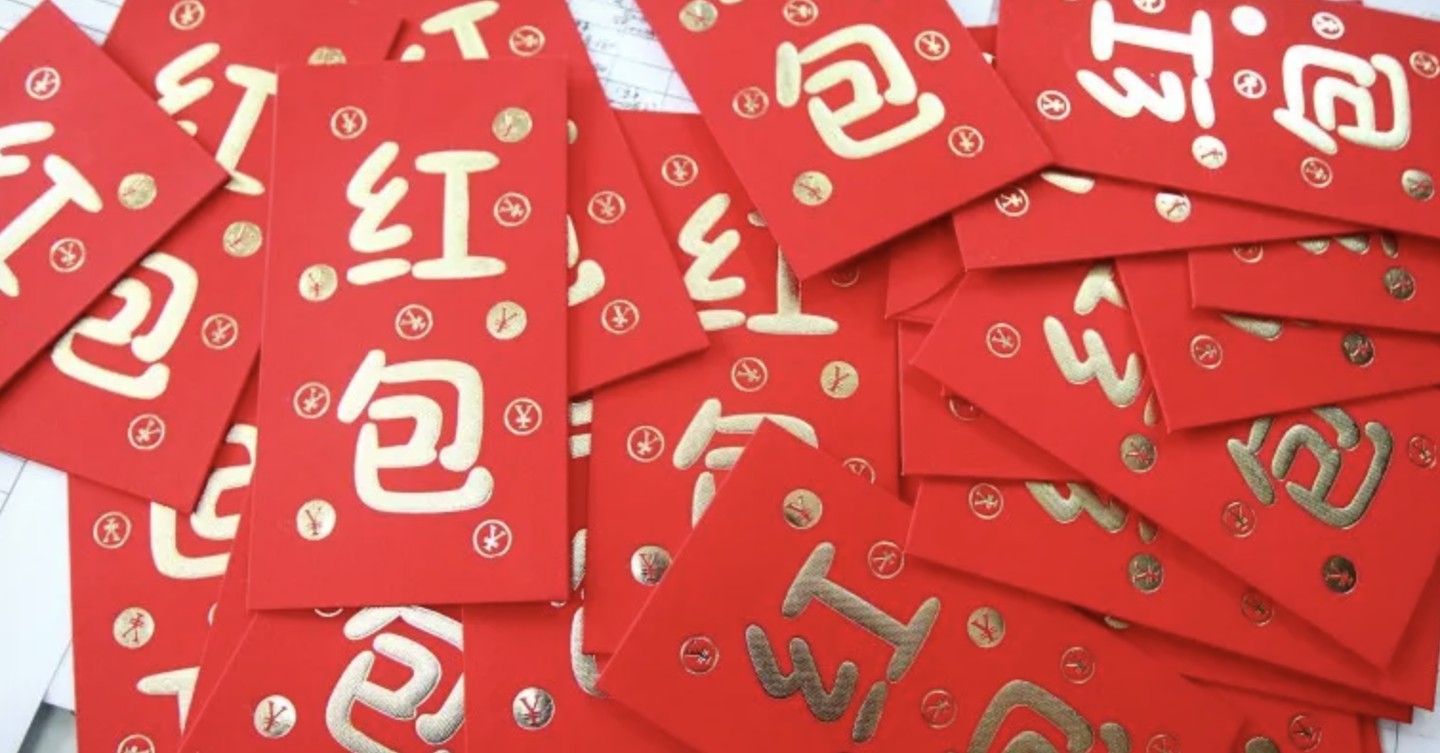
As the Spring Festival approaches, the practice of "spending money" to promote new businesses has become a staple for major internet companies. This year, the focus of the red envelope battle during the Spring Festival has shifted to AI.
Recently, major AI companies have announced their cash red envelope activities for the Spring Festival. However, on the other side of the battlefield, Alibaba's Tongyi Qianwen has appeared "low-key." They did not release red envelope grabbing strategies or marketing gimmicks, but on January 26, they dropped a bombshell on the global tech community: the flagship reasoning model Qwen3-Max-Thinking.
In today's peak traffic environment, leveraging the massive traffic window of the Spring Festival to use subsidy tactics to gain user downloads and daily active users, achieving a curve-over-take in the C-end user scale, this strategy is filled with the familiar smoke of the mobile internet era, and players are clearly attempting to translate this classic approach to the large model battlefield.
However, industry insiders point out that the underlying logic of the AI era has diverged from the traffic rules of the mobile internet era. Large models are not food delivery services or ride-hailing apps; they are not simple matchmaking platforms but productivity tools that require extremely high intellectual density.
An executive from a model company pointed out to Wall Street News that previously, subsidies could retain users because their service needs were homogeneous; but in the new era, if the model is not smart enough and cannot solve complex problems, then the massive users attracted by red envelopes may be gained and lost.
The Alibaba team has clearly realized that the moat in the AI era is no longer user scale but "the height of intelligence." Therefore, on January 26, they chose not to follow the crowd into the marketing melee but instead released Qwen3-Max-Thinking.
This model is not only an iteration of past technology but also a dimensionality reduction strike against the old internet traffic logic. It proves with its trillion-parameter scale and profound reasoning ability that in the AI race, the only hard currency is IQ, not DAU.
The release of Qwen3-Max-Thinking marks the official departure of China's large models from the "basic competition" of traffic contention, moving into the deep waters of competing for depth of thought.
According to official disclosures, the total parameter count of Qwen3-Max-Thinking has surpassed one trillion and has undergone large-scale reinforcement learning post-training. This training method is no longer a simple "feeding data," but through a unique algorithm, it allows the model to self-play and self-evolve in a vast array of complex tasks.
This pursuit of technological excellence has enabled Qwen3-Max-Thinking to surpass international top models such as GPT-5.2, Claude Opus 4.5, and Gemini 3 Pro in multiple key performance benchmark tests, proving that on the intelligent high ground of computing power and algorithm construction, only a grounded and direct charge forward will succeed More importantly, the "Thinking" ability emphasized by Qwen3-Max-Thinking represents a subversion of the logic of old internet products.
In the past, internet products pursued speed—quick connections, quick matches, quick responses. However, in the AI era, Qwen3-Max-Thinking introduces a "slow thinking" mechanism similar to human System 2. When faced with complex problems, it does not quickly throw out links like a search engine through keyword matching; instead, it engages in multi-step reasoning, logical disassembly, and self-reflection.
This quality of "thoughtful consideration," while possibly slower in response speed compared to simple retrieval, offers a value density that increases exponentially. This is the core competitiveness that users in the AI era are truly willing to pay for.
Additionally, the breakthroughs in Agent capabilities of Qwen3-Max-Thinking further confirm the gap between the new and old eras.
Tools in the internet era were fragmented, requiring users to jump between different apps, whereas Qwen3-Max-Thinking significantly enhances the native Agent capability to autonomously call tools, allowing the model to "think while using tools" like a professional.
It is no longer a passive Q&A box but a super assistant capable of actively planning, adjusting in real-time, and calling various APIs to complete complex tasks. This more user-friendly, intelligent, and seamless interactive experience completely breaks the application boundaries of the old internet.
At the same time, tackling the "hallucination" problem, a persistent issue in the large model field, demonstrates Alibaba's pragmatic attitude of addressing real problems. By reducing hallucinations, Qwen3-Max-Thinking lays the foundation for solving complex tasks in the real world, which can win the long-term trust of both B-end and C-end users more than any marketing gimmick.
The Spring Festival of 2026 may become the last curtain call for the thinking methods of the old internet era, as users will eventually realize that what truly changes their lives and enhances their efficiency is not cash rewards but that trillion-parameter brain operating silently in the background, capable of profound thought like a human. This is the true victory belonging to the AI era.
Risk Warning and Disclaimer
The market has risks, and investment requires caution. This article does not constitute personal investment advice and does not take into account the specific investment goals, financial situation, or needs of individual users. Users should consider whether any opinions, views, or conclusions in this article align with their specific circumstances. Investment based on this is at their own risk.
