LVMH's Q4 core business of soft luxury unexpectedly declined by 3%, while profits from alcoholic beverages sharply decreased by 25% for the whole year under tariff threats, leading to a "flash crash" in stock prices | Financial Report Insights

Wallstreetcn
2026.01.27 21:46
portai
I'm PortAI, I can summarize articles.

In the fourth quarter, LVMH's organic revenue grew by 1%, better than expected, with organic revenue in Asian markets outside of Japan increasing by 1%. However, the organic revenue of fashion and leather goods, which contribute nearly half of LVMH's revenue, accelerated its decline in the fourth quarter. The organic revenue of the wine and spirits business fell by 9%, significantly below expectations, while the organic revenue of perfumes and cosmetics decreased by 1% during the year-end peak season. The total revenue for the year fell by 4.6%, in line with expectations, with exchange rates causing an approximate negative impact of 3%. Organic revenue in Japan dropped by 13%, reflecting the fading effect of tourist demand in 2024. After the earnings report, LVMH's U.S. stock, which had risen over 2% in early trading, briefly fell by 2%

LVMH, the world's largest luxury goods group, saw its overall revenue in the fourth quarter of last year decline by 5.1% year-on-year to €22.72 billion, slightly above analysts' expectations of €22.59 billion. Organic revenue did not decline slightly as expected by 0.42%, but instead grew by 1%, maintaining the same growth rate as in the third quarter. After two consecutive quarters of decline, it has now increased for two consecutive quarters, with organic revenue in Asian markets outside of Japan, including China, increasing by 1%.

However, the core business that contributes nearly half of LVMH's annual revenue—fashion and leather goods—saw organic revenue decline by 3% in the fourth quarter, accelerating the decline compared to the third quarter, and the decline slightly exceeded Wall Street's expectation of over 2.9%. The perfume and cosmetics business did not manage to maintain the expected growth of around 2%, instead declining by 1%. The organic revenue of the wine and spirits business fell by 9%, a drop far exceeding the expected decline of about 1.1%, with the annual profit for this business decreasing by 25% year-on-year, partly reflecting the impact of tariff threats.

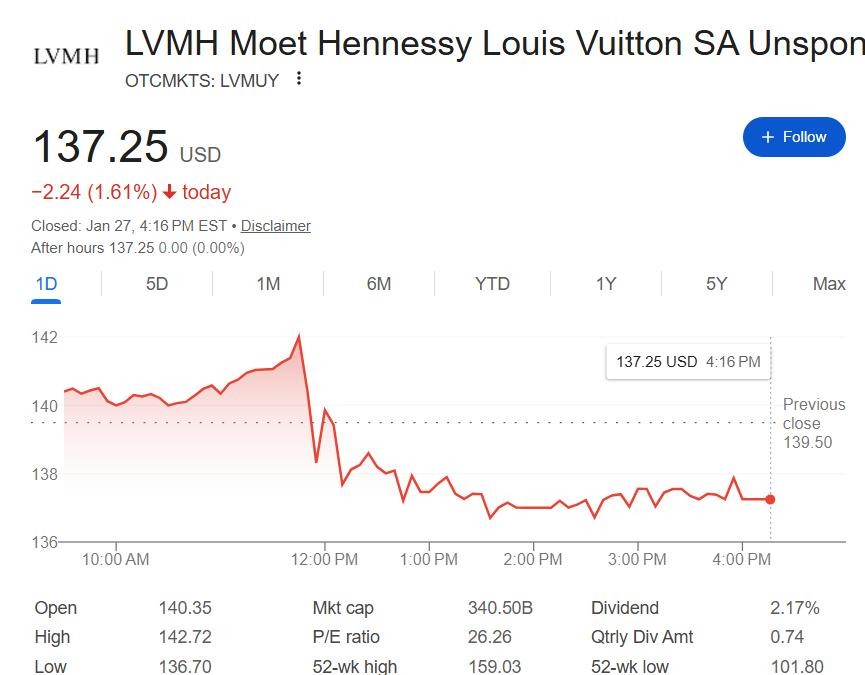
After the earnings report was released, LVMH's U.S. stock, which had initially risen over 2% in early trading, quickly plummeted and fell below $137 during midday trading, dropping about 2% intraday and closing down about 1.6%. The stock price "flash crash" was not a denial of the overall performance by investors, but rather a rapid repricing against the backdrop of stock prices already reflecting certain expectations of "performance stabilization."

Overall, for the full year of 2025, LVMH's total revenue is expected to be approximately €80.81 billion, a year-on-year decline of about 4.6% compared to 2024, in line with market expectations. Excluding the impact of exchange rates and consolidation, organic revenue is expected to decline by 1% based on existing internal resources of the group, rather than external acquisitions. The annual recurring operating profit is expected to decrease by 9% year-on-year to approximately €17.8 billion, and net profit is expected to decline by 13% year-on-year to approximately €10.9 billion. LVMH emphasized that organic growth is expected to stabilize in the second half of 2025, with operating free cash flow rising by 8% to €11.3 billion, and the asset-liability structure continuing to improve, with net debt decreasing by about 26%.

From a long-term fundamental perspective, this is still a solid earnings report. The issue is that the market is not trading on "stability," but rather on marginal changes. Investors had previously hoped for clearer signals of recovery from the year-end peak season, but several key points did not materialize: the performance of wine and spirits, as well as perfume and cosmetics in the fourth quarter, was significantly below market expectations, the core fashion and leather goods business remains in negative growth territory, and the Japanese market has significantly declined after high base effects and the fading of tourism effects. Additionally, the erosion caused by currency exchange rates is still evident, with LVMH disclosing that exchange rates had a negative impact of about 3% on annual revenue.

Fashion and Leather Goods Q4 and Annual Performance Below Expectations

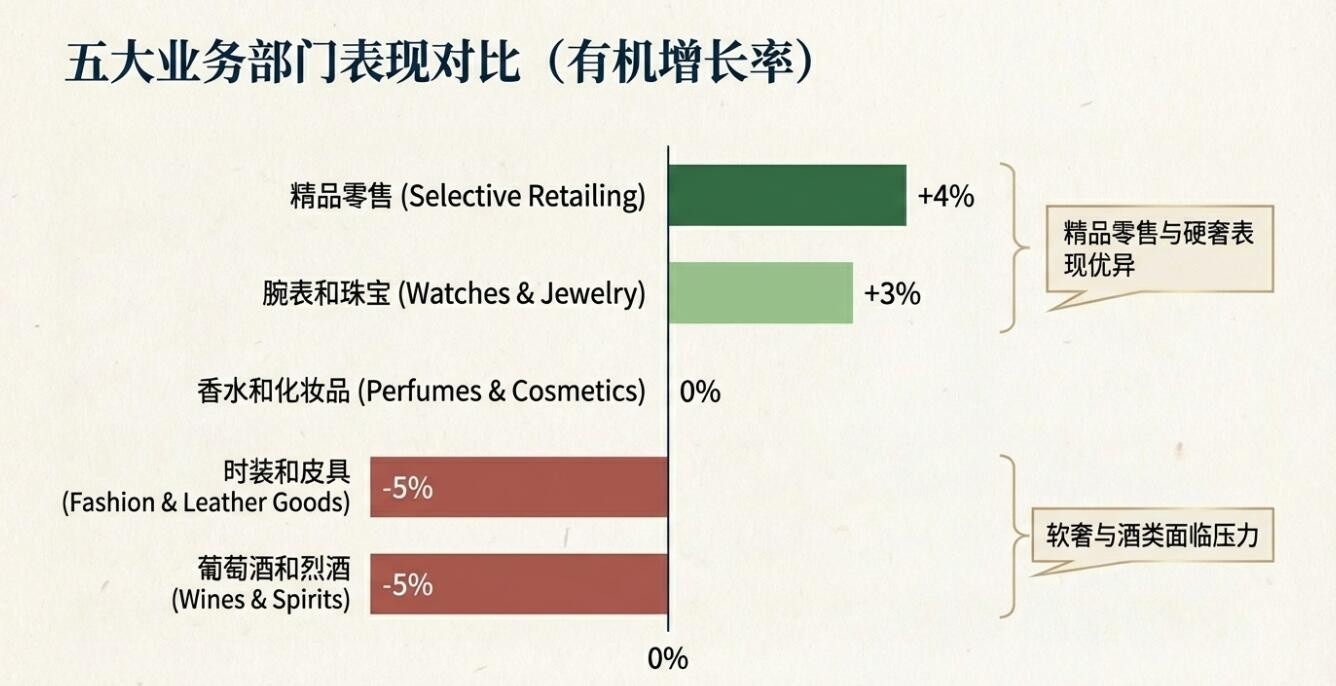
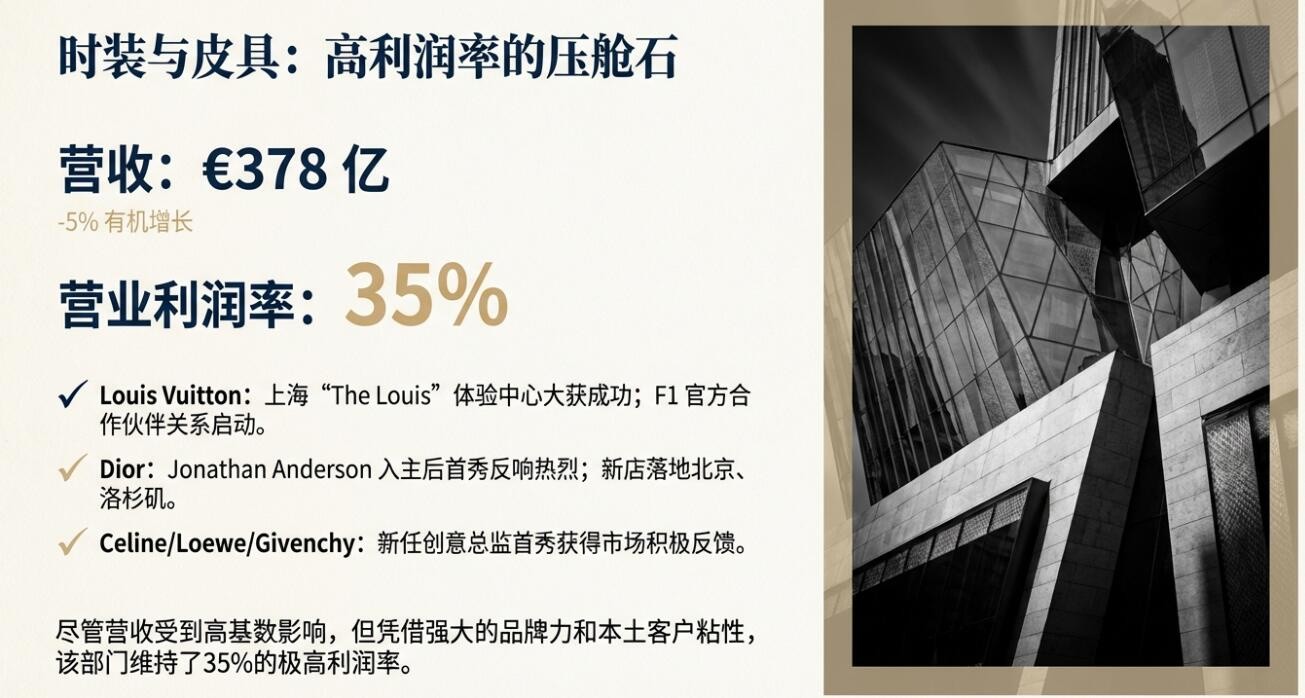
In the fourth quarter, organic revenue for the fashion and leather goods business declined by 3%, slightly exceeding analysts' expectations of 2.94%. The total revenue for this business for the year was approximately €37.77 billion, slightly below analysts' expectations of €37.79 billion, representing a year-on-year decline of about 8%, with organic revenue down by 5% This indicates that while the core business remains strong, benefiting from high-end pricing and gross margins, the decline in tourist spending and exchange rate factors still constrain nominal revenue growth.

LVMH Group emphasizes that this business maintains an extremely high operating profit, with an annual operating profit margin of about 35%, and local customer demand has stabilized in the second half of the year.

Fashion and leather goods remain LVMH Group's cash cow and brand showcase, with high operating profit margins serving as a "buffer." However, facing changes in customer demographics (local customers vs. tourists), exchange rates, and macro uncertainties, short-term growth elasticity is limited. The creativity and store investments of brands like Louis Vuitton (LV), Dior, and Celine serve as a long-term moat, while the pace of investment and inventory management need continued attention.

Demand slowdown, tariffs, and customs issues hit the wine business

In the fourth quarter, organic sales in the wine business fell by 9%, while analysts expected a decline of 1.13%, indicating that the seasonal or trade obstruction issues for this business far exceeded market expectations.

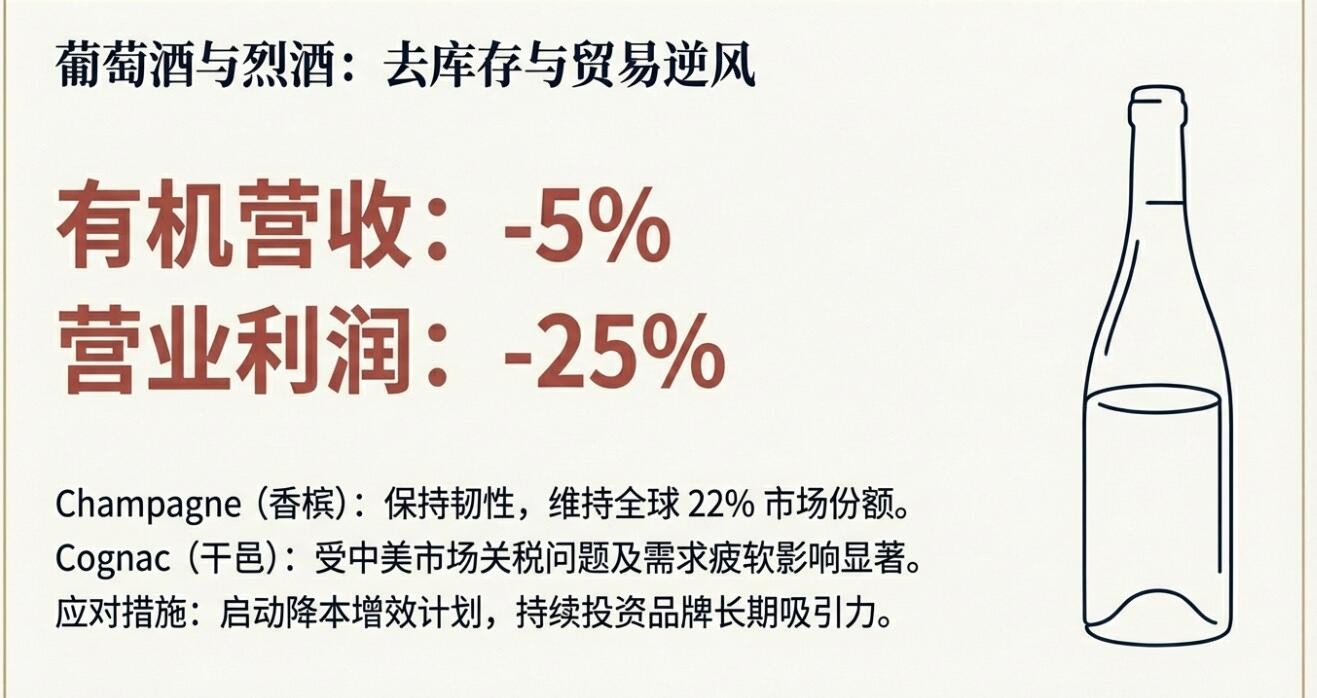
For the full year 2025, wine business revenue is expected to be approximately €5.36 billion, with organic revenue declining by 5%, and recurring operating profit sharply reduced by about 25%. LVMH Group clearly pointed out that demand for this business will continue to slow in 2025, with Hennessy showing weakness due to customs/tariff-related issues between China and the United States.

The decline in the wine business is due to both weak consumer demand and the actual impact of trade frictions and tax/customs processes (especially affecting high-end liquor exports and duty-free channels). This division has high profit elasticity, and in the short term, attention should be paid to inventory digestion, pricing and promotional strategies, as well as specific responses to the Chinese market.

Organic revenue of perfumes and cosmetics declines

In the fourth quarter, organic revenue from the perfume and cosmetics business fell by 1%, while analysts expected a growth of 2.18%, with the poor performance of this business contributing to the decline in LVMH's stock price.

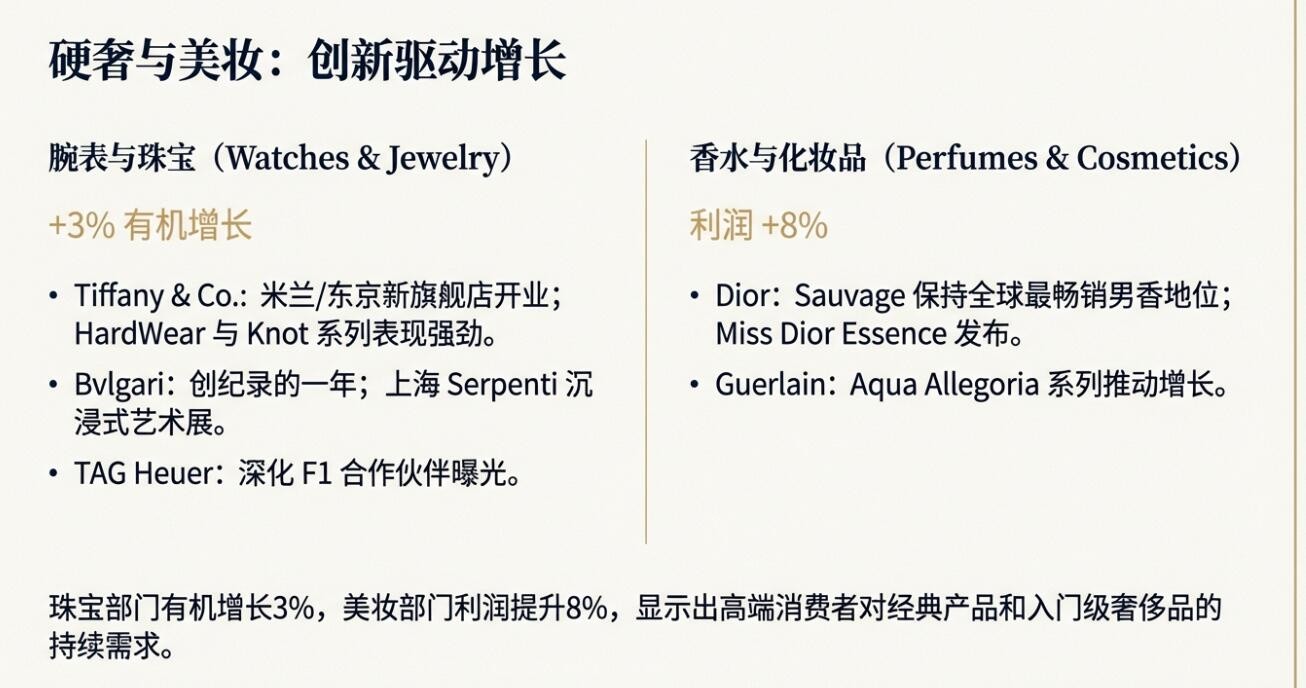
The annual organic revenue of the perfume and cosmetics business is basically flat for 2024, but recurring operating profit increased by 8%, with the operating rate rising to 8.9%. LVMH emphasizes innovation and selective channel strategies (such as the promotion of new products from Dior and Guerlain).

The profit improvement in the fragrance and cosmetics business indicates that LVMH is more efficient in category mix and channel selection (successful individual products in high-end fragrances and makeup, with the effectiveness of new product promotions becoming evident). However, quarterly rhythms and new product shipments/inventory will still lead to performance fluctuations, with the market being highly sensitive to seasonal and promotional rhythms.

Watches and jewelry organic growth of 8% in Q4 greatly exceeds expectations

The watch and jewelry business saw organic revenue growth of 8% in the fourth quarter, significantly exceeding the analyst expectation of a 0.67% increase. This business has become an important force to hedge against the weakness of the wine and other businesses For the whole year, the organic growth of this business was 3%, a year-on-year decrease of 1% to approximately €10.49 billion, with recurring profits slightly declining by about 2%. LVMH mentioned that flagship brands and high-end collections such as Tiffany and Bvlgari drove the highlights.

High-end jewelry and limited/expensive items significantly contributed to earnings, with Tiffany's store renovations and high-end collections performing exceptionally well. This business, with its "high average transaction value + high margin" attributes, provides strong support for the group's profits.

Sephora's Boutique Retail Business Exceeds Expectations

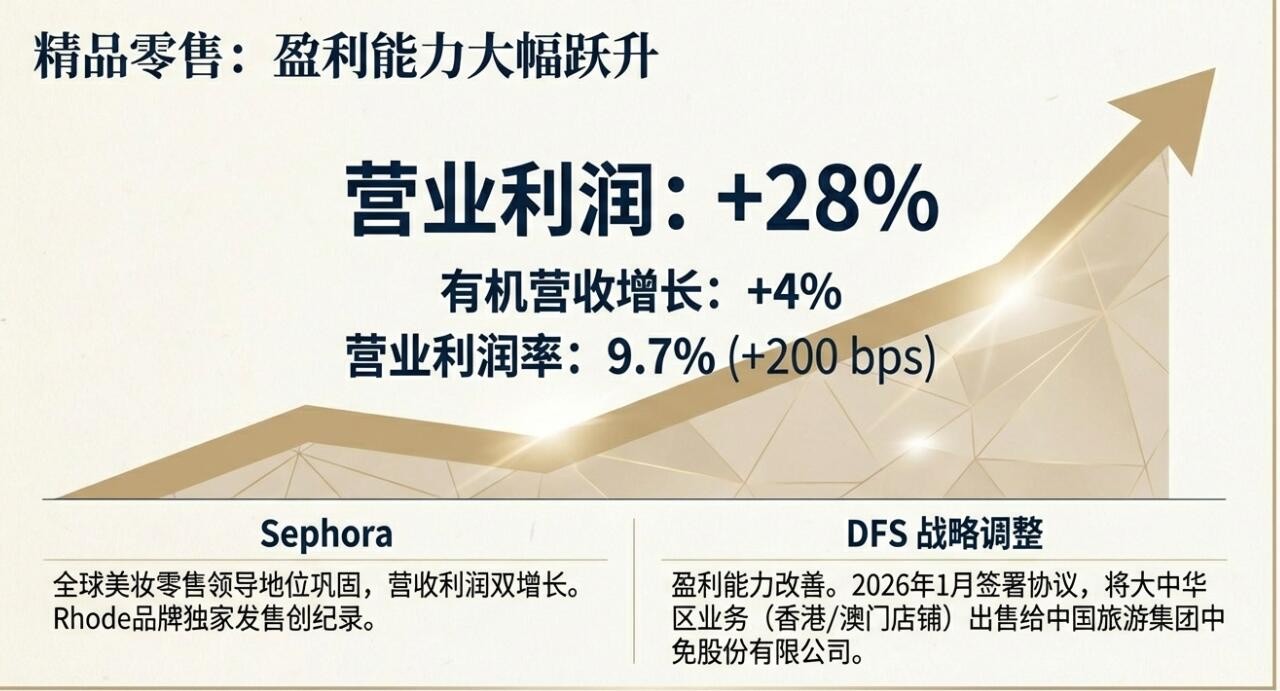
The boutique retail business, including luxury travel retailer DFS and beauty retail brand Sephora, outperformed Wall Street expectations in both the fourth quarter and for the entire year. Its organic revenue grew by 7% in the fourth quarter, while analysts expected a growth of 3.13%, and the annual revenue and profits also exceeded expectations.

The boutique retail revenue saw an organic growth of 4% for the year, with recurring operating profits soaring by 28%, and the operating margin improving to 9.7%. Sephora's performance was particularly outstanding: both revenue and profits grew, with store expansion and omnichannel strategies continuing to gain momentum. DFS improved its profitability through operational optimization. Last week, China Travel Duty Free announced an agreement with DFS to acquire DFS's stores in the Hong Kong and Macau regions and intangible assets in Greater China.

Sephora's global expansion and brand selection strategy provide a stable growth engine for the group; at the same time, DFS's transactions and restructuring highlight the group's flexible capital operations on non-core or volatile assets.

Asian Markets Outside Japan, Including China, Increased by 1% in Q4, Japan Decreased by 13% for the Year

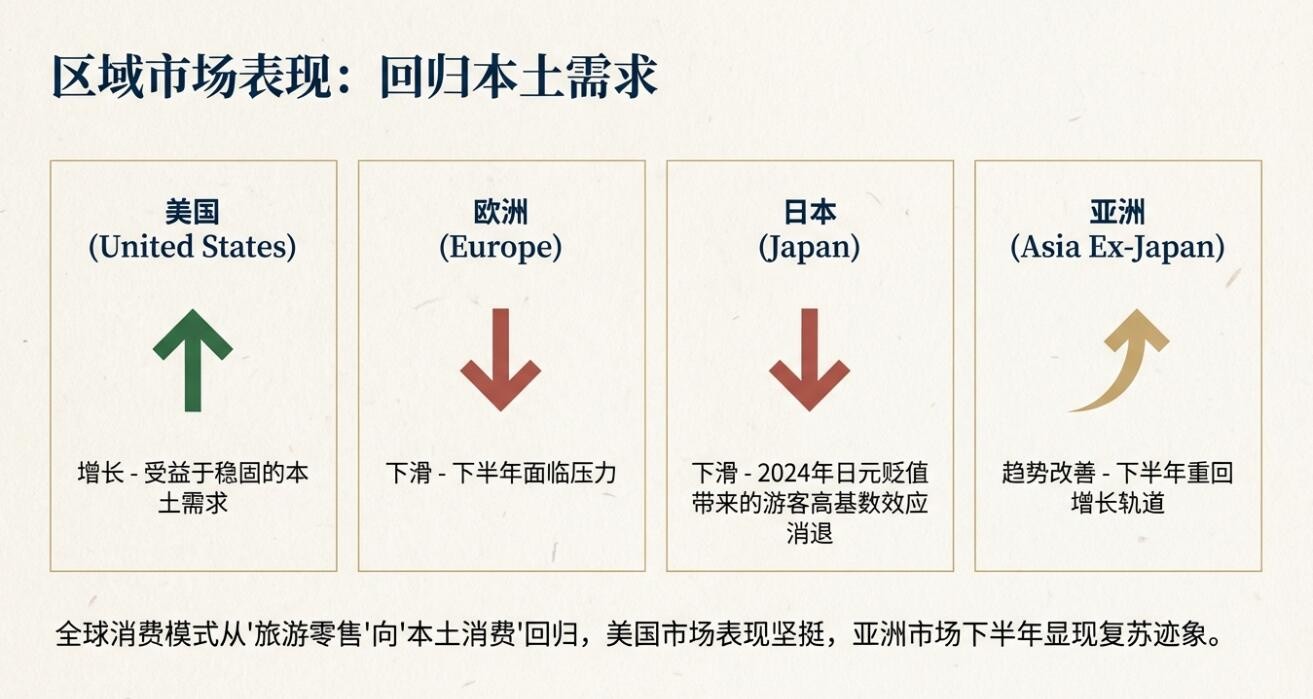
In major markets, organic revenue in the second half of the year for Asia outside Japan saw a slight increase, reversing a 9% decline in the first half. Japan's organic revenue in the fourth quarter fell more than expected, with annual revenue declining by double digits, mainly due to the base effect of significantly weakened yen attracting tourism consumption in 2024.

  • Asia Outside Japan: In 2025, organic revenue in this market is expected to decline by 4% for the year. LVMH stated that the market's performance "shows significant improvement compared to 2024, achieving positive growth in the second half." After an organic growth of 2% in the third quarter, the market recorded an organic growth of 1% in the fourth quarter, while analysts expected a decline of 2.1%, indicating that local demand recovery was stronger than market expectations, especially with positive signals emerging in China's domestic demand recovery.

  • Japan: In 2025, organic revenue is expected to decline by 13% overall, with a 5% organic decline in the fourth quarter, far exceeding analysts' expected decline of 0.28%, further proving that the tourist-driven effect from 2024 has receded.

  • United States: In 2025, organic revenue in this market is expected to remain flat compared to the previous year, with a 1% organic growth in the fourth quarter, exceeding analysts' expected growth of 0.82%. The stability of high-end consumption in the United States provides important support for market performance

  • Europe: The market is expected to see an overall organic revenue decline of 1% in 2025, primarily under pressure in the second half of the year, with a 2% decline in organic revenue in the fourth quarter, consistent with the third quarter, while analysts expect a decline of 0.47%, indicating weak demand in the region or impacts from tourism/industry-specific factors.

From a regional perspective, areas such as China and other Asian regions outside of Japan, as well as the United States, are currently the main points of certainty for recovery for LVMH, while Japan and Europe are still affected by base effects and macro/tourism fluctuations. Investors should continue to monitor the sustainability of domestic demand in China and the pace of Japanese tourist spending recovery, as these two factors will determine the elasticity of the group's revenue in the coming quarters.