


Is the high mortality rate Nipah virus facing its nemesis? The domestic COVID-19 drug VV116 shows effectiveness across fields, and the two partners respond to the current "temperature difference."

A domestically produced COVID-19 drug VV116 has been confirmed to have significant antiviral activity against the Nipah virus, which has a mortality rate of up to 70%. Animal experiments show that it can increase the survival rate of infected golden hamsters to 66.7%. However, the responses from the partner Junshi Biosciences-U and VIGONVITA-B were inconsistent; the former did not conduct related research, while the latter plans to initiate clinical trials. Affected by this news, VIGONVITA-B's stock price rose nearly 15%, and Junshi Biosciences-U also increased by 7.96%
A domestically launched oral COVID-19 drug is expected to become a weapon against the Nipah virus, which has a mortality rate as high as 70%.
Recently, a research team from the Wuhan Institute of Virology, Chinese Academy of Sciences (hereinafter referred to as "Wuhan Virus Institute") and other institutions published an important achievement in the international journal Emerging Microbes & Infections, confirming that the marketed oral COVID-19 drug VV116 (Min De Wei) has significant antiviral activity against the Nipah virus.
The Nipah virus is classified by the World Health Organization (WHO) as a top priority regional threat, with a wide host range and high mortality rate, and currently, there are no approved specific drugs or vaccines globally. Recent animal experiments in the study showed that oral VV116 can increase the survival rate of infected golden hamsters to 66.7% and significantly reduce the viral load in their key organs, providing a "ready-made drug option" for potential Nipah virus outbreaks.
However, regarding this major discovery, the domestic cooperative developer of the drug—Junshi Biosciences-U (688180.SH) and VIGONVITA (02630.HK)—had differing responses. Staff from Junshi Biosciences told Daily Economic News reporters (hereinafter referred to as "Daily Economic News reporters") that the company has not conducted similar research and that expanding new indications requires clinical data support; while VIGONVITA clearly stated that it is closely monitoring the development of related epidemic dynamics and will timely initiate clinical trials for treatment or post-exposure prevention.
Affected by the above news, on January 27, VIGONVITA's stock price once surged nearly 15% during the trading session, closing at HKD 108.9 per share, an increase of 10.90%, reaching a historical high. Junshi Biosciences-U's stock price also rose by 7.96% on the same day.
Latest Research Confirms: VV116 Has Significant Inhibitory Effect on High Mortality Nipah Virus
A drug that has been successfully used to treat COVID-19 now shows potential against another more lethal virus.
On the evening of January 26, the Wuhan Virus Institute published an article stating that recently, a research team led by researchers Xiao Gengfu/Zhang Leike from the Wuhan Virus Institute, along with researcher Shan Chao and others from the Shanghai Institute of Pharmaceutical Industry, published an important research result titled "The oral nucleoside drug VV116 is a promising candidate for treating Nipah virus infection" in the international journal Emerging Microbes & Infections, confirming that the oral nucleoside drug VV116 has significant antiviral activity against the Nipah virus, bringing new hope for the prevention and treatment of this highly lethal emerging infectious disease.
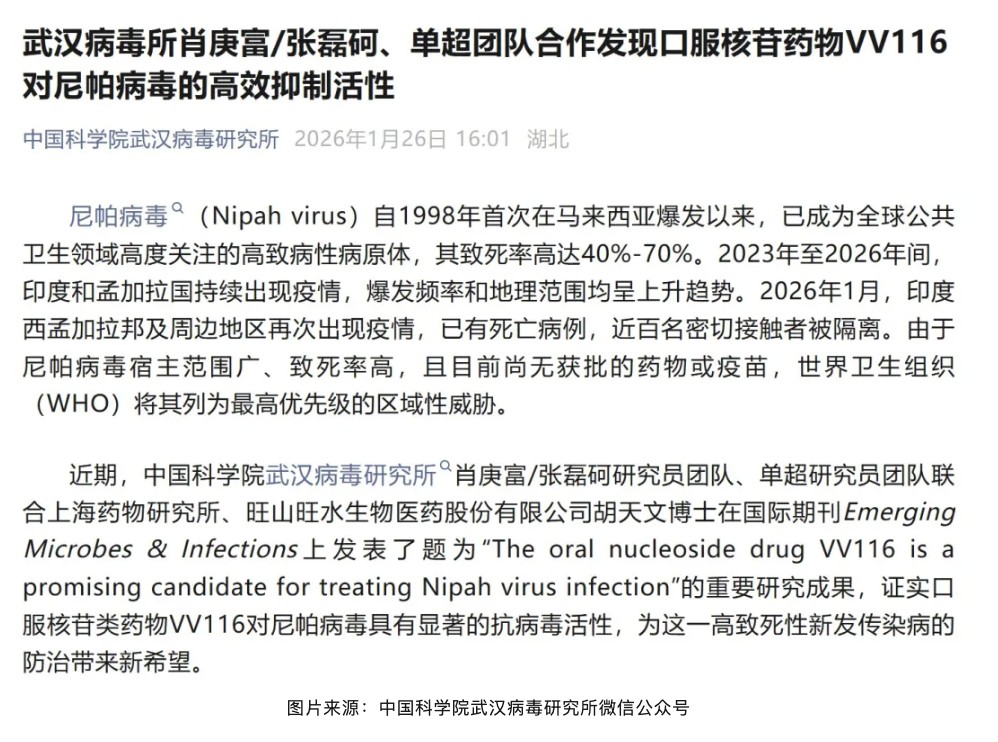 The Wuhan Virus Institute systematically evaluated the inhibitory effect of the oral nucleoside drug VV116 on the Nipah virus. The study found that in vitro experiments, VV116 and its metabolically active molecules both demonstrated activity against the two main strains of the Nipah virus, the Malaysian strain NiV-M and the Bangladeshi strain NiV-B
Significant inhibitory activity.
The Wuhan Virus Institute systematically evaluated the inhibitory effect of the oral nucleoside drug VV116 on the Nipah virus. The study found that in vitro experiments, VV116 and its metabolically active molecules both demonstrated activity against the two main strains of the Nipah virus, the Malaysian strain NiV-M and the Bangladeshi strain NiV-B
Significant inhibitory activity.
More convincing data comes from the golden hamster animal model. In the lethal dose infection model of golden hamsters, the research team treated infected animals through oral administration. The results showed that at an oral dosage of 400 mg per kilogram of body weight of VV116, the survival rate of the experimental animals increased to 66.7%. Moreover, the drug significantly reduced the viral load in the target organs of the animals, including the lungs, spleen, and brain.
The significance of this achievement is substantial. Nipah virus is a highly lethal zoonotic virus that has caused multiple outbreaks in South Asia and Southeast Asia since its first outbreak in Malaysia in 1998. Its mortality rate varies between 32% and 70% depending on the strain and outbreak, with some regions reporting even higher rates. Recently, India has reported new cases of Nipah virus, including fatalities, and nearly a hundred close contacts have been quarantined, raising public health alarms once again.
In the absence of approved vaccines and specific therapeutic drugs, research from institutions such as the Wuhan Institute of Virology suggests that the discovery of VV116 brings new hope for the prevention and treatment of Nipah virus. The study concludes that VV116 can serve not only as a preventive medication for high-risk groups such as healthcare workers and laboratory personnel but also provides a ready drug option for addressing current and future Nipah virus outbreaks.
Cross-border application of COVID-19 drug against Nipah: The "old drug new use" logic and potential of VV116
According to information, VV116 is a new drug candidate identified through collaborative research by the Shanghai Institute of Materia Medica, Wuhan Institute of Virology, Xinjiang Technical Institute of Physics and Chemistry, and Suzhou VIGONVITA Biopharmaceutical Co., Ltd. (VIGONVITA), and is an oral nucleoside drug with broad-spectrum antiviral potential.
In the critical clinical development and industrialization phase, Junshi Biosciences reached a collaboration with VIGONVITA in October 2021 through its holding subsidiary Junshi Biotech to jointly undertake the global clinical development and industrialization of VV116. By the end of December 2021, VV116 received emergency use authorization from the Ministry of Health of Uzbekistan, becoming the first COVID-19 oral drug approved for overseas marketing in China. At the end of January 2023, VV116, as a domestically developed oral drug against COVID-19, received conditional approval for marketing from the National Medical Products Administration.
During an interview, a reporter learned that the reason VV116 can expand from a COVID-19 treatment drug to potentially suppress Nipah virus lies in its mechanism of action. VV116 is a prodrug that targets viral RNA-dependent RNA polymerase (RdRp). RdRp is a core component of RNA virus transcription and replication, and its sequence is highly conserved during viral mutations. Given that VV116 targets the highly conserved active center of RdRp, it is anticipated to have the same level of inhibitory effect on future variants of viruses such as COVID-19.
Professor Jin Dongyan, a biomedical professor at the University of Hong Kong and senior vice president of the University of Hong Kong Research Institute, stated in a phone interview that studying the antiviral effect of VV116 on Nipah virus is very meaningful and is a long-term and reserve project VV116's effectiveness against the Nipah virus was largely expected. There are already various antiviral drugs with broad-spectrum activity internationally, including Ribavirin and Remdesivir, which have been confirmed to be effective against this virus and have even been tested in populations.
Jin Dongyan pointed out that the effect of VV116 on the Nipah virus stems from the characteristics of broad-spectrum antiviral drugs, which can inhibit the RNA polymerase of the virus. This enzyme is highly conserved, and its mechanism of action is similar. As nucleoside analogs, both VV116 and Remdesivir can inhibit the RNA polymerase of different viruses, so there is often cross-efficacy against various RNA viruses, a situation that has been reported extensively internationally.
"However, effectiveness does not equate to approval for the treatment of the Nipah virus. These drugs have not received relevant approvals due to a lack of targeted clinical trials." In terms of drug development direction, Jin Dongyan believes that broad-spectrum antiviral drugs are indeed an important direction for addressing emerging and sudden infectious diseases. If new sudden viruses emerge in the future, these drugs can quickly be adapted for relevant research. However, the specificity of broad-spectrum antiviral drugs is often not as strong as that of targeted drugs, and each type of drug has its own value; reliance on a single type is not advisable.
In fact, the broad-spectrum antiviral potential of VV116 is not limited to COVID-19 and the Nipah virus. According to a collaboration announcement by VIGONVITA in December 2025, research shows that VV116 also has inhibitory effects on various RNA viruses, including Human Metapneumovirus (HMPV), Zika Virus (ZIKV), and Nipah Virus (NiV).
VIGONVITA is already promoting the development of new indications for VV116. In December 2025, VIGONVITA announced an agreement with Ascletis Pharma, granting Ascletis exclusive rights for the development, manufacturing, and commercialization of VV116 for Respiratory Syncytial Virus (RSV) infection and Human Metapneumovirus (HMPV) infection in the Greater China region.
Responses from the two cooperating parties: Junshi claims no similar research, VIGONVITA will initiate clinical trials in due course
As a drug that has already been approved for market, if VV116 can successfully expand into the treatment of the Nipah virus, it undoubtedly has significant public health value and market potential.
In fact, before the Wuhan Institute of Virology officially announced it, there were multiple viewpoints online analyzing that "the oral nucleoside drug VV116 is a promising candidate for treating Nipah virus infection" and "VV116 under Junshi Bio is the only drug in the market that has been validated through in vitro and in vivo experiments to effectively inhibit the Nipah virus, with in vitro activity comparable to Remdesivir, and a 100% survival rate in high-dose in vivo experiments, and it has been marketed for rapid emergency conversion, filling the gap of no effective drugs."
However, from a practical perspective, expanding an already marketed drug into a new high-mortality infectious disease field still requires systematic clinical validation, regulatory review, and approval processes. When a reporter from Daily Economic News contacted the domestic cooperative developer of VV116, they received two completely different responses.
Regarding the prospects of VV116 for treating the Nipah virus, on January 26, a reporter from Daily Economic News called the secretary office of Junshi Bio, and the relevant staff responded: "I haven't heard of it, the company does not have similar research." It may require further clinical data support even if it wants to migrate (expand the indications), but the company is not conducting similar clinical (research).”
Another core partner, VIGONVITA, stated in response to an interview with reporters from every journalist: “Preclinical data indicate that VV116 has the potential to be developed as a treatment for Nipah virus infection. Given the high mortality rate of this viral infection, and the lack of vaccines and effective treatments, we will closely monitor the developments of related outbreaks and timely initiate clinical trials for treatment or post-exposure prevention to address potential public health needs.”
It is worth noting that the paper published in Emerging Microbes & Infections has Hu Tianwen from VIGONVITA as one of the co-corresponding authors. The two companies have previously collaborated closely to promote the listing of VV116. According to the official website, Hu Tianwen is the executive director and deputy general manager of VIGONVITA, responsible for the company's management and R&D strategy.
According to VIGONVITA's prospectus, as of now, the company has a total of nine innovative asset pipelines, of which two are in the commercialization stage, four are in the clinical stage, and three are in the preclinical stage. VV116 is one of the two products approved for listing by VIGONVITA, which brought in revenue of 196 million yuan solely from external licensing in 2023, accounting for 98% of the company's total revenue that year. However, as the COVID-19 pandemic recedes, the demand for oral COVID-19 antiviral drugs has significantly declined, and the commercialization space for VV116 has also shrunk.
In the prospectus, VIGONVITA candidly stated that drug development is highly speculative, with significant upfront investment, and there are risks that candidate drugs may fail to prove efficacy and safety, making it difficult to obtain regulatory approval or achieve commercialization. Financial data shows that although VIGONVITA achieved a net profit of approximately 6.4 million yuan in 2023, it mainly came from milestone payments related to VV116, which is difficult to represent the company's future financial performance. After entering the post-pandemic era, VIGONVITA's performance has come under pressure, with net losses of approximately 218 million yuan for the entire year of 2024 and 112 million yuan for the first four months of 2025.
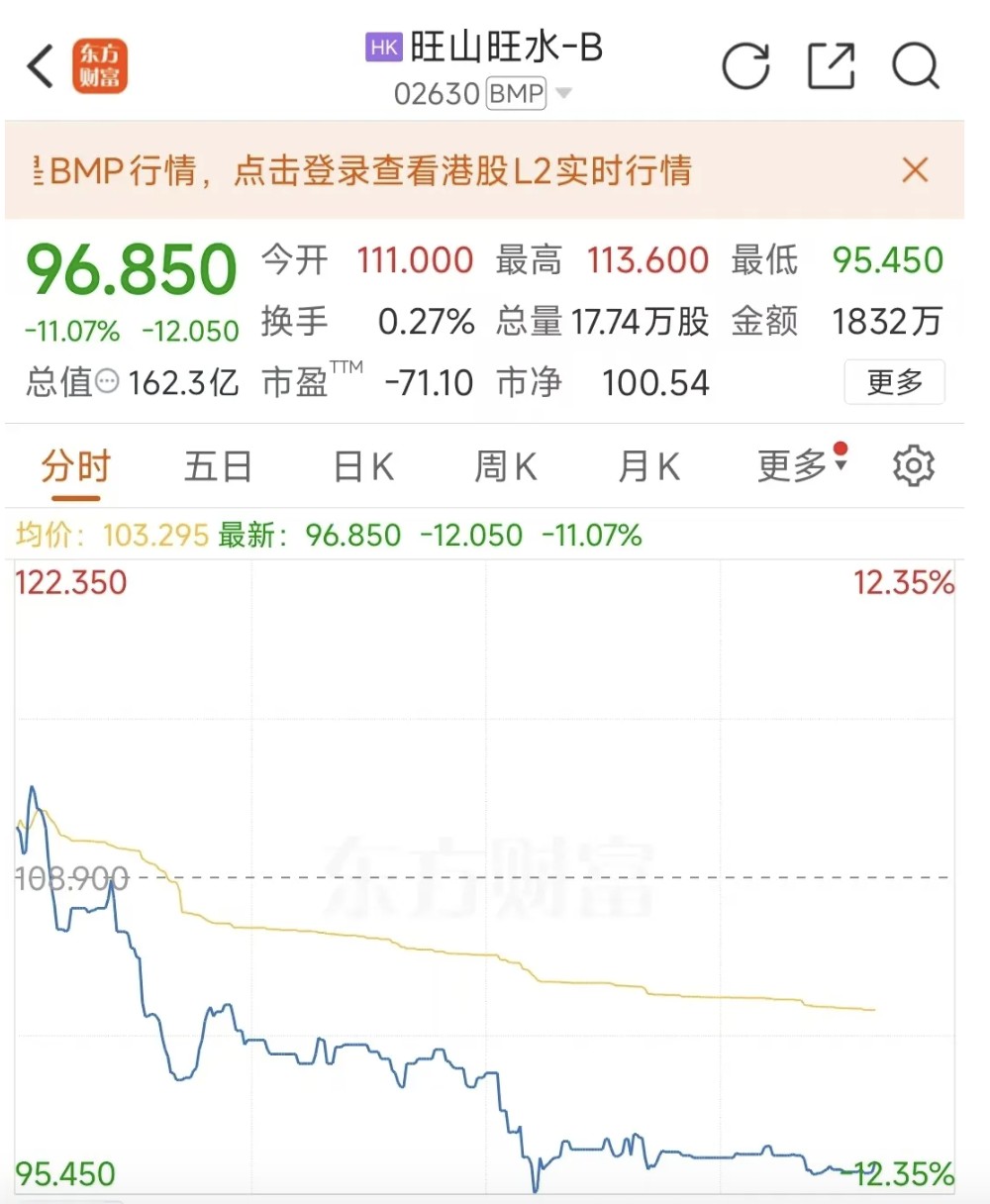
In the market, VIGONVITA's stock price fell nearly 11% today, after rising nearly 15% during trading yesterday. As of the time of publication, it was reported at HKD 96.85 per share.
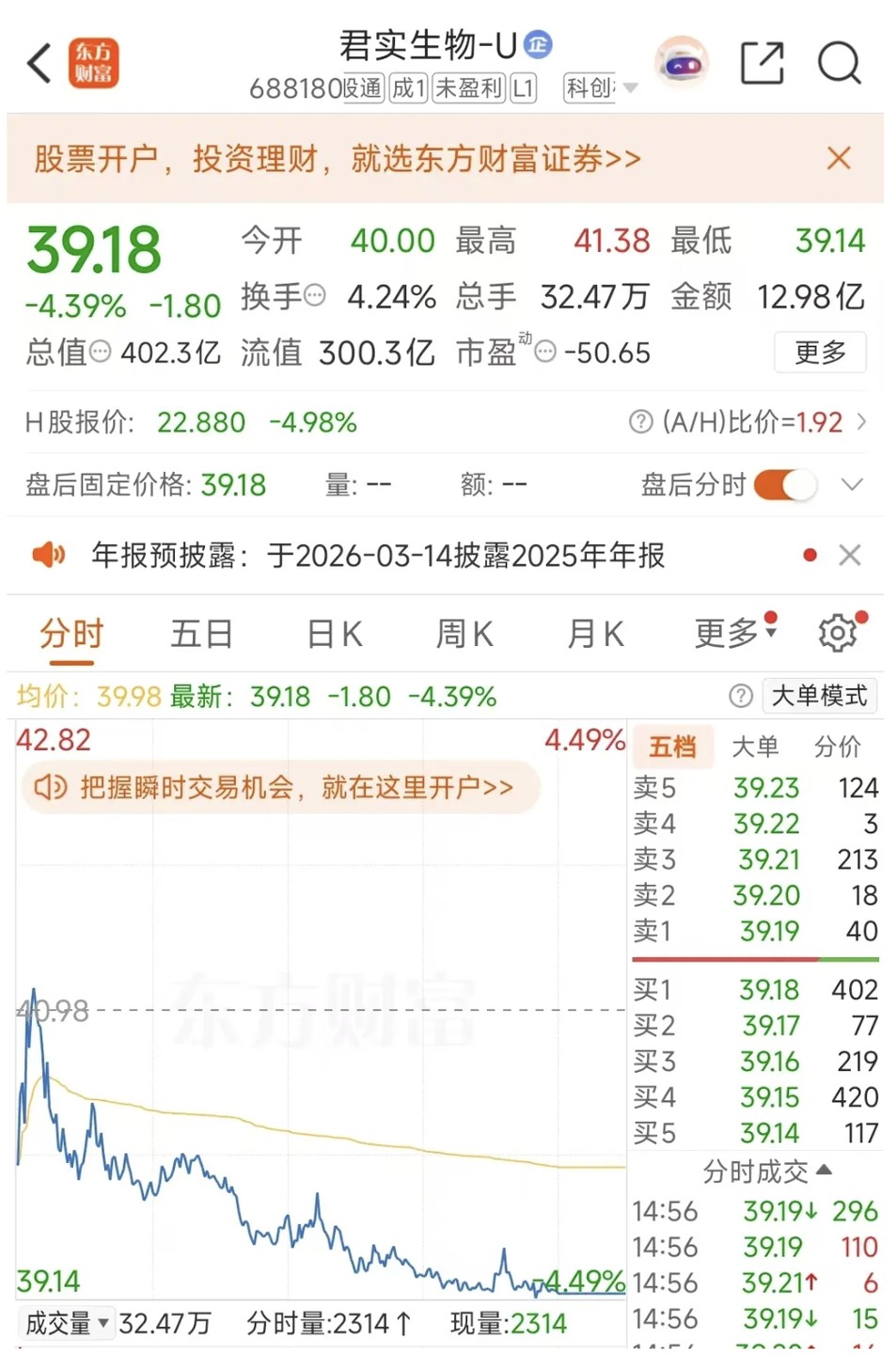
 JUNSHI BIO's A shares fell 4.39% today, closing at 39.18 yuan per share.
Risk Warning and Disclaimer
The market has risks, and investment should be cautious. This article does not constitute personal investment advice and does not take into account the specific investment goals, financial situation, or needs of individual users. Users should consider whether any opinions, views, or conclusions in this article are suitable for their specific circumstances. Investment based on this is at their own risk
