


HSBC China Wealth Insights: The "14th Five-Year Plan" starts with precise policy efforts, and regulatory stability helps the long-term healthy development of A-shares | China Perspective

According to HSBC China's Wealth Insights, China's GDP is expected to grow by 5% in 2025, despite facing a complex international environment and domestic demand pressures. Policy support remains necessary, with the central bank implementing structural interest rate cuts and multiple supporting measures, focusing on supporting private enterprises and consumption. The Ministry of Finance has introduced six policies to stimulate private investment, and fixed asset investment is expected to rebound in 2026. The overall policy tone is one of easing and stability, emphasizing quality improvement and efficiency enhancement while addressing structural issues
Annual Economic Growth Meets Targets, Resilience and Pressure Coexist
China's GDP is expected to grow by 5% year-on-year in 2025. Despite facing a complex international environment and domestic demand pressures, it still achieves its annual growth target.

The macroeconomic landscape exhibits a distinct characteristic of coexistence between resilience and pressure. On one hand, global demand for Chinese products remains strong, especially with the enhanced competitiveness of China's high-tech products. China's trade structure continues to optimize, supporting robust exports. New productive forces drive industrial production growth and optimize corporate profit structures, while supply-side reforms and consumption promotion policies continue to push for a moderate recovery in prices. On the other hand, overall domestic demand is relatively weak, with residents' consumption capacity and confidence still constrained by income expectations and a sluggish real estate market; weak real estate investment continues to drag down overall fixed asset investment.
The differentiated trend in the macroeconomy indicates a persistent need for policy support.
China's GDP Sub-item Trends in Q4 and for the Year

Data Source: Wind, HSBC Private Banking and Wealth Management, as of January 19, 2026
Targeted Policy Efforts, Emphasis on Structural Adjustment
As the first year of the 14th Five-Year Plan, policies have been intensively implemented since the beginning of the year.
On the monetary policy front, the central bank has implemented structural interest rate cuts and introduced eight supporting policy measures, focusing on reducing bank funding costs in specific areas. The focus includes supporting private and small micro enterprises, driving technological innovation and green upgrades, as well as stimulating consumption and stabilizing the real estate market. At the same time, the central bank indicated that there is still some room for further reserve requirement ratio and interest rate cuts this year.
On the fiscal policy front, the Ministry of Finance has introduced six fiscal and financial support policies aimed at stimulating private investment and reducing the consumption burden on residents to promote consumption. Additionally, this year marks the beginning of the 14th Five-Year Plan, with major projects gradually starting, and local governments' debt resolution efforts may provide more space to strengthen their fiscal support. The government has front-loaded bond issuance in the first quarter, with the first batch of CNY 93.6 billion in ultra-long special government bonds for equipment renewal already allocated. We expect fixed asset investment (especially infrastructure investment) to see a strong rebound in 2026 under policy support.
Overall, the current policy approach emphasizes quality improvement and efficiency enhancement while addressing structural issues, maintaining a moderately loose monetary policy, and coordinating fiscal policy to consolidate economic resilience and counter external pressures arising from profound adjustments in the international landscape Infrastructure investment is expected to rebound strongly in the first year of the 14th Five-Year Plan
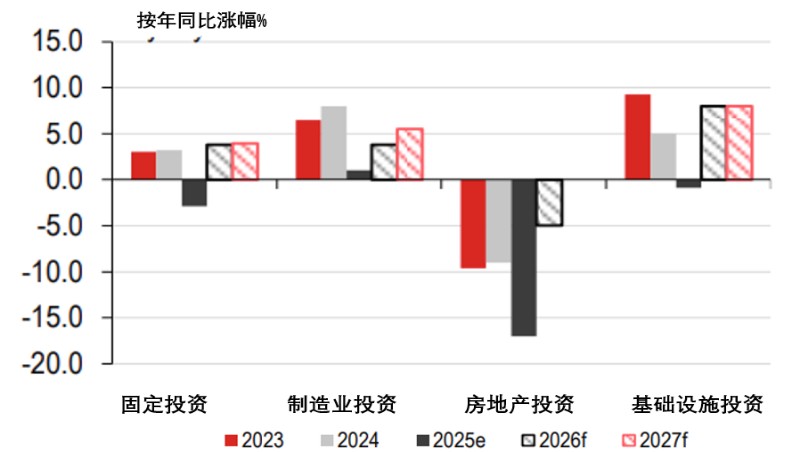
Data source: China Economic Database, HSBC Global Investment Research, as of January 8, 2026. e: estimated figures, f: expected figures
Stock Market: Regulatory stability benefits long-term healthy market development, profitability and liquidity remain important supports
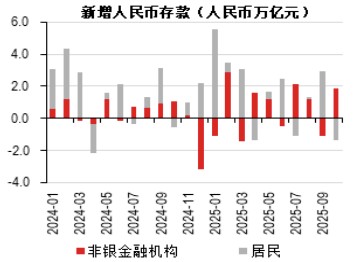
The stock market kicked off 2026 with a strong "opening red," with the SSE Index showing a rare consecutive rise. The maturity of residents' deposits, reallocation, and inflows from insurance and other asset management institutions, as well as foreign capital, have provided ample liquidity to the market. On the 15th, regulatory adjustments to the financing margin ratio aimed to curb excessive speculation and guide the market into a "slow bull" rhythm. We believe that regulatory stability benefits the long-term healthy development of the capital market. Looking ahead, the potential for residents to "move their deposits" still exists, and the active entry of institutional investors may continue. The global allocation demand for Chinese assets and the strengthening of the RMB may also continue to support market liquidity. From a fundamental perspective, Chinese stock earnings have entered an upward cycle, and future market focus may be more concentrated on high-performing sectors. We maintain a positive view on Chinese stocks, optimistic about the improvement in technology stock earnings under the support of policies and independent innovation, while continuing to utilize quality dividend assets for downside protection. Additionally, the consumer sector is in a "three lows" state of undervaluation, low positions, and low expectations, which may present structural allocation opportunities.
Since April 2025, deposits have shifted from residents to non-bank financial institutions
Bond Market: May continue to exhibit a range-bound fluctuation pattern
In the bond market, the stock-bond seesaw effect has put pressure on the bond market; however, the monetary environment remains loose, and the overall bond market is expected to continue a range-bound fluctuation pattern. Since November last year, the yield curve has steepened, with the current 30-year government bond yield fluctuating around 2.3%, and the term spread is at a relatively high level in recent years, which may present short-term trading opportunities. If the supply pace of government bonds stabilizes and the central bank releases clearer signals for maintaining stability, it could catalyze the price recovery of long-term government bonds.
The stock-bond seesaw effect exerts pressure on the bond market
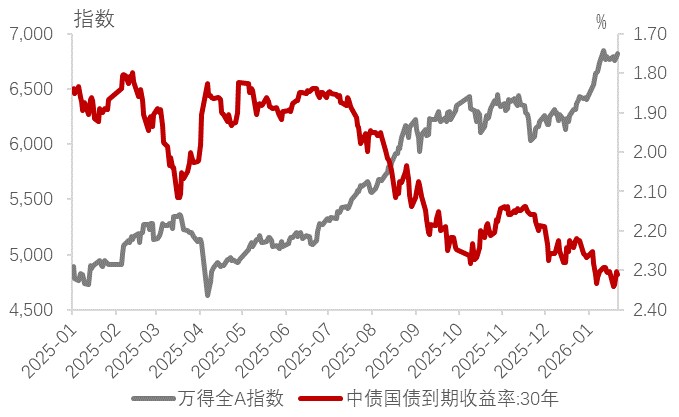
Data source: Wind, HSBC Private Banking and Wealth Management, as of January 23, 2026
The above content is from HSBC China Wealth Insights. For more content, click on [HSBC China Wealth Insights Column] The views on Chinese stocks in this article come from HSBC Private Banking and the Global Investment Committee of Wealth Management.

Risk Warning and Disclaimer
The market has risks, and investments should be made with caution. This article does not constitute personal investment advice and does not take into account the specific investment goals, financial situation, or needs of individual users. Users should consider whether any opinions, views, or conclusions in this article are suitable for their specific circumstances. Investing based on this is at one's own risk.
