


Surge, Boom, Crash – Gold and Silver Take the Lead, the Market's "Opening Performance" in 2026 is Particularly Spectacular

This week, Wall Street consensus trades experienced severe turbulence. Trump's nomination of Waller as Federal Reserve Chairman triggered a bloodbath in precious metals, with gold plummeting 10% and silver briefly dropping 37%. Extreme leverage and crowded positions have made the market fragile. One-way bets in multiple areas, including the dollar, emerging market stocks, and momentum stocks, are under pressure simultaneously. Analysts warn that parabolic rises are often accompanied by parabolic declines, and consensus trades always fail under extreme conditions, ringing alarm bells for contrarian investors
In an era of Wall Street where retail investors flood in while institutional positions are crowded, this week the market proved the fragility of consensus—when trading becomes excessively crowded, even slight fluctuations can trigger severe shocks.
Wall Street Insight mentioned that on Friday, Trump's nomination of Waller as the Federal Reserve Chairman ignited a "bloodbath" in precious metals. Gold plummeted by 10%, wiping out $5 trillion in market value over the past two days. Spot silver once plunged by 37%, spot platinum fell over 16%, and copper returned all of yesterday's gains.
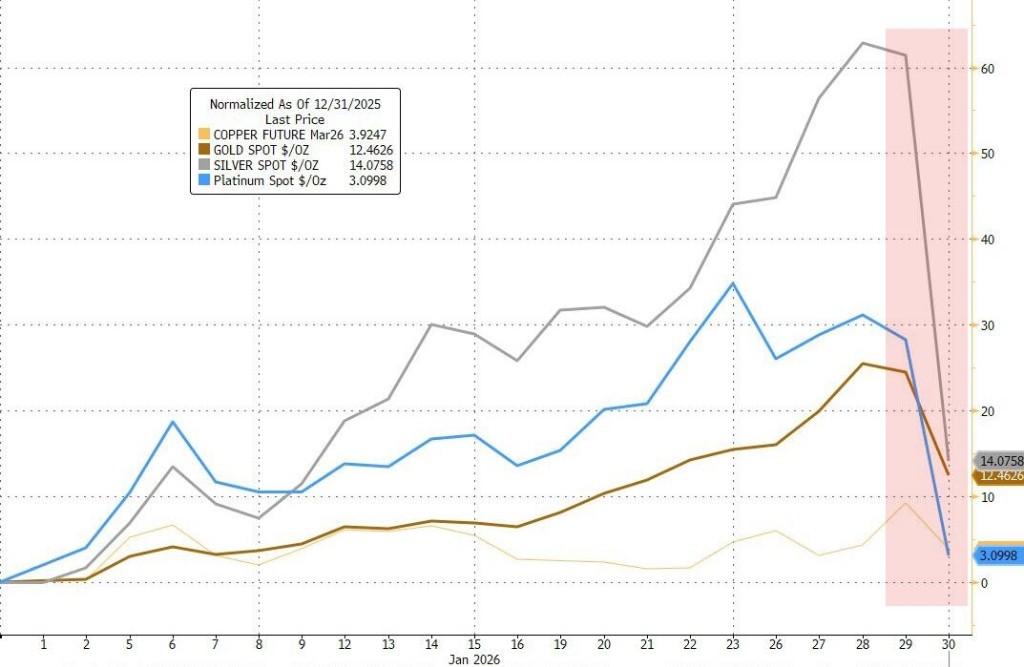 (Gold, silver, copper, and platinum trends in January)
After the recent surge in gold and silver prices, the crowded long positions, record levels of bullish options purchases, and extreme leverage levels have put the market in a state where a "gamma squeeze" could be triggered at any moment. Michael Brown, Senior Research Strategist at Pepperstone, stated:
The market has become very bubbly, and it only takes a small trigger to cause such a movement.
In addition to precious metals, other consensus trades are also under pressure. On Friday, the U.S. dollar index recorded its largest single-day increase since May, severely impacting investors shorting the dollar. Emerging market stocks performed the worst relative to U.S. stocks since the same period; the highly sought-after AI trades also showed signs of instability.
Trillions of dollars have rapidly flowed in a short period, and heavy position allocations leave almost no room for error. Emily Roland, Co-Chief Investment Strategist at Manulife John Hancock Investments, remarked:
Anything that rises parabolically usually also falls parabolically, and it largely feels driven by momentum, technicals, and sentiment.
Crowded Trades Spread Across Multiple Markets
The degree of market crowding was evident even before the plunge in precious metal prices.
A Bank of America January fund manager survey indicated that going long on gold is the most crowded trade in the global market. The demand is so strong that gold prices were once 44% above the long-term trend line, a premium level not seen since 1980.
According to Renaissance Macro Research citing Consensus data, the silver sentiment index, based on weekly surveys of brokerage strategists and newsletter authors, surged to its highest level since 1998.
In a market where positions are highly consistent and leverage has quietly accumulated beneath the surface, it is enough to trigger a sharp decline in a single day. It is worth noting that the same one-sided bets are appearing across various markets.
This month, the U.S. dollar has been sold off for the third consecutive month, marking its worst start to the year in eight years, with exchange rates against other fiat currencies dropping to their lowest level since July 2022.
However, in the past two days, amidst market turmoil, the dollar saw some buying interest. On Friday, the dollar recorded its best single-day performance since May 2025
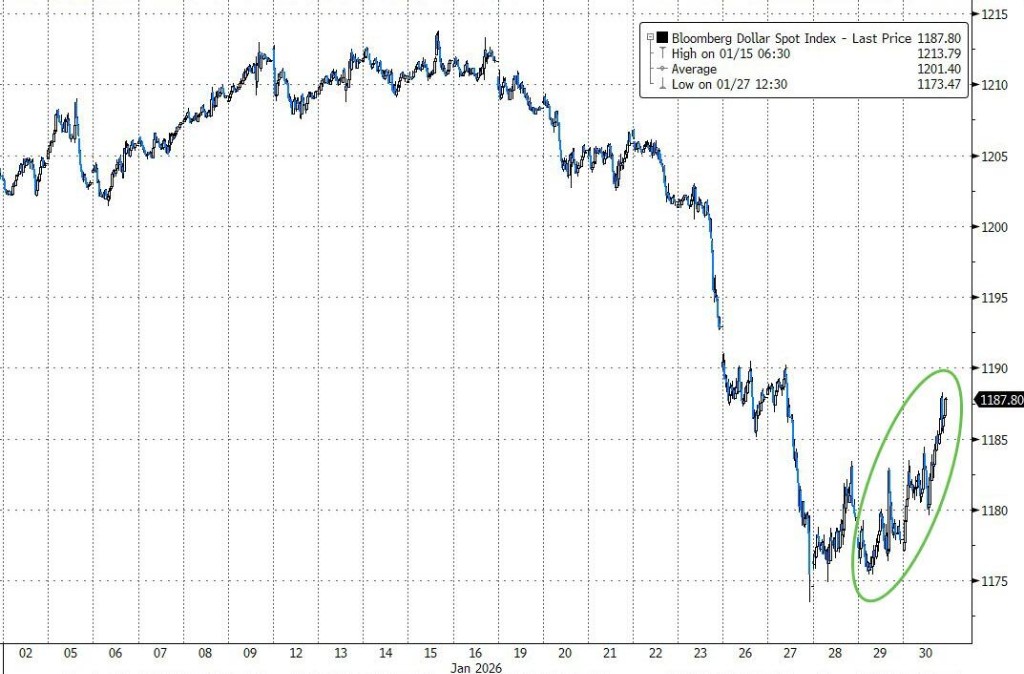 (US Dollar Index rebounded at the end of the month)
The stock market is also experiencing similar crowded trades. The MSCI Emerging Markets Index has outperformed the S&P 500 Index by an unprecedented margin since 2022. After a month of significant gains, momentum stocks in the U.S. market have seen a correction in the past two days.
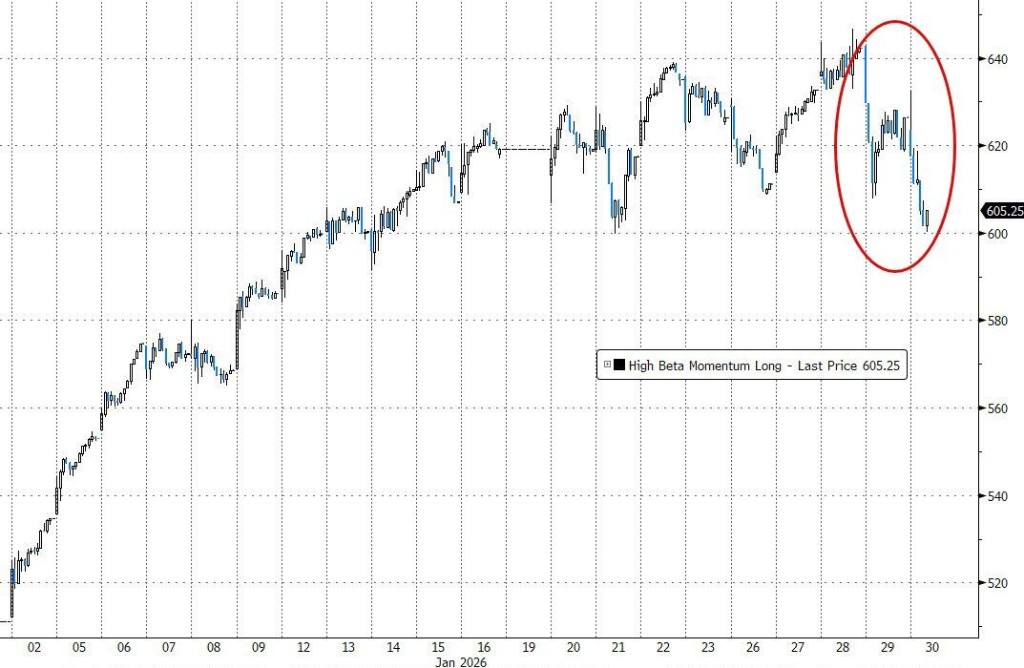 (Momentum stocks declined in the past two days)
After outperforming the S&P 500 Index for 14 consecutive trading days, the Russell 2000 Index has underperformed the S&P 500 Index in the past six trading days.
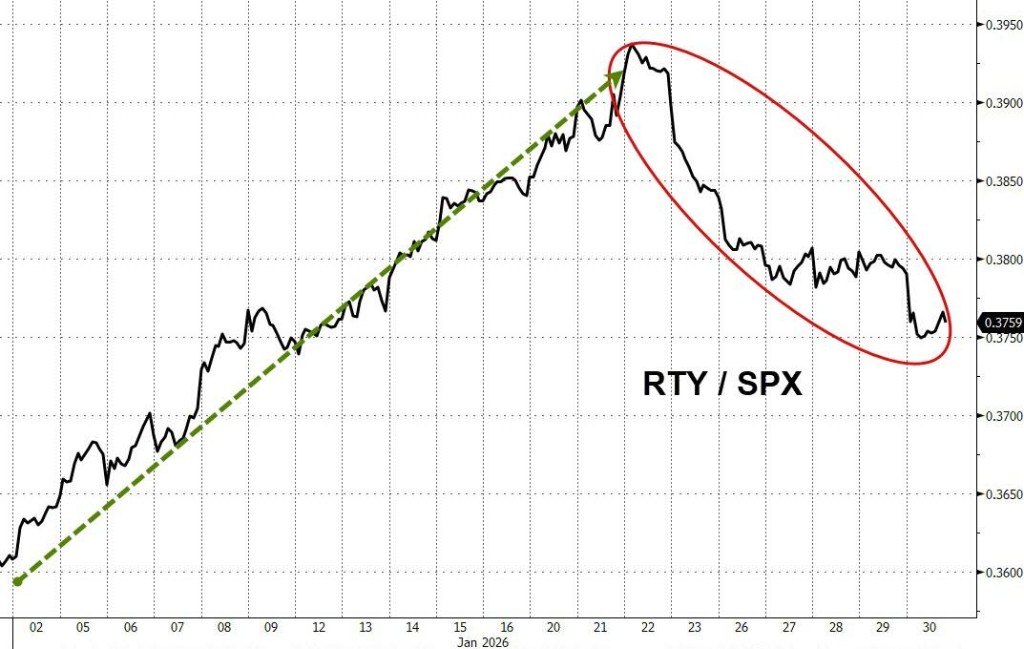 (Small-cap index underperformed the S&P 500 Index in the past six trading days)
The collapse of precious metals can be seen as a warning bell for other crowded trades that have remained stable so far. Keith Lerner, Chief Market Strategist at Truist Advisory Services, bluntly stated:
The consensus is always right—except in extreme cases.
The Persistence and Questions of Contrarian Trading
This week has raised a deeper question amidst the noise: In a momentum-driven market, is there still room for contrarian investors, and what is the cost of going against the consensus before it reverses?
Rich Weiss, Chief Investment Officer of Multi-Asset Strategies at American Century Investments, is one of the investors who began taking a contrarian stance on some mainstream trades at the end of last year. His portfolio has started to lean towards the U.S. stock market rather than international markets, a move that has currently been unfavorable for him as non-U.S. assets have surged.
But he remains steadfast, confident that growing profits will help U.S. companies continue to outperform their overseas competitors. Weiss stated:
Although the trend is not moving in our direction, we see the fundamentals working in our favor; momentum trading is like picking up nickels in front of a steamroller. So it remains effective until it doesn't.
Despite Friday's market volatility not being enough to completely undermine popular trades, some investors are beginning to question whether this is an early warning to exit.
Jeff Muhlenkamp has been capitalizing on the rise of gold; the $270 million fund he manages has returned nearly 10% this year. A drop in gold is not good news, but exiting too early could mean missing out on years of opportunity if prices rebound.
The question I have to ask now is, how much further can it fall? I don't have a conclusion yet
