


The macro shift has arrived! From the bloodbath in silver to the breakout in BTC, beware of the "volatility trap" in asset prices【Insight Representative's Extra Lesson】

The macro shift has arrived, and silver and BTC are facing volatility traps. The implied volatility of silver spot prices has reached a historical high, the market is unstable, and ordinary investors tend to speculate. Silver plummeted over 30% last week, but position data indicates that institutional investors do not favor high-volatility markets. It is recommended that investors stay away from high-volatility markets and seek more robust trading strategies
This year marks the tenth anniversary of the annual column "Fu Peng Says" by Wall Street Insights! The sixth season of "Fu Peng Says" has been fully upgraded, adding a column group chat to update the latest market views and chart data interpretations from Fu Peng (the community updates in real-time).
In addition to the daily content of Fu Peng Says, we have also added an online reading document for the column, sending out daily trading focus morning reports, noteworthy research reports, recommended electronic reading lists, and extended reading materials. Everyone can also ask questions and communicate more in the community to improve together. Users who join the column can scan the QR code in the image below to add the assistant and enter the exclusive group chat for "Fu Peng Says."
The macro shift has arrived! From the bloodbath in silver to BTC breaking down, beware of the "volatility trap" in asset prices.
This article reflects the author's views only, and the video was recorded on February 1, 2026. Click the video above to watch!
Recently, I feel that various asset classes have reached an important window period.
Implied volatility is an important observation indicator in our FICC strategy. For example, last week in the precious metals market, I demonstrated the terrifying aspects of a high-volatility market.
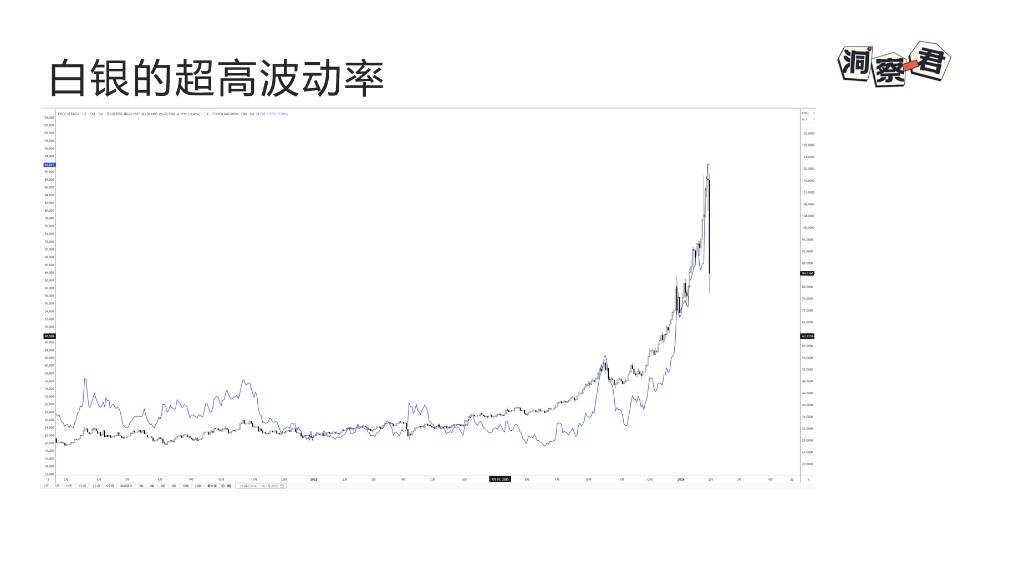
This chart shows the spot price of silver and the 1-month IV. The current IV of silver is the highest value since data collection began. The biggest characteristic of a high-volatility market is instability; we cannot reasonably predict how much the price will rise or when the market will collapse. Therefore, institutional investors often choose to exit when they see such high volatility, while ordinary investors tend to be more speculative and favor such high-volatility markets. On Friday, silver experienced a catastrophic drop of over 30%, and I saw many investors online blaming institutional investors for manipulation.
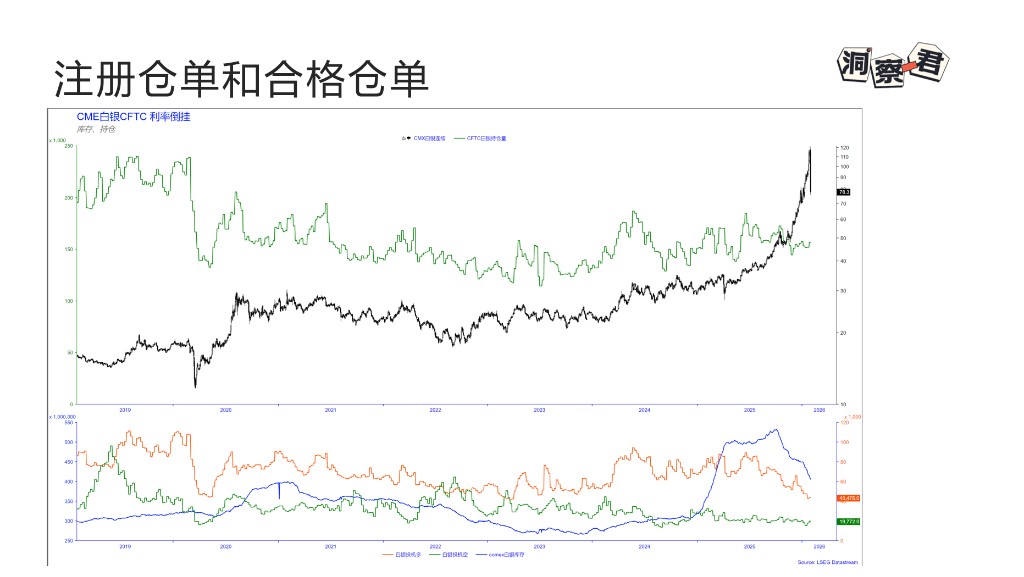
However, this is not the case. Let's look at this chart, which shows the CME silver futures prices and related position data. We can clearly see that the total CFTC open interest in silver has not shown significant growth over the past two years, and it has even decreased by about 40% compared to the peak in 2020. From the perspective of speculative positions, the speculative long positions have been declining from 2025 to now. This clearly indicates that institutions are not fond of such high-volatility markets. Therefore, my advice to everyone is to stay away from high-volatility markets. I jokingly told my friends that trading silver above 100 is not as good as going to Macau. In the current market, the only feasible strategy is a delta-neutral volatility short strategy, but this requires a high level of professionalism from retail investors There are also certain limitations on the amount of funds.
Then everyone might ask, if high volatility is difficult to manage, is low volatility better? Actually, it's not absolute; excessively low volatility often contains risks. Excessively high volatility means great uncertainty, while excessively low volatility often implies an underestimation of uncertainty.
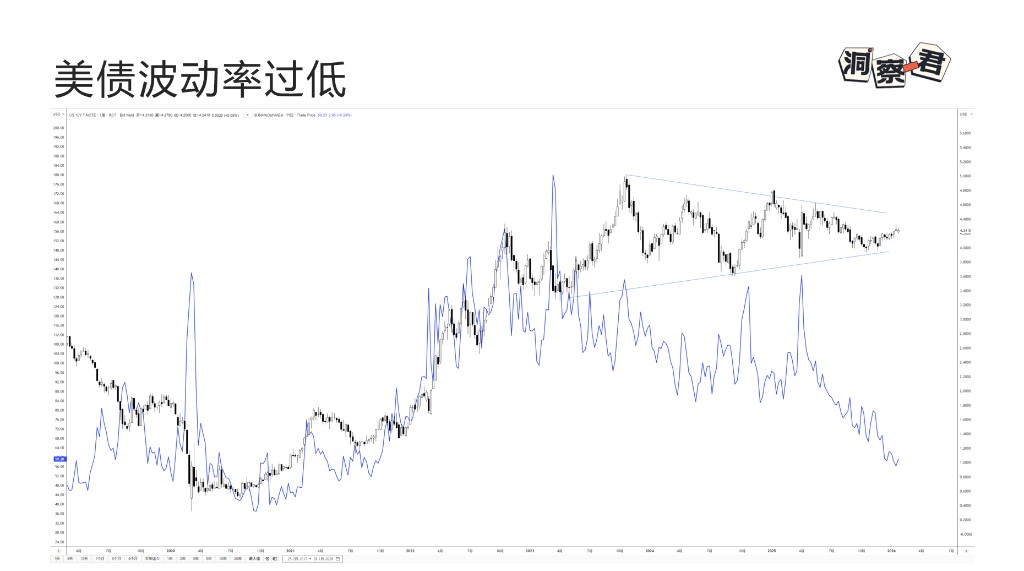
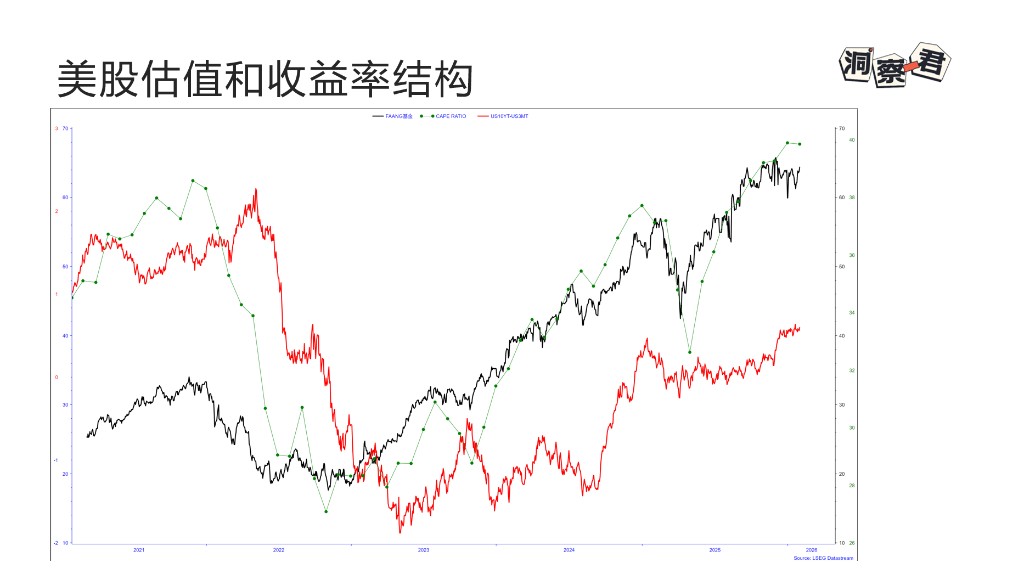
This is the yield of U.S. Treasuries and the volatility index of U.S. Treasuries. We can see that the current volatility of U.S. Treasuries is close to the period of zero interest rate and unlimited quantitative easing by the Federal Reserve during the pandemic. During that phase, the yield of U.S. Treasuries was artificially controlled at a low level, and the relatively low volatility was reasonable. However, the current low volatility may indicate that the market is overly certain about the future path of monetary policy. Let's take a look at the yield structure of U.S. Treasuries. As the Federal Reserve continues to guide short-term interest rates down, the 10-year yield stabilizes between 4.0-4.3.
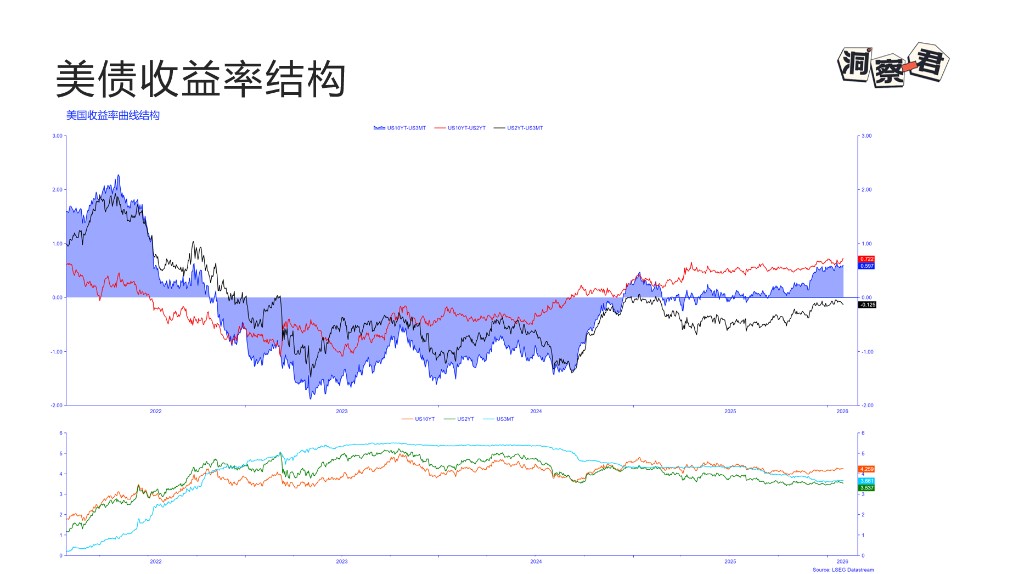
The widening of the yield spread is used to support the excessively high valuation of U.S. stocks. However, the marginal effect of this method will become increasingly poor. Therefore, we find that the valuation of U.S. stocks has been unable to expand further in the past quarter or so. At this time, we need to be very careful about the valuation shock brought by the rise in the long end of the yield curve, especially when the market is overly certain about the Federal Reserve's interest rate cut path this year.
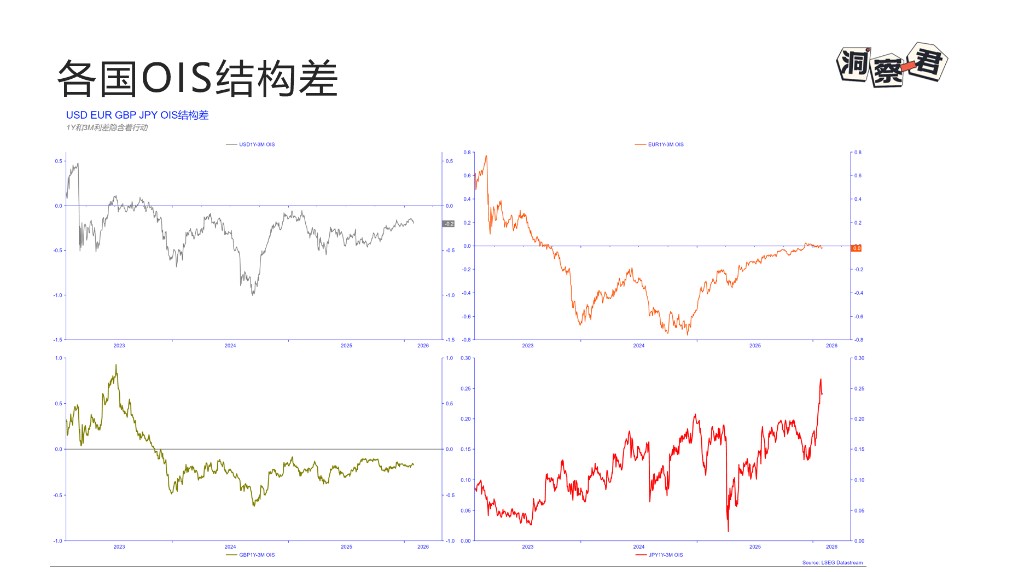
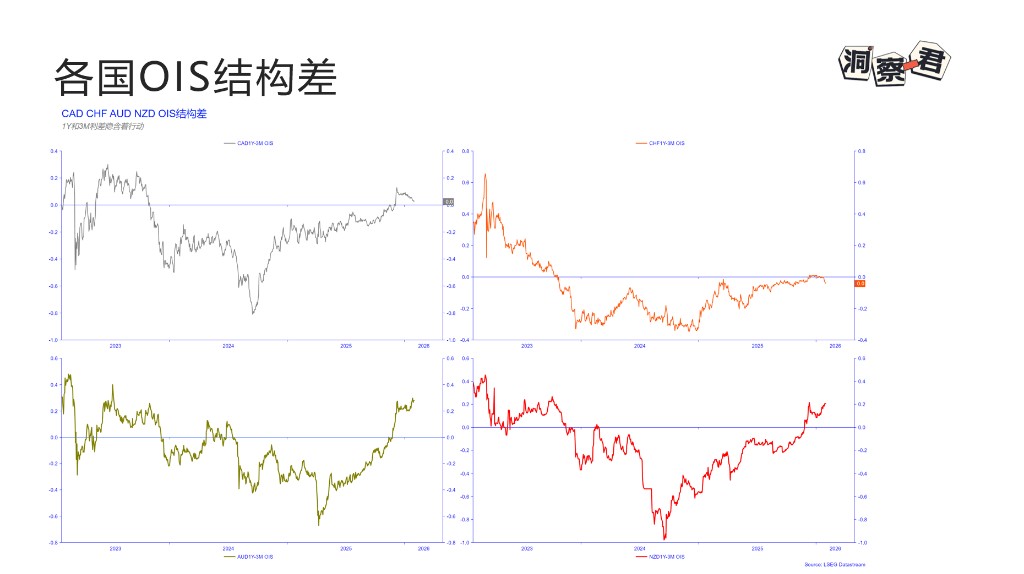
Let's take a look at the OIS structure of other countries. It is not difficult to find that the OIS structure of major economies mostly shows a narrowing trend, and commodity currency countries even show a significant incorporation of interest rate hike expectations. We need to consider whether the Federal Reserve's monetary policy will continue to proceed independently on the path of further easing, or whether some positive economic data might trigger a reversal of interest rate cut expectations, leading to an increase in bond yields and volatility, which in turn transmits to other major asset classes.
 We have mentioned multiple times that BTC can serve as an AI valuation index. This past weekend, it broke down first, which also gives us a side hint to be cautious about the transmission of major asset classes brought by fluctuations in the yield curve
Additionally, we previously discussed whether the Federal Reserve's interest rate cut expectations will keep pace with other economies. Everyone might as well apply the horse racing game from the previous video to try to analyze the possible future evolution paths of the US dollar.
We have mentioned multiple times that BTC can serve as an AI valuation index. This past weekend, it broke down first, which also gives us a side hint to be cautious about the transmission of major asset classes brought by fluctuations in the yield curve
Additionally, we previously discussed whether the Federal Reserve's interest rate cut expectations will keep pace with other economies. Everyone might as well apply the horse racing game from the previous video to try to analyze the possible future evolution paths of the US dollar.
Feel free to share your thoughts in the comments section. I hope this video can help everyone, and see you next time.

Risk Warning and Disclaimer
The market has risks, and investment requires caution. This article does not constitute personal investment advice and does not take into account the specific investment goals, financial situation, or needs of individual users. Users should consider whether any opinions, views, or conclusions in this article are suitable for their specific circumstances. Investment based on this is at your own risk.
