The most vulnerable moment for gold? A mere 5% exit of profit-taking is enough to offset global physical demand

Citigroup warns that the gold bull market driven by $1 trillion in hot money is facing the "Sword of Damocles"! Current market profits amount to $20 trillion, and a mere 5% sell-off could offset global physical demand. As geopolitical risks recede and the independence of the Federal Reserve is confirmed, Citigroup is bearish on the second half of 2026, expecting gold prices to drop 20% to $4,000 by 2027
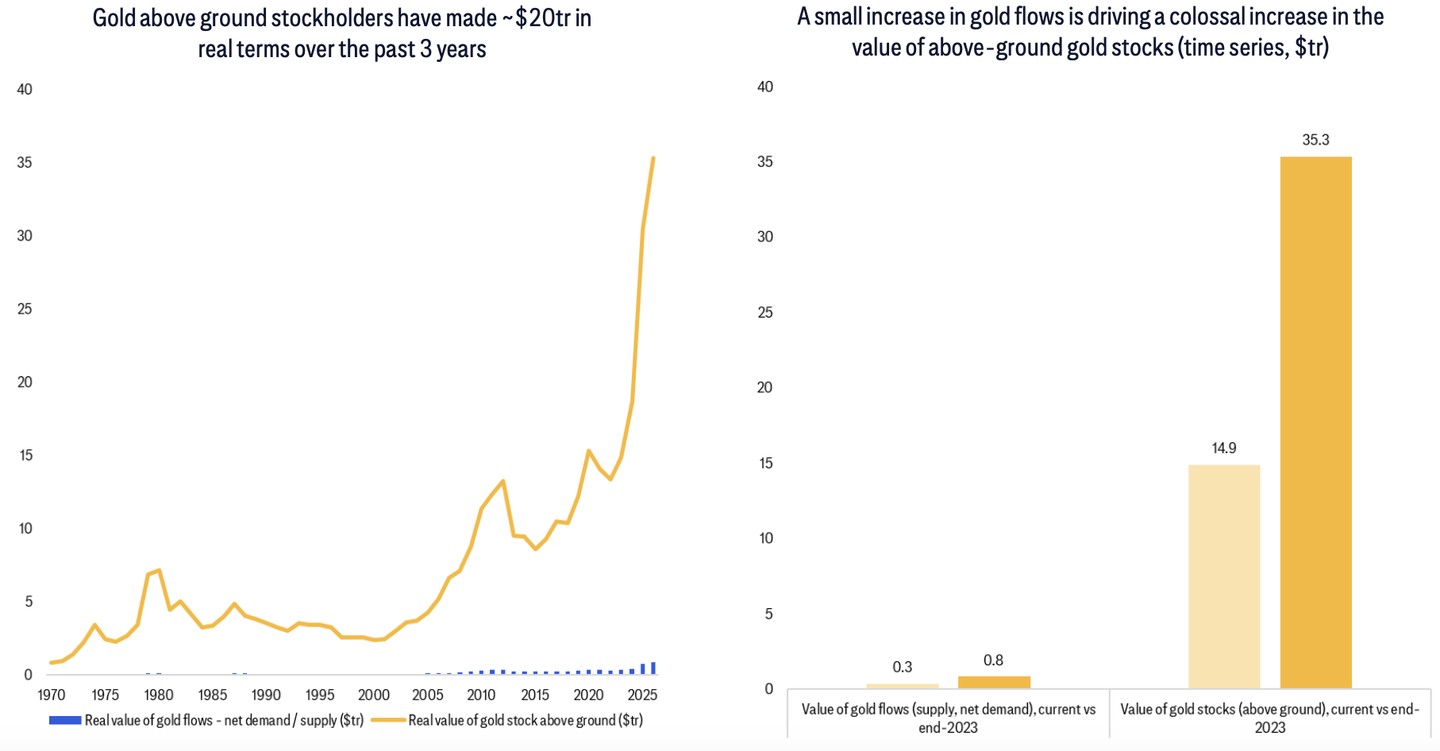
In the past three years, the surge in gold prices has created approximately $20 trillion in floating profits for investors, but this "sword of wealth" could reverse at any time. Citigroup's research indicates that if only 5% of the floating profits ($1 trillion) flow out of the market, it would be enough to offset all current physical demand, posing a devastating blow to gold prices.
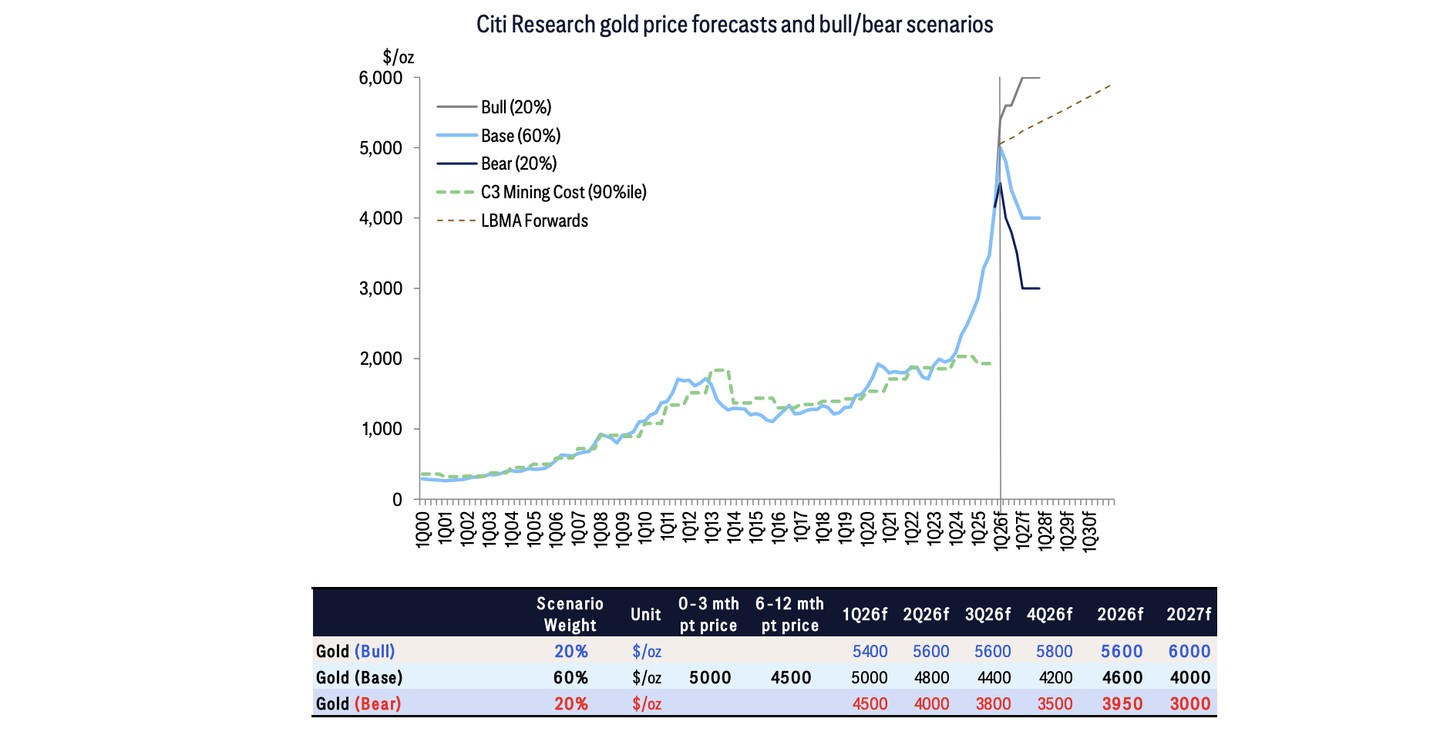
According to the Chase Trading Desk, Citigroup's research team stated in a report released on January 30 that they maintain their 0-3 month target price of $5,000 per ounce, but they are cautious about the second half of 2026. The baseline scenario expects gold prices to fall back to $4,000 per ounce by 2027.
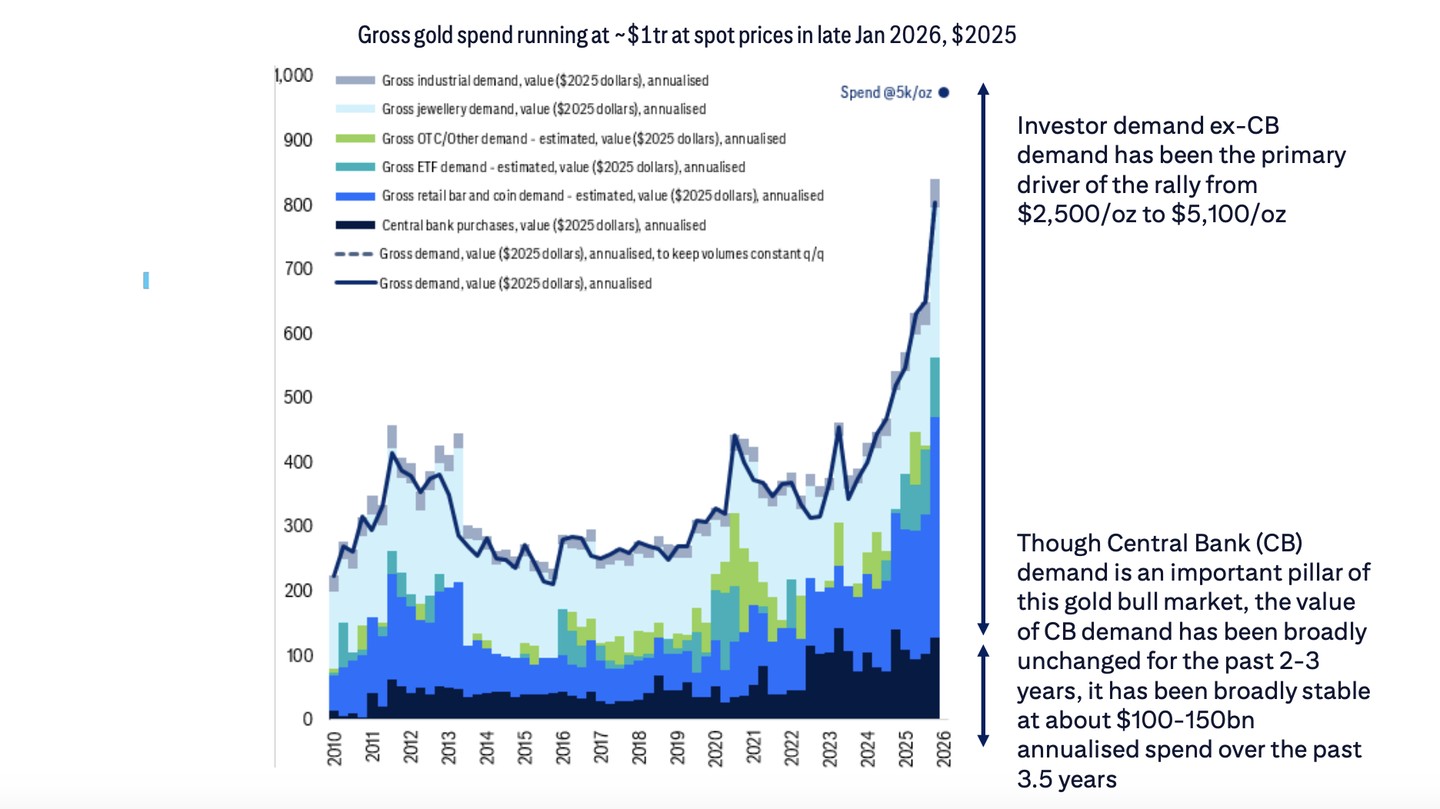
Citigroup believes that the core driving force behind this bull market is massive investor capital allocation, rather than central bank purchases. According to Citigroup's calculations, the capital inflow driving the current rise in gold prices is about $1 trillion, while the paper profits accumulated by gold holders over the past three years amount to approximately $20 trillion. A mere 5% profit realization would completely offset the current global physical demand, causing a significant impact on the market.
At the same time, Citigroup believes that as geopolitical risks ease in the second half of 2026, the U.S. economy achieves "Goldilocks" growth (a soft landing that weakens interest rate cut expectations), and the independence of the Federal Reserve is confirmed, the demand for portfolio hedging will decline, and the risk of profit-taking is rising sharply.
Trading funds are the main force driving this round of market
According to Citigroup's report: The rise from $2,500 per ounce to $5,100 per ounce in this round was primarily driven by "investor demand excluding central banks."
The demand for gold from central banks has remained relatively stable over the past 2-3 years, between $100 billion and $150 billion. Meanwhile, the capital allocation by market investors has reached a historical high of about $1 trillion.
Citigroup's research points out that the physical gold market is "too small" relative to the total global wealth and cannot cope with large-scale asset allocation shifts.
Citigroup reveals the structural vulnerabilities of the gold market through scenario analysis. The value of gold supply accounts for only about 0.1% of global household wealth. This means that for every 0.1% (or one-thousandth) increase in household wealth allocated to gold, mining supply would need to double to meet demand.
If the global average allocation level increases from the current 4.1% to 5% (a mere change of 0.9 percentage points), it would require an amount equivalent to 11 years of mining supply or half of the total jewelry and gold bar inventory accumulated over thousands of years. Clearly, the physical market cannot bear such a large-scale wealth transfer, and prices must rise significantly to balance supply and demand.
The "Sword of Damocles" of market structure
More dangerously, the reverse scenario involves the enormous accumulated profits from the past few years, hanging over gold prices like the Sword of Damocles, with greater potential volatility risk as prices rise.
Citigroup points out that the gold market structure is imbalanced, with insufficient turnover during the upward process. Currently, the risk in the gold market structure is that the capital flow driving this bull market is about $1 trillion, while the paper profits accumulated by gold holders over the past three years amount to approximately $20 trillion A mere 5% (USD 1 trillion) profit realization could completely offset global physical demand, causing a significant impact on the market.
Multiple factors supporting gold prices may ease in the second half of 2026
Citigroup assessed 12 overlapping geopolitical and economic risks supporting gold investment allocation. It is estimated that about half of these risks will not occur or will completely disappear by 2026.
Citigroup expects: The Trump administration will push for the U.S. economy to achieve "Goldilocks" status (low inflation, high employment, stable growth, weakening interest rate cut expectations) in the midterm election year of 2026; the Russia-Ukraine conflict will reach an agreement before the summer of 2026; and the U.S.-Iran situation will eventually ease.
If Waller is confirmed as the Federal Reserve Chair nominee, Citigroup believes the Federal Reserve will maintain its political independence, which is another bearish factor for gold in the medium term.
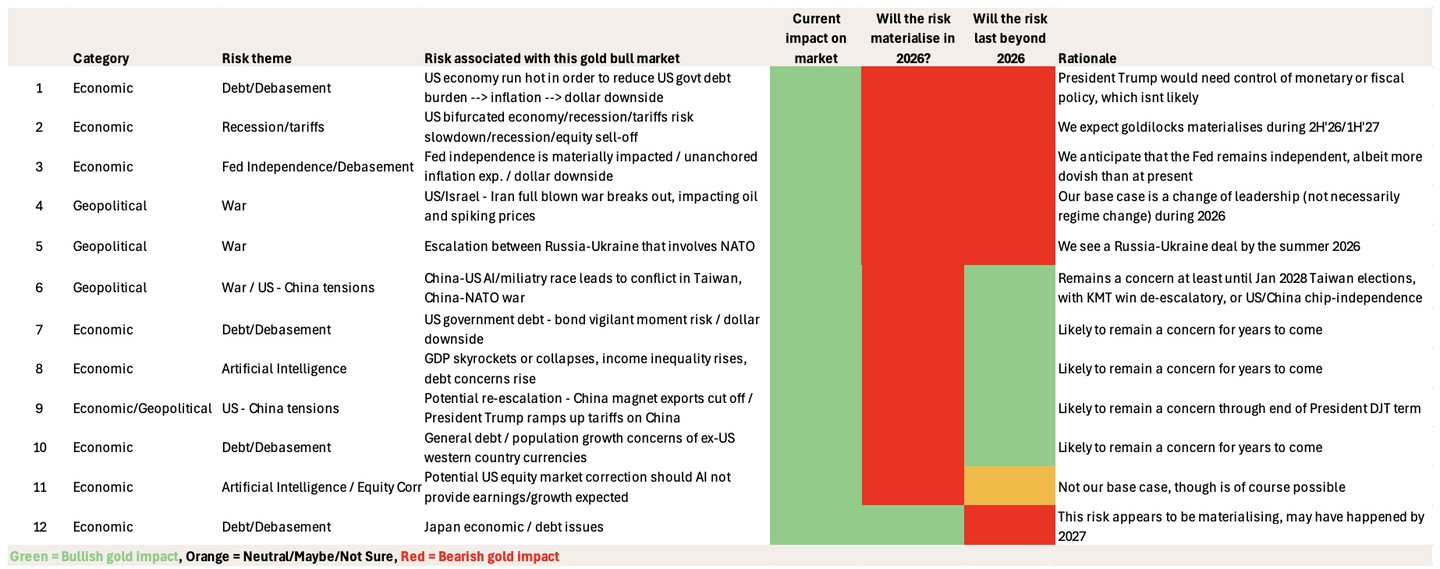
Citigroup emphasizes that although geopolitical and economic risks will continue to support gold prices in the short term, as geopolitical risks ease in the second half of 2026, the U.S. economy achieves "Goldilocks" growth, and the independence of the Federal Reserve is confirmed, the demand for portfolio hedging will decline, posing significant medium-term downward pressure on gold prices.
Historical experience also shows that during major U.S. stock market corrections (caused by the AI bubble burst or economic recession), gold often declines first, adding additional risk considerations for investors.
Citigroup predicts gold prices will fall to USD 4,000
Citigroup predicts: The target for 0-3 months is USD 5,000 per ounce, and for 6-12 months is USD 4,500 per ounce. By quarter, the forecast for the first quarter of 2026 is USD 5,000, for the second quarter is USD 4,800, for the third quarter is USD 4,400, for the fourth quarter is USD 4,200, with an annual average of USD 4,600, and a prediction of USD 4,000 for 2027.
Citigroup provides three scenarios: Bull market scenario (20% probability) gold price rises to USD 6,000; baseline scenario (60% probability) gold price falls to USD 4,000; bear market scenario (20% probability) gold price drops to USD 3,000.