


The turmoil in the foreign exchange market intensifies! Trump's "weak dollar" expectations trigger a resurgence in options trading

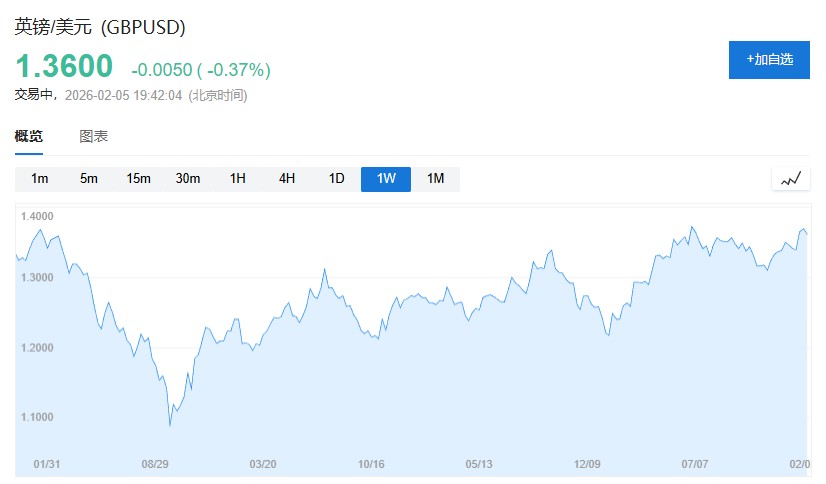
The US dollar fell to a four-year low last week, while the euro and pound soared to five-year highs, and the Swiss franc reached its strongest level since 2015. The global currency market is experiencing the most intense volatility since April of last year. This has created excellent trading opportunities for Wall Street, as the dollar's safe-haven properties have diminished, and expectations of Trump's "weak dollar" policy have intensified the turmoil. Options betting on significant fluctuations in the dollar are currently at their highest level since April of last year
After several months of calm, the volatility in the global foreign exchange market, which has a scale of $9.6 trillion, has resurfaced, bringing profit opportunities for traders.
The dollar fell to a four-year low last week, while the euro surged to a five-year high, marking the most intense fluctuations in the global currency market since April of last year. Signals from the options market indicate that this volatility will persist in the coming months, contrasting sharply with the calm trading that dominated the market in the second half of 2025.

The surge in volatility is primarily due to the unpredictability of policy-making. From Trump's threats to attack Greenland to the confusion surrounding Federal Reserve policy direction, these factors are undermining market confidence in the dollar. The sharp fluctuations create profit opportunities for Wall Street, which can extract higher trading costs from volatile prices.
Traders generally believe that the next round of wild market conditions is just a matter of time. Sagar Sambrani, a senior foreign exchange options trader at Nomura International in London, stated, "During President Trump's term, volatility could rise rapidly and often reverse trends more quickly. The market is either in a complete standstill—like it has been for the past six months—or it is caught in potential chaos, triggering multiple key levels."
Key Levels Continuously Breached
Market conditions are intense. The weakening dollar has pushed the pound to its highest level since 2021, and the Swiss franc has reached its strongest level since 2015. The yen has moved against the trend ahead of a key election, experiencing sharp fluctuations after nearing a forty-year low.
Options betting on significant dollar volatility are currently at their highest level since April of last year, when Trump's reciprocal tariffs shook global markets. Recent turmoil in the precious metals market has also pushed up future volatility indicators for commodity currencies like the Australian dollar and Norwegian krone.
These factors are driving renewed interest in G10 currency trading. Large corporations with foreign exchange exposure may be eager to protect their positions, and hedge fund activity seeking to profit from volatility is also becoming more active.
Dollar's Safe-Haven Status Fails, Trump's "Weak Dollar" Policy Heightens Turmoil
The dollar is no longer a reliable hedge against declines in risk assets—traditionally, it strengthens during difficult times—meaning investors need to seek alternatives. The current correlation between the weakening dollar and volatility has reached record levels, signaling that greater fluctuations are on the horizon.
Julian Weiss, head of G10 foreign exchange options trading at Bank of America, stated, "We believe the dollar has more room to fall, and we certainly expect more foreign exchange hedging. The gold-dollar trade was once more attractive than the euro-dollar trade, but now there is renewed pressure for diversification." According to data from Crisil Coalition Greenwich, the currency options revenue of the top 12 banks grew by 30% last year, although this lagged behind the 50% annual growth rate of precious metals.
Trump clearly supports a weaker dollar, which marks a reversal from the usual U.S. stance of supporting a strong dollar. After calling for larger interest rate cuts from the Federal Reserve, his nomination of the new central bank governor now adds uncertainty to the outlook for U.S. monetary policy.
Tim Brooks, head of foreign exchange options trading at electronic market maker Optiver, stated, "Since the beginning of last year, we have seen themes emerge that could potentially trigger significant foreign exchange volatility for the first time." Optiver's average daily trading volume in January was 80% higher than in the second half of 2025. Data from custodial trusts and clearing companies show that last week the currency options market experienced the two busiest trading days in history, reflecting a surge in hedging and speculative bets.
Eric Li, global head of foreign exchange trading at UBS Group, said, "I am not surprised to see clients eager to hold options positions again." He added that clients are particularly interested in betting on a weaker dollar against the euro and yen.
Questions About Sustainability
However, there are also opinions that it is still uncertain whether the increased trading volume and volatility can be sustained. There have been multiple instances of risk events triggering volatility, but calm often returns within months or even days.
Tanvir Sandhu, chief global derivatives strategist at Bloomberg Industry Research, stated, "We have seen this before; sudden breakouts rarely last. In the face of macro uncertainty, as confidence wanes, foreign exchange volatility may remain suppressed."
The resurgence of volatility this year followed a drop in December to the lowest level since early 2022. Some attribute this to a structural shift in the dominant forces in the market rather than macro factors. The rise of systematic strategies among hedge funds has continued to sell volatility, allowing the market to return to calm more quickly.
Andreas Koenig, global head of foreign exchange at Europe’s largest asset management company Amundi, believes that the volatility in the currency markets this year has indeed justified a slight increase in forward volatility indicators. "Volatility has been too low; it should be higher," Koenig stated
