


NIO has secured a key stronghold

Li Bin did not break his promise
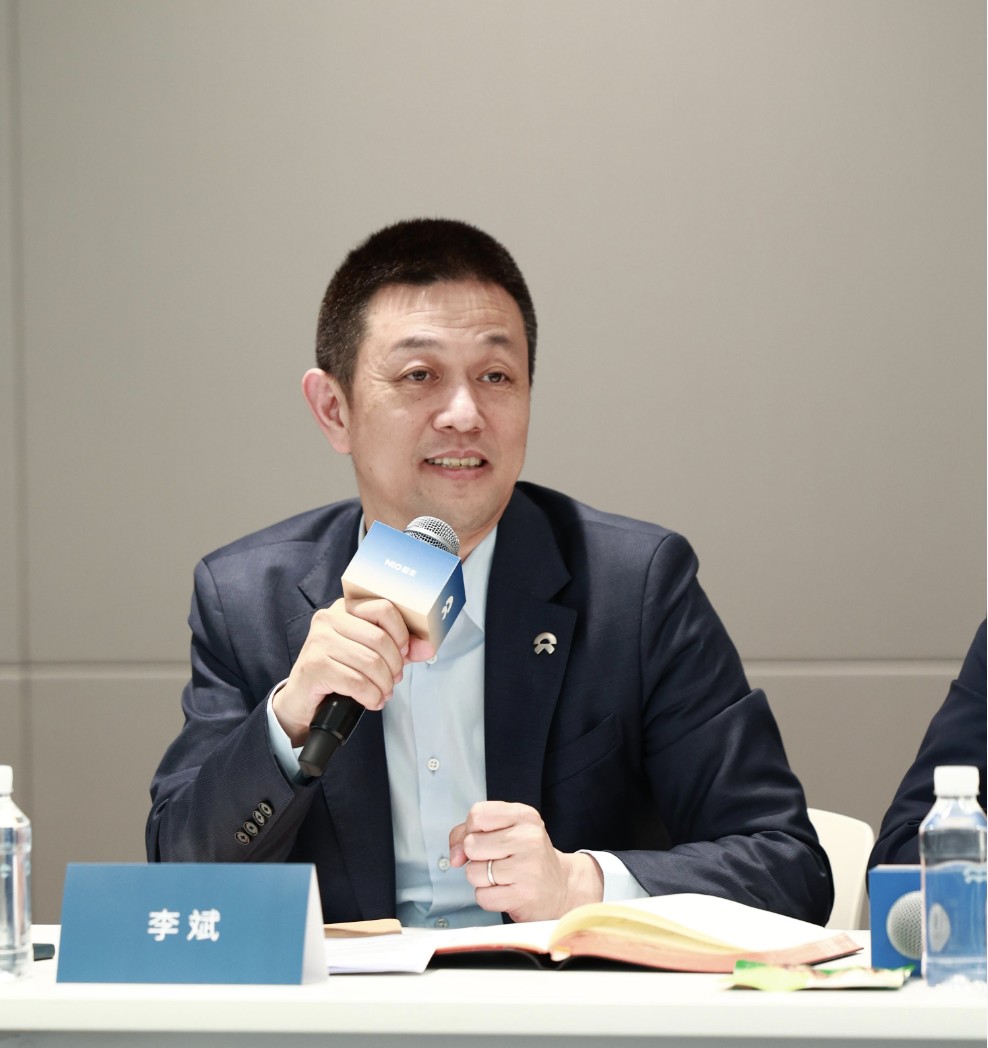
Author | Chai Xuchen
Editor | Zhou Zhiyu
Li Bin ultimately fulfilled his promise made at the beginning of 2025, securing the crucial high ground of "profitability in the fourth quarter" and stabilizing the morale of the team.
On February 5th, Nio announced its profit forecast. The announcement indicated that based on a preliminary assessment of the company's unaudited consolidated management accounts and the information currently available to the board, Nio recorded its first quarterly adjusted operating profit in the fourth quarter of 2025. According to non-GAAP standards, Nio's operating profit for the same period is expected to reach between RMB 200 million and RMB 700 million.
This means that after a long period of investment, skepticism, and market competition, Nio has finally broken the curse of losses and welcomed its first positive quarterly adjusted operating profit since the company's establishment. On the same day before the market opened, Nio's U.S. stock surged by more than 10%.
Looking back over the past few years, Nio has always been shrouded in the shadow of "losing money on every car sold." Huge R&D investments, a heavy asset model for establishing battery swap networks, and high operating costs centered around user services had labeled it as a "money-burning machine." Many consumers hesitated to make a purchase due to its massive losses.
In March last year, Li Bin urgently called in an internal meeting, "Other companies' kids have all gone to college, and we are still repeating a year!" He bluntly stated that surviving was the most important thing at the moment, and winning the battle was better than fighting beautifully, thus setting a military order for turning losses into profits in Q4. He also began to heed external advice, correcting mistakes, and initiated a series of organizational adjustments internally, launching the CBU policy.
The inward-focused adjustments over the past year have yielded results.
The new ES8 and the Lido L90, which have high profit margins, sold exceptionally well. In December, Nio's ES8 topped the sales chart with its battery swap system, selling 22,258 units and leaving the second place more than 5,000 units behind. It is worth noting that a year ago, this market was still dominated by "BBAL" (Benz, BMW, Audi, Li Auto); the once underestimated Firefly has also become a standout in the small car segment, rapidly capturing market share in the personalized market.
It is noteworthy that Nio did not burn profits to gain market share but instead found a balance between volume and profit. Li Bin stated that with the mass delivery of the new ES8 and reductions in supply chain costs, the gross margin for vehicles is expected to rise to about 18% in the fourth quarter.
"If we look at the growth of our first-generation product cycle (2018-2021) at 100% per year, the growth of the second-generation product cycle (first half of 2022-2025) indeed did not meet expectations. However, the third-generation product cycle, starting with the delivery of the L90, has resumed rapid growth," Li Bin told Wall Street Insights, indicating that the company has entered a harvest period and Nio's growth engine has regained momentum.
At the same time, the reforms initiated at the beginning of last year have begun to bear fruit, allowing Nio to operate with a lighter load. The Lido, which was independently establishing channels, has merged into the Nio main brand, forming shared channels; in terms of R&D expenses, Nio has completed the foundational R&D work for the NT3.0 platform, and subsequent R&D investments have returned to normal levels Seven years ago, Musk saved Tesla from the brink of collapse through strict cost control and capacity breakthroughs. Now, Li Bin is experiencing positive feedback in innovation, system organization, and cost-cutting, entering a state of "endless joy."
After being repeatedly questioned about "how long it can survive," Nio welcomed the delivery of its one millionth mass-produced vehicle a month ago, officially joining the million club of car manufacturers. In the camp of new car-making forces, this moment may carry more weight than any previous million celebrations of other car companies.
Li Bin admitted, "Since starting Nio, I feel like I've entered an endless game, a marathon on a muddy road, which is indeed very tough." Fortunately, Nio has kept pace with the larger industry despite the rounds of reshuffling.
As Nio co-founder Qin Lihong said, reaching one million vehicles in the automotive industry is an important milestone for a company's growth and a key indicator of whether it can survive long-term, signifying that Nio has truly entered the final round. For Nio, which has experienced life-and-death struggles, this is also a reward for "long-termism."
Although it has secured the "key high ground" of quarterly profitability, Li Bin and Nio's executive team clearly do not dare to be complacent. They know that competition in the automotive industry is a marathon without an end, and a victory in one quarter does not guarantee survival in the long run.
The market environment in 2026 is bound to be more perilous than in 2025.
On one hand, Huawei's HarmonyOS Intelligent Driving Alliance is launching a full-scale attack, with its product line highly overlapping with Nio's and possessing strong intelligent driving capabilities and channel advantages; on the other hand, traditional luxury brands, after experiencing the pains of electrification, are also starting to retaliate with significant price cuts and new platform products.
In this context, Nio's profitability in Q4 2025 is more like a "ticket to entry," qualifying it for the next round of even harsher finals. The upcoming challenge is whether Nio can normalize quarterly profitability.
Li Bin also admitted that the finals in 2025 are just a beginning, and a relatively stable situation may not form until around 2035. "We are very fortunate to be in the finals now. Although we have gone through the lows of the past three years, we have also gained skills. We hope to operate steadily in Nio's second decade and strive for a leading position in this final."
Next, Nio will achieve its annual profitability target under non-GAAP accounting standards for 2026. Nio also faces threefold challenges. First is the sustainability of sales. The new car effect often has a window period; whether the L90 and the new ES8 can maintain strong sales amidst competing products depends on Nio's subsequent OTA upgrade capabilities and the stability of service experience.
Second is the strategic synergy of Ledo/Firebase. While the mass-market brand can bring scale, it may also lower overall gross margins. Balancing the relationship between the main brand and sub-brands to avoid internal conflicts is a problem Li Bin needs to solve.
Regardless of how bumpy the road ahead may be, the report card Nio submitted in Q4 2025 has upheld the bottom line of its high-end strategy for many years. Li Bin, a veteran entrepreneur of 30 years, seems to finally be seeing the light at the end of the tunnel
