


Novo Nordisk's weight loss drug advertisement was deemed "false or misleading" by the FDA, and the stock price hit a new daily low

The FDA sent a letter to Novo Nordisk stating that its advertisements imply that the oral medication Wegovy is superior to other GLP-1 weight loss drugs and positions the drug as a solution for broader life challenges rather than a treatment for specific diseases, with no data to support these claims. Novo Nordisk's U.S. stock, which had risen over 7% during the day, at one point increased by less than 3%. On Monday, Novo Nordisk also announced it is suing the telemedicine company Hims & Hers for producing a generic version of Wegovy, marking the first patent infringement lawsuit regarding generic semaglutide, with Hims' stock price dropping nearly 29%
Novo Nordisk has been identified by U.S. regulators for running "false or misleading" television advertisements for its flagship weight loss drug Wegovy, causing the company's stock price to hit a daily low during trading, retracting at least half of its gains.
The U.S. Food and Drug Administration (FDA) stated in a letter to Novo Nordisk released on Monday, February 9, that the company's advertisements imply that Wegovy's oral tablets are superior to other GLP-1 weight loss drugs and position the drug as a solution for broader life challenges rather than a treatment for specific diseases, all of which lack data support.
The FDA's letter requires Novo Nordisk to provide a list of similar promotional content within 15 business days and to explain plans to cease such promotions or distribution of Wegovy. Novo Nordisk spokesperson Liz Skrbkova responded that the company takes all regulatory feedback seriously and is preparing a response to the FDA to address its concerns regarding the presentation of the advertisements.
Following the release of the FDA letter, Novo Nordisk's stock on the Copenhagen Stock Exchange hit a daily low of 309.35 Danish kroner, with intraday gains narrowing to about 4.7%, closing up less than 5.3%. Novo Nordisk's U.S. stock listed on the New York Stock Exchange also hit a daily low, dropping to $49, with intraday gains shrinking from over 7.2% at the day's high to less than 2.9%.
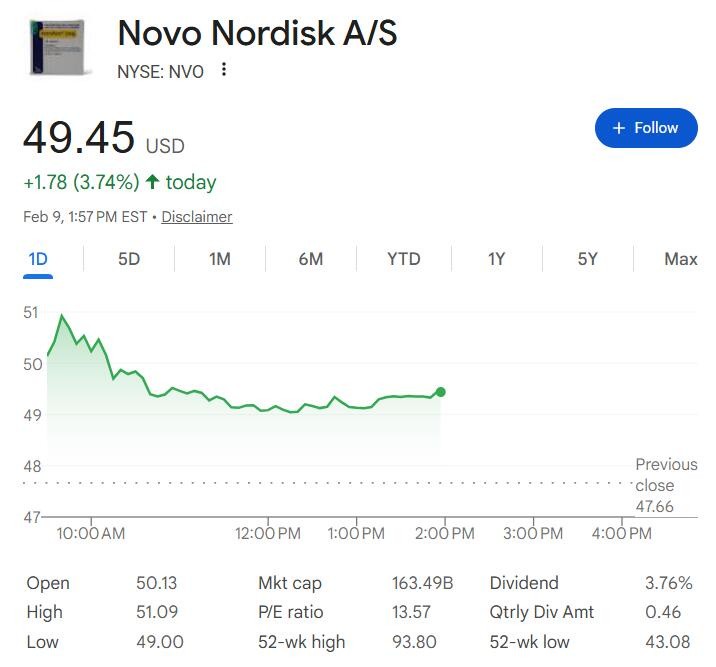
The FDA's warning about false advertising adds new challenges for Novo Nordisk, the highest market capitalization pharmaceutical company in Europe, as it strives to regain market share from competitors like Eli Lilly and low-cost generic manufacturers.
Earlier this week, Novo Nordisk announced it is suing telehealth company Hims & Hers Health for producing a generic version of Wegovy. This marks the first time Novo Nordisk has filed a patent infringement lawsuit regarding generic semaglutide, indicating a more aggressive legal strategy under the leadership of new CEO Mike Doustdar.
FDA Names Wegovy's Misleading Advertising Language
In a letter to Novo Nordisk dated February 5, the FDA detailed the issues with Wegovy's television advertisements. The letter stated: "These promotions and presentations misleadingly suggest that, due to its dosage form (i.e., tablet), Wegovy offers advancements or improvements (i.e., superior efficacy and/or safety) compared to other currently approved GLP-1 weight loss treatments."
The FDA specifically pointed out phrases in the advertisements such as "live lighter" and "a way forward." The letter stated: "Furthermore, they misleadingly imply benefits beyond weight loss, such as emotional relief, reduced psychological burden, hope, or direction for patients' lives, positioning the drug as a solution for broader life challenges rather than a treatment for specific diseases, none of which have been substantiated."
The FDA noted that according to the prescription information approved for Wegovy, the clinical studies were conducted against a placebo, and there is no data supporting that its tablet form is superior in efficacy and safety compared to other approved GLP-1 weight loss drugs The agency stated that if Novo Nordisk has data to support these claims, it should be submitted to the FDA for review.
The letter also pointed out that there is a discrepancy between audio and text when presenting the main risk information in the advertisement, failing to use both audio and text (dual mode) simultaneously, which violates the requirements for television drug advertisements.
Novo Nordisk Files Patent Infringement Lawsuit Over Generic Drugs for the First Time
On the same day the FDA letter was released, Novo Nordisk announced it was suing Hims & Hers, accusing the company of producing generic drugs that infringe on the U.S. patent for semaglutide. Novo Nordisk stated that this is the company's first patent infringement lawsuit regarding generic semaglutide. Previously, the company's legal strategy had primarily focused on the marketing practices of generic drug manufacturers.
Novo Nordisk's General Counsel John Kuckelman stated in an interview that Hims' decision to launch a generic version of Wegovy tablets is "outrageous." He said, "Last week's (Hims' generic drug) announcement was shocking and absolutely a tipping point."
The lawsuit targets not only Hims' generic tablets but also injectable products that mimic Wegovy and its sister drug Ozempic. Novo Nordisk stated in a press release, "Hims has conducted promotional activities highlighting its generic semaglutide products, deceiving consumers and healthcare professionals about the clinical benefits and safety of these unapproved drugs." Novo Nordisk believes these generics "are putting patients' health and well-being at risk."
The lawsuit documents state that Hims is aware of the relevant patents and that its products have been infringing since 2024. Novo Nordisk is seeking reasonable royalties and damages for lost profits and stated that it sent a letter to Hims on February 8, pointing out the infringement and requesting that the telemedicine company cease production of these products.
Hims countered in a statement that this lawsuit is "an outright attack by a Danish company on millions of Americans who rely on generic medications for personalized care," and pledged to fight for "choice, affordability, and accessibility."
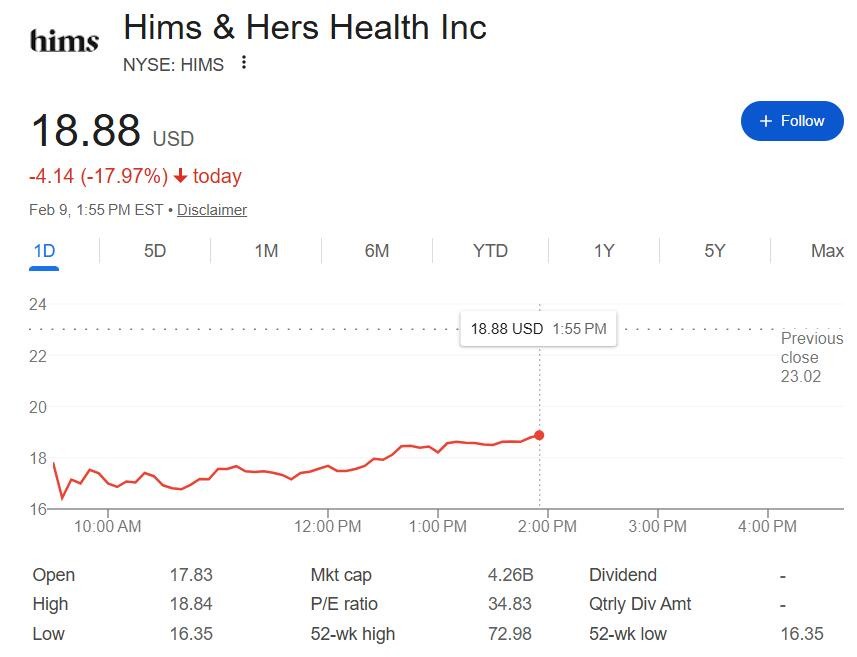
On the day the lawsuit news was announced, Hims' stock price fell nearly 29% at the beginning of trading on Monday, with the decline narrowing to under 20% by midday.
Dilemma Under Regulatory and Competitive Pressure
The FDA's criticism of Novo Nordisk's advertisement comes at a time when the company is facing multiple challenges. Last week, Novo Nordisk released a pessimistic sales forecast for 2026, sharply contrasting with the ambitious expectations of its competitor Eli Lilly. Subsequently, Hims announced the sale of a cheaper generic version of Wegovy tablets, delivering another blow to Novo Nordisk.
The Wegovy tablets are key to Novo Nordisk's strategy to regain market share. This is the first GLP-1 pill for obesity that entered the market in January, and Novo Nordisk stated last week that over 170,000 American patients are currently taking the drug.
Novo Nordisk and Eli Lilly have long complained that the FDA has not done enough to prevent the proliferation of cheap generic weight loss drugs. Telemedicine companies were initially able to sell generic obesity medications during a supply shortage a few years ago Although the shortage has ended, this practice continues.
The FDA committed last Friday to take action against generic weight loss drugs. The U.S. Department of Health and Human Services also stated that it has referred Hims to the Department of Justice for potential violations of federal law. The FDA took a firmer stance after Novo Nordisk and Eli Lilly agreed to price reduction agreements with the U.S. government.
Novo Nordisk's market value has fallen from over $600 billion in 2024—when it briefly became the most valuable company in Europe—to about $227 billion. The FDA also sent a large number of letters to pharmaceutical companies last year as part of the Trump administration's crackdown on drug advertising
