


Revenue down 10%, profit down 40%! Gucci is deeply mired in winter, Kering hopes for a turnaround in 2026

Kering Group is facing its most severe crisis in a decade, with flagship brand Gucci's revenue declining for ten consecutive quarters. Although the sales decline in the fourth quarter has narrowed and the stock price has rebounded, the group's profit margin has been halved compared to three years ago, widening the gap with LVMH. Currently, the group is hoping to achieve a recovery by 2026 through store closures to reduce debt, personnel restructuring, and new product development
French luxury goods giant Kering is experiencing its most severe profit crisis in a decade. Although the sales decline in the fourth quarter was slightly better than expected, the group's flagship brand Gucci has seen revenue decline for ten consecutive quarters, with annual operating profit plummeting by more than two-thirds compared to three years ago, and profit margins halved to 11%, widening the gap with competitor LVMH.
Kering announced a fourth-quarter sales figure of €3.9 billion on Tuesday, a year-on-year decline of 3% after currency adjustments, better than the 5% decline anticipated by analysts. Gucci's revenue fell by 10%, slightly better than the market expectation of a 12% drop, but this marks the tenth consecutive quarter of revenue decline for the brand.
CFO Armelle Poulou stated that Gucci showed signs of improvement in "almost all regions" at the end of last year, supported by new product and handbag sales. She emphasized that "2025 will not reflect Kering's true potential or the strength of our brands, but it lays the foundation for future recovery."
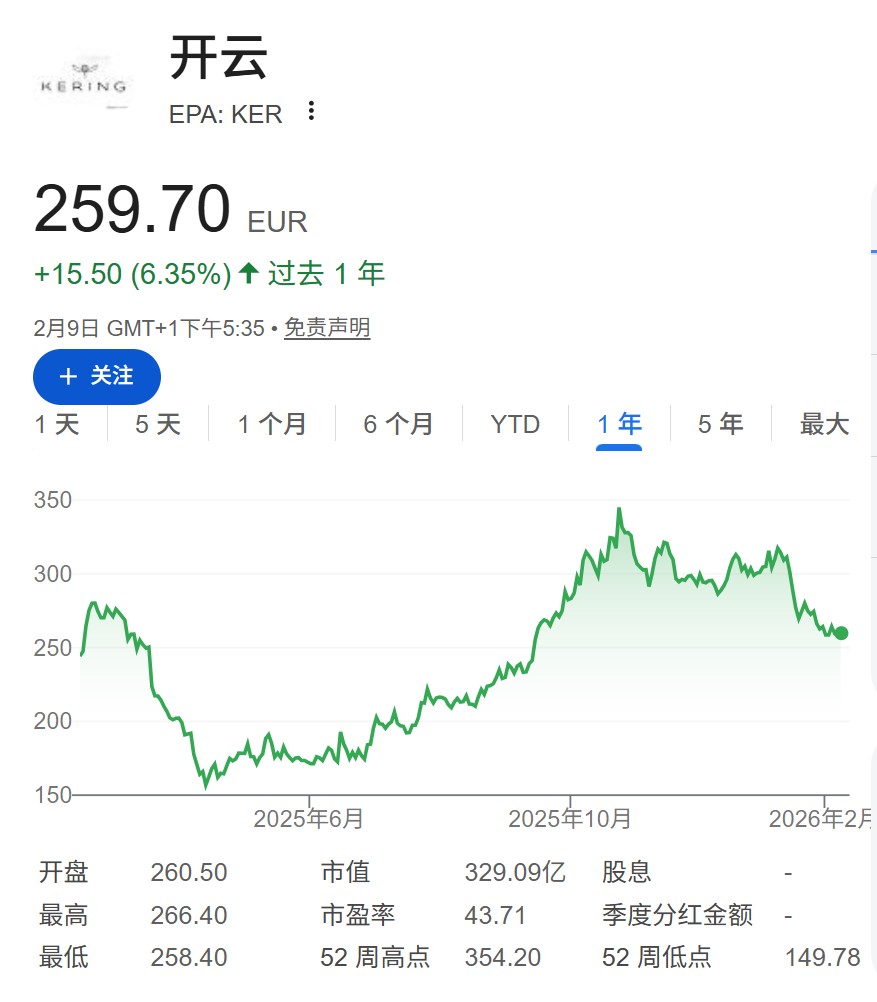
This performance highlights the severe challenges facing Kering. Since the appointment of new CEO Luca de Meo in June last year, the group's stock price has risen by about 50%, but investors are still waiting for specific details on the recovery plan.
Declining Performance Hard to Conceal Weakness
Although Kering's fourth-quarter sales of €3.9 billion showed a narrowing decline, the downward trend continues. The Italian flagship brand Gucci, which accounts for most of the group's profits, saw a 10% revenue decline, continuing the brand's ongoing slump since 2022.
CFO Poulou pointed out that thanks to new product and handbag sales, Gucci saw some improvement in almost all regions at the end of last year. However, these positive signals have yet to translate into a substantial performance turnaround.
In the face of an uncertain business outlook, Kering further reduced its store network, net closing 75 boutiques in the fourth quarter, with Poulou stating plans to close more stores. The group's brands also include Balenciaga, Bottega Veneta, and Yves Saint Laurent.
Gucci's Predicament Deepens
Gucci's troubles began in 2022. After the fall from grace of former star designer Alessandro Michele's maximalist style, the brand's sales have continued to weaken, marking ten consecutive quarters of revenue decline. This situation has led Kering to face strict scrutiny from investors regarding its high debt and declining profitability.
Kering's operating free cash flow last year fell by 35% to €2.3 billion after excluding one-time income from real estate sales. This figure reflects a significant deterioration in the group's cash generation ability.
JP Morgan analyst Chiara Battistini stated, "For Kering, the key is (to restore) broad appeal globally." This points to the core issue facing the group—how to win back consumer favor
Profitability Plummets Significantly
Kering Group's profitability decline is alarming. The group's annual operating profit is €1.63 billion, less than one-third of the 2022 level. The overall operating profit margin of the group has plummeted from 28% three years ago to 11%, while the profit margin of the Gucci brand has dropped sharply from 36% to 16%.
This performance stands in stark contrast to its competitors. LVMH achieved a profit margin of 22% last year despite a slowdown in the overall luxury goods industry, with its leather goods and fashion division—home to Louis Vuitton and Dior—reaching a profit margin of 35%. The gap between Kering Group and industry leaders continues to widen.
These figures highlight the severe challenges facing Kering Group. Even after the appointment of new CEO de Meo, which has seen the stock price rise by about 50%, the group still needs to achieve fundamental improvements in operations to catch up with competitors.
Hope for Recovery by 2026
Despite the current dire situation, Kering Group's management remains cautiously optimistic about future recovery. CFO Poulou emphasized that 2025 lays the foundation for the group's future recovery, suggesting that a real turnaround may not be evident until 2026.
Since Luca de Meo was appointed CEO in June last year, market confidence in Kering Group has somewhat recovered, with the stock price rebounding by about 50%. However, investors are still waiting for de Meo to announce specific details of the revival plan to assess whether the group can truly escape its current predicament.
The fourth-quarter performance slightly exceeded expectations, providing a glimmer of hope for the market, but this is far from sufficient to prove that the group has emerged from the trough. Whether Kering Group can achieve a true turnaround by 2026 will depend on its ability to successfully reshape brand appeal, improve operational efficiency, and re-establish its position in the fiercely competitive luxury goods market
