Arbitrage "time bomb" ticking, the yen's unusual movement may be the signal for a global asset shift

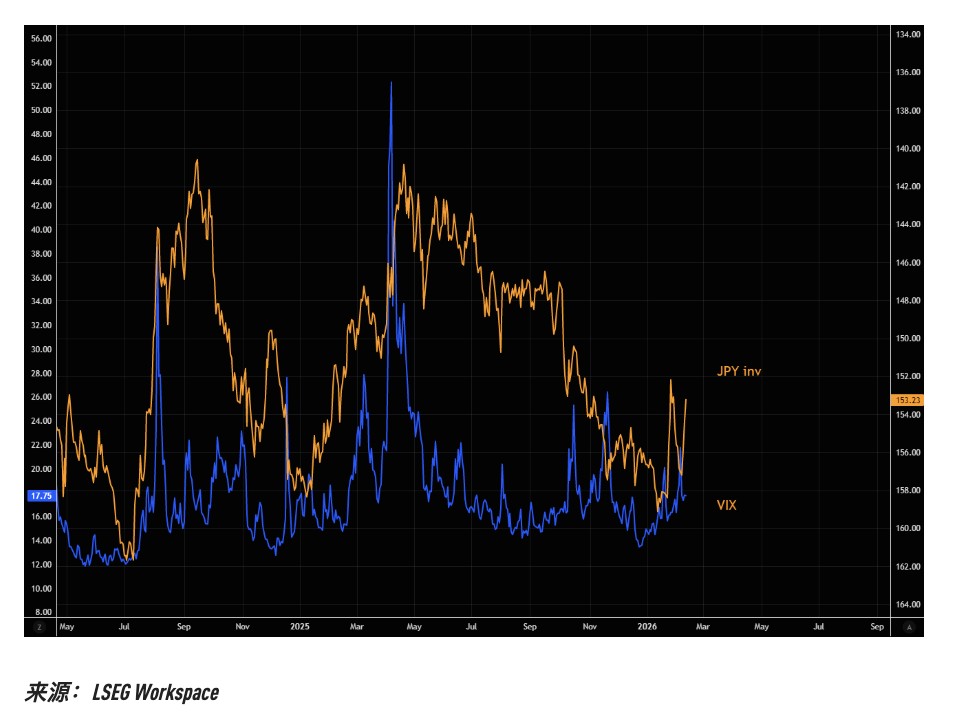
The recent strengthening of the yen may trigger large-scale arbitrage unwinding. BCA points out that the past three instances of yen arbitrage unwinding were driven by pressure on arbitrage assets rather than narrowing interest rate differentials, and were accompanied by a surge in global volatility. The current appreciation of the yen has begun to transmit to the Nasdaq, bond volatility indicators, and the VIX, with a cross-asset volatility window approaching
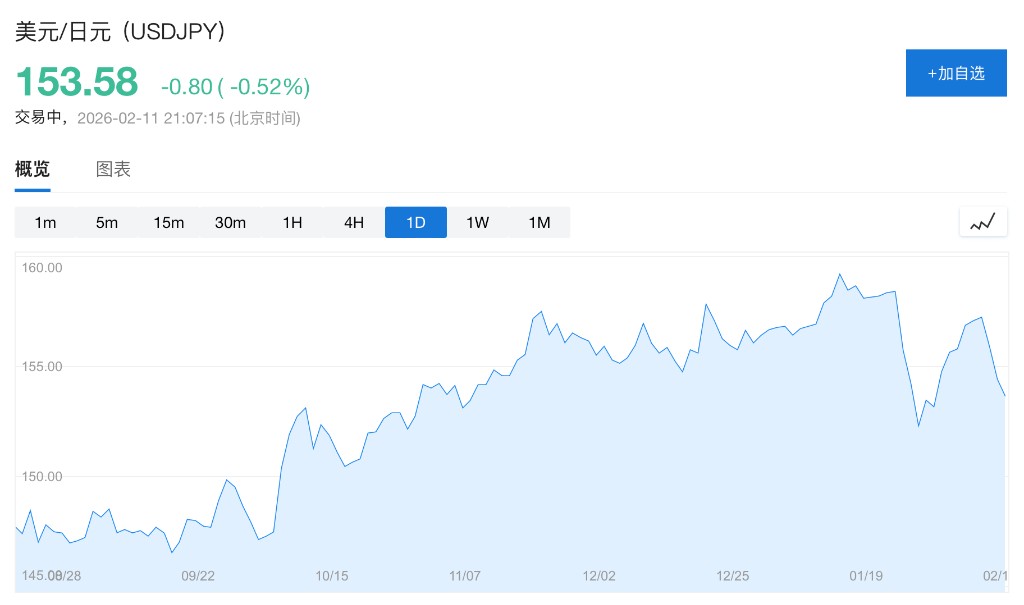
The recent sharp fluctuations in the Japanese yen are raising market vigilance. After a period of weakness, the yen has begun to strengthen, with the USD/JPY technical indicators showing that it has fallen below the 100-day moving average and is testing a long-term trend line since April of last year. A decisive break below this level would open up space to challenge the 200-day moving average, targeting the 150.50 level.
Analysis indicates that this technical breakthrough may not be an isolated event. Historical experience shows that the trend fluctuations of the yen often precede the resonance adjustments of global risk assets. BCA research points out that the last three major yen carry trade (YCT) unwinds were triggered by pressure on "arbitrage assets," rather than driven by narrowing interest rate differentials, and were accompanied by a surge in global volatility indicators across the board.
If the yen's appreciation momentum continues, the concentrated unwinding of carry positions may quickly transmit across asset markets. On the risk transmission path, the Nasdaq 100 index, the MOVE volatility indicator for U.S. Treasuries, and the VIX panic index may come under pressure in succession. The yen's "technical breakdown" is becoming a leading signal for a shift in global assets.
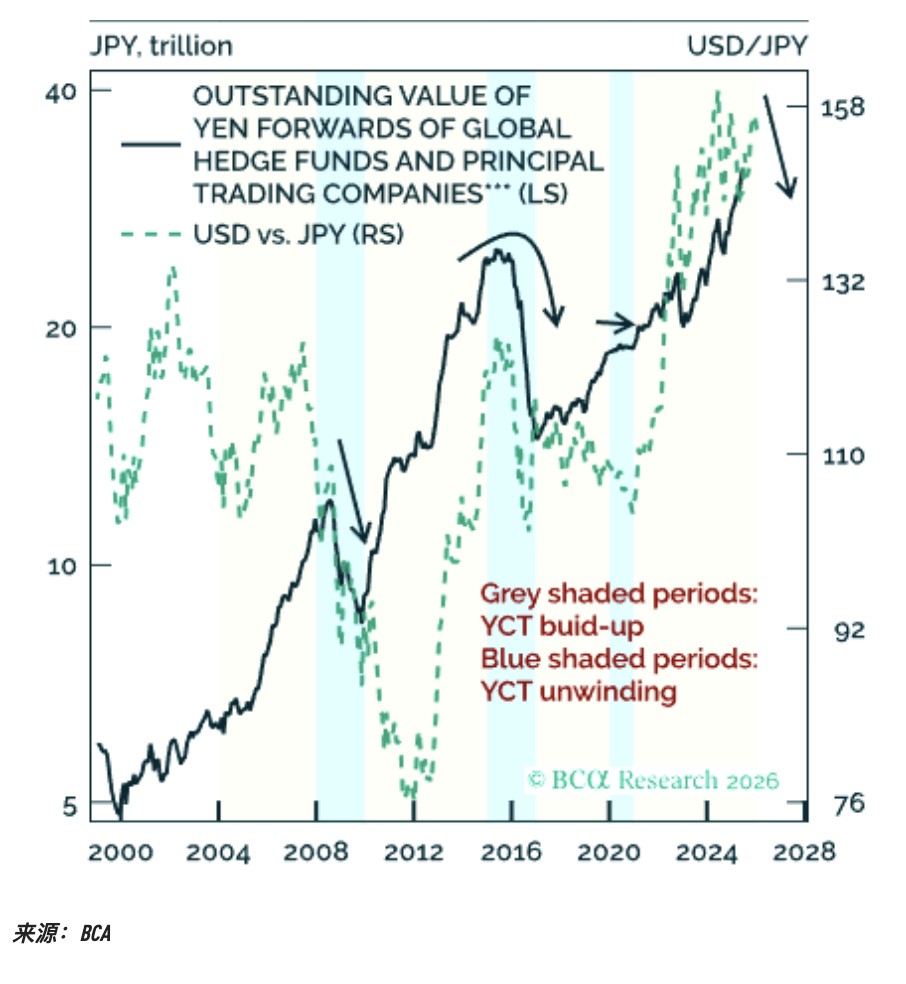
The Role of the Yen: From Pro-Cyclical to Safe-Haven Currency
Around 2005, the yen completed a key attribute transformation: from a pro-cyclical currency to a counter-cyclical currency. This turning point coincided with Japan's net overseas income first exceeding its trade surplus. BCA points out that once net foreign exchange income exceeds the trade surplus, the yen will exhibit counter-cyclical fluctuations.
Over the past twenty years, the dominant logic of yen fluctuations has shifted from trade balance to the reinvestment and repatriation of overseas assets. BCA research indicates that the correlation between the yen and outflows from Japanese domestic investment portfolios has weakened, while it has shown a significant positive correlation with global volatility indicators, which is a structural trace left after deep penetration of carry trades. 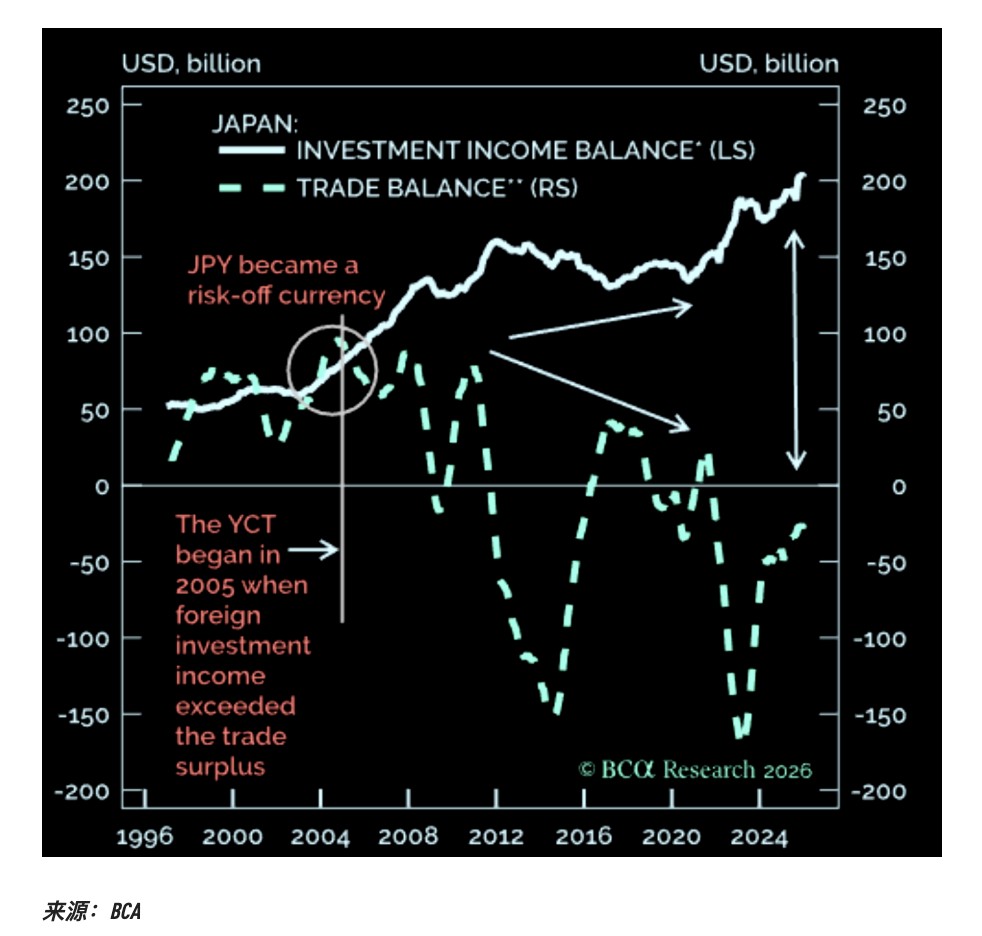 Currently, the logical chain has been reshaped. In the era of trade surpluses, export prosperity determined the strength of the exchange rate; now, the yen more often plays the role of a shadow variable for global risk sentiment. When overseas assets come under pressure and risk aversion rises, Japanese investors accelerate the repatriation of overseas earnings, which in turn strengthens the yen. This "atypical" reaction has repeatedly made it a safe haven during risk sell-off cycles, and has also made it more sensitive to global volatility.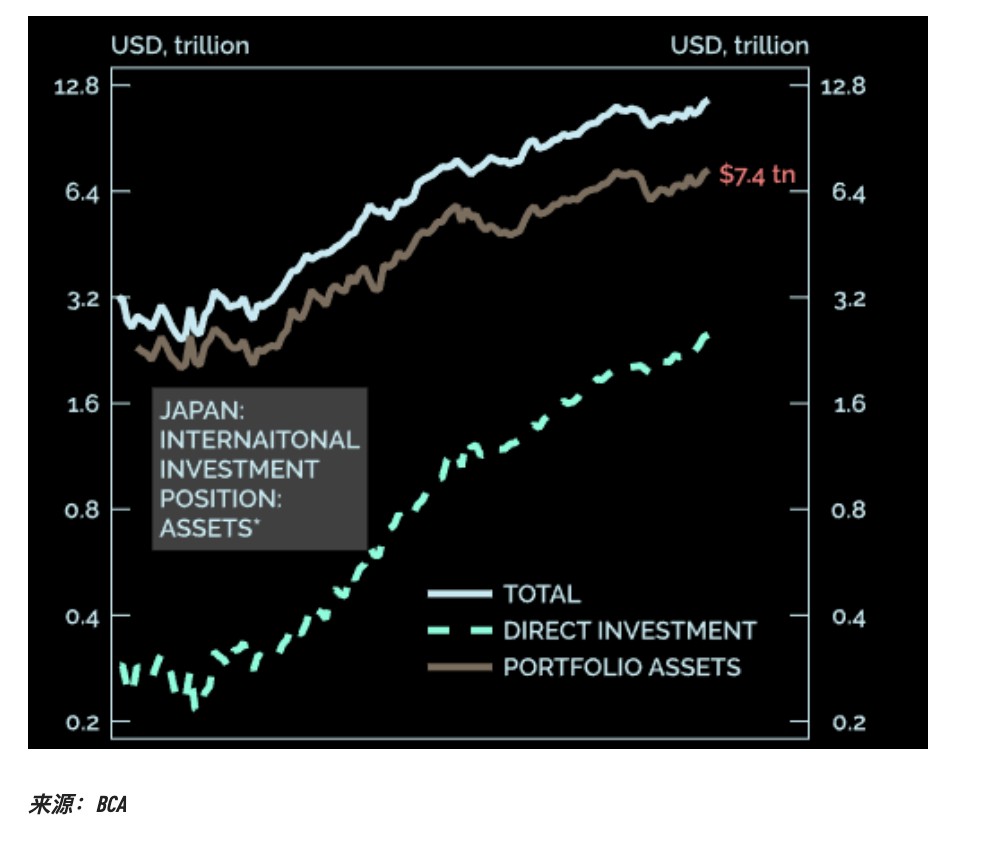
The Strengthening Yen Transmits Risks, Approaching a Cross-Asset Volatility Window
Japan has accumulated approximately $12 trillion in overseas assets, generating substantial annual income. According to BCA data, Japan's overseas investment portfolio alone contributed about $240 billion in income last year, allowing it to maintain a current account surplus of $210 billion despite recording a small trade deficit, entirely supported by overseas earnings.
This structure profoundly rewrites the logic of the yen exchange rate: the driving factor is shifting from trade surplus to income flow. When overseas earnings are reinvested, the yen tends to weaken; during periods of global pressure, accelerated capital repatriation drives the yen stronger. The latter is becoming the current market's pricing anchor.
The continuous appreciation of the yen has begun to transmit into cross-asset domains. Data shows that the yen has a significant negative correlation with the Nasdaq 100 index, and if it further breaks through key technical levels, it may exert pressure on technology stocks. Although the bond volatility indicator MOVE has slightly increased, it remains at relatively low levels; historically, this indicator has closely synchronized with the yen, and currently, the gap between the two is widening, suggesting that bond market volatility risks have not been fully priced in. 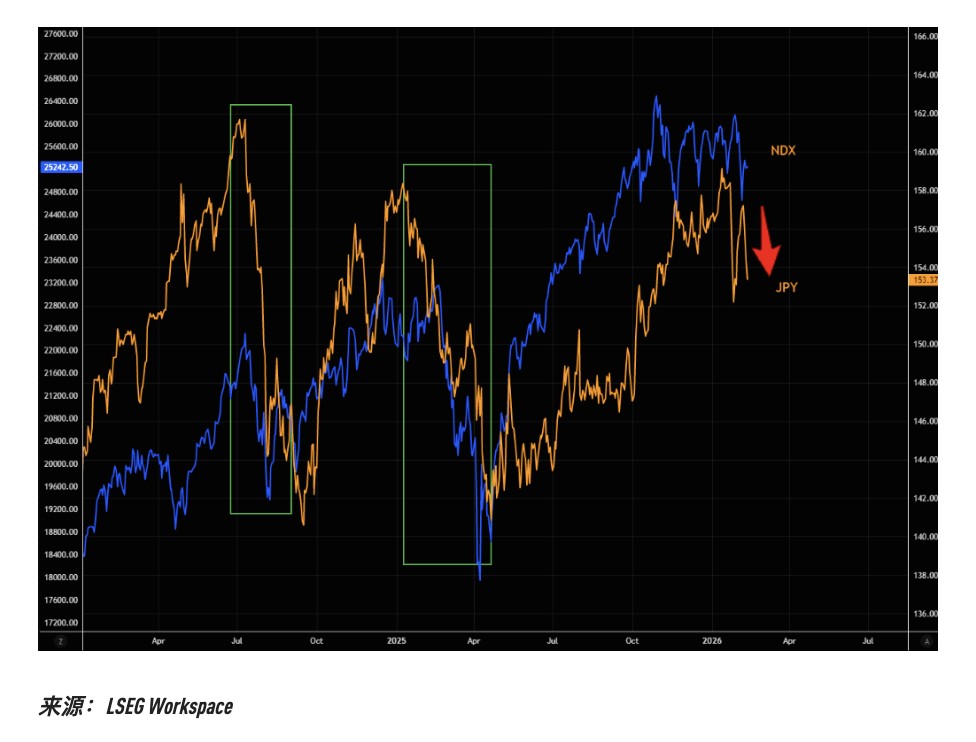
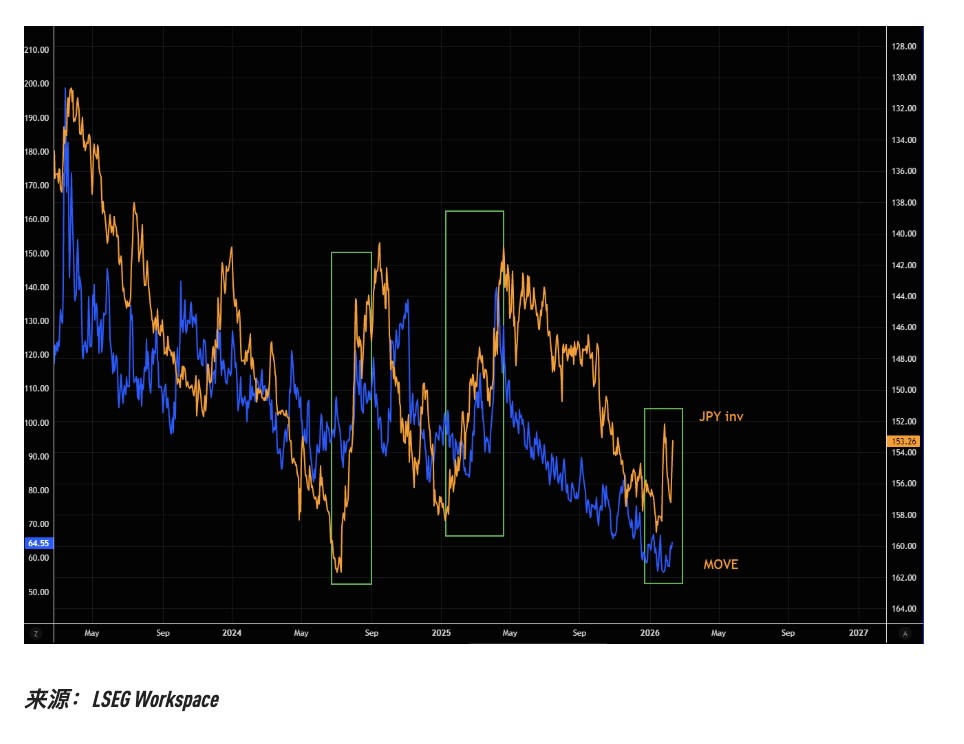
The VIX panic index has also entered a sensitive window. Historical patterns show that a sharp appreciation of the yen is often accompanied by an increase in the VIX, while seasonal factors indicate that volatility typically has an upward tendency during the current period. The market is closely watching whether the yen will decisively break through key trend lines and whether this breakout will serve as a trigger for cross-asset volatility.