


From Goldman Sachs to Blackstone, Wall Street giants are all here to support: Software will not collapse

Executives from Goldman Sachs, Blackstone, Apollo, and KKR unanimously believe that the market's concerns about AI leading to the demise of the software industry are greatly exaggerated. While acknowledging that AI will bring about a "severe technological cycle" and disruption, the institutions believe that large, well-established software companies will be protected and may even become beneficiaries. At the same time, each institution clarified that their risk exposure in the software sector is manageable
In response to the recent sharp sell-off in the software sector due to fears surrounding artificial intelligence (AI), senior executives from major financial institutions on Wall Street are attempting to convey a clear message to investors: the rumors of the demise of software companies have been greatly exaggerated.
Last week, following the announcement of new tools by AI startup Anthropic, the stock prices of software giants like Salesforce and Adobe plummeted, resulting in the evaporation of hundreds of billions of dollars in market value. Panic spread through the market as investors worried that AI would replace traditional software functions, thereby destroying the business models of the industry.
In response, executives from Goldman Sachs, Blackstone, Apollo Global Management, and KKR made intensive statements this week. They pointed out that the current market reaction is a form of "indiscriminate" selling; while AI will indeed bring disruption, the view that all software companies will become obsolete is overly broad and lacks basis.
While soothing market sentiment, these Wall Street giants are also downplaying their own risk exposure in the software sector. They emphasized that although the software industry has always been a popular target for private equity investment, the diversification of their portfolios is sufficient to withstand fluctuations in a single industry, and some institutions have already adjusted their holdings in advance.
"Severe Technological Cycle" and the Question of Pricing Power
Despite the overall tone being reassuring, investment moguls did not deny the transformations facing the industry. John Zito, Co-President of Apollo Asset Management, candidly stated in an interview with CNBC on Wednesday that the software industry will not disappear, but the business logic will change.
"No one at Apollo believes that software will disappear. In fact, we actually believe that the usage of software will increase significantly," Zito said, "It's just a question of—how much will you pay for it?"
Zito warned that the market will experience a "very severe technological cycle," resulting in winners and losers. He specifically cautioned investors not to judge the prospects of software companies solely based on their current revenue status, as these companies are performing reasonably well at the moment. He used a vivid analogy: "It's like saying BlackBerry will still do well when the iPhone 1 was released."
The Root of Panic: AI's Impact on Subscription Models
The immediate trigger for this market panic was Anthropic's announcement of new legal tools for its Cowork assistant, aimed at assisting with drafting and research tasks. This news sparked investor concerns about the fate of various software providers, leading to a sharp decline in the stock prices of Salesforce and Adobe last week, which continued to fall on Wednesday.
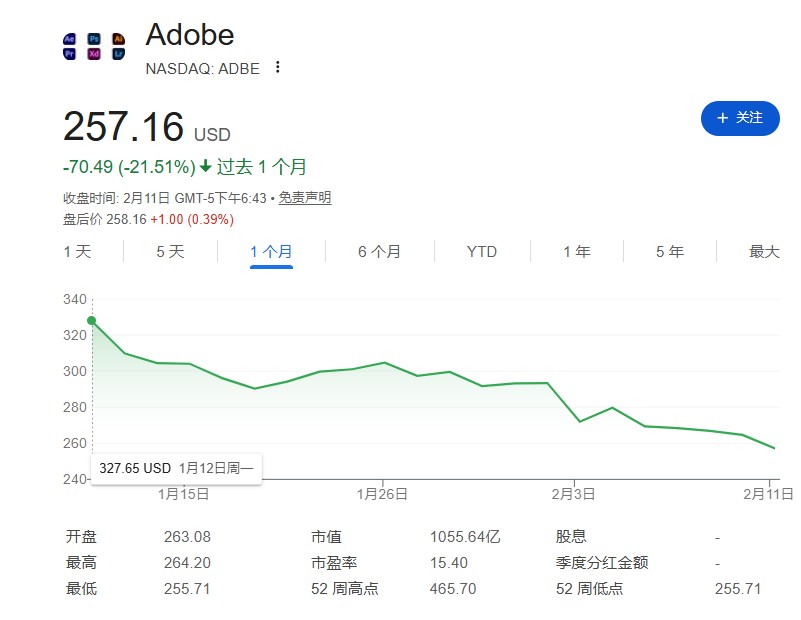
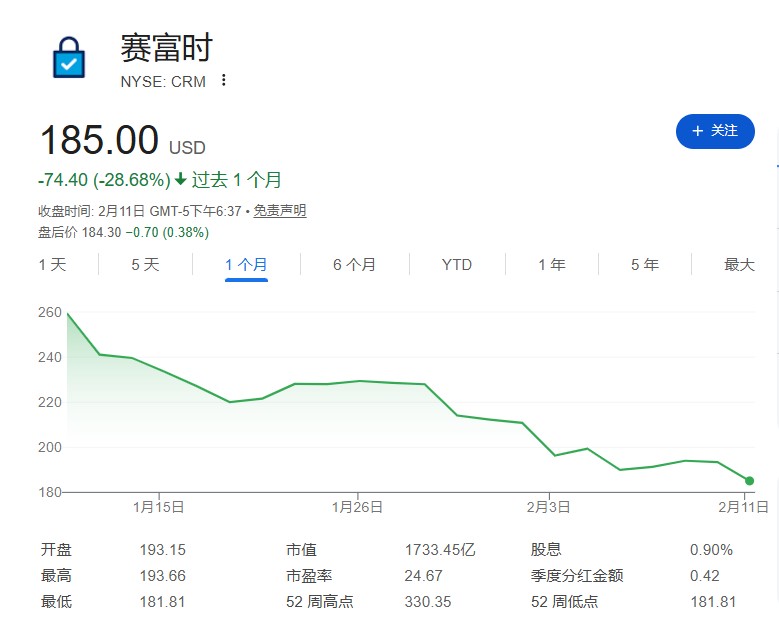 Before Anthropic released its news, investors were already uneasy about the potential disruption to industries from the hundreds of billions of dollars flowing into the AI sector. Software companies are seen as particularly vulnerable targets because they typically profit through subscription and licensing fees.
For years, software businesses have been viewed as premium assets by private equity firms and lenders due to their high profit margins and stable recurring revenue. If the valuations of these software companies continue to plummet, it could mean significant losses for these investment institutions.
Differentiated Treatment: Opportunities in "Indiscriminate" Selling
In the face of an overall industry downturn, Blackstone's Chief Financial Officer Michael Chae believes the market's reaction lacks rationality. At a Bank of America conference on Tuesday, he stated that while recent transactions in the sector have been "indiscriminate," results will diverge over time.
“We expect that larger, well-established companies will be better protected and, in many cases, will become beneficiaries of AI,” Chae said. He emphasized that the market should not adopt a blanket bearish view on all software assets.
Goldman Sachs CEO David Solomon also expressed similar views at a UBS conference on Tuesday. He acknowledged that the company expects AI to disrupt the market, but he believes that “the narrative over the past week has been a bit too broad.”
Giants Self-Defense: Risk Exposure "Negligible"
While defending the industry, major institutions are also assuring investors of their own safety.
KKR Chief Financial Officer Robert Lewin stated at a UBS conference earlier this week that the investment diversity of large asset management firms will help protect them from the impacts of AI disruption. He revealed that KKR has about 15% of its private equity investments exposed to software companies, accounting for about 7% of its total assets.
Lewin also pointed out that the company has recognized the risks brought by AI applications and has sold off some businesses in recent years.
Goldman's David Solomon more directly downplayed the risks, stating that Goldman’s risk exposure in software investments is “negligible in terms of our overall platform scale.”
