Famous hedge fund Gusu Capital CIO: The AI bubble will have to wait until OpenAI goes public, thinking not about short-term speculation but about the world pattern in 3-5 years

David Craver, Co-CIO of GUS Capital, pointed out that the current market is experiencing severe short-term volatility and is decoupled from fundamentals. The core advantage for investors lies in adopting a long-term perspective, thinking about the world landscape 3-5 years from now. He is firmly optimistic about AI, believing that the industry is still in its early stages, and the real bubble may only appear after OpenAI goes public. In addition to infrastructure, Craver proposed the investment theme of "The Revenge of the Dinosaurs," predicting that traditional large enterprises will significantly reduce costs and improve efficiency through AI technology, leading to a profit explosion in the coming years
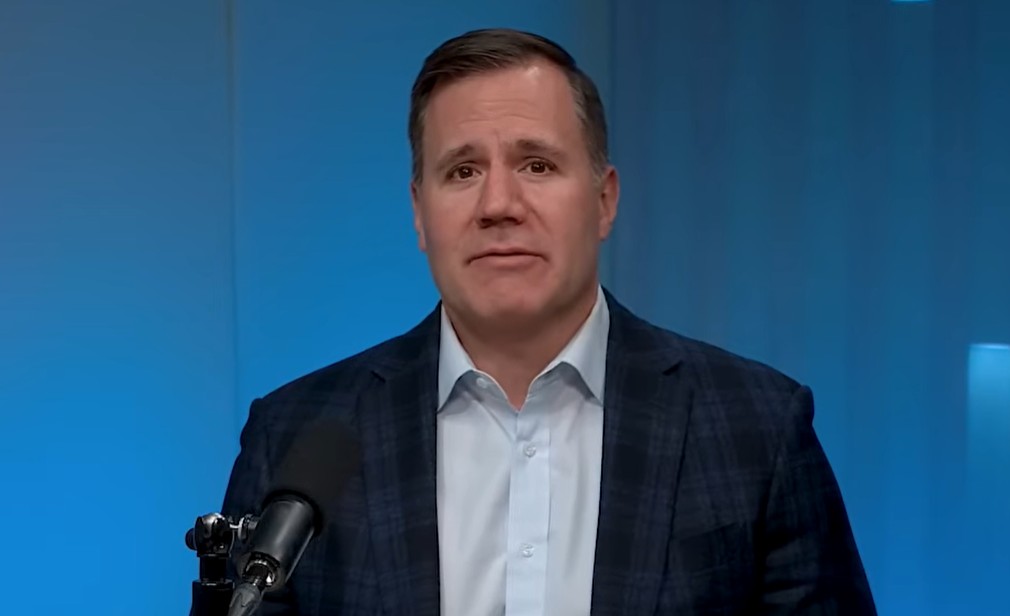
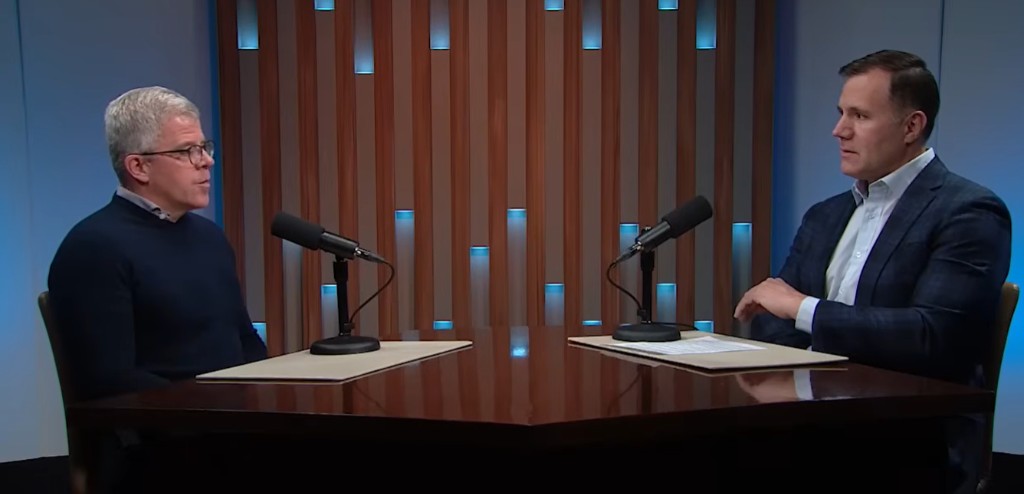
Recently, David Craver, Co-Chief Investment Officer of the well-known hedge fund Lone Pine Capital, which manages over $19 billion in assets, shared his in-depth thoughts on the current market structural changes, the progress of artificial intelligence (AI), and investment philosophy during Goldman Sachs' "Great Investors" series interview.
Saying Goodbye to "Short-Sightedness": Thinking About the World Pattern in 3-5 Years
As one of the representatives of the "Tiger Cub" funds, Lone Pine Capital has consistently adhered to a fundamental long position strategy. Craver observed that the market structure has undergone fundamental changes.
Compared to when he first entered the industry, the most significant changes in the current market are twofold: First, the volatility of individual stocks around events is at a historical high and often decoupled from qualitative fundamental news; second, the phenomenon of overvaluation is rampant among the giants.
"I used to tell my partners that after reading a press release, I could tell you how the stock price would move the next day, but that is no longer the case," Craver stated. Due to the rise of passive investing and multi-strategy funds, the market's reaction to short-term information is often excessive and irrational.
In this environment, Craver believes that true "Alpha" opportunities come from this forgotten blank space—the time dimension.
"I don't care whether a company will exceed expectations in the next quarter; too many people are engaged in this short-term 'night fight,' trying to predict short-term stock prices based on a set of facts.
What I try to think about is what the world will look like three or five years from now.
Given the tremendous changes happening in today's world, this is a challenge, but it also provides a huge opportunity for investors like us who are willing to conduct in-depth research and hold long-term views."
He emphasized that if you imagine the stock market closing tomorrow and reopening three years later, "what assets would you want to hold in that scenario?" This question can filter out most noise.
Regarding the highly watched "Magnificent Seven," Craver believes there has been significant internal differentiation:
"Within this group, there are a few companies that I believe are fundamentally undervalued, but there are also a few that are absurdly overvalued."
On the AI Bubble Moment: We May Have to Wait Until OpenAI Goes Public
In response to the market's most concerned question of whether AI is overheated, Craver gave a clear judgment: Now is not a bubble; although capital expenditure is huge, we are still in the 3rd or 4th inning of the construction cycle.
He listed three core reasons supporting his bullish view on AI infrastructure:
- Models continue to "get stronger and scalable": "Models are continuously improving and scaling... the more computing power you give it, the stronger it becomes, and the use cases will continue to grow."
- Computing power/inference capacity is still in short supply: "From a capacity perspective, we are short... the companies doing inference hosting do not have enough capacity today."
- The corporate side has already seen "stunning value returns": He said that whether it is private equity portfolios or "founder-led digital native companies," the effects after adopting AI are "incredible."
Craver stated:
"We have spoken with several CEOs, and they said: 'I believe I can triple my business revenue or more, and I no longer need to hire any new employees.' This is the beginning of everything."
Regarding the "bubble theory," Craver proposed a counterintuitive viewpoint:
"When everyone thinks it's a bubble, it is not a bubble.
Only when we get through this phase, probably waiting for OpenAI and Anthropic to become publicly traded companies, and AI use cases to be ubiquitous in large enterprises, can the bubble truly arrive. And before that, we have a long way to go."
The theme of the next phase: "Revenge of the Dinosaurs"
Craver believes that AI is entering a "different phase": the early stage is more about concentrated bets on infrastructure, and the subsequent phase will spread to applications and traditional industries.
If the first phase of AI investment is represented by infrastructure builders like NVIDIA, Craver believes the market is about to enter a broader phase. He named it "Revenge of the Dinosaurs."
This means that traditional large enterprises with deep moats will leverage AI technology to significantly reduce cost structures.
"Larger companies will drastically cut costs with this technology in the next two to three to four years."
"I think we will hear CFOs say in their 2027 earnings calls: 'I just cut annual spending by $500 million because we implemented this new technology.'"
Craver believes this will not only benefit tech stocks but also lead companies in traditional industries like logistics and manufacturing. If these "dinosaurs" can use AI to accomplish things they couldn't before or significantly improve efficiency, they will achieve astonishing profit growth. This is not just a story about infrastructure but also about the dividends brought by technology spreading across all industries.
Investment secret: Willingness to change one's mind and trust intuition
At the end of the interview, when asked about the biggest advantage as an investor, Craver did not mention specific models or data analysis capabilities but emphasized the flexibility of thought.
"My biggest advantage is the willingness to change my mind."
Craver recalled the teachings of his first boss, legendary investor Julian Robertson: "The rearview mirror is not the way to look at the world." He acknowledged that when facts change, there must be a willingness to pivot, especially in today's era of frequent disruptive changes. This is not just science; it is also an art.
Additionally, Craver shared the best advice given to him by his partner of 33 years, Steve Mandel: "Trust your instincts."
"Steve always told me: trust your instincts. Although I sometimes act slowly, my instincts are usually right."
Risk Control: The Most Effective Risk Management is "Understanding the Company"
When discussing position management, Craver stated that Lone Pine Capital still maintains a relatively concentrated position. Although the market is highly volatile, he does not manage risk through complex hedging tools (such as pair trading), as this often requires high leverage.
"The greatest risk mitigation strategy is to understand your company. When you know a company's moat and the changes happening, you can maintain composure when the market overreacts, and even see it as an opportunity."
Craver concluded by summarizing that in the current macro environment, with inflation gently retreating and the Federal Reserve still having room for easing, this provides a good foundation for risk assets. Coupled with the productivity leap brought by AI, he remains optimistic about the market in the coming years.
Full Interview Translation:
Tony Pasquale (Host): Welcome to another episode of Goldman Sachs Exchanges' "Outstanding Investors" series. I am Tony Pasquale, Global Head of Hedge Fund Coverage in Goldman Sachs' Global Banking and Markets Division. Today, I am honored to invite David Craver. David is the Co-Chief Investment Officer of Lone Pine Capital, an investment firm with over $19 billion in assets under management, focusing on long-term fundamental investing. David, welcome to the "Outstanding Investors" program.
David Craver (CIO of the renowned hedge fund Lone Pine Capital): Thank you for the invitation. It is an exciting time.
Tony Pasquale: You joined Lone Pine Capital in 1998. I think the audience and those following the market are familiar with the broad changes in the industry since then, such as the rise of passive investing, the emergence of private markets, and the increased regulation of banks after the financial crisis. In your view, what impact have these changes had on the market itself?
David Craver: Compared to when I first entered the industry, there are two significant differences in the market now.
**First, the volatility of individual stocks around events is greater than ever, and this volatility often does not correlate with what I believe to be the actual qualitative news. This is completely different from the past. I used to tell my partners that I could predict the stock price movement the next day after reading a press release, but that is no longer the case Moreover, the volatility surrounding events is often much greater than what fundamental investors expect.
Secondly, some high market capitalization companies today are valued extremely high. This is very different from when I first entered the industry. I used to have a rule: any company with a market capitalization over $200 billion and an expected price-to-earnings ratio over 20 times might have trouble. But today there are dozens of such companies, which is also very different from the past. I believe there are reasons behind these phenomena, and we can delve deeper into them.
Tony Pasquale: Many people, whether through personal experience or hindsight, think of the late 1990s, especially the peaks of 1998, 1999, and 2000, which were characterized by huge volatility and severe overvaluation. But to some extent, your comparison now makes it feel like today's market is even crazier than back then. Is that a fair statement?
David Craver: It's very fair. Interestingly, using the "Magnificent Seven" (Mag 7) as a subset of the market, I believe there are a few companies in that group that are fundamentally undervalued, and a few that are absurdly overvalued.
I think this is partly a result of the passive capital flows we've seen in the market over the past few years. Yes, there are many bubbles in today's market, but there are also a lot of opportunities. As I mentioned earlier, this is an exciting time.
Tony Pasquale: A logical question is: what does this mean for your work? How do these changes in market structure affect your operations? Ultimately, does this create better or worse opportunities for long-term bottom-up fundamental investors like you?
David Craver: I think it’s better for me. There are fewer and fewer people in the market taking a fundamental view based on valuation. By definition, passive capital flows do not invest through a valuation lens. The rise of multi-strategy funds is more of a relative value game, often not focusing solely on the value of the company.
Therefore, we are working to enter what we see as the "white space," which has a duration mindset and action, and examining valuations through this lens, which I believe is different from what many people are doing today.
Tony Pasquale: If I summarize, is this part of what makes Lone Pine Capital unique? Is this part of it? How would you respond?
David Craver: There are a few points. First, my research team is very lean. I often say I have a small group focused on big issues. The changes in today's world are more than I've seen in my career, even including the internet bubble period. Given the rise of artificial intelligence (AI) and the disruptions it will cause, there are huge questions surrounding various industries. My team is very focused on answering where we will head in the medium term.
My team does not focus on short-term issues. I don't care whether a company will beat quarterly expectations; many people are engaged in "night battles" (short-term speculation), trying to figure out what will happen to individual stocks in the short term under specific facts. I try to think about what the world will look like three to five years from now. Given everything that is happening in the world, this is a challenge.
But this also provides huge opportunities for those of us who have been working in the industry for the long term. We have extensive connections in both private equity and public markets, and we are very good at conducting in-depth fundamental research. This is exactly what we focus on.
Tony Pasquale: Summarizing everything you just said, I guess you see this long-term orientation and persistence as a competitive advantage, right? So the next question is, how do you know when you are wrong?
David Craver: Of course. The ability and willingness to act with duration is indeed a competitive advantage. When the market overreacts to certain information flows, the volatility we talked about earlier often presents opportunities.
The company itself has longevity, which is reflected in our reputation and in the fact that the large amount of capital we manage is actually our own money. So by definition, this also has duration. Our limited partners (LPs) who recognize our approach understand that we think about the world over the time spans I described. Therefore, when a particular quarter's performance is not as good as those who are smaller and more agile, I am not blamed; people assess my performance over a long period.
Tony Pasquale: Exactly. So how do you know when you are wrong?
David Craver: How do I know I am wrong? This is the art of this business, especially in a world undergoing tremendous disruption. We need to constantly conduct counterfactual reasoning on the companies we own and are investing in. I believe we will talk about AI today, and I can take you through some of the things we are closely monitoring there to determine whether this super cycle will continue.
Tony Pasquale: Digging deeper, some people consider themselves contrarian investors, while others are completely the opposite. Where do you position yourself on this continuum?
David Craver: I am more of a "Growth at a Reasonable Price" (GARP) type of investor. I grew up in this industry with Steve Mandel, who was my partner at Tiger Management 33 years ago. Looking back, it's a bit unbelievable; at that time, we had a dozen or more "category killer" retailers operating in just seven states. You could map out metropolitan statistical areas (MSAs), calculate where they were going, how many stores they would open, and conduct unit economic analyses to infer that they would become much larger businesses.
Given the prospects of these businesses, it is reasonable that many of these companies trade at multiples above the market. I have watched many "acorns grow into oak trees," which has largely shaped my view of the world. We look for companies that have moats and long-term tailwinds that we can hold for the long term
I told the team, imagine the stock market closes tomorrow and reopens three years later. In this scenario, what would you want to own? Using this perspective often eliminates some lower-quality targets, specifically those where you feel you have an advantage over a certain data point. In my experience, it is often those things that seem obvious when looking back five or ten years that may not have any specific factors changing the market's view in the short term. But as long as you maintain a long-term mindset and hold on, the eventual outcome is often very good.
Tony Pasquale: Let's talk about artificial intelligence (AI). I remember we had a conversation in late July last year. My recollection is that you said the scale of this construction would be much larger than people imagine. Am I mistaken? If we fast forward to today, what stage are we at now?
David Craver: You are not mistaken. What is happening is somewhat incredible. I completely understand people's concerns about bubbles due to the massive amount of funding being poured in. But this is a generational platform shift. We may be in the third or fourth inning of actual construction. That's a judgment.
We are observing a few things to understand how this infrastructure development will unfold.
The first is the models themselves. The models are continuously improving and expanding. As more computing power is invested, the productivity of the models and what they can do is absolutely getting better, and the use cases will continue to increase. So the expansion is ongoing, and we are closely monitoring it.
The second is capacity; we are currently in a state of shortage. When you talk to hyperscalers and those hosting inference—essentially the use cases for the chips themselves—they are currently under capacity. They are rapidly building more capacity, as you know. But the utilization is extremely high.
The third point, perhaps the most important, is that the companies we trust—including small and medium digital-first companies—are seeing tremendous value from implementing this technology. When we talk to companies in our private equity portfolio and digital-first companies managed by founders in the market, the results they are achieving today using this technology are astonishing.
The obvious benefits in coding have been well documented. The process is shifting from humans to agents, greatly improving business efficiency. Many CEOs tell us, "I think I can triple my business revenue or more, and never need to hire another person again." This is the beginning of all of this in the future.
These three points—the models getting better, increasing use cases, and market demand exceeding supply—are why we remain bullish on infrastructure. Another important thing I want to say about infrastructure is that building these things is hard. It’s not like you can just snap your fingers and have a lot of capacity come online. Due to bottlenecks in the system, some things will be delayed. I think this could extend the duration of this cycle.
That’s my view on AI. At this moment, we remain quite optimistic about this overall bet. I have a saying internally: when everyone thinks it’s a bubble, it’s not a bubble When we reach the other shore, it will become a bubble, which may be when OpenAI and Anthropic become publicly traded companies, and we see more such use cases surging in large companies. We still have a long way to go to get there.
Tony Pasquale: Last question. I think your point is very clear. If you were to execute this viewpoint today, what would you think? I would say that the first three years of the AI era—from the birth of ChatGPT to its third birthday—have an incredible simplicity; you really only need to pick one or two stocks to capture most of the convexity gains. Are we now entering a different stage of the game?
David Craver: I do believe we are entering a different stage. But that doesn’t mean the initial winners are in a bad position, because I think it’s still early. We’ve seen memory chips surge in the past few months. As construction progresses, some peripheral areas outside of Nvidia and Avago are also becoming tight.
But I think another thing that is very interesting and exciting for Lone Pine Capital is what I call the “Revenge of the Dinosaurs” theme, which means that large companies will adopt this technology in the next two to three years, or even four years, and significantly cut costs. I think we will hear CFOs say in the 2027 conference call, “I just reduced annual spending by $500 million because we implemented this new technology.” Therefore, it will spread across various businesses.
In my view, this is very bullish for the market. Infrastructure is clearly the first way to participate in this trend. The application of technology will be the next big thing. You can participate through hyperscale cloud service providers; clearly, Anthropic and OpenAI will be beneficiaries, but there will also be companies in logistics that can do things they couldn’t do before, or do things more efficiently than before. If their business has a moat, they will be able to retain these economic benefits and significantly improve profitability. This is all in the expectations for the future, and I absolutely believe it will happen.
Tony Pasquale: Very interesting. I want to briefly review how you operate the fund. Clearly, you have concentrated core positions. Do you trade around them? Do you pair trade? Use options? How do you think about building positions and subsequent risk management?
David Craver: The biggest risk mitigation measure is understanding our companies. On the long side, we tend to hold a fairly concentrated portfolio. We are absolutely convinced about a certain theme or company, and then we build a position. Understanding the company and the changes happening around it is the biggest risk mitigation tool for the portfolio.
We do not do pair trading. My view on pair trading is that it works well if you run a highly leveraged balance sheet. The hedge fund we operate typically does not have high leverage, so we focus less on short alpha and more on making money on the short side. This means that the things we short are usually very different from the things we go long on, and we are looking for industries and sectors that are experiencing value destruction
The mirror effect on the bullish side means that you cannot run such high leverage, because when market factors rotate, the performance of shorts often moves in the opposite direction like bulls. Therefore, short positions are smaller than before. We used to do more pairing.
Today, for a variety of reasons, our positions are quite bullish. One is the AI bet. From a macro perspective, inflation continues to be moderate. We have received these views from companies we talked to and many trusted individuals, so we feel that the Federal Reserve still has room to continue moving towards easing, which often benefits risk assets. Therefore, our positions have been adjusted accordingly.
Tony Pasquale: I would like to ask a question about the hedge fund business in the context of private equity. As I mentioned earlier, in the early days after the collapse of Lehman Brothers, the funds managed by hedge funds were less than $2 trillion. Today, that number exceeds $5 trillion. There has indeed been good growth. Meanwhile, the growth rate of the private equity business and the entire alternative investment space has far exceeded this level. How do you view the rise of private market investments and their relationship to your business?
David Craver: We are private market investors ourselves. I think if you want to be a good public market investor, being active in this space is essential. This absolutely benefits another part of my business. What I learn from the research cycle of private companies influences my positions in the public market.
We trade regularly. We are active in the late-stage and pre-IPO space. This world is astonishingly large now. I don’t think this will change anytime soon, as investors like the fact that what they invest in has no volatility. Entrepreneurs like the fact that they don’t need to hold quarterly conference calls and be accountable to the SEC. Therefore, many companies have become very large in the private market, and frankly, I think this situation will continue.
I think many projects funded in 2020 and 2021 may not do very well. But before a company becomes what is called a "mature company," the world of private investment is similar to public market investment. We need to have eyes in this world to inform our operations in the public market.
Tony Pasquale: The last mainline question. In some ways, this goes back to where the conversation started. Regarding today's market structure, how do you think the industry will change in the future?
David Craver: I do believe we are in an unusual time where passive investing has been very successful. Some of the largest companies in the world have created a lot of value, and passive investment in this has worked well.
But I think, with the platform shift we are seeing now, disruption is intensifying. You know the data about the largest companies by market value over the decades and how that looks. If history repeats itself, when we look back in 2035, the names on the list will be different from today.
I am an active manager. Given the many changes happening in today's world, the value of fundamental research is higher than ever. As I mentioned at the beginning, this is a truly exciting time because so much is changing in the world.
Tony Pasquale: Alright, let's move on to the famous "quick-fire" round. Here we go. As an investor, what is your greatest strength?
David Craver: My greatest strength is my willingness to change my mind. My first boss, Julian Robertson, taught me that the rearview mirror is not the way to see the world. When I first started, I saw him pivot quickly in ways that surprised me when the facts changed. You asked me earlier how I execute my views; you have to be willing to change. The world is changing, so it is definitely more of an art than a science, but I am willing to pivot when necessary.
Tony Pasquale: What is the best advice you have ever received?
David Craver: The best advice I have received in the investment industry is to trust my instincts. Overall, I have a good market intuition. Over the past 25 years, if you attended Steve Mandel's evaluations of my staff, this is also what he always told me: trust your instincts. Because I can be slow to act at times, but what my instincts tell me to do is usually right.
Tony Pasquale: Which investor do you admire the most?
David Craver: The answer is obvious to me. Steve is the person I have followed for the past 33 years. I respect his investment acumen, but I respect his character even more. He has always been a great partner to me, and he is the person I would point to as having the greatest impact on me.
Tony Pasquale: One last question, how do you spend your time outside of the office?
David Craver: I read a lot of books. I read everything, fiction, non-fiction, and I read very voraciously.
In addition, my wife and I spend a lot of time on charitable work, helping non-profit organizations aimed at "empowering children to be self-sufficient." I did not come from wealth (Silverspoon); I grew up in South Carolina and attended public schools. There were a few people along the way who took a chance on me, for which I am forever grateful. Therefore, I derive a lot of joy from helping others find opportunities. As long as we discover those non-profits that help people achieve this, we want to help them as much as possible.
Tony Pasquale: We'll leave it there. David, thank you for joining the show.
David Craver: Thank you very much.
Tony Pasquale: Thank you all for listening. This episode of Goldman Sachs' "Outstanding Investors" was recorded on January 27, 2026. I am Tony Pasquale
Disclaimer: The views expressed here only represent the opinion as of the date of publication and are subject to change without notice, and do not necessarily reflect the institutional views of Goldman Sachs or its affiliates.
The materials provided are for reference only and do not constitute investment advice, action recommendations from any entity of Goldman Sachs, or an offer or solicitation to buy or sell any securities or financial products. This material may contain forward-looking statements. Past performance does not indicate future results. Goldman Sachs and any of its affiliates make no express or implied representations or warranties regarding the accuracy or completeness of the statements or information contained herein and disclaim any liability arising from reliance on such information for any purpose.
Each third-party organization name mentioned is the property of its respective company and is strictly used here for informational and identification purposes, and does not imply any ownership or licensing rights between such companies and Goldman Sachs.
The provision of the transcript is for convenience and may differ from the original video or audio content. Goldman Sachs is not responsible for any errors in the transcript. Without the express written consent of Goldman Sachs, this material may not be copied, distributed, published, or reproduced in whole or in part, or disclosed to any other person