


The victory of Takamori Saimae dispels fears of "fiscal deficit," and the yen is expected to achieve its best weekly performance in 2024

Japanese Prime Minister Sanae Takaichi promised not to finance tax cuts through bond issuance, alleviating market concerns about fiscal deterioration and reducing political uncertainty. Market worries about potential government intervention in the foreign exchange market limited the decline of the yen, while safe-haven demand and expectations of interest rate hikes by the Bank of Japan stimulated the yen's strength. The yen's increase this week may reach its highest level since November 2024, with an appreciation of approximately 2.8% as of Thursday
Due to the market's belief that Prime Minister Kishi Sanae's victory will allow her to expand fiscal stimulus while maintaining confidence in the financial markets, the yen is expected to record its largest weekly gain since November 2024.
On Thursday, the yen rose more than 0.3%, strengthening for four consecutive trading days, with a cumulative appreciation of about 2.8% this week. Meanwhile, as risk assets continue to face selling pressure, safe-haven demand has also supported the yen.
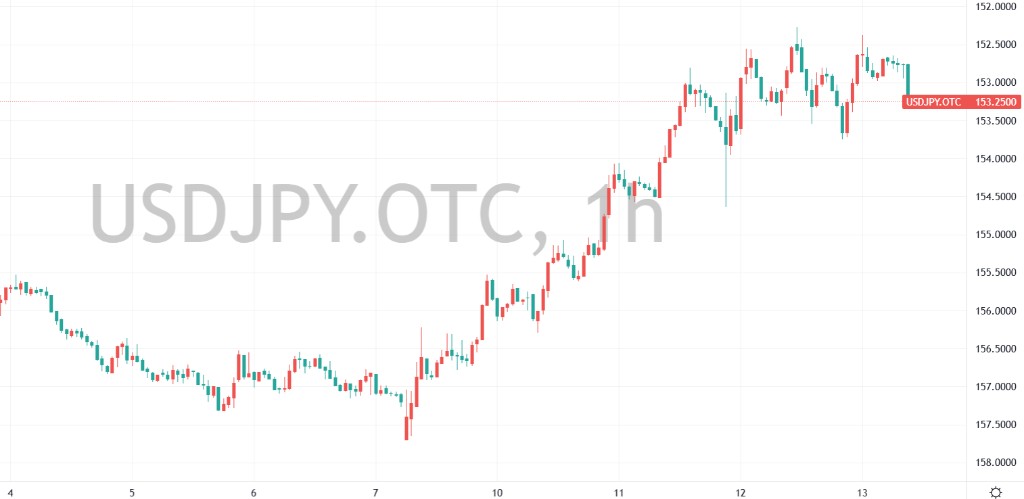 (USD/JPY 1-hour chart, coordinates reversed, source: Wall Street Insight)
Analysts believe that Prime Minister Kishi Sanae's victory is interpreted as reducing political uncertainty and lowering the risk of the worst fiscal scenarios, helping to strengthen the yen and causing Japanese government bond yields to retreat from the multi-year highs reached last month.
Japan's top currency official Atsushi Mimura stated that despite the yen's rebound this week, the government remains highly vigilant about foreign exchange trends, and concerns about potential government intervention to support the yen have also limited the yen's decline.
Easing Fiscal Policy Concerns
Kishi Sanae acknowledged market concerns regarding the two-year food consumption tax reduction plan at a press conference on Monday and reiterated that the measure would not be financed through bond issuance. This statement further alleviated market worries about fiscal deterioration.
Takeru Yamamoto, a trader at Sumitomo Mitsui Trust Bank in New York, stated:
After the Liberal Democratic Party of Japan achieved an overwhelming victory, the easing of fiscal concerns and expectations for interest rate hikes by the Bank of Japan have driven the strengthening trend of the yen.
Overnight index swaps indicate that the probability of the Bank of Japan raising interest rates in April is about 78%.
Bloomberg strategist Michael Ball pointed out that the yen strengthened after Kishi Sanae's historic victory for the Liberal Democratic Party because traders are pricing in a rare policy combination in Japan, namely a tax reduction policy that will not worsen the deficit, potentially funded by internal pools of capital.
Ball emphasized that the risk of this policy combination lies in the potential for selling foreign exchange reserves, which will support yen buying in the short term but increase volatility, as the market cannot predict how far officials are willing to go.
Market Speculation on Japanese Government Intervention
The high vigilance stance of Japan's top currency officials regarding foreign exchange trends has led to ongoing market concerns about potential government intervention, and this expectation itself is also limiting the yen's downside.
Wall Street Insight mentioned that on January 23, the yen's intraday maximum gain was about 1.75%, marking the largest increase since August of last year. This sudden movement has sparked widespread speculation in the market about the Japanese government's potential intervention in the foreign exchange market, and even possible joint intervention with the U.S. government.
However, U.S. Treasury Secretary Janet Yellen subsequently stated that the U.S. has consistently pursued a strong dollar policy and will "absolutely not" intervene in the foreign exchange market to support the yen. Japanese Finance Minister Shunichi Suzuki indicated that she maintains close contact with Yellen, and both share the responsibility of maintaining stability in the dollar-yen exchange rate.
JP Morgan foreign exchange strategist Pat Locke previously stated:
Yellen's comments about non-intervention do not rule out additional verbal intervention or even actual intervention; however, he reiterated a core position that setting the correct fundamentals for the foreign exchange market is crucial in the long term—not just for the U.S., but also for other countries, including Japan.
Investors will pay attention to the speech of Bank of Japan "hawkish" board member Naoki Tamura on Friday, as well as U.S. CPI data, to assess the outlook for the U.S.-Japan interest rate differential and the direction of the yen.
