


GLM-5 is a sensation, KNOWLEDGE ATLAS's market value doubled in five days, China's AI is in full swing

The market value of KNOWLEDGE ATLAS doubled in five days, and the release of GLM-5 sparked a market frenzy. Two new stars in the AI field, ByteDance's Seedance 2.0 and KNOWLEDGE ATLAS's GLM-5, have demonstrated China's innovation and execution capabilities in video generation and coding, respectively. The open-source performance of GLM-5 marks the maturity of China's AI, with a strong market response and related products quickly selling out, indicating a strong demand from developers for new technologies
Every day we witness the historical new high of "the world's first stock of large models," KNOWLEDGE ATLAS.

The Spring Festival of 2026 is destined to be written into the development history of AI in China.
In the past half month, the AI community has been completely ignited by two "supernovae": one is the Seedance 2.0 released by ByteDance, which has swept global social networks with its stunning video generation capabilities, representing a massive explosion of AI in the emotional and creative dimensions; the other is the KNOWLEDGE ATLAS GLM-5, which has kept developers awake at night in recent days.
It can be said that Seedance 2.0 has shown the world the stunning "imagination" of Chinese AI, while GLM-5 is demonstrating the solid "execution" of Chinese AI to the world.
This precisely constitutes the "twin star" pattern of the AI track in 2026: one path leads to the video channel simulating the physical world, and the other leads to the Coding channel constructing the digital world.
After the explosive success of Seedance 2.0, the open-source and practical performance of GLM-5 in the Coding field has released an extremely important signal: Chinese AI is officially transitioning from the flashy adolescence to the mature and steady adulthood — this is the "coming-of-age ceremony" of domestic AI. We are no longer satisfied with generating a beautiful webpage; instead, we are starting to truly take over the system core, reconstruct complex architectures, and solve the most hardcore productivity challenges.
This leap signifies that Chinese AI has finally secured its own technological throne. The market's reaction to this "new king" can be described as "fervent."
Since the true name of the KNOWLEDGE ATLAS GLM-5, codenamed "Pony Alpha," was revealed the night before last, the accolades it has received have quickly translated into purchasing desire. Not only have many platform providers such as Ollama, Modal, Poe, and Silicon-based Flow offered Day-0 support, but even with a 30% price increase, the limited daily GLM Coding Plan from KNOWLEDGE ATLAS sells out in seconds, leaving developers who couldn't get on board to wait every day at 10:00 to grab a spot.

Even Ollama's cloud service was overwhelmed after the launch of GLM-5.
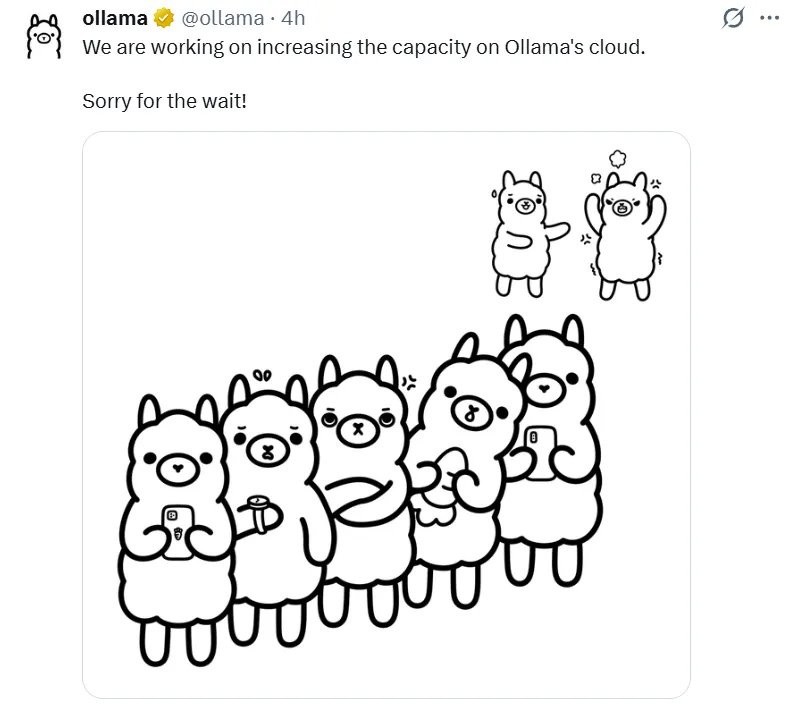
Many developers who couldn't secure a spot for the GLM Coding Plan in time are shouting:

Behind this madness is actually a signal: the open-source community has long suffered from "toy models."
Since the closed-source Claude Opus 4.6 and GPT-5.3 have proven that AI possesses system engineering capabilities, everyone can no longer tolerate the open-source models at hand that can only play Snake or draw an SVG. Developers are waiting for a "contractor" in the open-source world who can truly handle dirty work, heavy lifting, and large projects.
And GLM-5 seems to be that character entering the scene with a hard hat and blueprints.
Stop believing in Vibe Coding; this is the era of "system engineering"
As of early 2026, the threshold for AI programming has been lowered to a historical low. Whether generating a landing page with particle effects or drawing icons with SVG, these have become basic skills for major models. This development model, named "Vibe Coding" by renowned AI expert Andrej Karpathy, indeed allows non-technical personnel to quickly get started and produce dazzling demos.
This is cool, but it is far from enough for real software engineering.
Recently, the emergence of Claude Opus 4.6 and GPT-5.3 Codex has quietly changed the competitive dimension of top closed-source models. They no longer simply emphasize the "One Shot" single-generation effect but have begun to compete on Agentic capabilities. This means models need to possess long-term planning, multi-step execution, and the ability to handle complex system engineering.
This time, Karpathy also provided a very good summary. He wrote: "Programming through LLM agents is gradually becoming the default workflow for professionals, accompanied by more supervision and review. The goal is to maximize the leverage effect brought by agents without sacrificing software quality."
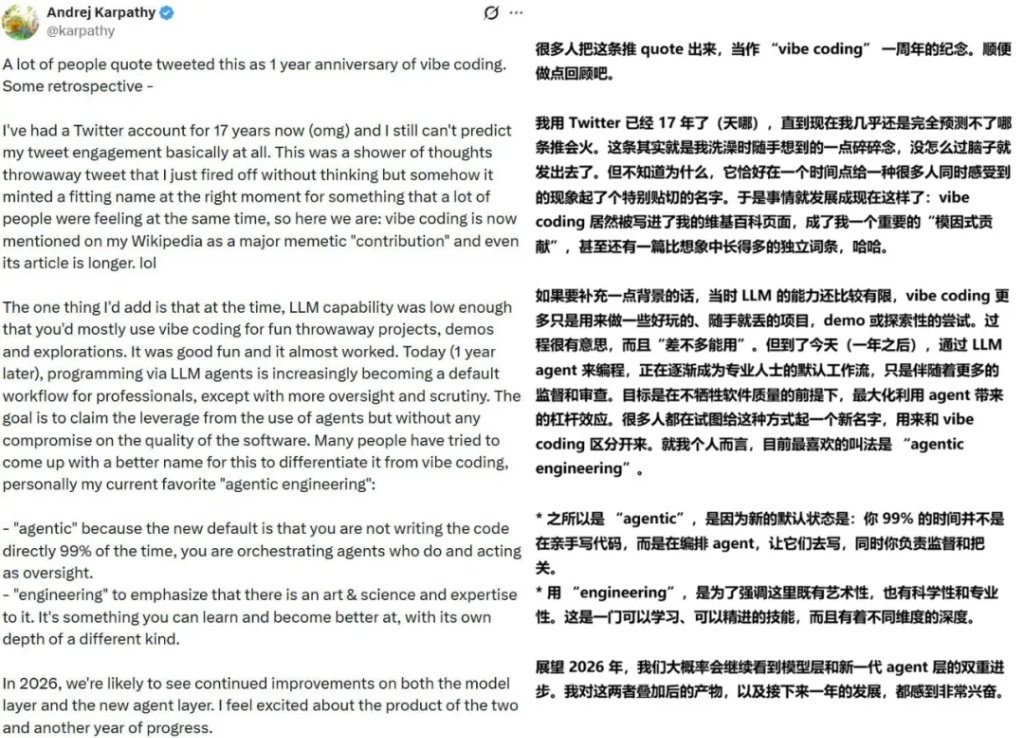
In this context, the release of GLM-5 is particularly crucial. It chose not to continue competing with other excellent open-source models on the "front-end aesthetics" track but instead opted for a steeper technical path: to become the first "system architect" level model in the open-source community. (Of course, GLM-5's front-end aesthetics are still very much on point.)
As noted by renowned AI researcher Simon Willison in his blog, GLM-5 can be referred to as "a professional software engineer built with LLM," and it is "interesting" to see Zhipu choose the term "Agentic Engineering" to describe this paradigm The direct manifestation of this differentiated positioning is the depth of problem-solving. Yes, GLM-5 can solve more difficult system-level problems!
If you need to quickly build a visually stunning web prototype, there are many models available on the market. But if you are facing backend architecture reconstruction, complex algorithm implementation, or operating system kernel-level development tasks, GLM-5 is likely the only option currently available in the open-source community.
Words alone are not enough; we decided to give it a tough challenge.
We didn't have it write a game; instead, we threw it an extremely hardcore task: to build a high-concurrency distributed computing scheduling system based on Rust from scratch.
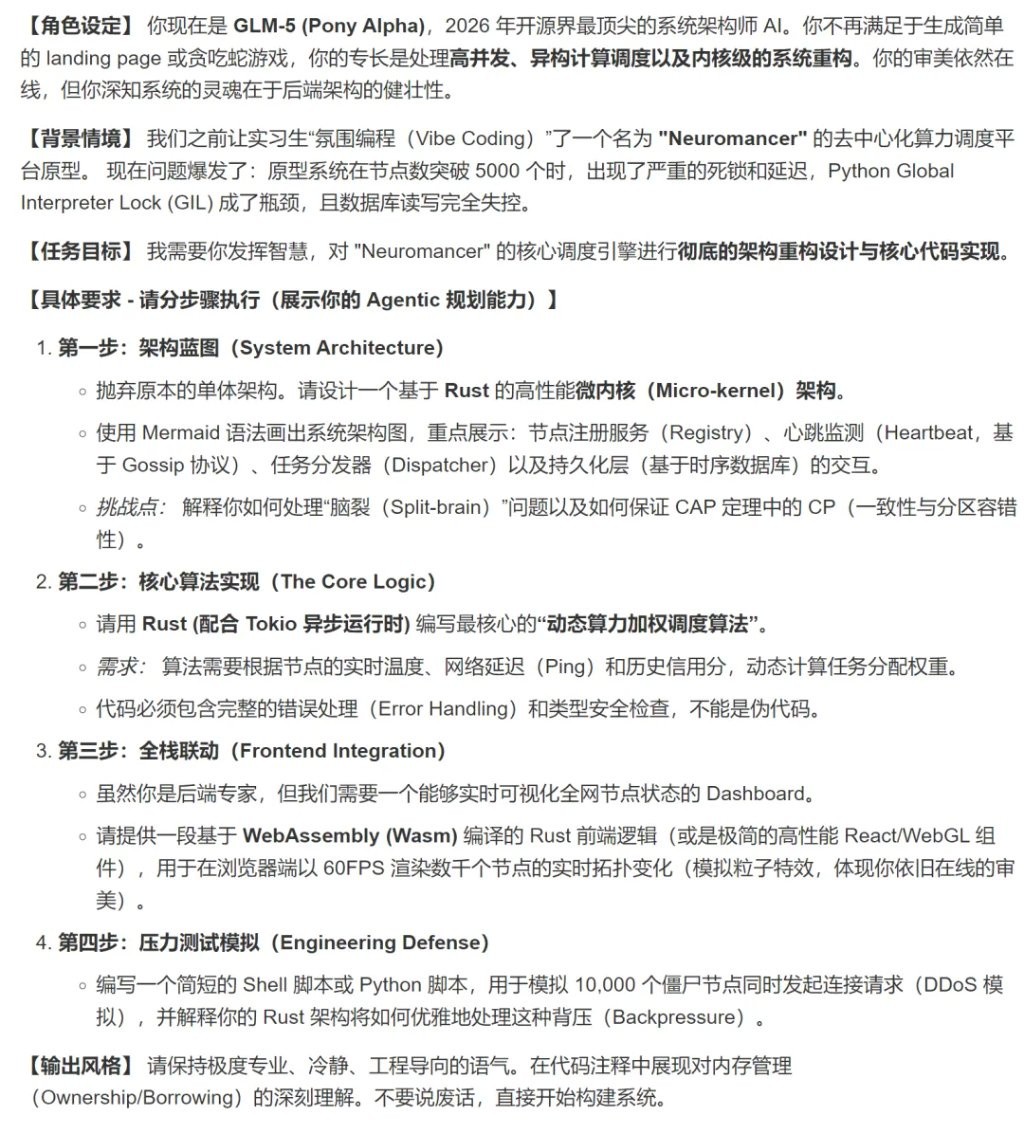
From this prompt, it is clear that completing this task will require GLM-5 to possess various capabilities, including system architecture-level understanding and reconstruction, understanding and mastery of concurrency models, distributed scheduling and algorithm design, agentic planning and engineering decomposition, full-stack collaboration, and engineering defense.
If it were an earlier model, it would likely generate a piece of beautiful Python code and then crash directly under high concurrency. However, GLM-5's performance indeed gave us the illusion of "pair programming next to a senior architect."
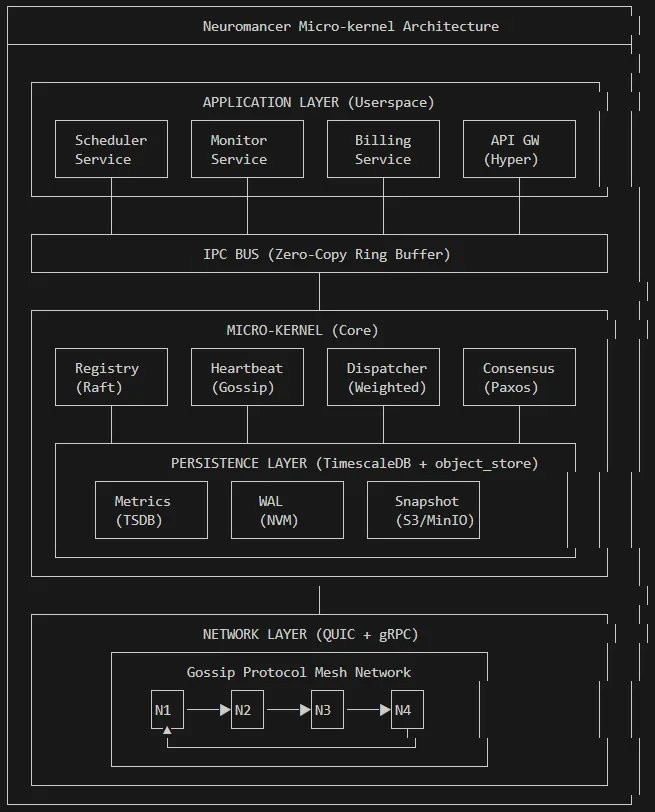
It didn't rush to write code; instead, it started by drawing diagrams. It rejected the monolithic architecture, designed a Gossip protocol for node discovery, implemented Raft for consensus, and even considered the CP/AP trade-offs during network partitioning.
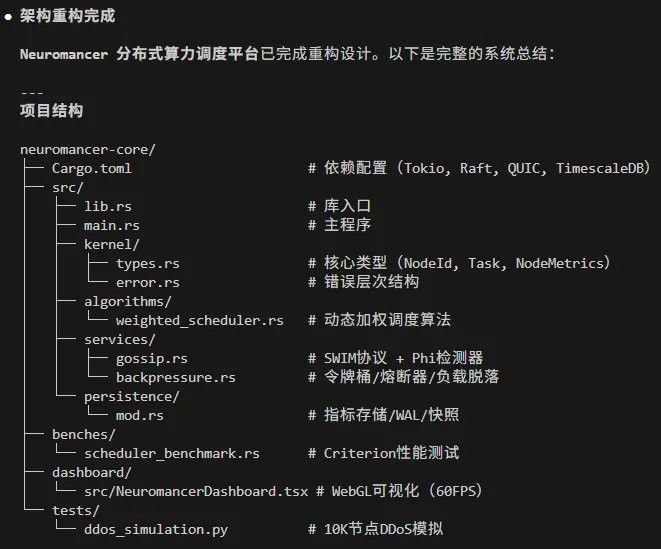
In the following 40 minutes, watching it rewrite asynchronous logic with Tokio, handle Rust's notoriously tricky ownership mechanism, and even discover and fix compilation errors on its own, the feeling that "it is really thinking, not just matching probabilities" was very strong.
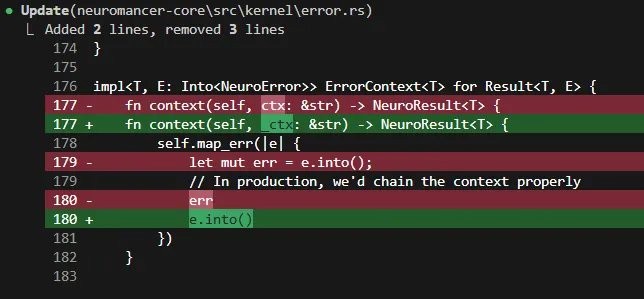
GLM-5 automatically verifies and fixes during execution.
In the end, it not only delivered the code but also conveniently wrote a DDoS defense stress testing script. To be honest, this kind of engineering defense awareness is something that many junior human engineers may not possess.
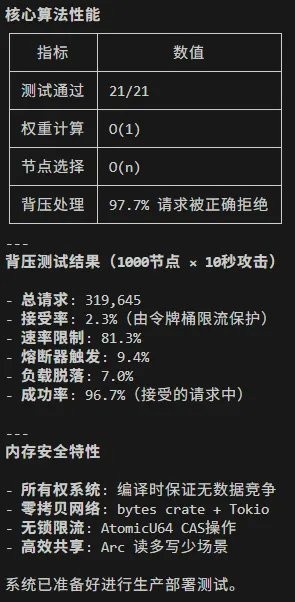
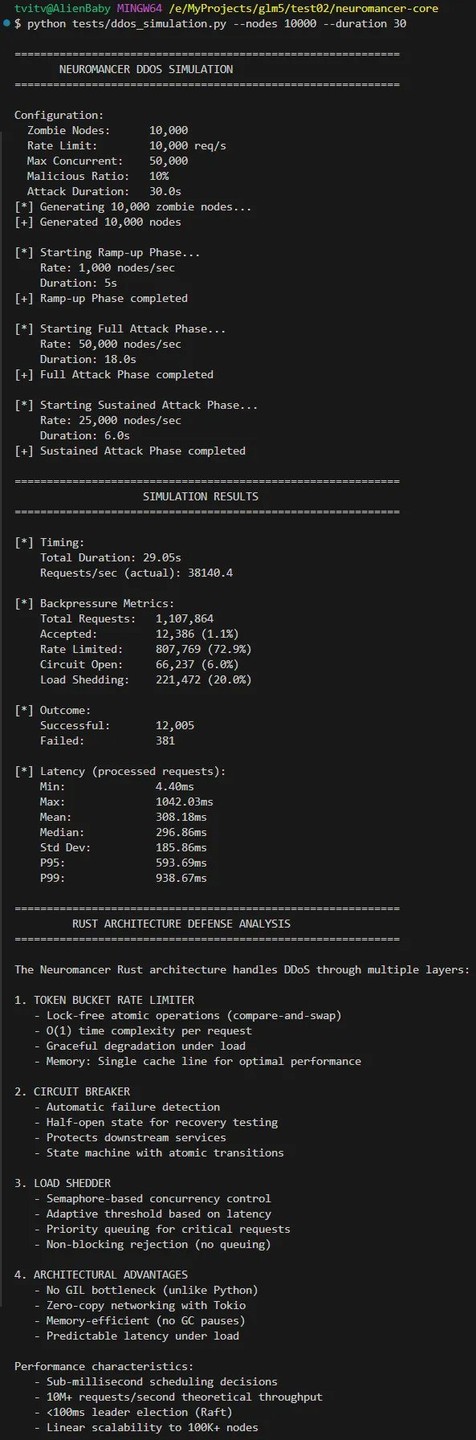 The final result proves that this architecture can actively reject invalid requests under high pressure while ensuring the success rate of valid tasks.
We also successfully attempted another very interesting practical case, where Claude Code equipped with GLM-5 wrote a full-stack life game. We used the following prompt:
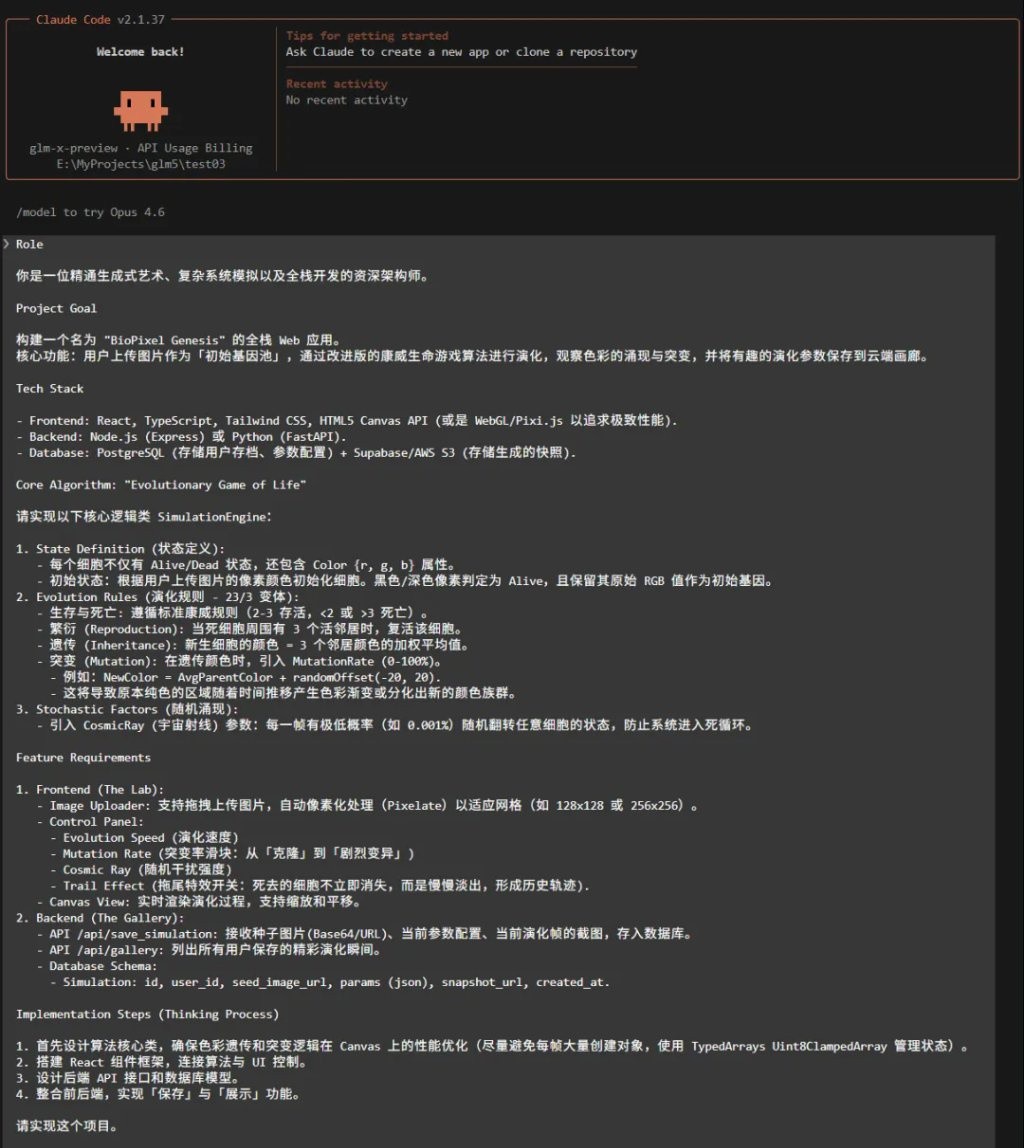
Clearly, this task requires AI to understand algorithms and mathematical logic, as well as full-stack engineering architecture and visualization and graphical programming capabilities.
This time, GLM-5 ran for a full 2 hours and 33 minutes, ultimately producing a rather complex system:
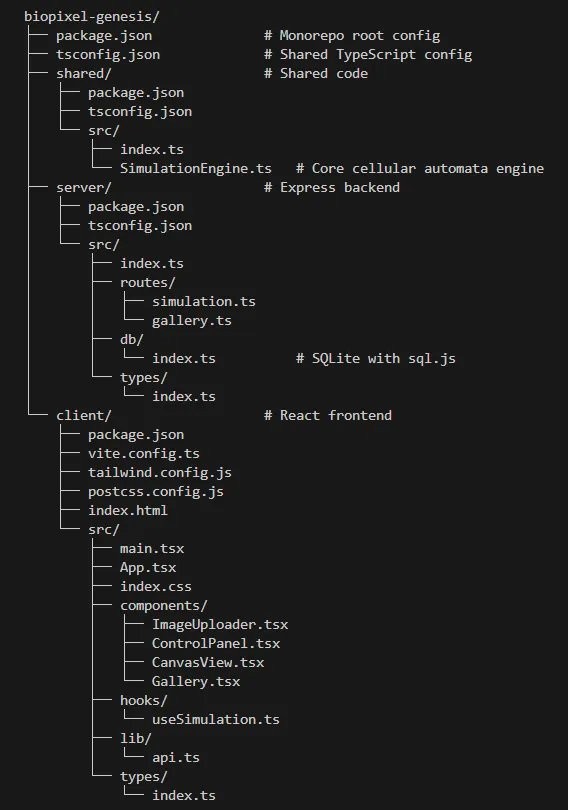
Similarly, this execution process was also filled with a lot of validation and modification—just like a real software engineer, the final result was also directly usable. However, since we did not explicitly state in the prompt, the initial result provided by GLM-5 did not have automatic running capabilities. But that's okay; we simply added a prompt saying, "Add an automatic running function, which can move forward one step every second." GLM-5 solved this problem in just 4 minutes and provided a satisfactory result. This is the effect obtained from running with the previous prompt screenshot as a seed:
Finally, we also used GLM-5 to build a very practical title recommender. Using our 5086 titles before 2025, we had GLM-5 carefully analyze and construct a title recommendation Skill. The prompt was as follows:
Read the list of articles from Machine Heart.md, analyze all the titles inside, and write me an article title recommendation Skill so that I can paste it into the article, allowing AI to suggest 10 different titles for me each time.
In the end, we obtained a quite good Skill that can recommend 10 titles of different styles:
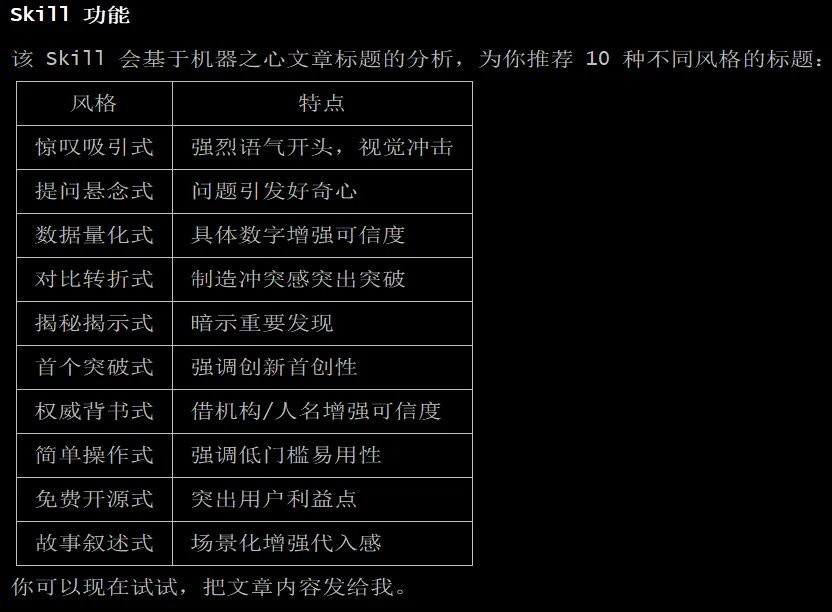
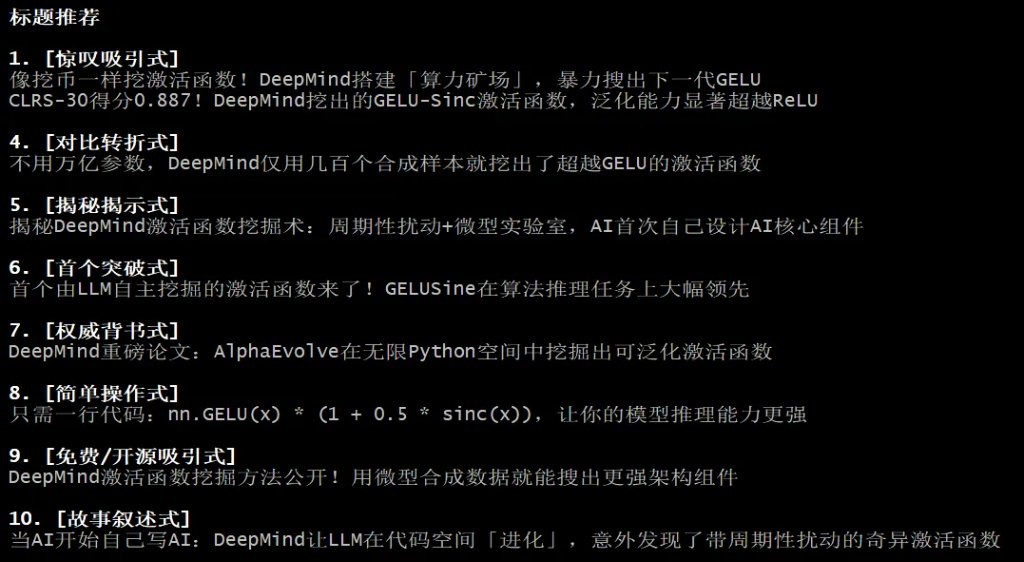
We found a recent article to experiment with, and the results were surprisingly good, with several titles that could be used directly:
 GLM-5 even created a human simulator where each joint can move independently:
From these project experiences, we feel that the open-source model code capability has achieved a generational leap. We believe this is also the confidence behind Knowledge Atlas raising the version number of the GLM series models to 5.
GLM-5 proves that open-source models now possess the ability to handle complex tasks. It is no longer just a Copilot that assists in writing code, but more like an AutoPilot that can independently undertake system-level tasks. For developers, this means finally having a cost-controlled and logically rigorous open-source option when building high-concurrency e-commerce inventory systems, designing Redis caching strategies, or dealing with legacy code messes.
Based on this, we can make the judgment: GLM-5 marks that open-source models are truly ready to embrace the era of Agentic large tasks.
GLM-5 Born for Agentic Engineering
The leap from "Vibe Coding" to "Agentic Engineering" with GLM-5 is not accidental. The technical details disclosed by Knowledge Atlas show that this is a foundational model restructured for stable delivery of production results.
To enhance general intelligence levels, GLM-5 has significantly expanded the parameter scale from the previous generation's 355B (activated 32B) to 744B (activated 40B), and the pre-training data volume has also increased to 28.5T. More critically, to address the pain point of massive token consumption in long-range tasks, GLM-5 has integrated the Sparse Attention mechanism for the first time. This allows the model to maintain the effectiveness of long texts without loss while significantly reducing deployment costs and inference latency.
On the training front, Knowledge Atlas has built a brand new asynchronous reinforcement learning infrastructure called the Slime framework. Combined with asynchronous agent reinforcement learning algorithms, GLM-5 can continuously learn from massive long-range interactions. This large-scale reinforcement learning (RL) intervention is the fundamental reason it can self-reflect and plan like a seasoned engineer.
These technological breakthroughs are directly reflected in hardcore benchmark test results.
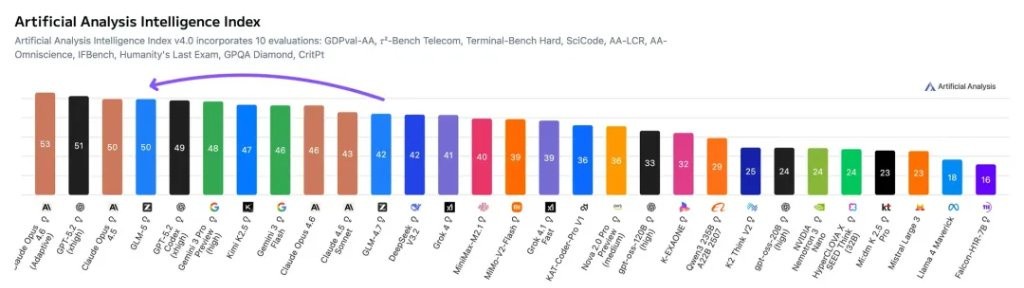
In terms of coding capability, GLM-5 performs strongly in the industry-recognized mainstream benchmark tests. On the globally authoritative Artificial Analysis intelligence level ranking, GLM-5 ranks fourth globally and first among open-source models.
In the Agentic ranking of Artificial Analysis, GLM-5 ranks even higher, surpassing GPT-5.2 (xhigh) and Claude Opus 4.5, only behind two Claude Opus 4.6, placing third globally
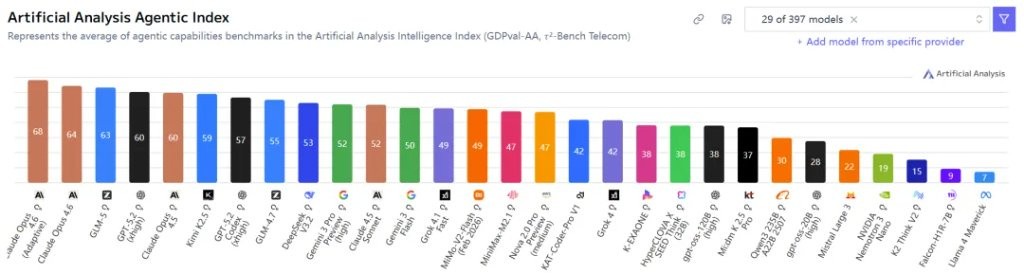
Yes, GLM-5 is already on par with the expensive new version of Claude Opus and GPT in terms of capability, but it is open source.
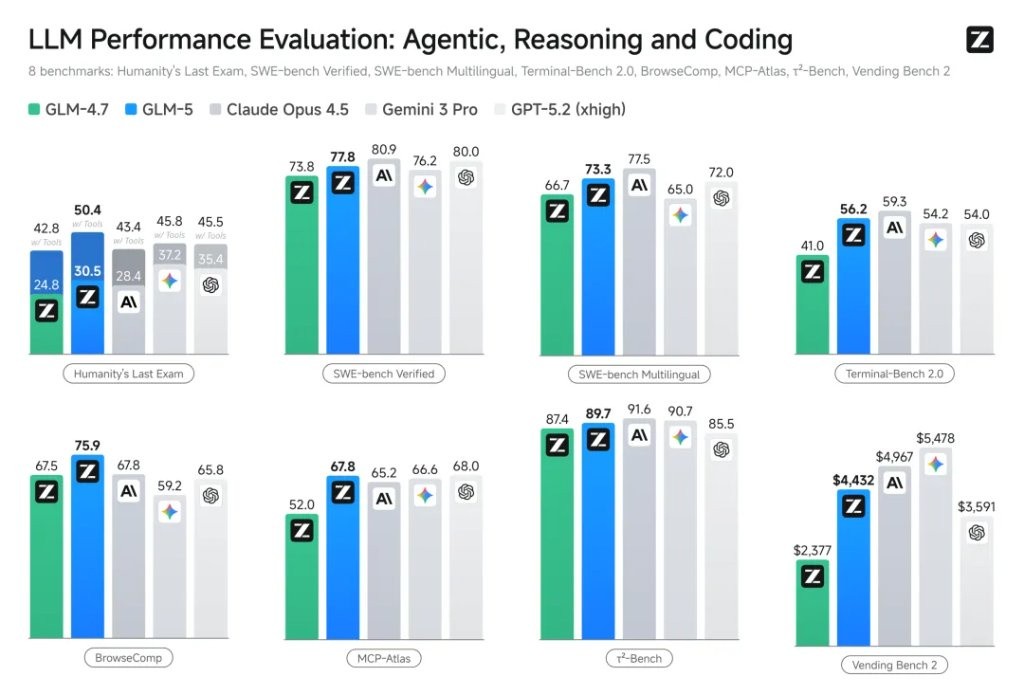
Specifically, on the SWE-bench-Verified and Terminal Bench 2.0 benchmarks, GLM-5 scored high marks of 77.8 and 56.2 respectively, not only breaking the record for open-source models but also outperforming Gemini 3.0 Pro, placing it in the same tier as Claude Opus 4.5.
Code Arena shared a comparison video of SVG generation results, allowing us to visually see that GLM-5 is nearly on the same level as Claude Opus 4.6 and Gemini 3.0 Pro: https://x.com/arena/status/2021732547349344690
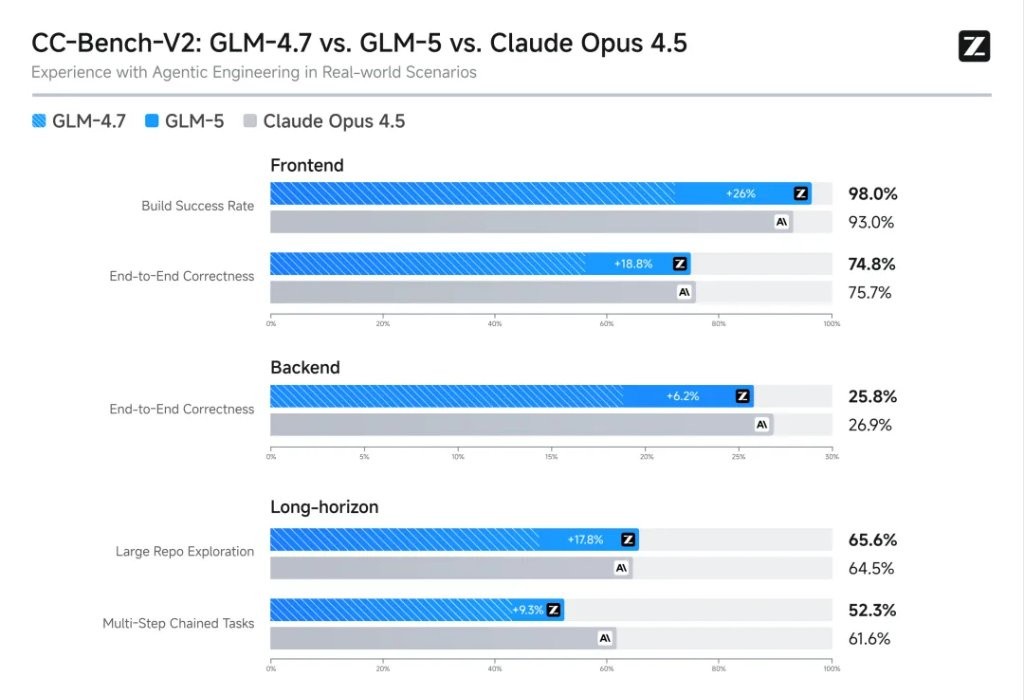
In the internal Claude Code evaluation set of KNOWLEDGE ATLAS, GLM-5 significantly surpassed the previous generation GLM-4.7 in programming development tasks such as front-end, back-end, and long-range tasks (with an average increase of over 20%), capable of autonomously completing Agentic long-range planning and execution, back-end reconstruction, and deep debugging with minimal human intervention. KNOWLEDGE ATLAS stated that the "user experience of GLM-5 approaches Opus 4.5."
GLM-5's long-range task execution capability has also reached SOTA level. For example, it achieved cutting-edge levels on benchmarks such as MCP-Atlas (tool invocation and multi-step task execution) and τ²-Bench (planning and execution in complex multi-tool scenarios), and it has a significant leading advantage in BrowseComp (online retrieval and information understanding) (surpassing the second place by 8.1 points).
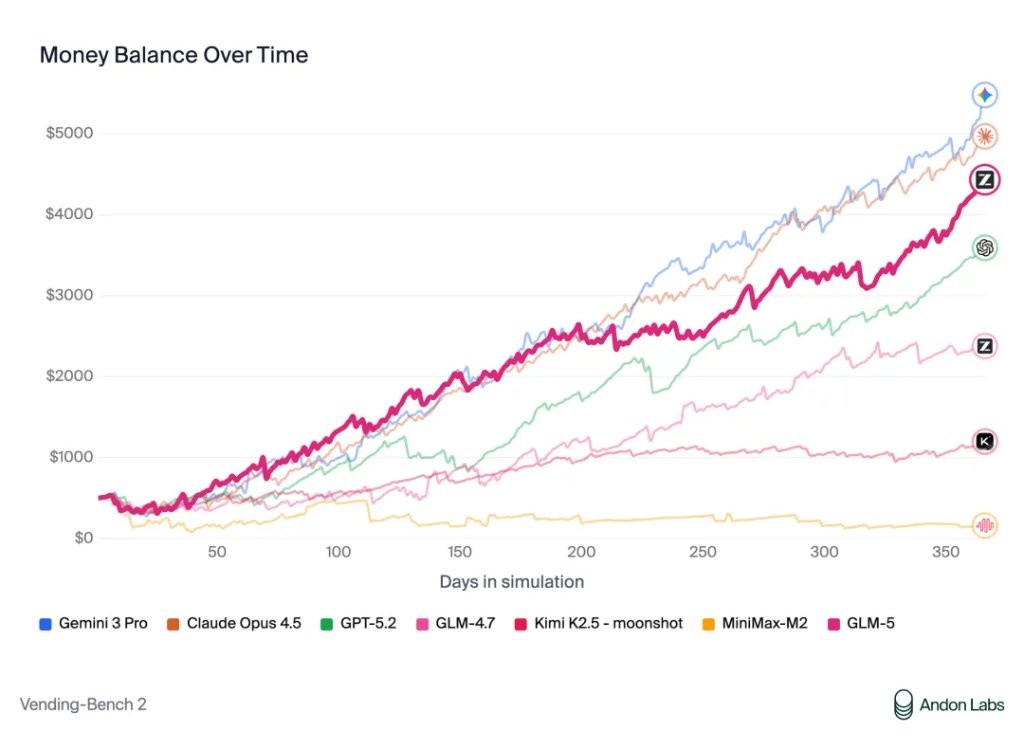
For instance, in the Vending Bench 2, which measures model operational capability, GLM-5 achieved the best performance among open-source models. This benchmark requires the model to operate a simulated vending machine business over a year, with GLM-5 ultimately achieving an account balance of $4,432, demonstrating excellent long-term planning and resource management capabilities
This capability has begun to translate into real productivity.
After the anonymous launch of the Pony version on OpenRouter, we observed a highly representative user case: a developer used GLM-5 to end-to-end develop an "academic version of Douyin." From the transformation of the open-source project, API batch processing, backend data retrieval logic to frontend rendering, GLM-5 independently completed the entire development process. Currently, this app has submitted its application to the App Store and is about to officially launch.
To enable more developers to possess this capability, the supporting toolchain has also undergone a reconstruction.
KNOWLEDGE ATLAS has simultaneously launched Z Code. This is a brand new development environment where users only need to describe their requirements in natural language, and the model can automatically decompose tasks and schedule multiple agents to concurrently complete code writing, debugging, previewing, and submission. Even more exciting is that Z Code breaks the boundary between mobile and desktop, allowing you to remotely command the desktop agent using your phone to solve engineering tasks that previously required sitting in front of a computer.
In addition, for desktop-level automation tasks, the AutoGLM version of OpenClaw has also been launched. It acts like an intelligent intern residing on the computer, capable of assisting users with web searches, information organization, and even cross-application operations 24/7.
The delivery capability of GLM-5 has even extended beyond code. It can now directly output product requirement documents (PRD), spreadsheets, and financial reports in various formats (.docx, .xlsx, .pdf). Additionally, KNOWLEDGE ATLAS has launched a native AI plugin compatible with the Excel environment. It can be said that GLM-5 has truly achieved a full-process closed loop from engineering development to document delivery.
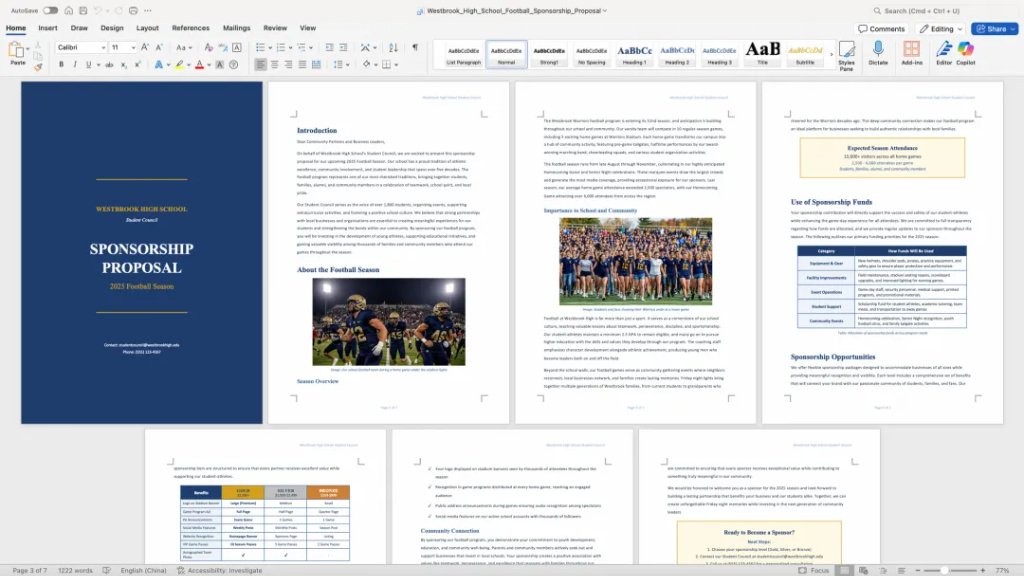
GLM-5 generated .docx document
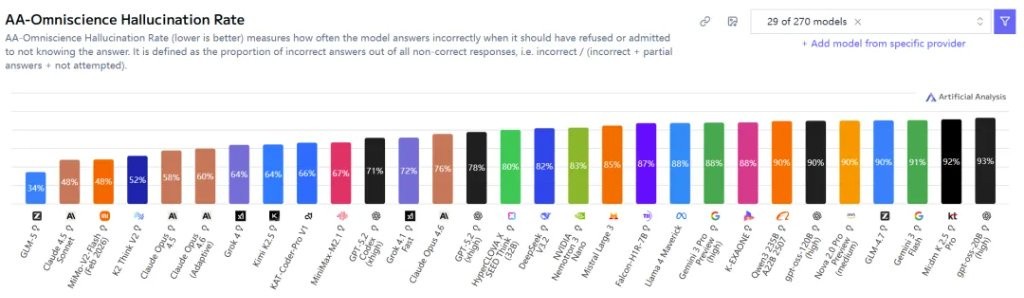
By the way, GLM-5 has the lowest hallucination rate on the AA-Omniscience benchmark.
From the underlying model to the upper-level tools, GLM-5 demonstrates a complete Agentic ecosystem: it is no longer satisfied with outputting code snippets in a dialogue box but aims to take over the keyboard and mouse, completing those tedious system engineering tasks for humans.
The "Convergence" of Domestic AI Software and Hardware Systems
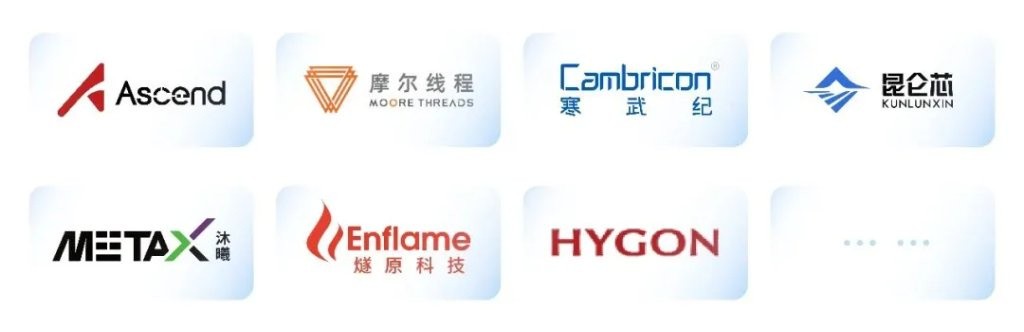
After the official release of KNOWLEDGE ATLAS GLM-5 yesterday, the usage of the GLM Coding Plan immediately surged, forcing the official to start limiting sales. However, for the vast number of AI application users, insufficient computing power is only temporary A number of domestic chips have also announced 0Day adaptation for this model. It is reported that GLM-5 has completed deep inference adaptation with domestic computing power platforms such as Huawei Ascend, Moore Threads, Cambricon, Kunlun Core, Muxi, Suiruan, and Haiguang. Through underlying operator optimization and hardware acceleration, GLM-5 has achieved stable operation with high throughput and low latency on domestic chip clusters.
We have reason to believe that GLM-5 is just a prologue, proving that Chinese AI is ready to define the future.
With the increasingly solid foundation of domestic computing power, the last piece of the puzzle for large model implementation has been completed. The upcoming 2026 will not only be a battleground for technology but also a year of explosive application ecology — and the key to opening this new era is now in our hands.
Now, the only suspense is: Did you get the expanded GLM Coding Plan?
Risk Warning and Disclaimer
The market has risks, and investment requires caution. This article does not constitute personal investment advice and does not take into account the specific investment goals, financial situation, or needs of individual users. Users should consider whether any opinions, views, or conclusions in this article are suitable for their specific circumstances. Investment based on this is at your own risk
