


Uncertainty in tariff policy looms over the market, spot gold rises above $5,170, South Korean stocks open higher, and oil prices decline

Trump's tariff policy has stirred up new waves, and investors are urgently seeking safe-haven assets. Spot gold has risen to USD 5,170 per ounce, up 1.3% for the day. Spot silver is currently reported at USD 87.11 per ounce, up nearly 3% for the day. The USD/JPY has fallen 0.5% to 154.27. The Seoul Composite Index has expanded its gains to 2%. The Japanese stock market is closed for the holiday. WTI crude oil has narrowed its decline to USD 65.75 per barrel
In the early trading session of the Asian market, the South Korea Composite Stock Price Index opened up 1.6%, while both the US dollar and US stock futures fell, as investors began to price in a higher risk premium for US assets.
The South Korea Composite Stock Price Index opened up 1.6%, the S&P 500 futures dropped 0.4%, and the US dollar index fell 0.2%. Due to a holiday in Japan, bond trading in the Asian spot market was suspended, but US Treasury futures declined. Gold and silver prices rose, while oil prices fell, as investors assessed the possibility of a nuclear agreement between the US and Iran. Asian stock market indices rose 0.5%, mainly driven by gains in major tech stocks.
According to CCTV News, after the US Supreme Court ruled on the 20th that the US government's imposition of large-scale tariffs was "overreaching," President Trump immediately issued a new executive order, announcing a 10% import tariff on goods from all countries and regions starting February 24, 2026. On the 21st, Trump announced that the newly imposed "global import tariff" rate would be raised from 10% to 15%. The lack of clarity in trade policy could cast a shadow over the global outlook and keep market volatility high.
- The South Korea Composite Stock Price Index's gains expanded to 2%. The Japanese stock market was closed for the holiday.
- The USD/JPY fell 0.5% to 154.27.
- The yield on the US 10-year Treasury bond slightly decreased to 4.082%.
- Spot gold rose above $5,170 per ounce, up 1.3% for the day.
- Spot silver stood above the $87 mark, currently at $87.11 per ounce, up nearly 3% for the day.
- WTI crude oil futures opened about 1% lower, with the decline narrowing to 0.65%, at $65.75 per barrel.
Policy Uncertainty Impacts the Dollar
Goldman Sachs Group strategists, including Kamakshya Trivedi, noted in a research report that the broad decline of the dollar may reflect a new injection of policy uncertainty brought about by the ruling. "Policy uncertainty is a particularly important channel for the dollar, as it can negatively impact investors and business activity. Regardless of the direction in which tariffs change significantly, the dollar will depreciate."
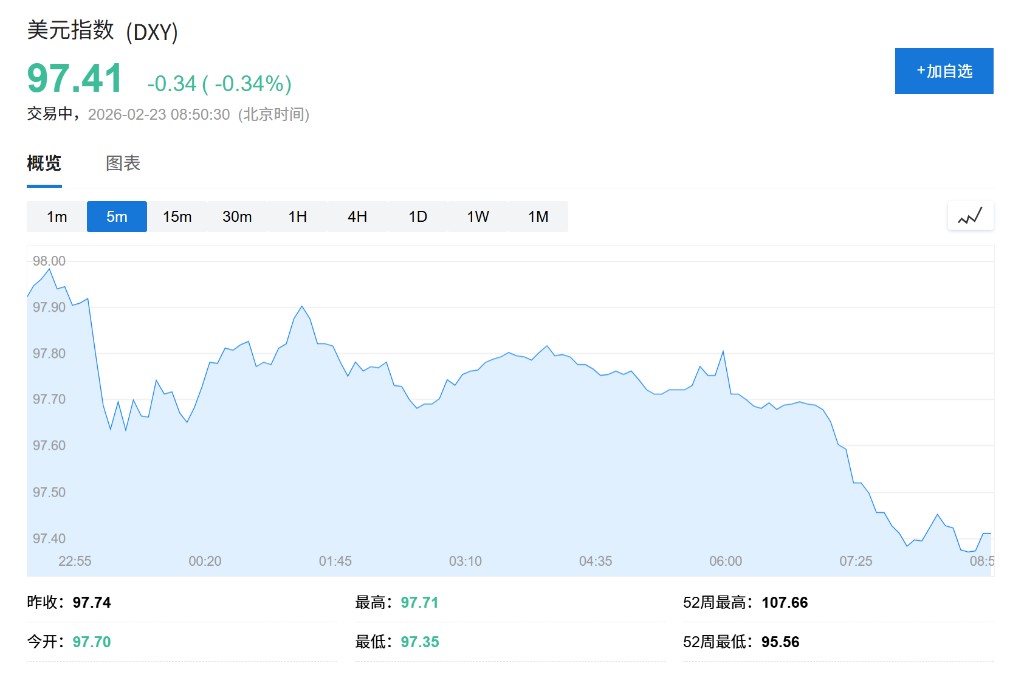
Nick Twidale, Chief Market Analyst at AT Global Markets, stated: "We have a lot of experience with Trump, and we believe he will not back down easily. The increase in uncertainty and the questions surrounding Trump's next actions overshadow any positive factors from tariff reductions and potential returns."
Monday morning's market trends indicate that investors are beginning to price in a higher risk premium for US assets, as the lack of clarity in US trade policy could cast a shadow over the global outlook
Last Week's Market Performance Review
On Friday, the S&P 500 index rose by 0.7%, marking its best weekly performance since January 9, as optimism from the Supreme Court's tariff ruling offset concerns over escalating tensions between the U.S. and Iran. The ETF tracking emerging markets reached an all-time high. The dollar fell by 0.2% on Friday, narrowing its weekly gain to 0.6%.
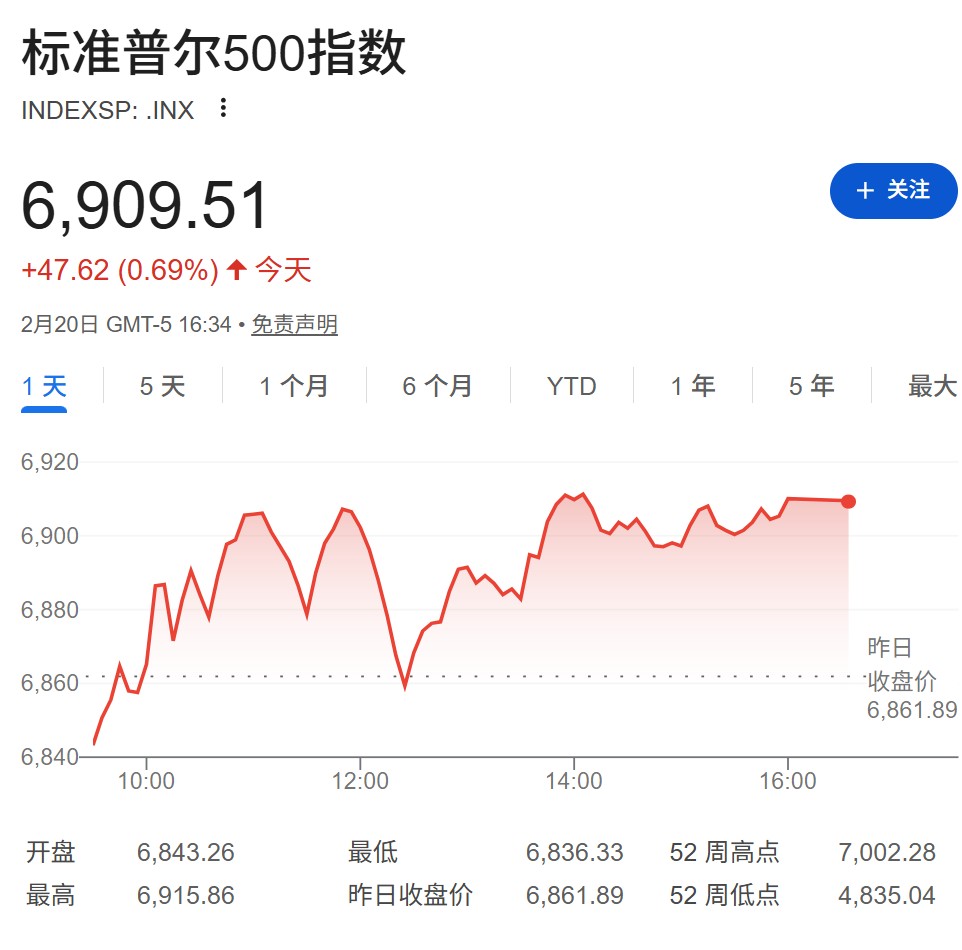
The yield on the 10-year U.S. Treasury rose by two basis points to 4.08% on Friday amid volatile trading. Previously released economic growth and inflation data were mixed, while the tariff ruling added uncertainty regarding potential budget shortfalls.
This pattern of rising and then falling highlights the market's contradictory mindset regarding policy prospects, as investors weigh the potential benefits of tariff reductions against the risks posed by policy chaos.
Continuously updated
