


Will the RMB break 6.8?

The RMB exchange rate remained strong at the beginning of 2023, reaching its highest level since April. Analysts believe that the weakness of the US dollar is a major factor, while the fundamentals of the RMB support its appreciation. Several institutions predict that the RMB may break through 6.8, with HSBC and Goldman Sachs providing different target prices. Despite the appreciation momentum, there are also cautious views, suggesting that the core logic is the damage to the credit of the US dollar, and future RMB trends need to pay attention to the performance of the US dollar
The RMB exchange rate has continued its strength for two consecutive days at the beginning of the Year of the Horse, with both onshore and offshore rates reaching their highest levels since April 2023. Multiple institutions have determined that this round of appreciation is primarily driven by the weakness of the US dollar, but the fundamentals of the RMB also provide support. As long as the credit of the US dollar has not been restored, combined with its own resilience, the appreciation trend is expected to continue.
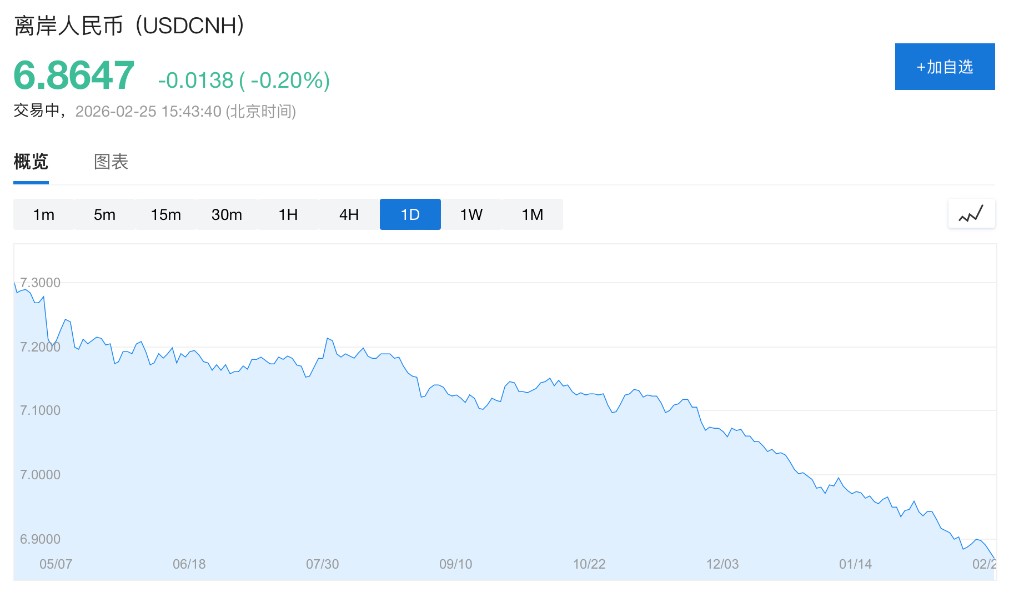
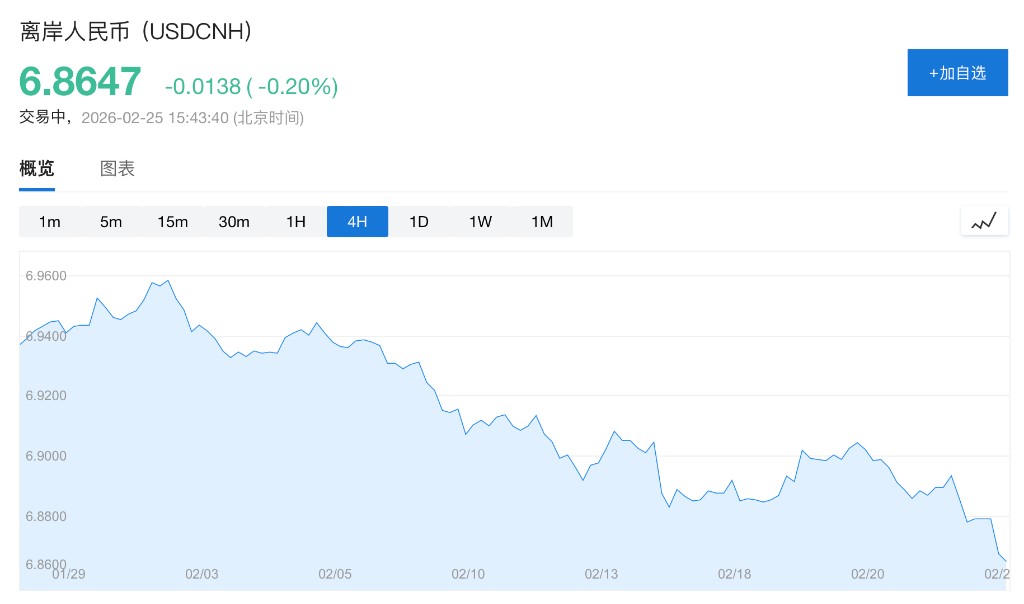
On February 25, the onshore RMB broke through the 6.87 mark against the US dollar, reporting 6.8658, while the offshore RMB reported 6.8628, with daily gains exceeding 150 points. Wang Qing, chief macro analyst at Dongfang Jincheng, attributed this round of appreciation to three driving forces: the stabilization of Sino-US economic and trade relations since November 2025, improvement in the external environment; the continued weakening of the US dollar leading to a collective strengthening of non-US currencies; and the concentrated release of foreign exchange settlement demand from export enterprises amplifying the pace of appreciation.
Goldman Sachs maintained a 12-month target of 6.70 for the RMB in its report on February 20, believing that the RMB still has about 22% undervaluation potential; HSBC adjusted its first-quarter end forecast to 6.85 and lowered its year-end target to 6.75 in its report on February 16; and Caitong Securities stated in its research report on February 15 that under extreme assumptions, there is a possibility for the RMB to approach 6.8 against the US dollar. If the willingness to settle foreign exchange continues to rise, further appreciation may even occur. The above points to credit-driven factors, with the continued deterioration of the US dollar as the core driving force.
Cautious views are also emerging. Wang Qing warned that the US dollar index is expected to stabilize in 2026, and the actual impact of the Walsh policy deserves close attention, as the momentum for RMB appreciation may weaken this year. Mingming, chief economist at CITIC Securities, also pointed out that as recent effects fade, the momentum for enterprises to settle foreign exchange may decline, and the significant upward force may weaken in the short term.
Damage to US dollar credit is one of the core logics behind this round of RMB appreciation
Caitong Securities pointed out that the US dollar index is expected to decline by 9.4% throughout 2025, while the RMB has only appreciated by 4.3% against the US dollar. If measured by the RMB exchange rate index, the RMB has actually depreciated by 3.4% against a basket of currencies throughout the year, indicating that the RMB is overall depreciating, only strengthening relative to the US dollar. This data clearly shows that the core driver of this round of appreciation comes from the US dollar side.
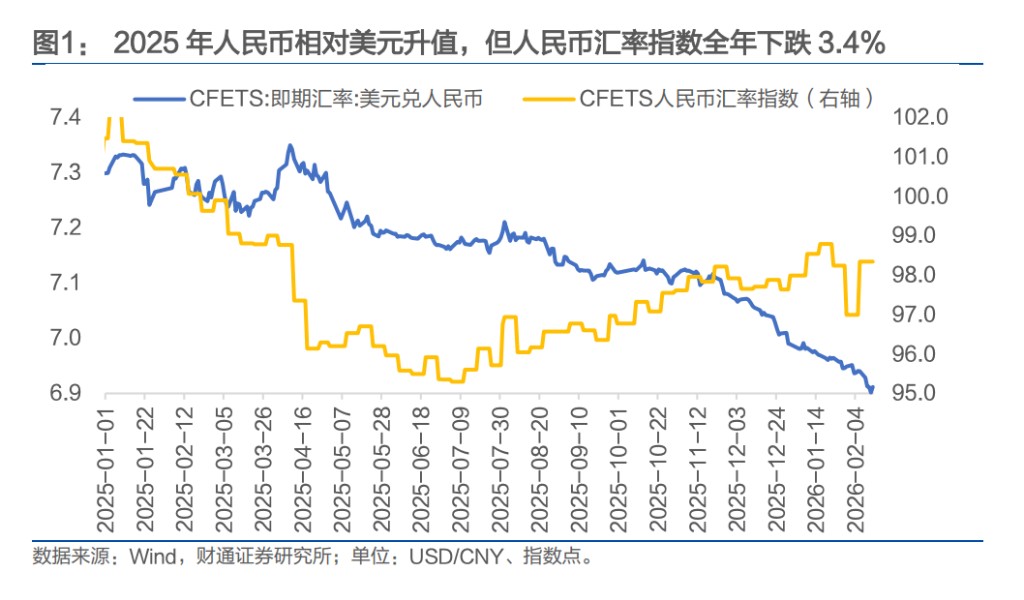
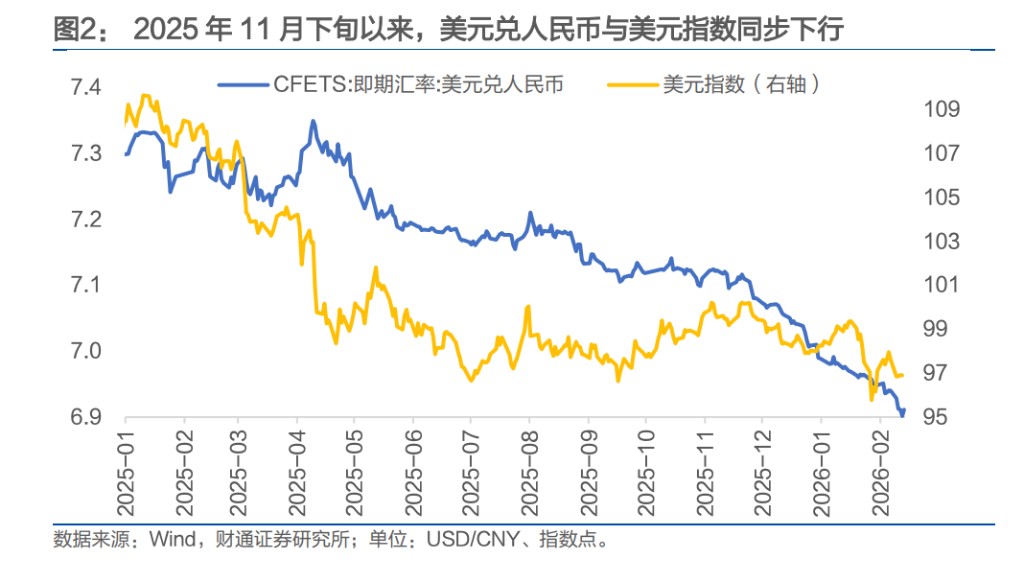 Caitong Securities believes that judging the exchange rate of the RMB against the USD is essentially a judgment on the future trend of the USD. The root cause of the USD's rapid weakening in 2025 lies in the market's distrust of U.S. sovereign credit and doubts about its long-term economic stability, which breaks the traditional logical premise of analyzing exchange rate fluctuations based on interest rate differentials.
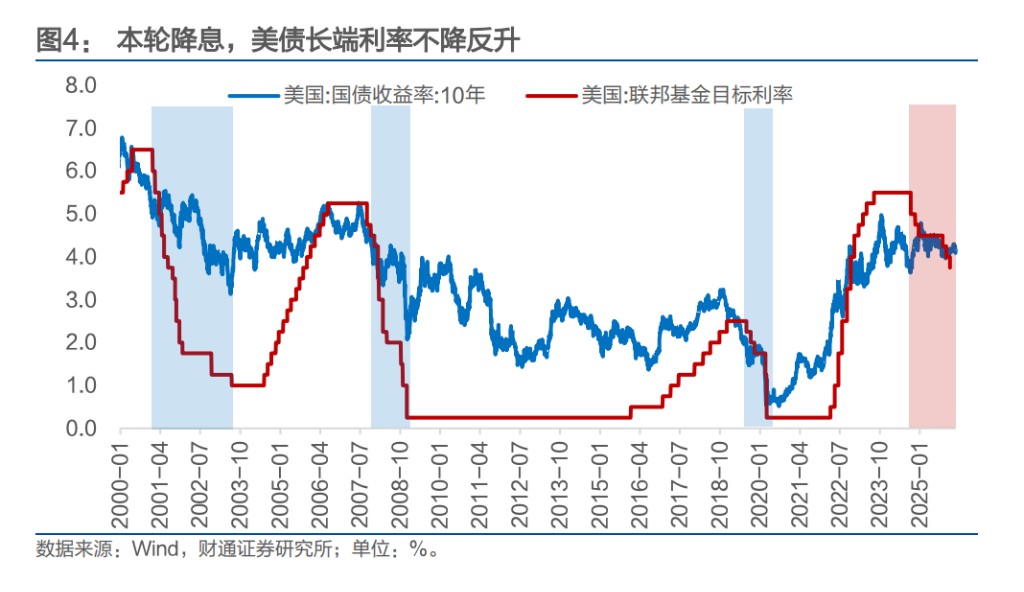
From the asset performance perspective, during this round of the Federal Reserve's interest rate cut cycle, the 10-year U.S. Treasury yield has risen instead of falling. Since the interest rate cut began in September 2024, it has risen from 3.73% to 4.04% on February 13, 2026, a cumulative increase of 31 basis points. Caitong Securities points out that this is in stark contrast to the significant decline in long-term rates during the three previous interest rate cut cycles in 2001, 2007, and 2019, reflecting the market's gradual loss of confidence in USD assets, necessitating higher credit premiums for U.S. Treasuries.
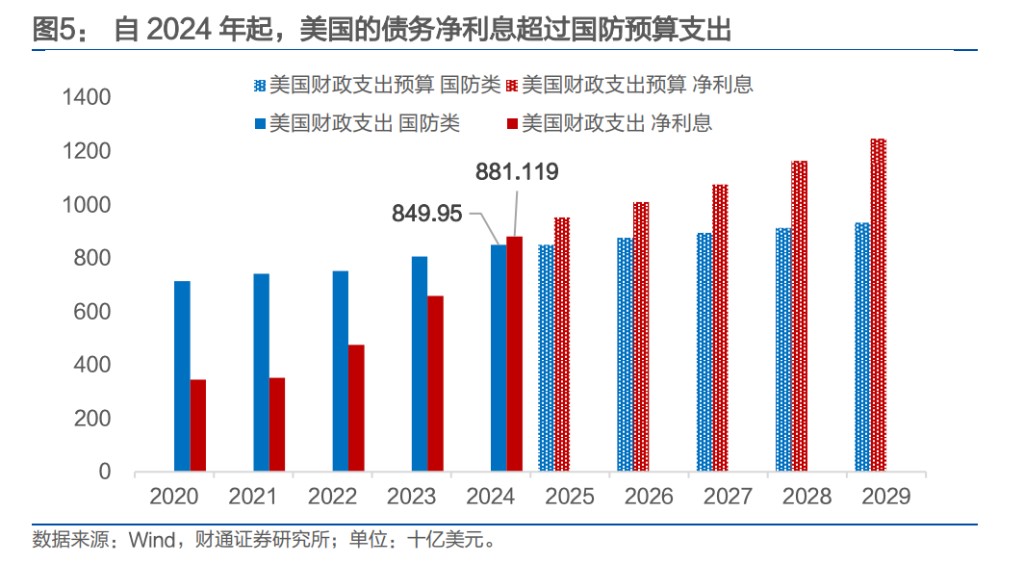
In October 2024, data from the U.S. Treasury Department showed that net interest payments on debt reached $881.1 billion, surpassing the defense budget for the first time, raising widespread concerns about fiscal sustainability. Measured against gold as a value scale, from the beginning of 2023 to the end of 2025, the USD depreciated by 55.7% relative to gold, the RMB depreciated by 57.4%, and the euro, pound, and yen all depreciated by over 50%. Caitong Securities believes that the collective depreciation of major currencies against gold is a result of the shaken credit foundation of the global fiat currency system.
Trump Faces the "Impossible Triangle," Weak USD Difficult to Reverse
Caitong believes that in 2026, U.S. policies may still struggle to resolve the "impossible triangle" of economic growth, inflation stabilization, and fiscal sustainability. Significant interest rate cuts could trigger uncontrollable inflation, leading to "stagflation" and damaging USD credit; not cutting rates would directly increase the risk of an economic "hard landing," also impacting fiscal sustainability.
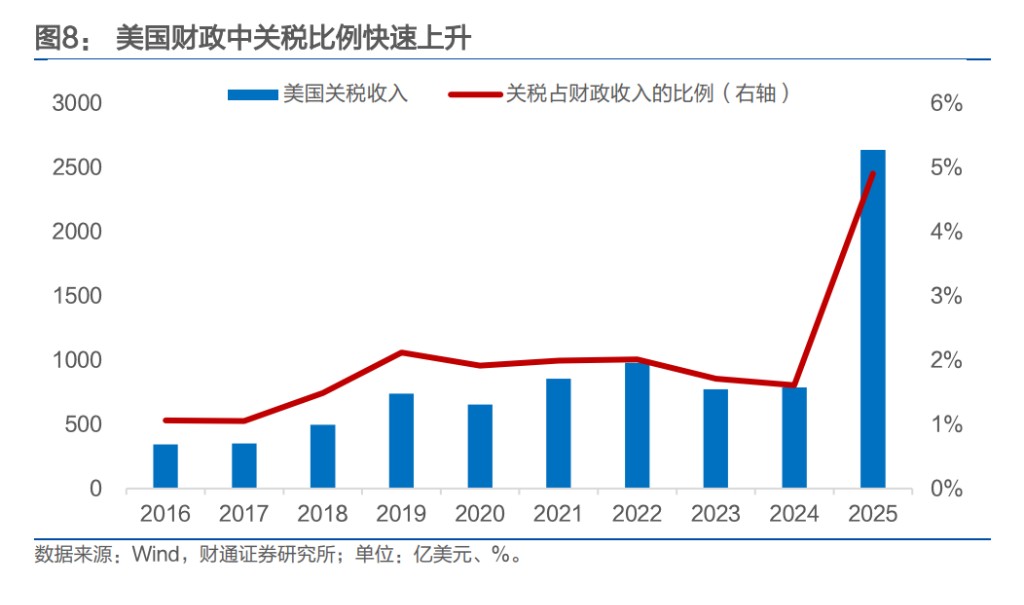
To win the midterm elections in 2026, Trump faces political pressure to lower prices and reduce borrowing costs. Caitong Securities analyzes that the tools available to him are mainly two: first, controlling energy prices, but the effectiveness is questionable due to the interests of OPEC+ and domestic U.S. oil companies; second, reducing import inflation through tariff exemptions, but tariffs already account for 5.0% of U.S. fiscal revenue, and large-scale reductions would directly impact fiscal revenue, forcing the Treasury to issue more national debt, further eroding USD sovereign credit.
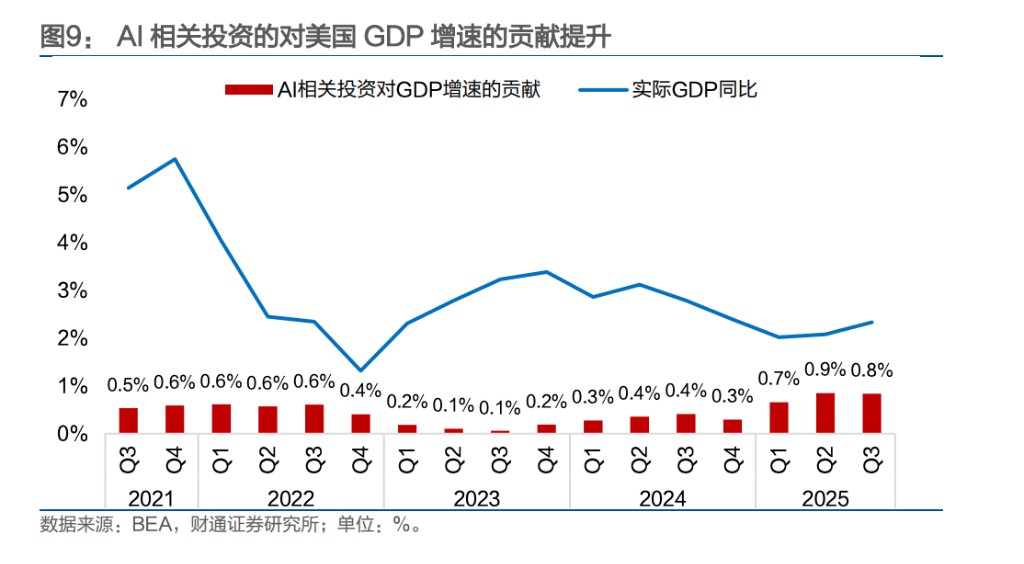
 Caitong Securities points out that if Trump does not significantly cut interest rates, high rates will suppress corporate investment while threatening the heavily debt-reliant AI capital expenditures.
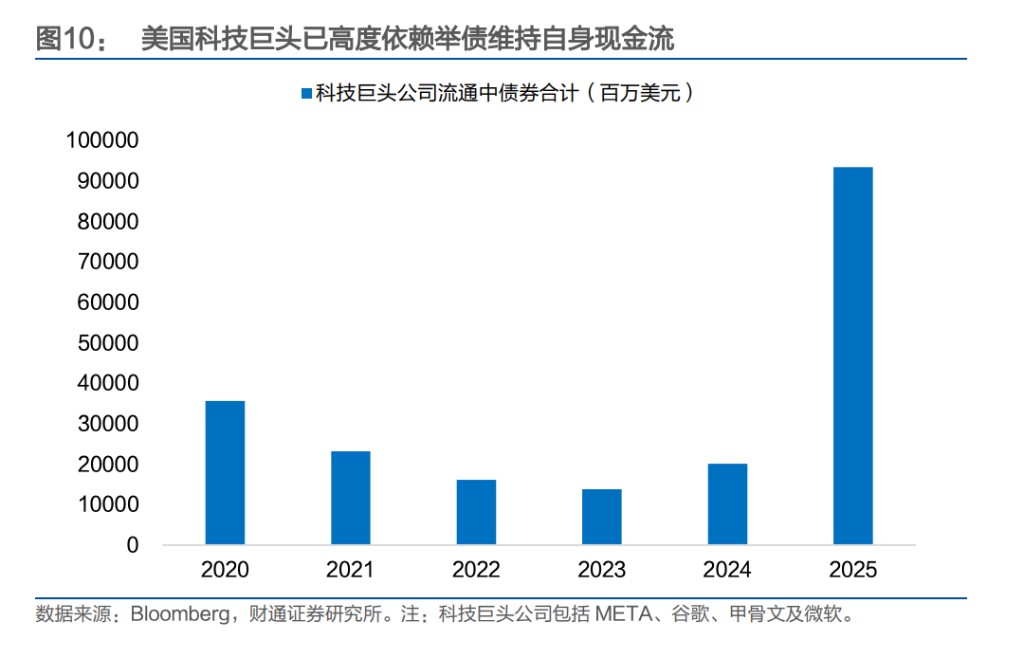
Meta, Alphabet, Amazon, and Oracle's AI infrastructure investments have become highly reliant on debt financing. In the second and third quarters of 2025, AI-related investments are expected to contribute 0.9% and 0.8% to the growth of the U.S. GDP, respectively, indicating a significant increase in the U.S. economy's dependence on this expenditure.
Caitong Securities points out that if Trump does not significantly cut interest rates, high rates will suppress corporate investment while threatening the heavily debt-reliant AI capital expenditures.
Meta, Alphabet, Amazon, and Oracle's AI infrastructure investments have become highly reliant on debt financing. In the second and third quarters of 2025, AI-related investments are expected to contribute 0.9% and 0.8% to the growth of the U.S. GDP, respectively, indicating a significant increase in the U.S. economy's dependence on this expenditure.
Caitong Securities believes that regardless of the policy mix adopted by Trump, the ultimate outcome points to an impact on U.S. sovereign credit, and the U.S. dollar is likely to remain weak, with the Chinese yuan possibly continuing to appreciate against the dollar in 2026.
Seasonal settlement assists, appreciation pace accelerates
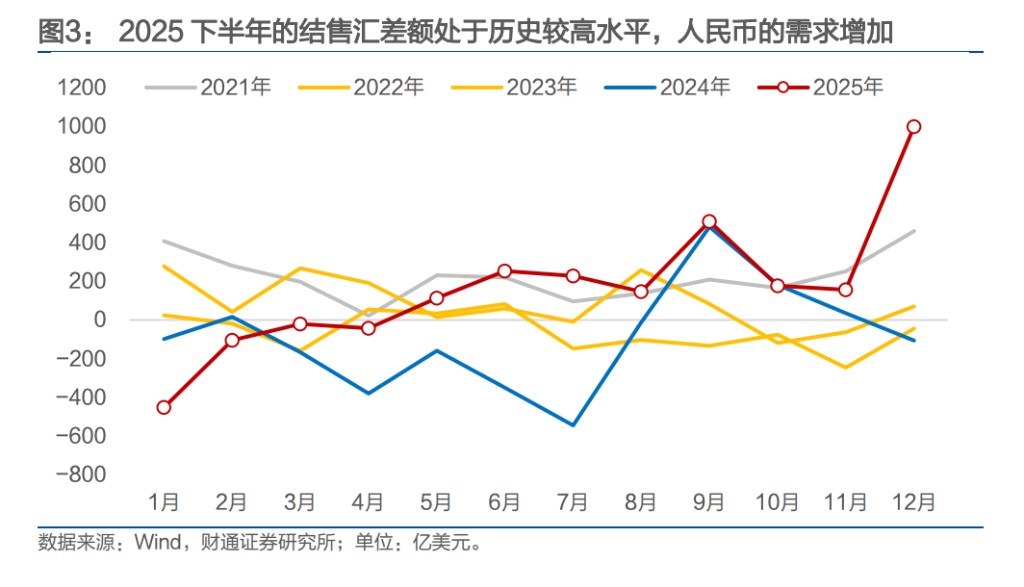
Caitong Securities points out that the concentrated release of settlement demand has also accelerated the pace of the yuan's appreciation. Every December, the settlement and sales difference of export enterprises typically experiences a seasonal increase, mainly due to financial accounting and profit realization needs, concentrating foreign exchange income into yuan.
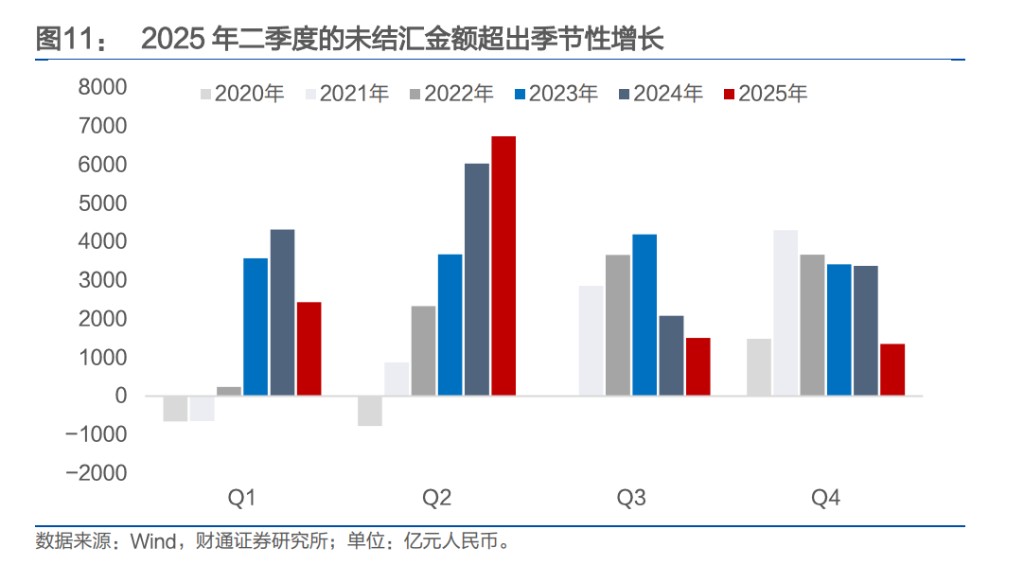
However, starting from September 2025, the settlement and sales difference has shown a super-seasonal growth, stemming from export enterprises' expectations that the yuan will continue to appreciate in the future, leading to concentrated settlements. The settlement and sales difference in December 2025 is expected to exceed seasonal growth to reach USD 100.1 billion. The short-term surge in settlements has accelerated the volatility of the yuan's appreciation.
Strong fundamental support, yuan expected to continue appreciating
In addition to the passive appreciation driven by a weaker dollar and the seasonal settlement wave, the fundamental factors of the yuan itself also provide significant support.
Goldman Sachs points out that in 2025, China's current account surplus is expected to account for 3.7% of GDP, exceeding previous forecasts. Based on fourth-quarter data, Goldman Sachs has raised its 2026 surplus forecast to 4.3% and expects that in the coming years, this surplus could approach 1% of global GDP, indicating that the yuan will further appreciate in 2026.
The report notes that the fundamental factors supporting a bullish outlook on the yuan remain solid: the yuan exchange rate is deeply undervalued, coupled with strong performance in the export sector, and currency appreciation is typically a balanced result of these two major factors.
According to HSBC, the current strength of the yuan is rooted in three clear main lines: the steady advancement of yuan internationalization, the deepening of China's economic rebalancing, and the structural shift in global capital's diversification away from dollar assets. Regulatory authorities are expected to focus future policies on industrial upgrading, technological self-reliance, and growth structure rebalancing, which together form the underlying support for the yuan's appreciation HSBC further elaborates that China's vision of promoting the renminbi as a global reserve currency is unfolding along four dimensions: increasing the share of renminbi usage in international trade and cross-border payments; promoting renminbi assets as a value storage tool for global investors; breaking the market's inertia of viewing the renminbi as "soft-pegged to the US dollar" and establishing exchange rate independence; and providing a demonstration for global exploration of "de-dollarization." These four dimensions are shaping the renminbi from a passive follower into a more proactive participant in the international monetary system.
Expected to Reach 6.8, Central Bank Intervention May Constitute Boundary Constraints
In terms of quantifying appreciation potential, Caitong Securities estimates that if the Federal Reserve cuts interest rates by 75 basis points in 2026, based on historical experience, the US dollar may appreciate against the renminbi by about 3.1%, potentially reaching 6.83 in extreme scenarios. If corporate willingness to exchange currency continues to rise, it may even appreciate further to the level of 6.8.
Goldman Sachs provides a more aggressive forecast, maintaining a 12-month target of 6.70, believing that the renminbi is currently undervalued by about 22%. China's current account surplus is expected to reach 3.7% of GDP in 2025 and rise to 4.3% in 2026, fundamental factors support further appreciation of the renminbi. Goldman Sachs points out that the renminbi has been steadily appreciating at a rate of less than 1% per month, becoming an important underlying force affecting the broader US dollar trend.
HSBC has lowered its first-quarter end forecast to 6.85 and its year-end target to 6.75, noting that the US dollar against the renminbi has fallen below the implied level of interest rate differentials, a divergence that has become the norm for the US dollar index over the past year.
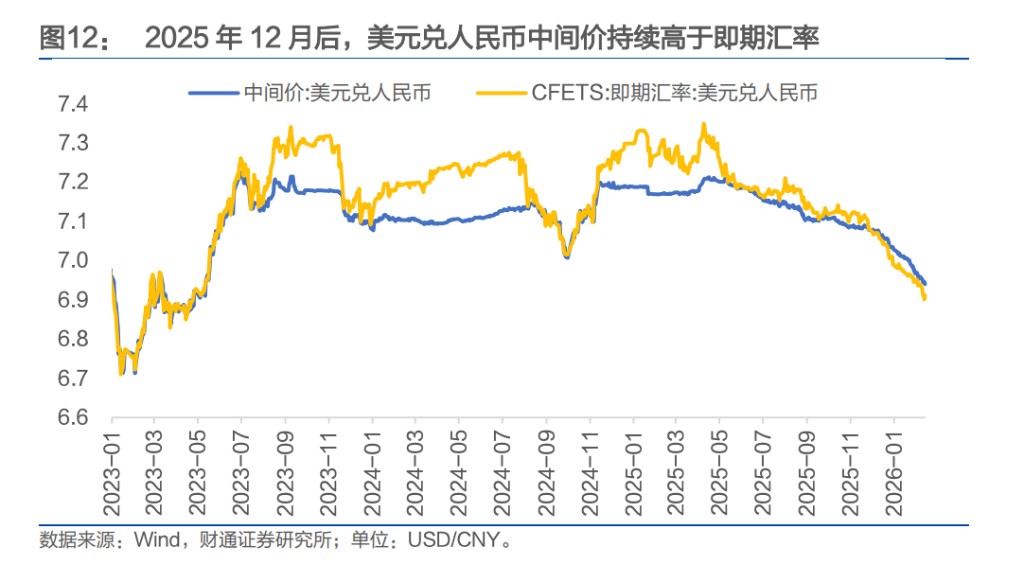
However, appreciation is not without constraints. Caitong Securities notes that after December 2025, the spot exchange rate has consistently remained below the midpoint, reflecting that the central bank is intervening in the unilateral rapid appreciation trend. Although the central bank's tolerance for exchange rate flexibility has increased, it will not allow the renminbi to appreciate too quickly unilaterally. Based on a 3.1% appreciation estimate, total export trade volume is expected to decrease by about 0.8%, and export growth may slow to 3.0% in 2026, with overall pressure being manageable.
Risk Warning and Disclaimer
The market has risks, and investment should be cautious. This article does not constitute personal investment advice and does not take into account individual users' specific investment objectives, financial conditions, or needs. Users should consider whether any opinions, views, or conclusions in this article are suitable for their specific circumstances. Responsibility for any investment based on this rests solely with the investor
