


OPEC+ is expected to finalize a production increase plan on Sunday, with several representatives anticipating a return to a "slight increase" mode in April

The current oil price performance contrasts with the expectation of "oversupply." The resilience of demand, geopolitical risks, and supply disruptions in multiple regions have driven a cumulative increase of 17% in oil prices this year. Several OPEC representatives expect to restart "moderate incremental" production increases, with analysts predicting a limited increase of about 137,000 barrels per day
OPEC+ will hold a video conference this Sunday to review the production policy for April. Several representatives expect the organization to resume a "moderate, small-step" pace of production increase, gradually releasing more supply to the market against the backdrop of resilient demand and rising oil prices.
According to Bloomberg, several unnamed OPEC+ representatives stated that although the final action plan before the meeting has not been finalized, they anticipate a series of small production increases to be restarted in April. The market is focused on whether the increase in production will weaken the recent rise in oil prices or merely balance supply and demand with limited increments.
The current performance of oil prices contrasts with expectations of "oversupply." Representatives pointed out that despite widespread expectations of a supply surplus this year, oil prices have still risen by about 17%, which increases the operational space for OPEC+ to resume production increases.
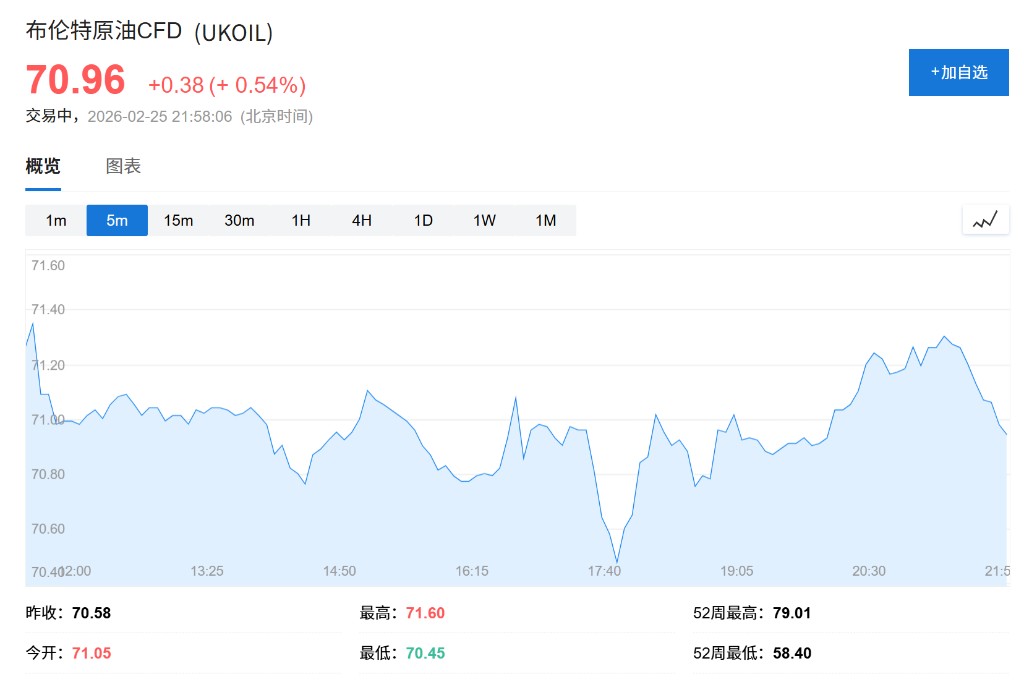
However, uncertainty is still rising. One official stated that an increase in production "may occur," but the decision remains unclear, as escalating conflict risks between the U.S. and Iran cast a shadow over the outlook and may amplify oil price volatility. Following the announcement, Brent crude prices remained around $70 per barrel.
Meeting Focus: Will "Small Production Increases" Resume from April?
Bloomberg cited representatives stating that OPEC+, led by Saudi Arabia and Russia, plans to assess the April policy in the video conference on Sunday, but has not yet reached a consensus on the approach.
In the baseline expectations of most representatives, the organization will return to a "cautious increase" strategy. Three officials expect a series of small production increases to resume from April.
According to analysts cited by Bloomberg, OPEC+ may raise daily production by about 137,000 barrels, which is generally consistent with the "minimal increase" at the end of last year.
This magnitude means that even if production increases are implemented, their impact on short-term supply and demand is more likely to be "calibration" rather than "turning," and the market will still focus on whether the increases will continue and the pace at which they occur.
Why Are Oil Prices Rising: Resilient Demand, Geopolitical Risks, and Supply Disruptions
Despite warnings from some well-known forecasting agencies about a significant supply surplus this year, this has not noticeably suppressed oil prices so far.
Bloomberg reported that one reason is the rising geopolitical risks, and another is a series of production disruptions from North America to Kazakhstan and Russia.
Recent statements from industry companies have also reinforced the judgment of "delayed surplus." U.S. shale oil producer Diamondback Energy stated on Monday that the "surplus wave" is being pushed to a later time window.
Baker Hughes, one of the world's largest oilfield service companies, expressed a similar view on Tuesday
