


The Asia-Pacific stock market continues its upward trend, sprinting towards the best February in history, with the South Korean stock index rising 18% for the month, but technology stocks are under pressure following NVIDIA's earnings report
英偉達跌超 4%,延續財報後疲軟態勢。Coreweave 盤中暴跌超 20%。標普地區銀行 ETF 暴跌 5%。軟件股重回跌勢,北美科技軟件股指數 ETF 跌 1.25%。戴爾逆勢暴漲約 22%。10 年期國債收益率下跌 5.7 基點。比特幣價格下跌 3%。現貨黃金上漲 1.8%,連續第七個月上漲。白銀同樣大漲超 6%,連續第十個月上漲。WTI 原油價格漲 2.88%。
美國 1 月 PPI 數據超預期重燃通脹憂慮,英國私募信貸巨頭 MFS 破產、爆出高達 13 億美元的抵押品缺口,引爆投資者對私募信貸風險的恐慌。美股低開,最終標普、納指跌幅收窄,但仍下挫。避險情緒推動美債和貴金屬走強,美伊地緣風險則提振原油價格。
週五道指下挫超 1%,標普 500 指數下跌 0.4%、全月累計下跌近 1%,創下自去年 3 月以來的最大單月跌幅。
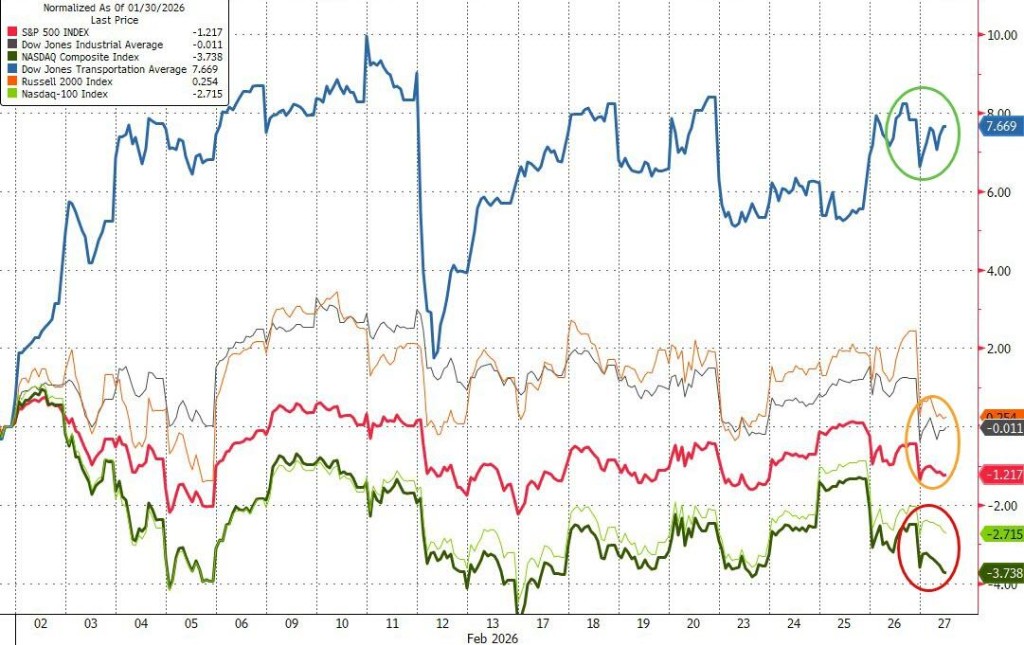 (美股基準股指本月走勢)
據華爾街見聞,美國 1 月核心 PPI 創一年最快增速,美聯儲貨幣政策複雜化加劇。數據印證了 “反金髮姑娘” 理論:通脹意外走高,而經濟增長卻意外下滑。
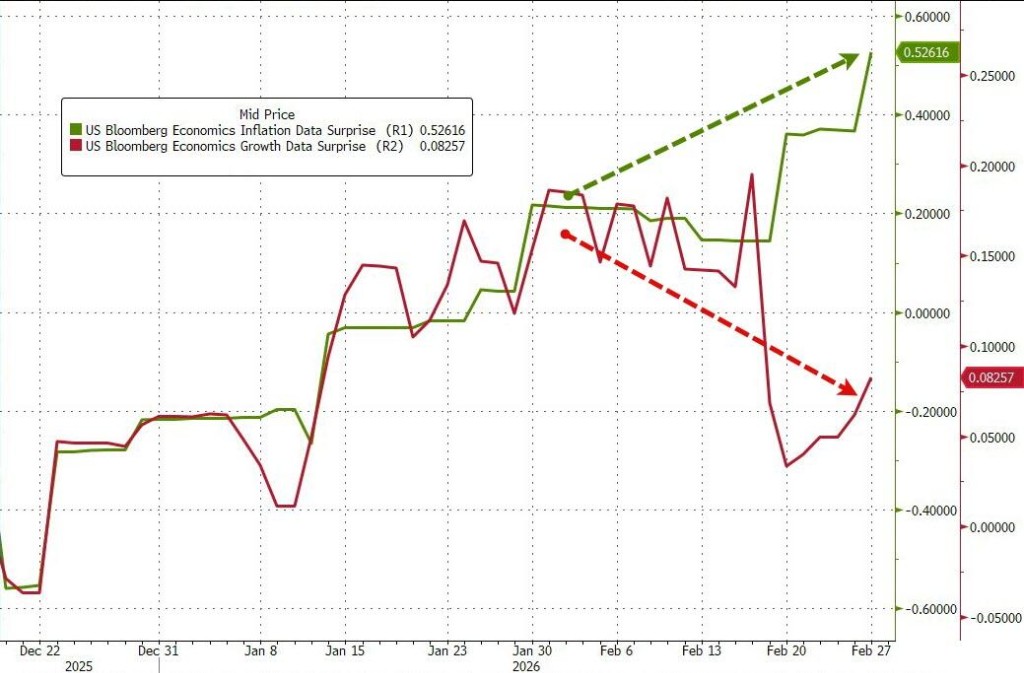 (通脹意外指數走高,而經濟增長意外指數下滑)
但是值得注意的是,短期投資者關注的是後者經濟增長放緩,而對前者通脹上升不以為意,本月降息預期明顯升高。
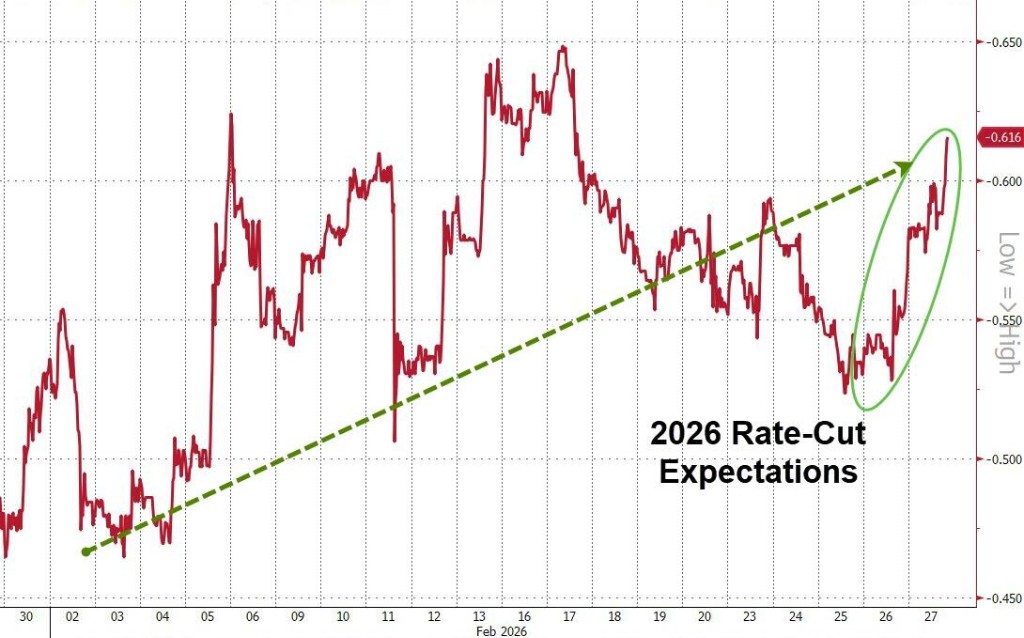
華爾街見聞提及,英國抵押貸款機構 Market Financial Solutions(MFS)宣告破產,多個私人信貸基金相繼出現流動性問題,令市場對不透明私人借貸領域的違約風險擔憂大幅升温。
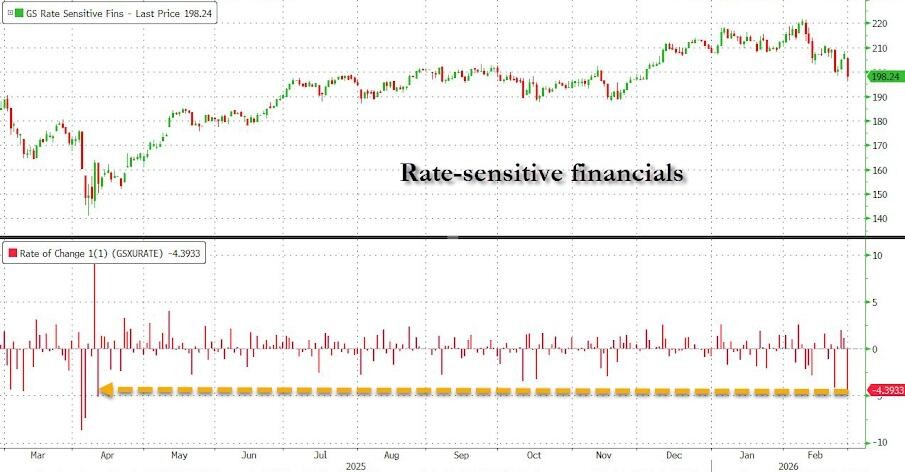
美股金融板塊重挫,標普地區銀行 ETF 暴跌 5%。高盛跌 7.4%,摩根士丹利跌 6.2%,富國銀行和花旗集團跌幅超 5%。對利率敏感的金融股遭遇了去年 4 月以來最大跌幅。
儘管 VIX 指數在 2 月份僅僅回到 21 點,但因為套期保值者紛紛湧入市場尋求下行保護,其偏斜度飆升至 2025 年 10 月以來的最高水平。
分析認為這説明,市場不僅僅覺得 “波動會變大”,而是恐慌於 “市場會暴跌”。大家在搶購 “下行保護”,比如買入看跌期權。
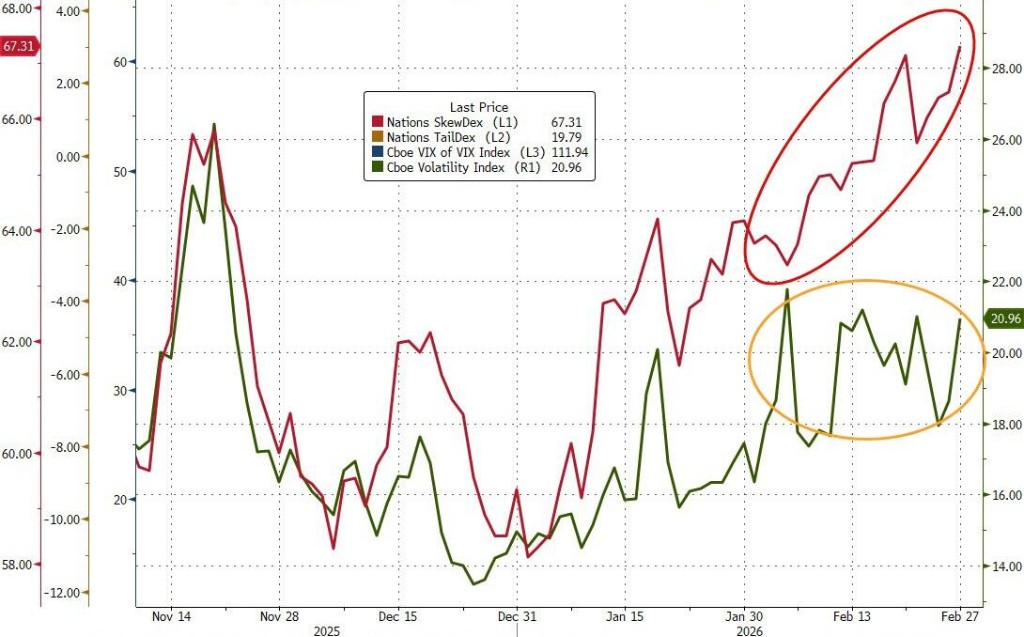 (Nations SkewDex 飆升至 2025 年 10 月以來的最高水平)
Miller Tabak 的 Matt Maley 表示:
目前市場面臨的最緊迫問題是中東局勢,然而,科技行業和信貸市場面臨的擔憂也緊隨其後。
Truist 的 Brian Finneran 在致客户報告中指出:
市場今早正在拋售任何與信貸稍有關聯的標的,專業投資者對美國運通尤為關注,因為白領失業趨勢對其業務有更為直接的影響。
軟件股週五再度下挫,北美科技軟件股指數 ETF 跌 1.25%,同時連續第二個月表現糟糕。本月科技、金融和可選消費板塊表現最差,而公用事業、能源和材料板塊則表現優異。
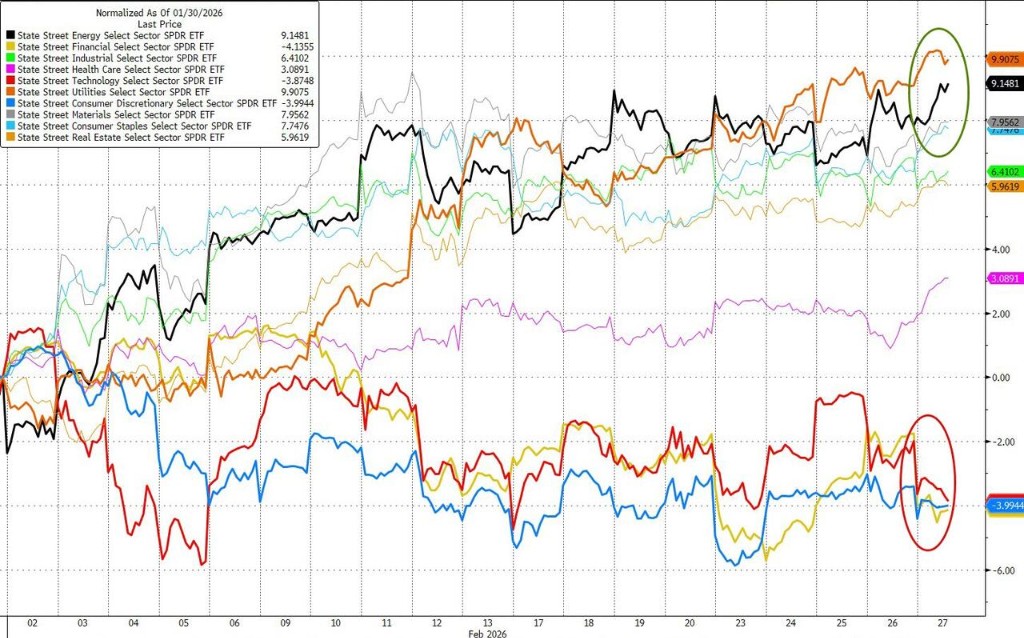 (2 月份美股各板塊走勢)
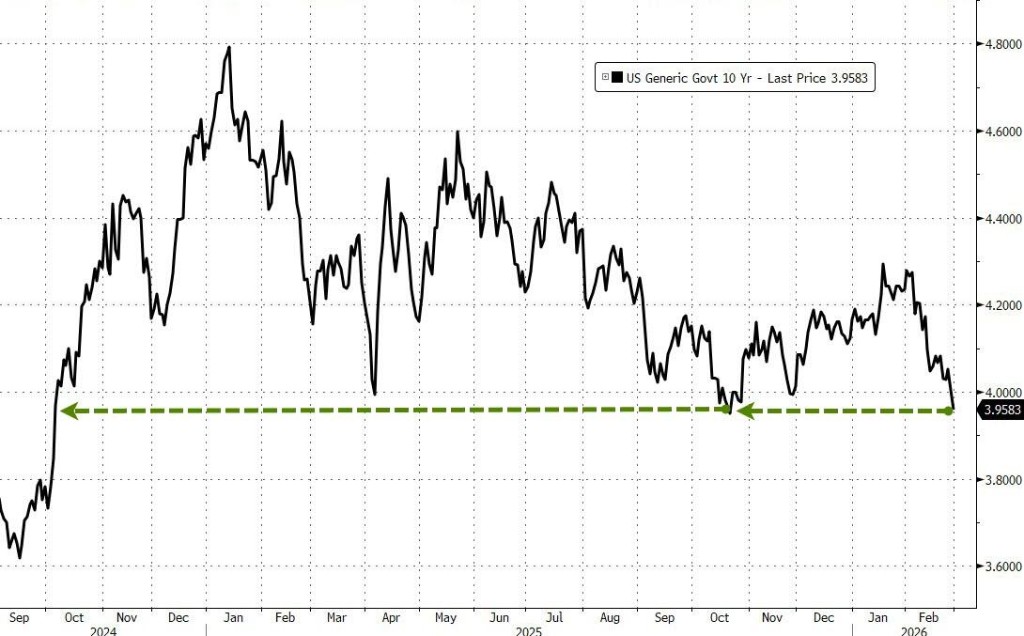
市場避險情緒繼續升温的背景下,10 年期國債收益率下跌 5.7 個基點,跌破了 4.00% 的關鍵心理關口,為去年 10 月以來首次。彭博行業研究分析師 Herman Chan 表示:
銀行正步入一個充滿未知數的更高波動期,AI 採納與顛覆的節奏尚難判斷。國債收益率走低疊加信用利差擴大,顯示市場整體轉向規避風險。
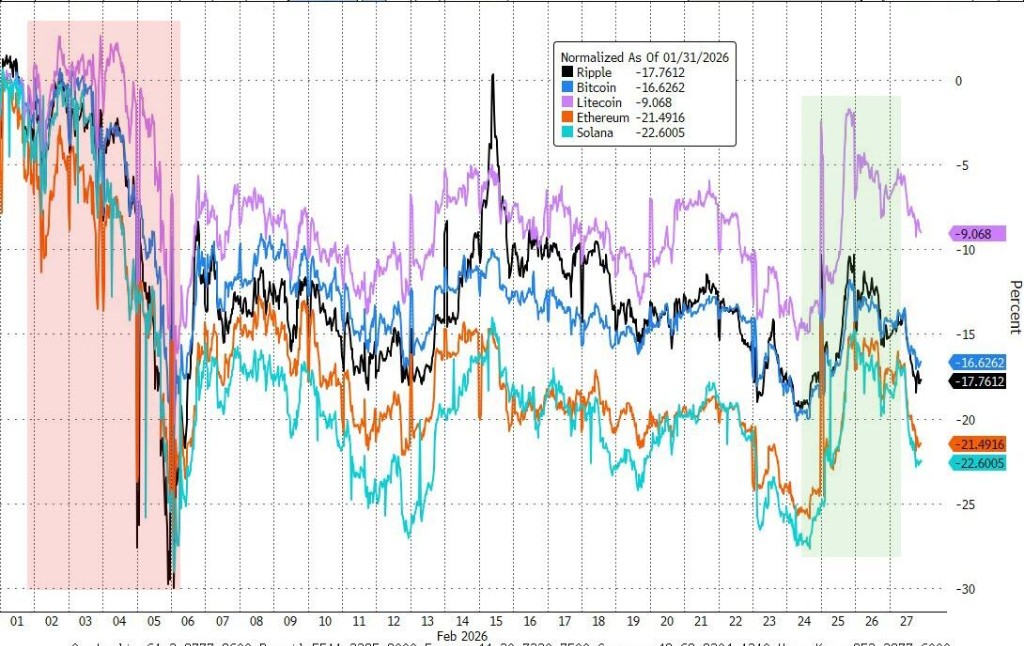
在普遍的避險情緒中,加密貨幣市場遭遇拋售。比特幣價格下跌 3%。以太坊更是下挫超 5%,跌破 2000 美元關口。整個 2 月份,比特幣連續第五個月下跌。
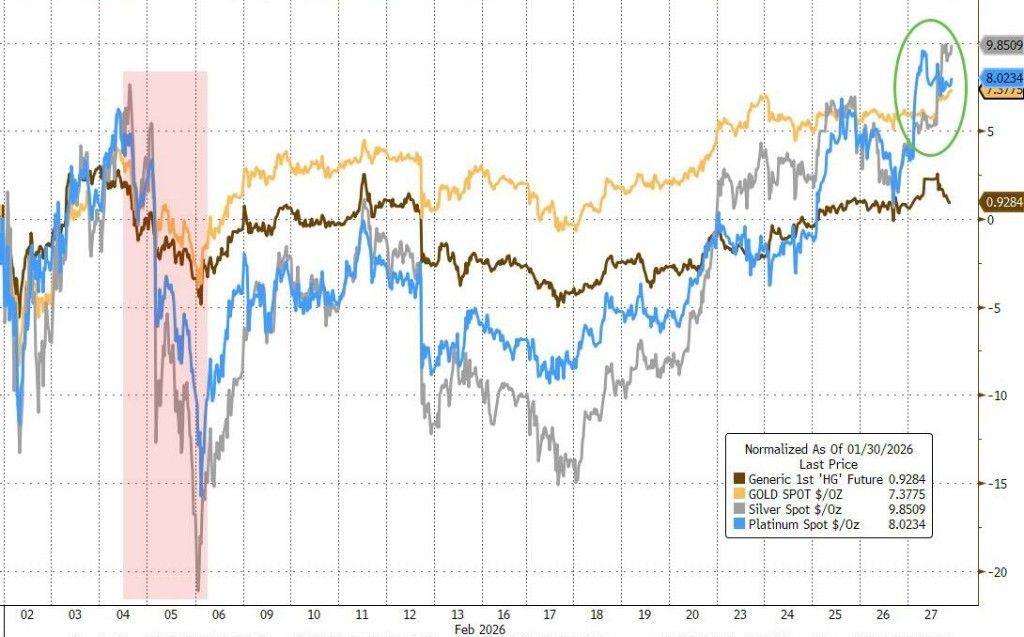
現貨黃金則上漲 1.8%,突破 5200 美元大關後快速拉昇、尾盤逼近 5300 美元,黃金連續第七個月上漲。白銀同樣大漲超 6%,連續第十個月上漲且當月漲幅達 10%。WTI 原油價格漲 2.88%。
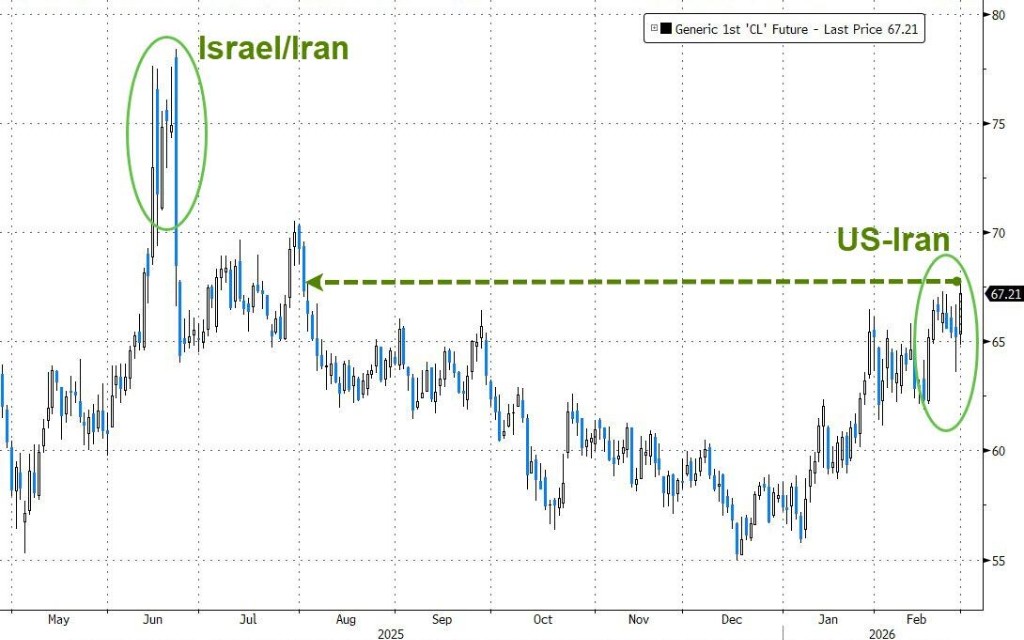
華爾街見聞提及,特朗普對伊朗談判表現不滿,仍希望通過談判解決問題,稱伊方未承諾不發展核武,尚未就是否發動打擊作出最終決定,戰爭發生時好壞風險都有。
受美伊緊張局勢衝擊,地緣政治風險溢價大幅上漲,油價連續第二個月收高,並觸及六個月高位。WTI 原油價格日內漲 2.88%。
週五美股三大股指下挫。美股銀行股普跌,高盛跌 7.4%,摩根士丹利跌 6.2%,富國銀行和花旗集團跌幅超 5%。不過戴爾因其 AI 服務器訂單激增而發佈了強勁的業績展望,其股價逆勢暴漲約 22%。
美股基準股指:
標普 500 指數收跌 29.98 點,跌幅 0.43%,報 6878.88 點。
道瓊斯工業平均指數收跌 521.28 點,跌幅 1.05%,報 48977.92 點。
納指收跌 210.171 點,跌幅 0.92%,報 22668.212 點。納斯達克 100 指數收跌 74.335 點,跌幅 0.30%,報 24960.035。
羅素 2000 指數收跌 1.68%,報 2632.36 點。
恐慌指數 VIX 收漲 6.6%,報 19.86。
美股行業 ETF:
銀行板塊重挫,標普區域銀行 ETF 跌超 5%,KBW 銀行 ETF 跌 4.89%。太陽能 ETF 重挫 4.46%。油氣板塊漲 2.60%。
(2 月 27 日 美股各行業板塊 ETF)
科技七巨頭:
美國科技股七巨頭(Magnificent 7)指數跌 1.83%,報 193.36 點,本週累計下跌 2.18%,2 月份累計下跌 6.57%。
谷歌 A 漲 1.42%,亞馬遜漲 1.00%,Meta 跌 1.34%,特斯拉跌 1.49%,微軟跌 2.24%,蘋果跌 3.21%,英偉達跌 4.16%。
芯片股:
費城半導體指數收跌 1.21%,報 8098.371 點。
台積電 ADR 跌 0.56%,AMD 跌 1.70%。
中概股:
納斯達克金龍中國指數收跌 1.81%,報 7277.39 點,本週累計下跌 3.61%,2 月份累計下跌 5.88%。
- 熱門中概股裏,蔚來收跌 4%,阿里跌 2.6%,新東方、理想、京東、文遠知行、拼多多、小鵬、小米等跌超 1%。
其他個股:
美國銀行股重挫,高盛跌 7.4%,摩根士丹利跌 6.2%,富國銀行和花旗集團跌幅超 5%。
- Circle 跌 4.32%。
- 戴爾因其 AI 服務器訂單激增而發佈了強勁的業績展望,其股價逆勢暴漲約 22%。
歐洲股市創收盤歷史新高,2 月份電信板塊漲約 15.6%、食品飲料板塊漲超 9.8%、油氣板塊漲超 8.7%。英國股市創收盤歷史新高,2 月份累漲超 6.7%,丹麥股市累跌超 17.2%。
泛歐股指:
歐洲 STOXX 600 指數收漲 0.11%,報 633.85 點,突破 2 月 25 日所創收盤歷史最高位 633.47 點。本週累計上漲 0.52%,2 月份累計上漲 3.74%。
歐元區 STOXX 50 指數收跌 0.38%,報 6138.41 點,本週累漲 0.12%,2 月份累漲 3.20%。
各國股指:
德國 DAX 30 指數收跌 0.02%,報 25284.26 點,2 月份累計上漲 3.04%。
法國 CAC 40 指數收跌 0.47%,報 8580.75 點,2 月份累漲 5.66%。
英國富時 100 指數收漲 0.59%,報 10910.55 點,2 月份累漲 6.72%。
(2 月 27 日 歐美主要股指表現)
歐股板塊:
板塊方面,STOXX 600 電信指數 2 月份累計上漲 15.57%,食品及飲料指數漲 9.83%,石油及天然氣指數漲 8.72%,基礎資源指數漲 8.54%,公用事業指數漲 8.41%。
10 年期美債收益率跌穿 3.94%,2 月份累跌將近 30 個基點。10 年期德債收益率週五跌約 5 個基點,本週累跌超 9 個基點。
美債:
紐約尾盤,美國 10 年期基準國債收益率跌 6.66 個基點,報 3.9375%,本週累計下跌 14.52 個基點,2 月份累計下跌 29.80 個基點,整體交投於 4.2975%-3.9375% 區間。
兩年期美債收益率跌 5.51 個基點,報 3.3729%,本週累計下跌 10.31 個基點,2 月份累跌 14.75 個基點,整體交投於 3.5901%-3.3729% 區間。
(美國主要期限國債收益率)
歐債:
歐市尾盤,德國 10 年期國債收益率下跌 4.7 個基點,報 2.643%,本週累計下跌 9.4 個基點,整體交投於 2.740%-2.643% 區間。
兩年期德債收益率跌 4.3 個基點,報 1.998%,本週累跌 5.6 個基點,整體交投於 2.058%-1.998% 區間。
英國 10 年期國債收益率下跌 4.4 個基點,本週累計下跌 12.1 個基點。兩年期英債收益率跌 2.5 個基點,報 3.525%,本週累跌 5.5 個基點。
美元指數跌 0.2%,2 月份累漲 0.6%。離岸人民幣 2 月份漲約 1.4%,一度逼近 6.82 元。
美元:
紐約尾盤,ICE 美元指數跌 0.21%,報 97.582 點,本週累計下跌 0.21%,2 月份累計上漲 0.61%。
彭博美元指數跌 0.09%,報 1186.93 點,2 月份累跌 0.11%,交投區間為 1197.11-1178.09 點。
(彭博美元指數)
離岸人民幣:
紐約尾盤,美元兑離岸人民幣報 6.8625 元,較週四紐約尾盤漲 181 點,日內整體交投於 6.8391-6.8699 元區間。
- 離岸人民幣本週累漲大約 350 點,漲幅 0.50%;2 月份累漲大約 950 點、漲幅 1.37%,整體持續走高、交投區間為 6.9630-6.8267 元。
加密貨幣:
紐約尾盤,比特幣價格下跌 3%。以太坊則下挫超 5%,跌破 2000 美元關口。整個 2 月份,比特幣連續第五個月下跌。

美國商品期貨交易委員會(CFTC):2 月 24 日當週,投機者所持 NYMEX WTI 原油淨多頭頭寸增加 16,968 手合約,至 98,187 手合約,創七個月新高。
原油:
WTI 4 月原油期貨收漲 1.81 美元,漲幅 2.78%,報 67.02 美元/桶,本週累計漲超 0.81%,2 月份累計上漲 3.52%。
(WTI 原油期貨)
布倫特 4 月原油期貨收漲 1.73 美元,漲幅 2.45%,報 72.48 美元/桶,2 月份累漲 5.64%。
天然氣:
NYMEX 4 月天然氣期貨收報 2.8590 美元/百萬英熱單位,2 月份累計下跌 29%。
現貨黃金週五漲 1.7%,紐約期銀漲約 7.7%,2 月份期金漲約 11.3%、期銀漲約 19.3%。
黃金:
紐約尾盤,現貨黃金漲 1.75%,刷新日高至 5275.82 美元/盎司,2 月份累計上漲 7.84%。
(現貨黃金價格)
COMEX 黃金期貨漲 1.64%,報 5279.60 美元/盎司,2 月份累漲 11.27%。
白銀:
紐約尾盤,現貨白銀漲 6.33%,報 93.8333 美元/盎司,2 月份累漲 10.11%。
COMEX 白銀期貨漲 7.67%,報 94.300 美元/盎司,2 月份累漲 19.28%。
其他金屬:
紐約尾盤,COMEX 銅期貨漲 0.61%,報 6.0630 美元/磅,2 月份累漲 1.35%,整體出現三波 V 形行情。
2 月份,現貨鉑金累漲 7.19%,報 2369.00 美元/盎司;現貨鈀金累漲 4.56%,報 1790.59 美元/盎司。
- LME 期銅收漲 39 美元,報 13344 美元/噸。LME 期錫收漲 3294 美元,報 57728 美元/噸。LME 期鎳收漲 150 美元,報 17844 美元/噸。
