


Dialogue with Li Bin: Having gone through 2019, the current difficulties are just minor issues
At a communication meeting with Wall Street Insights, Nio Chairman Li Bin stated that although the company achieved profitability in the fourth quarter of last year and its market value returned to 100 billion, it is still a "nobody" in the entire automotive industry. He pointed out that in the next two to three years, the industry will face stock competition, the total market will decline, and technological barriers will quickly dissolve, requiring companies to find development strategies that suit themselves. Li Bin emphasized that the era of relying on industry growth has ended, and companies need to be vigilant about market changes
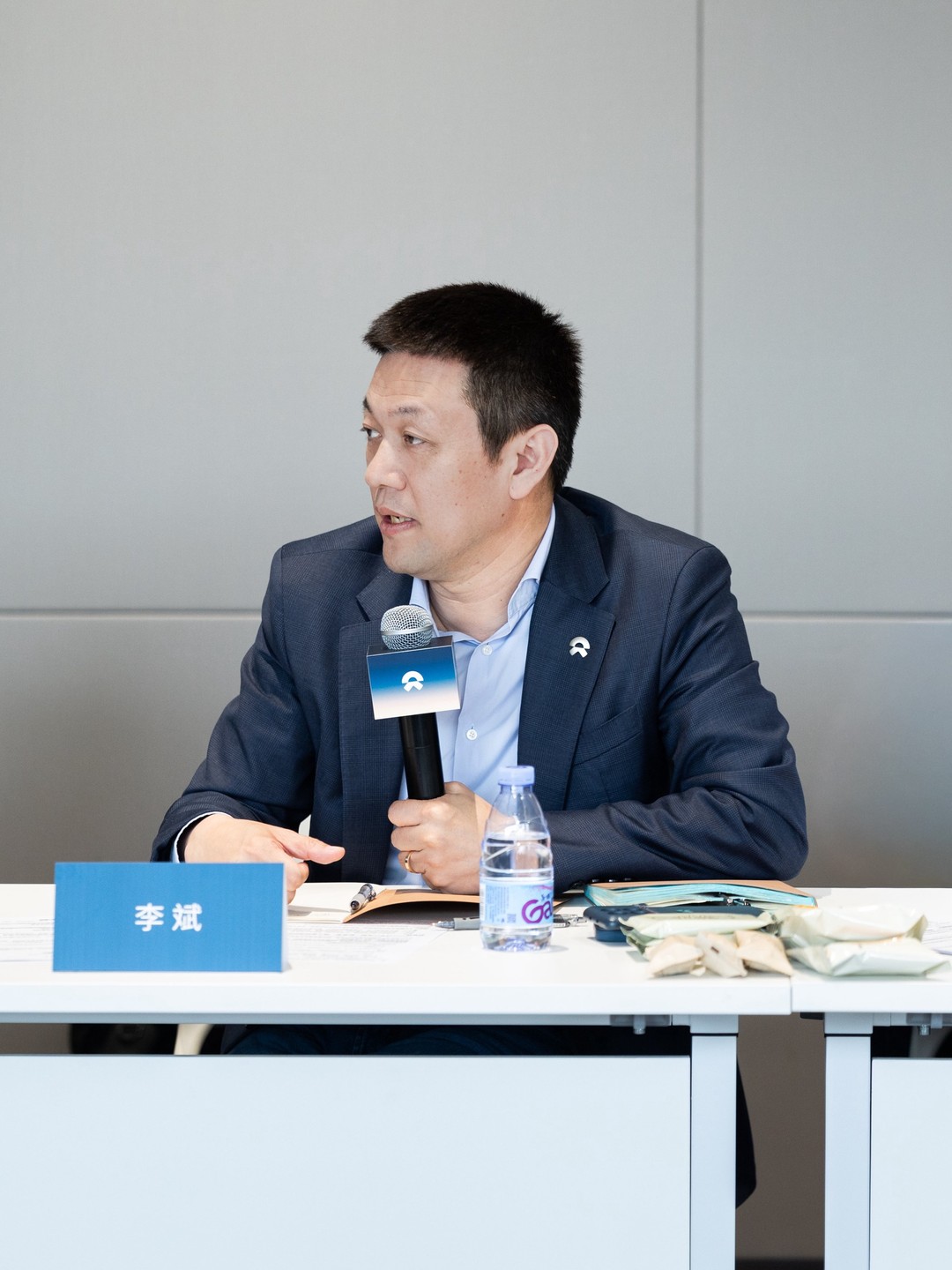
Author | Chai Xuchen
Editor | Zhou Zhiyu
In the race of car manufacturing, Nio has finally secured a crucial match point.
This company, which has been proving its ability to "survive," achieved quarterly profitability in the fourth quarter of last year, with multiple operational indicators reaching historical highs.
Chairman Li Bin once said that he is the kind of person who can pull himself back from the edge of a cliff. After years of setbacks and enduring the "roller coaster" fluctuations, Nio has finally proven that it can indeed succeed, tackling the tough challenges of high-end and battery swapping, and doing so with great momentum.
With a market value returning to 100 billion, Li Bin is not overly excited. Having experienced two rounds of industry cycles, he knows that quarterly profitability is merely passing the "survival" test.
At a communication meeting on March 11, Li Bin told Wall Street News that in the entire automotive industry, Nio is still a "nobody," with only a 1.5% share of the domestic car market.
Moving forward, how to prove that the achievements of the fourth quarter last year are sustainable, and to truly transition from a new force aiming to change the industry to an automotive giant with multiple sub-brands, is the question Nio needs to answer. Because, before a company is profitable, its stock price space comes more from the "story," but once it becomes profitable, it must be estimated according to methods like price-to-earnings ratio.
However, Li Bin quickly shifted his focus forward—over the next two to three years, there will be no incremental growth in the industry, only competition for existing market share. In his own words, this is a "marathon on a muddy road," and Nio must find its own way to run.
Facing the Chill
Li Bin's judgment on the trend is very straightforward: the total volume of China's passenger car market will decline compared to last year, and it will continue to decline next year. The era of relying on the overall industry to lift all boats is over, and no one should harbor any illusions.
Beyond the peak in total volume, what is even more concerning is the rapid dissolution of technological barriers. Li Bin admitted that the iteration of technology is changing rapidly; any new technology released can be quickly followed by competitors within six months to a year, and no one dares to claim that their technology can maintain a long-term lead.
In the current communication environment, product cycles are being infinitely compressed. To gain attention, car companies generally adopt a pulse marketing strategy, combined with a large number of new car launch rights. This tactic of over-drawing the future leads to an inevitable result: after a brief sales frenzy during the initial launch period, sales often experience a cliff-like drop, with no exceptions.
Li Bin's response strategy is clear: to survive in this "valley of death," car companies must make significant improvements in investment decision-making, market response speed, and team system capabilities.
Faced with the huge gap between the initial sales period and the long sales period, Nio's solution is: on one hand, to accumulate a sufficiently deep water level in the early stage, and on the other hand, to continuously acquire new orders through frontline channels, thereby developing the ability to "store water."
Reshaping the Foundation
What the outside world is most concerned about is the recovery of Nio's overall vehicle gross margin, but Li Bin is more focused on another matter: the "user enterprise" model that has been questioned for many years finally showed positive results last year Nio's non-vehicle business revenue exceeded 10 billion last year, accounting for 12% of total revenue, with a gross margin of 11.9%. This segment includes community businesses based on vehicle ownership, such as after-sales service, NIO LIFE, and financial insurance, which have achieved profitability for three consecutive quarters. As Nio continues to accumulate a user base of one million, this snowball will only grow larger, becoming a stable cash cow for Nio to navigate through cycles.
At the core of this business foundation, the most disruptive and reflective of Nio's long-term value is its unwavering commitment to pure electric and battery swap routes.
In response to the recent push for fast-charging technology by giants like BYD, Li Bin expressed his approval but clearly stated that supercharging and battery swapping are not mutually exclusive, and in terms of refueling speed, battery swapping is still three times faster than the fastest supercharging.
However, speed is merely a surface issue. Li Bin insists that the underlying logic of battery swapping is a redefinition of the asset attributes of the automotive industry, drawing a parallel between smart electric vehicles and the aviation industry.
In aviation, the aircraft's fuselage and engine have always been operated separately because the engine is highly valuable (accounting for 40% of the aircraft) and has a completely different lifespan compared to the fuselage. Similarly, batteries, as high-value electrochemical products, account for 30% to 40% of the total vehicle cost and experience degradation in both cycle life and thermal life.
Nio's implementation of vehicle-battery separation and battery swapping systems is essentially a solution to the problem of "different lifespans of vehicle and battery."
Internal Efforts
If the choice of route determines how far Nio can go, then the efficiency of the organization determines how fast Nio can run through the mud.
"Making a profit as a business is a must," Li Bin requires the team to account for costs without dismissing a one-dollar increase in a component as trivial; instead, they should calculate it against Nio's future scale of one million vehicles—one dollar means ten million, and one hundred dollars means one billion.
Li Bin shared a personal experience: for a research and development project, the industry price was 30 million, and the internal quote was over 20 million. He sent it back, and everyone worked together to find a way to complete it for 2 million, with even better results. The current internal culture at Nio is "finding joy in accounting."
Supporting this extreme efficiency is the deep integration of Nio's technical and organizational structures. Li Bin firmly believes that "technical architecture determines organizational architecture." Nio has implemented a company-wide operational transformation based on Core Business Units (CBU), aiming to create a company that can integrate data across departments and make quick decisions as an "intelligent entity."
With the help of AI tools, Nio can now accurately calculate the costs and returns of over 1,300 R&D projects, even down to how much each sales consultant contributes to the company.
In the capital-intensive field of intelligent driving, Nio has also maximized efficiency.
In the second and fourth quarters of this year, Nio will launch two important versions of its intelligent driving system, and the computing cost incurred may only be one-tenth or even one-fifth of its peers. Li Bin proudly stated that money should not only be spent wisely but also rely on focused algorithmic model validation to replace blind accumulation of computing power, which has improved Nio's R&D efficiency by at least one-third compared to the past.
Grand Strategy
In terms of products, Nio's strategy this year is very clear: to firmly maintain profitability for the entire year and ensure a sales growth of 40%-50%. Its core weapon is the "large vehicle strategy."
In addition to consolidating the dominance of the L90 and ES8 in the pure electric large three-row market, Nio will launch the executive-level large three-row SUV ES9 this year, as well as the highly anticipated L80 and Nio ES7.
Li Bin is confident about the impending explosion in the large five-seat market. The automotive development cycle lasts two to three years, which severely tests automakers' foresight in product definition. Li Bin has observed that the current new energy tax rates are very friendly to large-sized models, and under similar price conditions, users naturally tend to prefer products with larger space.
This is precisely Nio's advantage as a pure electric brand.
Li Bin made an analogy: for the same 100 square meter house, traditional fuel vehicles and hybrids have complex powertrains, with the "equipment room" occupying 30 square meters, resulting in a usable area of 70 square meters; pure electric vehicles have a simpler structure, with the equipment room only taking up 15 square meters, allowing users to access 85 square meters. This is the inherent advantage of pure electric vehicles in the large vehicle segment, and coupled with battery swapping to alleviate range anxiety, Nio is confident in this arena.
This physical spatial advantage, combined with the battery swapping system addressing the energy replenishment shortfall, forms the winning logic of Nio's large vehicle strategy.
In terms of channel networks, Nio is also starting to seek growth in lower-tier markets. More than 170 SKY stores nationwide have entered the project pipeline, with a peak in store openings expected around mid-year. In contrast, in overseas markets, Nio has chosen a pragmatic strategy, concentrating its core efforts on the Chinese market, fiercely pursuing the goal of a 10% market share.
Looking back at the "darkest moment" of 2019, when internal product quality, external supply chain crises, and geopolitical issues intertwined, Li Bin admitted that the difficulties faced in the past two years are trivial in comparison.
For a company that has experienced two rounds of life-and-death cycles, true competitiveness is no longer about the short-term popularity of a specific model, but rather the organization's ability for "correct attribution" and extremely short "perception delays."
Being restrained when there is money and thinking clearly when there is none—this is the rule Li Bin has figured out. The marathon on the muddy road continues. Li Bin said Nio has found its own pace, and the next step is to keep running.
Transcript of the conversation with Nio Chairman Li Bin and Nio President Qin Lihong:
Question: How do you summarize Nio's performance last year?
Li Bin: As everyone expected, Nio achieved profitability in Q4 last year from any perspective. Our single-quarter NON-GAAP operating profit was even higher than previously forecasted, reaching 1.25 billion. The GAAP profit reached 810 million, which was also higher than our original expectations.
At the same time, multiple operational indicators also set historical records. First is the delivery volume; in Q4 last year, Nio's delivery volume was 124,800 vehicles, a year-on-year increase of 72%. The three brands worked together to create historical highs in Q4; total deliveries for the year exceeded 326,000 units, a year-on-year increase of 46.9% While sales have increased, the overall quality of our operations has also continued to improve. First is the gross margin; our comprehensive gross margin in the fourth quarter of last year was 17.5% (a new high since 2022, having previously exceeded 20% in 2021), and the vehicle gross margin was 18.1%, also a new high in recent years.
Aside from car sales, the gross margin for other businesses was 11.9%, as many costs are included, making the gross margin very valuable. Moreover, this gross margin has been continuously increasing for three consecutive quarters, which is very important for the overall closed-loop of Nio's business model.
As everyone knows, Nio's underlying business thinking translates into our commercial figures, which we refer to as service and community business based on ownership. Last year marked a historic breakthrough with three consecutive quarters of profitability, and the entire year was also profitable.
To translate further, our businesses outside of battery swapping, such as after-sales service, NIO LIFE, finance, insurance, etc., along with some technical services, can generate some profit. Looking at the transformation of Nio's entire business model, this is a figure that is more worth noting than our profitability in the fourth quarter last year. This figure is gradually increasing, with revenue from non-vehicle businesses exceeding 10 billion, accounting for 12% of total revenue. This quarter, the ownership will continue to increase with the growth of our Nio user base.
In terms of cash flow, we have also achieved positive free cash flow for two consecutive quarters, and the entire year has seen positive operating cash flow. Additionally, our cash reserves in Q4 have increased significantly, nearly 10 billion more compared to Q3. From this figure, the overall health of Nio's operations has significantly improved.
There has always been great concern about whether Nio's investments in technology research and development, infrastructure, and user service systems can be sustainable and whether they can create a commercial closed loop.
Our profitability in the fourth quarter of last year should fully validate that Nio's technological route, product planning, and business model possess core competitiveness and can achieve a closed loop. It also reflects Nio's systematic capabilities and the efficiency of the entire company's management and operations, enabling us to participate in fierce market competition.
Therefore, it can be said that the profitability in Q4 last year laid a solid foundation for the long-term sustainable development of our company. It has given confidence to our investors and provided great confidence to our team, and we believe it has also given a lot of confidence to everyone.
This also marks that Nio has entered the third development stage, focusing on high-quality growth, which began in the second half of last year. In the third development stage, we are still confident in maintaining an annual sales growth of 40% to 50%.
During the period from 2022 to 2024, Nio's overall sales are expected to maintain a growth rate of 30% to 40%. Therefore, as long as sales are increasing, many issues in the automotive industry can be resolved. We anticipate that our third development cycle can maintain a growth rate of 40% to 50%, and maintaining such competitive capability and operational results should elevate us to a higher level This year marks the beginning of our third development phase, and our goal remains to achieve profitability for the entire year. Of course, the company's operations are not simply aimed at short-term profits; we are still committed to long-term competitiveness and will resolutely invest in that direction. In terms of research and development, we will continue to invest, and our efficiency has improved significantly. Simply put, we can now achieve research and development results that others would need 30 to 40 billion to accomplish with an investment of 20 to 25 billion each quarter, and we are confident in this.
After a year of experience, Nio has indeed learned how to improve efficiency and focus on ROI. Profitability is just a starting point and a phase breakthrough; we are very clear that competition in the industry is extremely fierce. We have always said that competition in the automotive industry is a marathon on a muddy road, an endless marathon. However, we have a new starting point and more confidence, which can also instill more confidence in our users. Therefore, regarding the upcoming fierce competition, we still have expectations, and we have expectations for ourselves.
Q: With more competition this year, how does Nio plan to respond to these competitors?
Li Bin: In fact, the competition was quite fierce last year. In our 2019 outlook, we anticipated that the industry would enter the final stage around 2024-2025. At that time, we thought, how long would this final stage last? I believe it has no end. However, we judge that from 2025 to 2030, the overall landscape will become increasingly clear, so the early stage of the finals will definitely be intense.
First, I believe the total volume of the entire Chinese passenger car market will decline slightly this year compared to last year, and it will continue to decline next year. In the coming years, the total volume of the passenger car industry will see a slight decrease and will not grow at the high speed it used to. This is the situation we are facing now; everyone should not have any illusions.
Second, technology is still rapidly iterating, and technological advancements are changing day by day. No one can confidently say that their technology can lead others by six months or a year. New technologies are released, and six months or a year later, others catch up.
Third, and this is also very important, the marketing paradigm for new cars has changed. I coined a term called "the new car effect death valley." It is now very difficult to find a consistently popular evergreen car.
Because product cycles are faster, the spread of information quickly diminishes, and there are also overlapping launches of cars that offer certain benefits. Marketing is now pulse-based, leading to a cliff-like decline in sales after the initial sales period, which I believe no one in the industry can escape. We must respect this rule; not respecting it is futile.
This means that the threshold for sustained success is much higher than before. How to face the huge gap between the initial sales period and the long sales period? This requires investment decisions, market response speed, and team capabilities to all reach a new level.
In the coming years, the overall scale will decline, technology will advance rapidly, and the marketing paradigm for new cars will change due to today's communication environment and the characteristics of smart electric vehicles, leading to new situations. Therefore, the competition will still be very fierce. What will this competition really be about? It will still be about systemic capabilities and operational management capabilities, a long-distance race, a marathon on a muddy road, which is all about systemic capabilities How is Nio responding? We started building and refining our system capabilities a few years ago. Our company has 15 system capabilities that we continuously improve. This system capability is the ability to get things done. In terms of management, we began implementing an organizational transformation based on user value creation for all employees last year. Everyone can see that Nio's cost control ability has improved significantly compared to previous years. We will continue to delve deeper and be a bit tougher on ourselves, so both our execution and management capabilities keep pace. This is our self-cultivation in response to competition.
From an external perspective, we believe that although there are significant challenges in the industry, we are still very confident in our product and technology roadmap.
Competition in the automotive industry can be divided into three levels: technology roadmap, product planning, and product definition. The technology roadmap may take five to ten years; you must judge it accurately and have enough foresight. If product planning is wrong, it can be corrected in three to five years. Product definition can be developed today and can be corrected in as little as ten months, or at most 20 months. Therefore, while product definitions seem to be converging, competition in the technology roadmap requires a longer time. Nio's insistence on a pure electric route, combined with our battery swapping technology, gives us increasing confidence.
Pure electric vehicles are entering their golden period.
Last year, the growth of the entire new energy vehicle market was driven by pure electric vehicles, with the penetration rate of pure electric vehicles rising from 26% to 33%. The overall growth of new energy vehicles also saw a penetration increase of about 7 to 8 percentage points, simply driven by this.
If we look at an endgame, Norway now has 98% new energy vehicles, with 98% of those being pure electric. This is actually the result of technological trends and the rationality of technology. So why is the trend of pure electric vehicles important for Nio? Because Nio only makes pure electric vehicles. It seems that currently, there are only two companies in the world making pure electric vehicles: one is us and the other is Tesla.
What are the benefits of adhering to this technology roadmap? It significantly enhances our company's R&D efficiency, sales efficiency, service efficiency, and management efficiency, which is very important.
In the high-end market, the penetration rate of pure electric vehicles has historically been low. The growth of pure electric vehicles mainly relied on the mid-to-low-end market below 300,000, while vehicles above 300,000 were primarily pushed by Nio. However, there was a significant change last year, as the penetration rate of pure electric vehicles in the high-end market is rapidly increasing. The penetration rate of pure electric vehicles in the high-end market above 300,000 grew from 14% in Q4 2024 to 27% in Q4 last year, achieving a doubling.
For this reason, in Q4 last year, Nio's sales in cities like Shanghai, Wenzhou, and Wuxi exceeded those of BMW, regardless of price or brand. However, in many places, we still lag behind, such as in Nanchang and Zhengzhou, where we only have one-fifth of their sales. But in many areas of the Yangtze River Delta, we still surpass them, which is a positive for us.
By 2025, the growth of high-end pure electric vehicles above 300,000 is projected to be 58%. It's not just us; Li Auto is also doing it, Aito, and BMW is also working on it, while the range-extended vehicles have seen a year-on-year decline of 4% So from the perspective of pure electric routes, we believe that in the next few years, the penetration rate of pure electric vehicles in the entire new energy vehicle market will increase, so we adhere to this trend.
Our technology route of pure electric, rechargeable, and upgradable vehicles gives us confidence to participate in this competition in the early stages of the finals over the next five years.
Q: What thoughts does Nio have regarding organizational management in this wave of AI?
Li Bin: My consistent view is that the technological architecture determines the organizational structure; the technological architecture even determines the organization of society. Any organization whose structure adapts to technological development will definitely have more advantages in this competition and development, particularly in terms of efficiency.
We actually completed a very important organizational transformation many years ago. First, our entire company's R&D organization is fully adapted according to a 12 full-stack approach. If there are no new products emerging from such technological developments, it cannot be supported.
In simple terms, the entire company will also be an intelligent entity in the future. Our current organization has laid a foundation for cross-departmental integration of data, enabling quicker perception, decision-making, and execution.
Last year, the company launched the basic business unit (CBU), which can be understood as the operational entity. Therefore, only when the organization matches the entire technological transformation can this technology truly be implemented within the company.
Our company is basically prepared organizationally for the era of AI-powered electric vehicles. Of course, AI has always been a core capability of our company. You can perceive it in areas like AD, AI cockpit, and many aspects that may not be widely recognized, such as how to decouple and atomize the supply chain, and how to improve efficiency in smaller operational units.
Last year, in terms of R&D, the company had over 1,300 projects, and we need to calculate the full cost input for each project and the full-caliber return. Without AI, it would be difficult to manage; now AI allows us to manage very precisely, and for the basic business units, we need to calculate the full cost of each user consultant and the full-caliber costs and benefits they bring to the company.
We believe AI can significantly enhance the overall efficiency of our company.
Q: How will the management prove the sustainability of this profitability, allowing the market to evaluate Nio with the attitude of a mature company?
Li Bin: For a considerable period, we are still a startup, proving our profitability. We will prioritize the company's development, including sales volume and user numbers, as well as our overall revenue growth, and will not deliberately pursue profit maximization. Therefore, we may not yet be judged as a mature company; in the automotive industry, we are still a nobody.
Last year, our sales accounted for only 1.5% of the entire passenger car industry in China by volume, and in terms of sales revenue, it may only be around 2%-3%, estimating a 2.5% market share. Even in the Chinese market, we still have a very large growth space, so we are still in a relatively early stage. We need to exercise and establish our own system capabilities and business philosophy in a rapidly changing and fiercely competitive smart electric vehicle industry In the past two years, we have had some good beginnings, especially in management operations. We have found some methods to strive for a closed-loop in our business model.
Q: What is the significance of WeNeng issuing REITs last month? Besides chips and energy, what other businesses can be separately capitalized?
Li Bin: WeNeng has completed the world's first REITs and finished an equity financing, so WeNeng is still widely recognized and acknowledged in the capital market and financial market. Professional financial institutions have a high level of recognition for their entire business model.
Financial institutions look at data; their entire bad debt rate, customer acquisition cost, collection cost, and all the numbers related to automotive finance are at a significantly better level. So I think this is a very high-quality business.
Before WeNeng, there was no battery asset company globally. This was an innovation when we initiated this company in August 2020 with CATL and some founding shareholders, but it is very common in other industries.
In the aviation industry, the aircraft body and engine have always been separate businesses. The engine is a very large business; the leasing of engines, the operation and maintenance of engines, and the scale of engines may even be larger than that of the aircraft body. Why is that? Because the lifespan of an aircraft engine and the aircraft body is different.
I think there is another interesting point: the value of the engine accounts for about 40% of the total value of the aircraft. An aircraft body may use about two sets of engines throughout its lifecycle. We believe that the difference in lifespan between batteries and vehicles needs to be addressed with very fundamental systemic innovation.
Therefore, separating the vehicle and the battery aligns with the fact that the battery, as a high-value electrochemical product, accounts for 30% to 40% of the vehicle's cost, is difficult to maintain, has a cycle life, and thermal life. Decoupling this system from the vehicle is a fundamental issue.
If today there are 41.6 million vehicles, and each vehicle needs to replace a battery costing 60,000 yuan, the current national warranty for most automotive companies' batteries is eight years or 160,000 kilometers, with another parameter of 70% health. Recently, some companies have claimed it can reach 72.5%. These three numbers need to be considered, but vehicles are not forcibly scrapped after eight years. Just like aircraft engines, after a certain mileage, their safety will definitely decline, and if not maintained properly, it becomes more troublesome. Similar to batteries, once the health drops below a certain level, the safety risk will increase.
Separating the vehicle from the battery aligns with the natural laws of this matter. NIO has always had a clear understanding of this because we have a large amount of data. With one million users and hundreds of billions in battery assets, we record the current, voltage, and operating conditions of every cell every second. We understand the real-time status of each battery over six months very well.
The more we think about it, the clearer it becomes. Financial institutions analyze this matter most thoroughly. That’s why WeNeng can collaborate with so many financial companies and why so many financial companies are willing to support such an innovative operating institution and business model. Their evaluation of risk is very precise So I am very pleased to see that an innovation like WeLion has received such recognition from the financial industry. Whether it's their financing of several billion in equity or the latest focus on the 500 million green REITs, this reflects the robustness of the business and the rationality of the business model's logic.
Currently, the part of Nio that is most closely related to our business is actually chips. Recently, there has been a financing of 2 billion, hoping to provide more to partners, including embodied intelligence, the automotive industry, and other edge-side inference markets for high-performance inference chips.
Because our technology content is very high, our chips are indeed very useful and can be applied in many scenarios. Automotive companies use them well, and we are very happy that companies in embodied intelligence are willing to use them. There are also some edge-side high-performance inference chips that work well with us, so we believe there is a great opportunity.
Currently, we do not have more plans to spin off other businesses.
Q: After Nio released its fourth-quarter report yesterday, it proposed an equity incentive plan. Why at this point?
Qin Lihong: When the board of directors approved this matter, Bin Ge recused himself and did not participate in the discussion and voting. It was a plan that had already been approved and was only announced externally after we achieved quarterly profitability.
The goal of the entire incentive plan is definitely not to allocate a certain amount of property to Li Bin and the management team. Our main intention is to spur and motivate everyone to move forward. We also referenced some cases of entrepreneurial companies in the global smart electric vehicle industry to propose a more comprehensive, long-term, and mutually beneficial plan. For example, some plans may pursue short-term indicators, while others may be somewhat one-sided, but we are using the company's market value and operating profit as a plan, which has a relatively high threshold.
This is the background of the matter. Our board made the decision about half a year ago, and after achieving profitability in the fourth quarter, we started this matter, fearing it would be misunderstood.
Li Bin: The equity incentive plan is definitely a motivation. As everyone knows, when I went public, I transferred my shares to create a user trust. I bought my shares in Nio with money, so I am very grateful that the board is willing to give me this recognition and incentive. It is also an encouragement to our team, not just to me personally. However, this has not been received yet. Yesterday, a colleague sent me a photo saying they hope Bin Ge can receive the incentive soon because the sooner it is received, the happier everyone will be. We still need to strive for progress.
Q: Is Nio considering laying out embodied intelligence?
Li Bin: I think the technical stack capability model of automotive companies and robots is the same.
Nio is still a nobody in the automotive industry; we are still more focused and grounded. Although it may not sound as bold, we must be allowed to do our own things well first.
We must complete pioneering innovations to a certain extent, and then when the entire industry is at a similar level, when we can sell several hundred thousand robots or even millions in a year, we can also enter the market. This is because robots, whether in terms of technology, supply chain, manufacturing, service, or internal management, have the same capability model Q: Earlier in January, it was mentioned that Nio's sales network would be deepened. How is the performance now?
Qin Lihong: Opening stores requires a certain preparation time. The first batch of stores has been gradually opened around the Spring Festival. We need to evaluate the performance after more than a quarter because new stores typically take about 3 to 6 months to stabilize. Initially, this process has been quite smooth.
As of now, regarding the image standards and operational standards for new stores, we are still discussing and perfecting many details while working. This year, we can look forward to our SKY stores; we have already selected locations for over 170 stores that have entered the project pipeline nationwide. The peak period for opening stores may be between June and October, by then I believe there will be stores across the country.
Q: What are Nio's future product plans, and how will you maintain sustained sales growth? What is the core of competition in the high-end market?
Li Bin: In the high-end market, high-end brands must have a high-level spirit. First, there must be original technological leadership and a comprehensive service system. You might ask how different cars are from each other; in fact, they are becoming increasingly homogeneous. What truly distinguishes them will be more about emotional experiences.
The reason why everyone pays so much attention to Nio is that we excel in these two aspects, such as our original research and development of underlying technology, and the comprehensive experience surrounding products, technology, service, and community. This allows Nio to differentiate itself from others, and we have indeed invested a lot in this area.
For example, if someone were to replicate an ES8, I believe it wouldn't sell as well as ours.
Q: What about your overseas plans?
Li Bin: At the beginning of the year, we mentioned that we will still focus on the Chinese market, with the global market entering through national general agents, whereas before it was direct sales. Many situations have changed today; electricity prices in Europe have become very high, and additional tariffs have been imposed on Chinese pure electric vehicles, creating a headwind for global pure electric vehicles.
In the long term, we certainly want to enter the global market, but we will still focus on the Chinese market first. Can we increase our market share in China to 10%? That would be a fourfold increase, and this is what we will truly focus on.
Qin Lihong: We have not pursued excessive gross margins overseas, mainly due to the impact of objective costs such as freight, tariffs, and consumption taxes. We hope to have a relatively uniform gross margin level. For example, when we go to Norway, Germany, or Singapore, the internal gross margin levels are similar, but their price performances in different markets vary. I believe that in the next two to three years, we will mainly focus on laying the foundation overseas.
We are primarily working on two aspects: one is establishing initial sales capabilities, including partners and sales outlets, etc.; the second is building initial user satisfaction. Recently, Li Bin and I must personally participate in overseas user satisfaction surveys every week. We need to check one by one to ensure that regardless of how large our scale is overseas now, we maintain a good reputation and brand recognition for the company We may have to wait a few more years to reap the benefits in overseas markets, which is slightly longer than we anticipated.
Q: Last week, BYD's fast charging technology was officially implemented. How does the internal team view the challenge of fast charging to battery swapping?
Li Bin: I am very pleased to see BYD's strategy for building charging infrastructure beginning to be executed. The advancement of battery technology will certainly benefit the entire industry and pure electric vehicles. Automakers laying out infrastructure will enhance the user experience for all smart electric vehicle users, including Nio, Leidao, and Firefly.
Charging and battery swapping should not be seen as opposing each other; they solve different problems. Nio has also deployed over 28,000 charging piles. Interestingly, the WeChat index shows that the charging index is over 59 million, while battery swapping is over 21 million.
The technological advancements in solid-state batteries and battery technology are beneficial for us, but this does not contradict battery swapping. There are still some issues that charging cannot solve, regardless of speed, such as battery life differences, energy efficiency issues, and better operational safety, among others. Everyone is addressing different problems.
Thanks to BYD for benefiting battery swapping; even the fastest supercharging is still slower than battery swapping, only about one-third of the speed. We are still three times faster.
Q: Will the ES8 battery rental take away some of Leidao's L90 market?
Li Bin: The L90 still emphasizes being a large three-row SUV. In its price segment, it is the first large three-row pure electric SUV. Many users of the L90 come from brands like Volkswagen, Toyota, and Honda, and there are also some entry-level users from brands like BBA. However, there are relatively few users coming from Nio, and even fewer from the ES8.
Q: Recently, many car companies have launched ultra-long low-interest policies, which some may see as a disguised price war. Nio and Leidao have also followed suit. Is there any internal pressure?
Qin Lihong: First of all, we are not just following the trend. We actually wanted to launch this earlier, but the market was very sluggish in January and February. At that time, any stimulus policy might have been ineffective, so we chose to launch it after the Spring Festival.
Now, there are many ultra-long low-interest products from various manufacturers, but we need to differentiate the hidden pitfalls and tricks within them. Genuine ultra-long low-interest financial products that cooperate with banks are very rare, as we understand.
Taking Leidao's seven-year low-interest as an example, our comprehensive rate is only over 0.4%, which translates to an interest rate of over 0.9%. Moreover, with the true low-interest payment over seven years, you can also repay early at any time after one month without binding or other restrictive clauses. Such products are still quite rare.
We are not looking for a financial leasing company to engage in second-hand financial transactions; we primarily want to benefit the users. Is this a price reduction strategy? I have not reduced a single cent of the money I collect, and this still relies on the entire national financial system's capability to collaborate for development Question: Is the path to achieving profitability for the entire year in 2026 replicable, given that we achieved profitability last year?
Li Bin: Last year's fourth quarter profitability was due to high-priced vehicles and those with high gross margins, a good product mix, and decent volume, along with our internal organizational transformation towards full employee management and various improvements in operational efficiency.
These factors have not changed significantly this year. For instance, this year's new vehicles are still large vehicles. Last year, the L90 and ES8 in the pure electric large three-row segment completely transformed the industry trend. This year, the ES9, which is an executive-level large three-row SUV, is coming out, along with our two large five-seater models, the L80 and the dual-cabin super large five-seater. I believe these vehicles will have a significant impact on the entire industry.
This year's three new models will allow us to cover a larger and broader market, so we are confident that we can continue the success of last year's L90 and ES8, with an even larger target market that should be able to grow by 2 to 3 times.
Of course, there are still risks this year; competition remains fierce, and our peers are very competitive, with excellent products and services. Everyone is quite outstanding, so we need to put in more effort to ensure that users choose us.
Looking at Nio, we have basically completed our investment in battery swapping and innovative technologies, and we actually have the capability to establish a high-end brand with reasonable gross margins and sell cars. This has been proven by Nio, LeDao, and Firefly.
In terms of new vehicle business, we achieved an 18.1% gross margin in the fourth quarter last year, which has indeed been validated. Another important point is the non-vehicle business, specifically the community business related to vehicle ownership, which we successfully closed the loop on last year, and this is sustainable as the user base will only continue to grow.
For the entire company in terms of operational efficiency, the final competition boils down to a 3 to 5 percentage point comparison. Last year, we proposed many unified internal ideas in this regard, such as the million-fold thinking. Previously, if a component cost an extra dollar, we would say add a dollar; now we don't allow that. Instead, we say multiply it by a million. Ten dollars becomes ten million, and a hundred dollars becomes one hundred million. This approach is becoming internalized in our daily management decisions.
Question: After the initial sales boom of the ES8, how do we maintain a good volume?
Li Bin: The current performance of the ES8 is still very good. To get through this "valley of death," there are two strategies: first, if we accumulate enough orders initially, it will extend the duration, and the decline in water level will be slower. Secondly, we need to ensure that new orders keep coming in. This is about system capability and marketing communication; our frontline stores and channels need to attract enough new users, which is like ensuring that new water flows into the reservoir to keep it from going down.
After the Spring Festival, the new orders for the ES8 have recovered very well, better than we expected. The ES8 should still have the opportunity to complete a relatively good continuation after the existing orders are fulfilled. The cumulative delivery of the ES8 will reach the 80,000th unit by the end of this month There are also reverse trends, with the best performer being Firefly, which is definitely selling more and more as orders are fulfilled.
Q: Is there more information that can be disclosed about the Shenji second-generation chip?
Li Bin: What we mentioned yesterday is actually the second chip of Shenji, which is the second chip in the series, equivalent to the computing power of three ORIN-X chips. It successfully completed the wafer process a few months ago and is already in mass production. It is approximately one-third cheaper.
Q: Starting this year, the overall volume of passenger cars will decline somewhat, possibly entering an era of stock competition. Does this mean that Nio will face greater pressure, and will it affect our commitment to long-termism?
Li Bin: Achieving profitability is not just about giving an account to investors or the capital market. The entire company, including myself, is very determined in pursuing sustainable operations. From the perspective of the capital market, different investors have different views. Our core market is in China, and we cannot let users feel insecure, so we are very resolute in promoting this matter.
The market will not significantly affect our long-term competitiveness. For example, last year we built battery swap stations as planned, and this year we will build over a thousand more. We will spend where necessary and save where possible; now is the time to save and spend wisely.
Last year, our entire team enjoyed reducing costs and improving efficiency, which is essentially ROI—spending less money for greater results. Now the entire company is calculating and clarifying the benefits created for users.
For anything that is crucial to the company's long-term competitiveness, we can do anything; we absolutely have enough resources. If the returns are unclear, we should refrain from pursuing those matters as much as possible.
For instance, last year our spending on computing power for AD was only about one-tenth of our peers. If we had more computing power but did not focus on algorithms or completing model validation, that money would be wasted. The cards would be wasted; the effects achieved by DeepSeek could be equivalent to what others achieve with ten or a hundred times the computing power. Recently, with the emergence of world models and reinforcement learning, many people do not realize that Nio's autonomous driving is quite impressive, yet we really only spent one-fifth or one-tenth of the computing power of others.
Q: In 2025, Nio will usher in a decade of R&D technology dividends. What technological dividends can we expect in 2026?
Li Bin: Last year was indeed a big year for Nio's products, technology, and infrastructure. This year, we will continue to invest in infrastructure, building over a thousand battery swap stations, and we have three new car models. In terms of technology, we can look forward to advancements in autonomous driving, with significant investments in computing power. Therefore, there will be two versions released in the second and fourth quarters of this year.
This year, in the areas of autonomous driving and AI, we have made some initial investments, including in Nomi and AI cockpit aspects, and we have completed initial model validations, which should lead to significant improvements.
From a product perspective, the ES9 can be considered a culmination of our technology, showcasing our technological strength in the flagship SUV market. I believe it represents a process of qualitative change from quantitative change Next year, there will be more new things coming out. CBU is not just a concept that can be proposed; in fact, the journey to continuously internalize it into a company's systemic capability is still long. This year, we will continue to improve and optimize the entire process system, including solidifying it through digital systems.
Q: Why is Nio so determined to invest in the consideration of large SUVs with six and five seats this year?
Li Bin: We are still narrowing down from a macro perspective. When we make cars, we first need to know who the car is for, what kind of target user group it is aimed at, and what the scale of the entire user group and the changes in product demand are. This actually tests our capabilities in product planning and product definition that we mentioned earlier.
From the perspective of product planning, we need to consider what kind of market to enter, where the difficulties lie. The automotive development cycle is about two years, or slower, two to three years. How do we forecast the market two years from now? The number of units to be sold is already determined while the car is still in development, and it is indeed too late to make changes later.
The reason we believe that the large five-seat market will explode this year is that we think there is a demand for a large five-seater car for families, whether for small families balancing business needs or for personal use. For people like me and Li Hong at our age, assuming we are not starting a business, we would definitely be driving a large five-seater to travel around.
We believe that this year we will have two large five-seater products, one is the L80, and the other is the large five-seater based on our third-generation ES8. I believe there will be very high expectations. It is indeed quite different from the three-row seats. When we defined the product, we had some very interesting insights into user needs and enough scenarios for adaptation, so we can look forward to it.
Q: What kind of gains does Nio hope to achieve in the next decade?
Li Bin: We don’t think too much about ten years. What we hope for now is to maintain a growth rate of 40% to 50% in the third growth cycle. We don’t really want to make grand financial statements about how things will be.
Q: What pressure does the rise in raw material costs put on Nio?
Li Bin: Copper and aluminum prices are rising. Currently, the speed of price increases is still within our acceptable range. The existing price system of the three brands should still support our price increases.
This year, we don’t need to do anything special; we can still manage. We have already taken the expected operational goals into account, including the factors of price increases, and we will cooperate with the upstream supply chain.
Additionally, the price increase of storage chips is a significant cost pressure this year. Currently, you might have money but still can't buy memory because suppliers are unwilling to produce it. This is the problem we are facing now. The benefit of our self-developed chips is now evident because we recently established a project and spent a lot of money to adapt to more memory manufacturers. The chips are still being adapted for memory and need to undergo overall validation, so for now, we are okay The rise in raw material prices may lead to an increase in costs of three to five thousand yuan for high-end smart electric vehicles this year. In this context, the cost of a car could rise by six to ten thousand yuan.
Q: Was there a moment when Nio felt it was very difficult, yet made a firm decision? Was there such a moment?
Li Bin: We have experienced situations like 2019, and for us, nothing is particularly difficult.
Objectively speaking, 2019 was indeed very tough for us, influenced by international politics, our company's own stage, product quality, and various supply chain issues, all turning in a negative direction. Just when we managed to resolve one issue, a more difficult one would arise. After overcoming one hurdle, another tougher challenge would come.
So, the issues we faced in the past two years are trivial compared to 2019; it’s not that bad. We have gone through two cycles, but it’s hard to pinpoint a particularly special moment.
Q: What are your insights on achieving profitability?
Li Bin: Achieving profitability is a must for a business. When we first established the company, we knew we would need about ten years, as the automotive industry has basic rules: your volume, gross profit, R&D investment, and sales service network all need to be accounted for. It requires a certain scale and gross profit. As a new company, I think it’s reasonable for us to take some time to become profitable.
Those in the industry who became profitable before us also went through a long period of innovation and long-term investment. We should look at this over a slightly longer time frame. More than one million users believe in us and have spent real money, which is what we need to account for.
I have a travel allowance of 400 yuan per day, and I exceeded that while staying for two days at a hotel. I haven’t wasted a single penny of the company’s money; I can only work hard, sell cars, and spend every penny of the company wisely, making fewer mistakes. This is our accountability to investors.
Cost control has real examples. There was a research and development project last year; the industry spent 30 million yuan, but our colleagues thought spending over 20 million was fine. The project was proposed, but I sent it back. In the end, we figured out a way to complete it for 200,000 yuan, and the results were even better. I was personally involved in this.
There are many such instances in our company; everyone is calculating costs. Our company now finds joy in accounting.
Q: What is the underlying logic and methodology of the ES8's success that can be replicated? Can this be expanded to two successful models next?
Li Bin: When we assess whether a model is successful, we often look at its target market segment.
For example, the L90 is currently the number one in its target segment, the pure electric large three-row SUV, and it was also number one in January and February. Similarly, the L60 is performing well in its segment.
Many people say that it hasn’t sold well because it’s purely electric, which is somewhat misplaced. Tesla sells quite well, and Xiaomi is also doing well. To attribute this to the type of powertrain doesn’t hold water, at least not in the Chinese market; that’s not a valid attribution As an entrepreneur, the most important thing is to attribute correctly, neither to belittle oneself nor to deceive oneself. You ask if this methodology can be replicated elsewhere; I wouldn't dare to say so, but indeed over the past years, every time we made a mistake or failed to meet expectations, we would identify areas for improvement, be pragmatic, make necessary changes, and then review the results.
So today, as a company, it is important to be like AI: perception must be swift, decision-making must be objective, and execution must be resolute. The delay in perception should be short. I often say that the capability of an organization is measured by its delay; if the outside world has already changed and you still have no perception internally, cannot make decisions, or execute properly, that won't work. Perception, decision-making, and execution are all part of a company, and the delay must be short in terms of sensing market changes and the objective competitive landscape, with decisions made quickly and effectively.
Our company had three blockbuster products at one point last year, but maintaining three blockbuster products is very difficult.
Q: If Nio has a goal this year, is it to maintain technology or maintain gross profit?
Li Bin: From a business perspective, we must definitely achieve profitability for the whole year; this is very resolute. In fact, sales volume is not what we are focused on; that phase has long passed. We are still looking at the quality of operations, which will not sacrifice our long-term investments. This year, regardless of the circumstances, we will maintain 1,000 battery swap stations and keep quarterly R&D investments between 2 billion to 2.5 billion.
Q: What about the follow-up strength of R&D investment?
Li Bin: We will maintain R&D expenditures of 2 to 2.5 billion each quarter to sustain our long-term competitiveness. However, we will restrain ourselves from developing too many new products; the focus is on getting the products right and improving R&D efficiency. Currently, our R&D spending has at least improved efficiency by one-third compared to before.
Q: Brother Bin has previously said that good decisions are made when one is relatively poor, while bad decisions are made when one is relatively wealthy.
Li Bin: Currently, there are indeed two difficult periods: 2019, when there were indeed short-term behaviors. Last year, I feel that there hasn't been anything particularly wrong from my perspective because to manage well, whether in times of scarcity or limited resources, still forces you to think about what is right and what is most important.
So it is not because we made correct decisions that we are still here today; it is because we haven't made enough wrong decisions that we have survived. A few more wrong decisions might have led to our end.
If an organization does not possess the ability to reflect and learn from mistakes, that is not called trial and error; that is simply a mistake. Trial and error should ultimately lead to real trials and improvements. It is about the process of thinking things through clearly, prioritizing, and then deciding where to allocate resources. Ultimately, the benefit is that you have thought things through thoroughly. They are working on range extenders, but I am not; I am focusing on my own products and resolutely pursuing this approach. This way, things become clear. When funds are low, you will think clearly about two things: one is prioritization, and the other is true value creation—what value you are actually creating for users Q: What are the factors driving the large vehicle industry?
Li Bin: The emergence of the large vehicle market, especially for new energy vehicles in China, has its reasons. This reason is not simply that users prefer it, but also because the tax rates for new energy vehicles are favorable for making larger vehicles. It is a situation created by the industry due to taxes and energy forms, which has led to this scenario where the entire industry has naturally produced such products.
From the user's perspective, the vehicle is significantly larger while the price remains the same. If you have to choose, you would definitely opt for the larger one. It's like choosing between a 100 square meter and a 50 square meter house, where the price difference is only 1%. You would certainly choose the 100 square meter one. Similarly, with large vehicles, the advantages of pure electric vehicles combined with battery swapping come into play. Both are 100 square meter houses, but if your 100 square meter house has a utility room that takes up 30 square meters, you only have 70 square meters left. In contrast, my 100 square meter house only needs 15 square meters for the utility room, leaving me with 85 square meters. This is the advantage of pure electric technology as it has developed to this point today.
Risk Warning and Disclaimer
The market has risks, and investment requires caution. This article does not constitute personal investment advice and does not take into account the specific investment goals, financial situation, or needs of individual users. Users should consider whether any opinions, views, or conclusions in this article are suitable for their specific circumstances. Investing based on this is at your own risk
