


Volkswagen enters the range extender market for the first time, how to fight a tough battle?
The extended-range track adds another player, the 9 series
 Author | Wang Xiaojun
Editor | Zhou Zhiyu
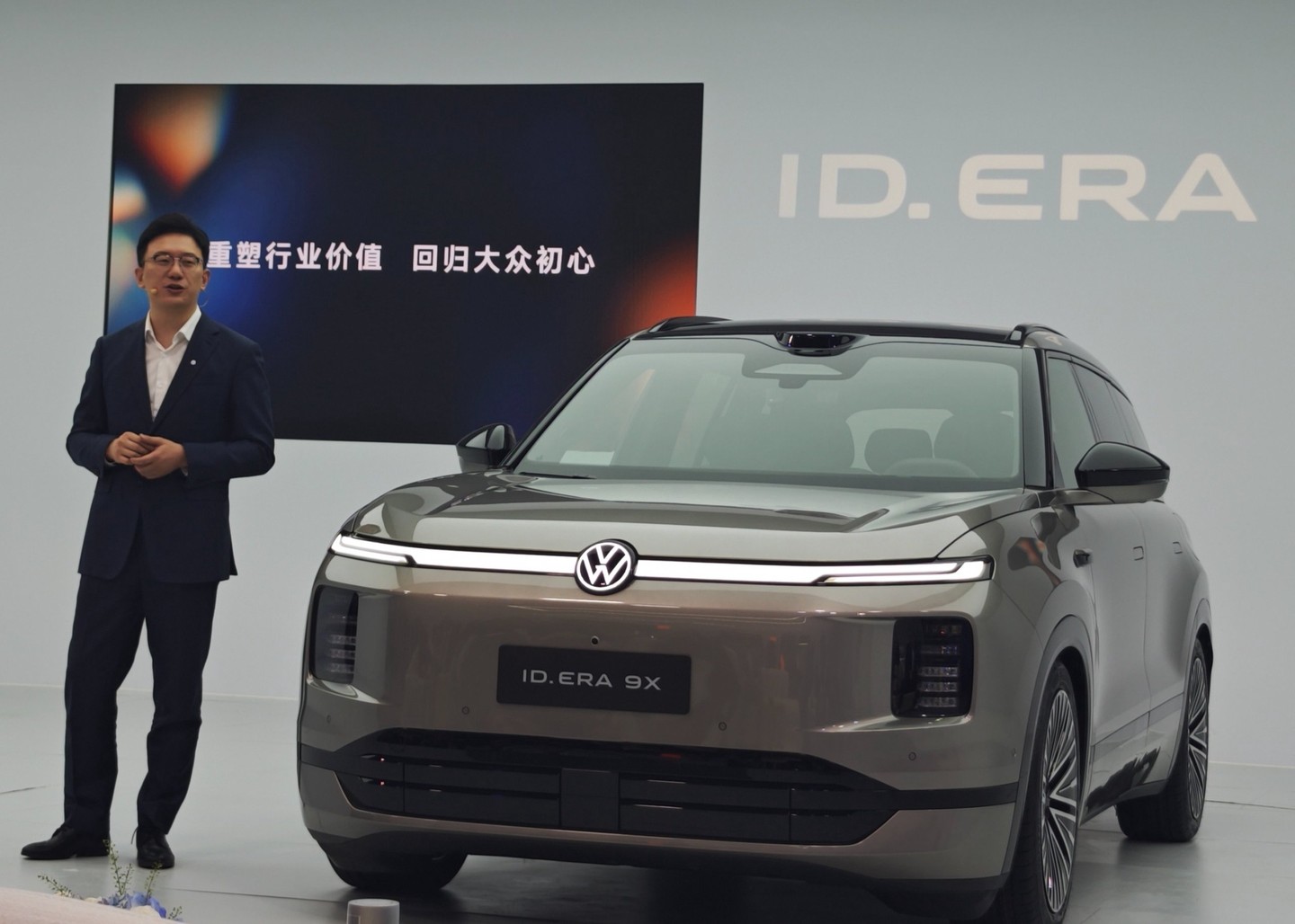
In 2026, China's new energy market has transformed the extended-range segment from a blue ocean to a red ocean. SAIC Volkswagen's entry strategy is to go straight for the flagship—rather than testing the waters in the 150,000 yuan range or exploring the compact segment, their first extended-range vehicle targets the ceiling price segment of large six-seat SUVs, directly competing with Li Auto L9 and Aito M9.
Before this, players like Li Auto and Aito had already been deeply engaged in the extended-range segment for many years. As 2026 begins, another 12 extended-range models are set to launch, with Nio ES9, IM Motors V9, and ID. ERA 9X appearing simultaneously on the Ministry of Industry and Information Technology's announcement. The three-row SUV market has shifted from a competition among three to five companies to a chaotic battle among more than ten automakers.
Is Volkswagen's entry at this moment "better late than never," or "too little, too late"? Volkswagen Passenger Cars brand CEO in China, Kai Ze Kai, and SAIC Volkswagen's Executive Vice President of Sales and Marketing, and General Manager of Shanghai SAIC Volkswagen Automotive Sales Co., Ltd., Fu Qiang, provided their answers.
In their view, Volkswagen is not here to take a slice of the pie but to "define the standard."
Fu Qiang candidly stated in an interview that the most painful and time-consuming part of the R&D process is the extended-range system. "When we decided to make an extended-range vehicle, we told ourselves that we must do something different. We conducted a lot of user research and found that there were many complaints about extended-range vehicles in cold weather, high-altitude conditions, and when the battery is depleted."
A common pain point in the extended-range industry is: "full charge is smooth sailing, but low charge is a struggle." In harsh cold and high-altitude environments, the performance difference can sometimes reach 100 or even 200 kilometers. The goal of ID. ERA 9X is to reduce this difference to 5% to 8%.
Real-world test data shows that in a -30°C environment in Heihe, the acceleration from 0-100 km/h in a depleted state is only 0.8 seconds slower than when fully charged; in a test at an altitude of 3,650 meters in Lhasa, the acceleration difference between high and low battery states is only 0.18 seconds; the noise change in the rear when the range extender kicks in is less than 0.5 decibels.
Kai Ze Kai added the engineering logic behind it: "Volkswagen has over 8,000 engineering technical standards. Studying these standards is not for the sake of the standards themselves, but because we have accumulated a large amount of data over the past few decades. In many aspects, our standards exceed regulatory requirements."
The EA211 1.5T range extender is the core of this technology. Built on an engine with a global ownership of over 20 million units, it features a VTG variable geometry turbocharger, 350 bar high-pressure direct injection, and deep Miller cycle. The 65.2 kWh CATL battery offers a CLTC pure electric range of over 400 kilometers—allowing most commuting users to charge once a week, with the range extender truly becoming a "long-distance backup."
The greater significance of ID. ERA 9X lies in its embodiment of the exploration of "Joint Venture 2.0." The traditional joint venture model is "foreign party exports technology, and the domestic party is responsible for the market," while the core of Joint Venture 2.0 shifts from "technology introduction" to "technology co-creation." This car is led by a Chinese team in product definition, deeply integrating the local supply chain—CATL batteries and Momenta intelligent driving—while adhering to Volkswagen's global engineering standards. Fu Qiang emphasized: "Everyone uses the same suppliers, but the results and the final user experience are completely different. Our R&D center plays a very significant role in this."
Qi Zekai used cooking as a metaphor: "We hope to better integrate the best raw materials into China's ecological system, while the Volkswagen brand has its own 'secret recipe.'"
Whether this combination of "German craftsmanship + Chinese supply chain" can succeed will directly affect the market performance of SAIC Volkswagen's subsequent six new energy products.
The market landscape in 2026 is changing. The cooling of pure electric vehicles and the warming of range-extended vehicles have become industry consensus. In February, the penetration rate of new energy vehicles was 36.4%, with fuel vehicles still occupying two-thirds of the market. In the latest batch of new car declaration catalogs from the Ministry of Industry and Information Technology, only Tesla and Nio are still committed to building a brand new pure electric platform.
The timing of ID. ERA 9X's entry is reasonable. The range-extended market has matured through education by pioneers, with users returning from chasing "novelty" to rationality, paying more attention to quality, reliability, and consistency across all conditions. Volkswagen is now returning with "system strength," which can raise the quality threshold for range-extended vehicles.
However, challenges are also evident. The competition in the 9 series market has become fierce, and Volkswagen's reputation in the new energy market still needs to be rebuilt. More importantly, when competitors iterate on a 12-month cycle, can Volkswagen's 24-month product rhythm keep up with market changes? The performance after the pre-sale on March 30 will provide its preliminary answer.
To some extent, this car carries not just Volkswagen's bet. In 2025, joint venture brands fell silent in the new energy market, with the Volkswagen Group delivering about 2.69 million vehicles in China for the whole year, with new energy accounting for less than 4.5%. FAW-Volkswagen, SAIC-GM, and Dongfeng Nissan are all exploring their own transformation paths but have yet to produce a new energy model recognized by the market.
The "German standard + Chinese supply chain" model that ID. ERA 9X attempts to prove is essentially a collective breakthrough experiment for joint venture brands in the new energy era. How far this road can go is not only of interest to Volkswagen itself; the entire joint venture camp is waiting for a signal.
Below is a dialogue between Qi Zekai, CEO of Volkswagen Passenger Cars China, and Fu Qiang, Executive Deputy General Manager of Sales and Marketing at SAIC Volkswagen, and General Manager of Shanghai SAIC Volkswagen Automotive Sales Company (edited without affecting the original meaning):
Q: In the fierce "9 series battle," what makes ID. ERA 9X enter the market forefront?
Fu Qiang: This year is indeed the "9 series battle." In addition to Aito and Li Auto, many manufacturers will join the competition in the first half of the year. SAIC Volkswagen is confident in standing out, and the core is that we have developed this product with an enterprising attitude, featuring nine industry-first black technologies. Previously, Volkswagen's strategy in electric vehicles was more about following, but this time we are leading product iteration with technology and using innovation to solve the pain points of the range-extended industry. I believe this effort will receive positive feedback from the market Second, the ID. ERA 9X has fully reached the industry first-tier standards in intelligent experience, whether in intelligent driving, intelligent cockpit, or intelligent chassis, and the Volkswagen brand also has its own industry-leading black technology in intelligent cockpit and driving.
Third, the quality of major manufacturers. Products need to have technological attributes and innovation, but beyond that, the Volkswagen brand also has the endorsement of "safety, quality, and reliability." By combining top German craftsmanship with China's intelligence, and with the support of "Chinese speed," I believe this car is a "capable" product in the entire 9 series market, a flagship, and a fully equipped product.
Q: Will this model developed in China go global? What new changes are there in supply chain cooperation?
Fu Qiang: This product is defined not only for the Chinese market. Volkswagen has three major R&D centers globally, and China carries the function of exploring the forefront of intelligence, and the results of these explorations can be enjoyed by users worldwide. We actively collect overseas user demands during the development process, and when launching, we will invite suppliers from other countries to come to China to see. So this car is not only made for Chinese users but also jointly developed for other countries.
Qi Zekai: Volkswagen has three major important centers globally, and China has now become one of the extremely important R&D centers among them. In certain product development areas, the development pace in other global markets lags behind China, and Chinese suppliers can also provide opportunities for the global market. We choose to cooperate with different types of suppliers, just like cooking, integrating the best ingredients into the Chinese ecosystem, and Volkswagen has its own "secret recipe" that can combine the ingredients into excellent products. This "secret recipe" is crucial.
Q: How to maintain the long-term vitality of a car? What is SAIC Volkswagen's core competitiveness?
Fu Qiang: The new energy market is very competitive now, and it is difficult for a car to become popular, and even harder to maintain that popularity. To achieve long-term vitality: First, the product definition must be done very well, grasping user needs and even uncovering needs that users did not expect; second, cars are durable consumer goods, and while pursuing novel experiences, we must also adhere to quality and safety; third, the most critical is reputation, like a snowball, only when the product quality is good and user reputation is good can the snowball grow bigger; fourth, continuous R&D, when the first generation is off the line, the second and third generations are already in pre-research.
In terms of core competitiveness, the first is innovation capability. Volkswagen invests heavily in establishing R&D centers in China, not simply bringing in suppliers, but engaging in joint development because Volkswagen has its own car-making philosophy and standards; the second is the ability to implement user-centered approaches, which we call "human-centered technology," where technology is developed around people, not just for the sake of technology; third, systemic strength. SAIC Volkswagen has very good systemic strength, with the integration of high technology from both China and Germany making the systemic strength even more powerful.
Qi Zekai: Volkswagen has over 40 years of operational experience in China, which is very close to users. In the future, fuel vehicles will also be equipped with the CEA electronic and electrical architecture, and many intelligent technologies will be shared and integrated between the two types of vehicles. At the same time, the fuel vehicle business is an important support for our steady development, allowing us to continue investing in future innovations Question: Is this Volkswagen's first range-extended model, and is it a strategy based on the characteristics of the Chinese market, or will it be promoted globally?
Fu Qiang: Internally, we call this car the "flagship campaign," showcasing the latest research and development technologies. It is positioned against Aito M9 and Li Auto L9, and we hope to work with them to expand the high-end six-seat SUV market. This year, SAIC Volkswagen plans to launch six models, so please be a little patient.
Qi Zekai: We chose the range-extended route because we see that the coexistence of pure electric, hybrid, and other power forms in the Chinese market will continue. The ID. ERA 9X also has advantages in other global markets, especially in the six-seat SUV category. As for exports, the demand in the European market is different from that in China, and there are differences in regulations and road conditions. We will take this into consideration, but which specific markets to export to still needs further evaluation.
Question: What was the most painful moment in the development of this car?
Fu Qiang: The most painful and time-consuming part was the development of the range-extended system. When we decided to go with a range extender, we told ourselves that we must do something different. We conducted a lot of user research and found that there were many complaints about range-extended vehicles in cold weather, high altitudes, and low battery situations. The marketing department defined the product by saying that if we are going to do it, we must effectively address these complaints. Although we used the EA211 engine, we were initially unsure if it could solve industry pain points when used in the range extender. We made it very clear to the R&D team: since we are doing this, we cannot fail; we must create the best range extender in the industry. The entire R&D process incurred a lot of costs and time, going through two winters and two summers of testing.
In January, Qi Zekai and I went to Heihe to conduct extreme testing at temperatures between -30 to -40 degrees Celsius. Volkswagen excels in redundant design, providing a great sense of safety and handling experience when unexpected situations occur. The area north of the Yellow River generally faces severe cold, while the southwest and northwest of China also encounter high altitudes; about 50% to 60% of the country is in such environments.
As a joint venture that entered China in 1985, we have an obligation not to simply create a range-extended product by following what others do. We need to overcome these pain points and demonstrate value in this industry first.
From a sales perspective, there is always a desire to launch products faster, but Volkswagen has extremely strict standards. When this car was initially defined, it was not only planned for sale in China but also considered for future exports. Therefore, we adopted Volkswagen Group's global standards, which require completing two winters and two summers of testing, 100,000 kilometers of testing, and 300,000 kilometers of bench simulation testing. This did take some time, so the layout of the range-extended product came a bit late, but since it is here, we want to provide a good answer to the market.
For example, Volkswagen's understanding of safety differs from that of other companies. The older ID. series vehicles automatically turn on the lights when they move and cannot be turned off; this is our understanding of safety. We told our suppliers that R&D must align with Volkswagen's logic and meet our standards before we can accept delivery. When aligning the R&D logic with suppliers in the areas of intelligent cockpit and intelligent driving, we found many differences from other companies. But we are very proud and should stick to those differences because those aspects will ultimately be perceived by users, allowing our products to go further Qizekai: This involves collaboration between the Chinese team and the German team. The joint venture has a deep understanding of Chinese user needs, and the introduction of the range extender solution is precisely to address market pain points. Volkswagen has over 8,000 engineering technical standards, and studying these standards is not for the sake of the standards themselves, but because we have accumulated a large amount of data over the past few decades. In many aspects, our standards exceed regulatory requirements. From the sales perspective, people may feel that the advancement process is not fast enough, which is because we are uncompromising in engineering and safety, spending a lot of time on rigorous testing and validation.
Different teams have their own engineering focuses, needing to meet Chinese regulatory requirements, respond to sales feedback, and ensure the DNA of the Volkswagen brand. During the R&D process, there are often intense discussions among teams, but the core remains the same: to center on user interests.
Q: What specific pain points does the ID. ERA 9X address? Who is the target audience?
Fu Qiang: The biggest pain point in the range extender industry is the inconsistent power performance when the battery is low or fully charged, with significant differences in extreme cold and high-altitude conditions, sometimes reaching a 100 to 200 difference. Through our R&D technology, we can reduce this power performance difference to 5% to 8%, allowing the vehicle to provide relatively consistent performance across all operating conditions.
Additionally, the "dynamic zero-gravity seat" solves the problem that traditional zero-gravity seats can only be used when parked. A responsible company cannot allow the seat to maintain a zero-gravity position while the vehicle is in motion, as in the event of a collision, the seatbelt could become a "choking strap." Our dynamic zero-gravity seat can be enjoyed even while the vehicle is moving.
The target audience is divided into two categories: first, new era family users, covering three generations (young, middle-aged, and elderly), who have needs for weekend outings and long-distance travel during holidays, requiring large six-seat products that emphasize safety, reliability, and comfort; second, business customers, who are those previously purchasing MPVs and are now shifting towards the large SUV market. SUVs are trending towards MPV characteristics, with interior quality on par with MPVs, but offering better passability and driving experience.
These users, when purchasing large six-seat vehicles, will hope for high-tech configurations, focusing on features like refrigerators, TVs, and large sofas. Beyond that, we can also provide the endorsement of large factory quality, ensuring that the vehicle is safe, reliable, and durable, allowing users to feel very secure while using the product and enjoy a pleasant driving experience.
Qizekai: Solving problems for users is not only reflected in configuration parameters but also, more importantly, in the engineering standards behind them. For range extender models, we have set very specific technical requirements to ensure that the product can provide the best performance across different battery levels, maintaining long-lasting power output while minimizing performance gaps between different battery levels.
Q: How to get consumers to add the ID. ERA 9X to their shopping list? What considerations are there for pricing?
Fu Qiang: The ID. ERA 9X will start pre-sales on March 30 and officially launch in early to mid-April. In our design, we have anchored our ideals and Aito, positioning it as a high-end six-seat large SUV. There are two core highlights: first, the range extender experience is excellent, with users hardly feeling the intervention of the range extender, the driving process is very quiet, and the performance remains consistent during intervention, which can surpass all competitors; second, intelligent driving assistance, which will be detailed at the technology launch on March 16, showcasing the industry-leading intelligent driving assistance experience developed in collaboration with Momenta The slogan is "Super Volkswagen, Beyond Imagination." With nine major black technologies, this car can bring users many experiences that exceed expectations.
Qi Zekai: The most important thing is the strength and core value of the product itself. Our functional configuration is at the leading level in its class. Compared to the past, we are also striving to create higher emotional value, emphasizing the connection between technology and users, and valuing the lifestyle of users. The excellent performance of the range extender system and configurations like the Smart Surface magic screen can provide users with better emotional value.
As for the price, it cannot be disclosed yet. Price is certainly very important, but relying solely on price to form a competitive advantage brings more risks. Users will also consider other factors beyond price when purchasing a car. We will carefully consider how to invest correctly, spend money in reasonable places, and set a reasonable price.
Question: What is the difference between "full level" and "fully equipped" products? Where is the main cost invested?
Fu Qiang: Our so-called "full level" has its exclusive definition, excelling in aspects such as intelligent experience, intelligent driving assistance, comfort, luxury, design, power output, and safety reliability, even being particularly strong in certain areas.
This time, we will be particularly strong in the dimensions of intelligent driving assistance and driving performance. In terms of intelligent cockpit, we did not simply choose a "me too" strategy with refrigerators, TVs, and large sofas, but returned to the essence, thinking about what kind of intelligent cockpit consumers really need. We jointly created the "Cloud Qicockpit," hoping that users can feel at home when sitting inside, embraced like a cloud, allowing their body and mind to relax. To achieve this, we introduced Smart Surface technology, hiding the screen inside the inner door trim, which is unique in the industry.
Currently, other SUVs on the market basically set up small LED displays in front or place a few buttons on the side. Our design not only provides emotional value but also brings elegant aesthetic value and very good practical value, such as safety, dynamic zero-gravity seats, active noise reduction technology, gentle air conditioning, NAPPA grain, and baby-grade environmental standards.
Additionally, the flagship product not only hopes to sell well but also has an important strategic significance, which is to refresh the brand image. We hope that through this product, Chinese users can re-recognize the Volkswagen brand, feel that Volkswagen's consistent safety and reliability are always present, and also sense the new changes in Volkswagen. We hope users can feel an enterprising Volkswagen this time, no longer conservative, and not just doing "me too" things, but also daring to innovate in technology. We are an enterprising Volkswagen, and we are a caring Volkswagen. Human-centered technology is the best interpretation of a caring Volkswagen, as technology exists for human needs.
Qi Zekai: This is a product with a distinct personality, equipped with multiple configurations that are first applied in its class, not simply following market trends. The real difference is that when you drive this car, you can personally feel its uniqueness and also sense Volkswagen's consistent DNA. More importantly, after years of use, everyone will further appreciate the durability of this car and the value brought by the well-established after-sales service system of the brand over the long term In terms of components, spare parts, maintenance, and service capabilities, Volkswagen's complete system can provide users with a truly worry-free experience.
Q: What is the Chinese name of ID. ERA 9X?
Fu Qiang: The English name is ID. ERA 9X, and the nickname is simply "Volkswagen 9X," which is easy to remember.
Q: What is the connotation of "Fully Committed"?
Fu Qiang: This time we have made a significant transformation in marketing, internally referred to as "marketing transformation." After the 3C industry joined the automotive industry, the marketing logic has changed, not only due to media fragmentation but more importantly, the marketing approach has changed. A car can be very popular during the pre-sale stage and can receive a large number of orders upon launch. It is our responsibility as marketers to convey the product value to consumers through marketing.
The product preheating started very early, with the concept car debuting at the Shanghai Auto Show last year, officially starting the preheating in January this year, inviting media users to participate in winter testing, and holding a technical press conference on March 16. This step-by-step approach is to thoroughly promote this product and brand during the pre-sale event.
We have carefully designed a good product and hope to spread this thoughtfully crafted product through our efforts and the support of media professionals, so that more Chinese consumers know that Volkswagen has invested a lot of effort in creating such a "not so Volkswagen, yet very Volkswagen" product. We hope the pre-sale event will be a hit and that the launch will achieve excellent order performance.
Qi Zekai: We are also discussing innovative car purchase financing plans. Moreover, starting with ID. ERA 9X, we will further enhance after-sales service capabilities, evaluating and introducing new technological means in insurance claims and other aspects to provide a smoother service experience
